News
Trump asks Supreme Court to overturn Colorado ballot eligibility ruling


WASHINGTON — Former President Donald Trump on Wednesday asked the Supreme Court to overturn a state court ruling in Colorado that said he is ineligible to appear on the state primary ballot because of his actions leading up to the Jan. 6, 2021, attack on the U.S. Capitol.
The Colorado Republican Party had already filed its own appeal. Based on language in the state court ruling, Trump for now remains on the Colorado ballot until the Supreme Court acts.
The Colorado Supreme Court based its Dec. 19 ruling on language in the Constitution’s 14th Amendment that prohibits those who “engaged in insurrection” from running for various federal offices. The case raises various novel legal questions, including whether the language applies to those running for president and who gets to decide whether someone engaged in insurrection.
If the ruling is allowed to stand, it would “mark the first time in the history of the United States that the judiciary has prevented voters from casting ballots for the leading major-party presidential candidate,” Trump’s lawyers said in the filing.
The court, the lawyers said, should “return the right to vote for their candidate of choice to the voters.” Only Congress has the authority to decide who is eligible to serve as president, they added.
Trump’s legal team also argues that even if the provision could be applied to the former president, he did not engage in insurrection on Jan. 6, citing a “long history of political protests that have turned violent.”
Separately, the Trump campaign put out a statement saying the Colorado ruling was an “unAmerican, unconstitutional act of election interference.”
The state high court’s decision reversed a lower court’s ruling in which a judge said that Trump had engaged in insurrection by inciting the riot on Jan. 6 but that presidents are not subject to the insurrection clause of the 14th Amendment because they are not an “officer of the United States.”
The state court said its ruling would remain on hold indefinitely, allowing Trump and his allies to file appeals with the Supreme Court. The Colorado GOP was the first to do so, on Dec. 27.
Interest in the Colorado case was heightened when Maine’s top election official concluded Thursday that Trump was ineligible to appear on the Republican primary ballot in that state, too. Again, the decision was put on hold so Trump can appeal in state courts in another case that could reach the justices. He filed that appeal Tuesday.
The Colorado case reaches a Supreme Court with a 6-3 conservative majority that includes three justices Trump appointed. Legal experts are divided over how quickly the court might want to intervene and how it might ultimately rule on such an unusual legal question.
The Colorado court’s ruling specifically addressed the Republican primary in the state. It remains to be seen whether the Supreme Court feels it would need to take up the issue once the filing deadline has passed with Trump remaining on the ballot.
One other option the court has is to take up the case and issue a ruling that would then apply to the general election and potentially in other states where similar lawsuits targeting Trump have been filed.
The Supreme Court’s central role in the Trump legal wars has drawn comparisons with the 2000 election, when the justices ended up issuing a pivotal 5-4 ruling that ended the Florida recount, enabling the Republican candidate, George W. Bush, to prevail over his Democratic opponent, Al Gore.
In a related matter, the justices are set to hear oral arguments in a case involving a man charged for his actions on Jan. 6 that could affect Trump’s prosecution in Washington, where he has been charged under the same federal law at issue. The Washington case is one of four different criminal prosecutions Trump faces.



By David E. Sanger, Alexandra Ostasiewicz, Stephanie Swart, Ray Whitehouse, Paul Abowd and Jon Miller
April 8, 2026
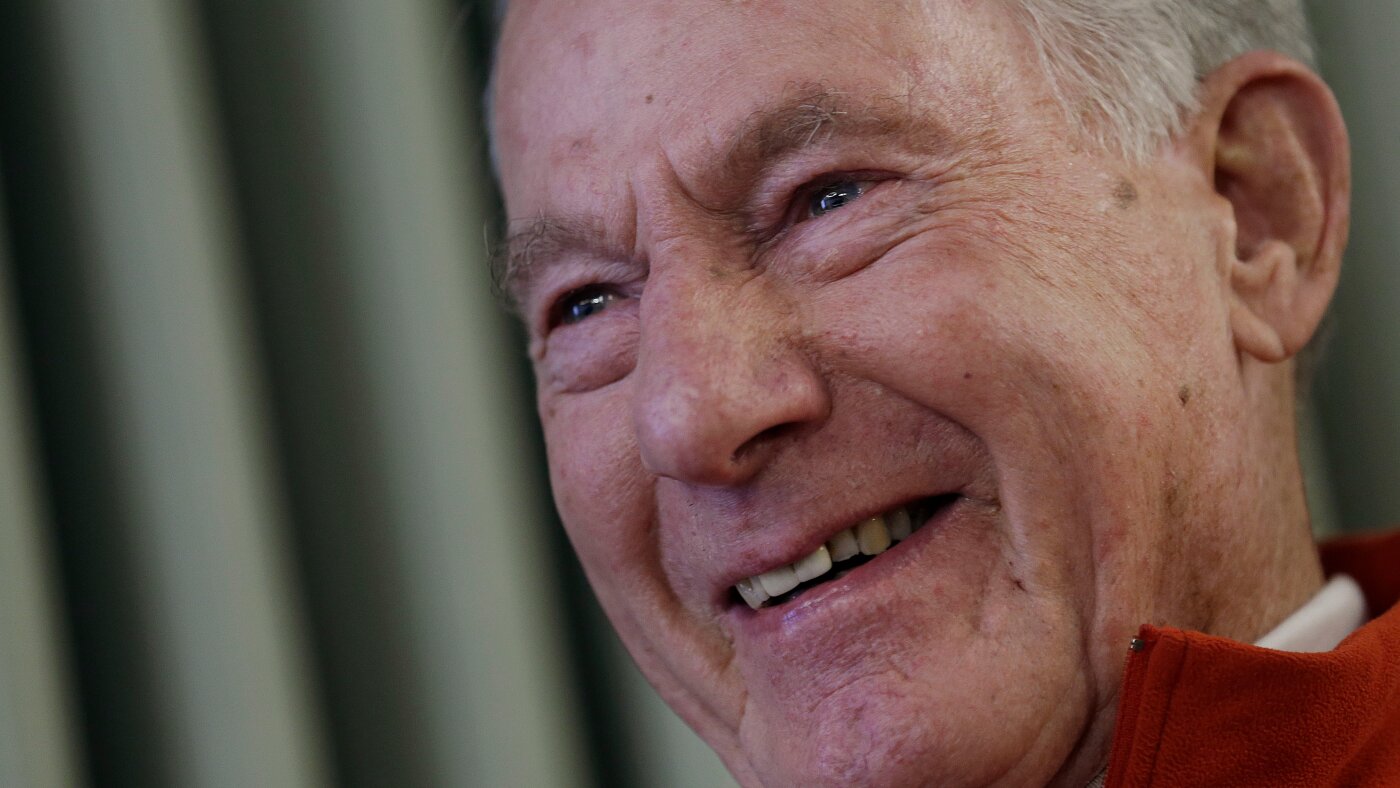
Jim Whittaker is interviewed for the 50th Anniversary Celebration of the First American Ascent of Mount Everest in Berkeley, Calif., Feb. 22, 2013.
Jeff Chiu/AP
hide caption
toggle caption
Jeff Chiu/AP
SEATTLE — The celebrated mountaineer Jim Whittaker, the first American to summit Mount Everest, has died. He was 97.
Whittaker, who also served as the first full-time employee of the outdoor retailer REI and later as its president and CEO, died Tuesday at his home in Port Townsend, Washington, according to a statement from his family.
“Whether at home, in the mountains, or at sea, he sought to share adventure, joy, and optimism with those around him,” said the statement, which was emailed by Leif Whittaker, one of his sons. “His warmth, humility, and belief in the power of nature to bring people together left an enduring legacy of care for our planet and for one another.”
Whittaker’s 1963 ascent of Everest alongside Nawang Gombu came 10 years after the pioneering climb of Sir Edmund Hillary and Tenzing Norgay. The feat helped spawn interest — and an industry — in mountaineering in the U.S., and it made the once-shy, rangy climber an instant celebrity. He was featured on magazine covers and in demand for public appearances.
Whittaker had been working for REI since 1955, when he was hired by the co-op’s co-founder, Lloyd Anderson. The company’s popularity surged after Whittaker’s Everest climb, and Whittaker went on to lead the business from 1971 to 1979. Its membership grew from nearly 250,000 to more than 900,000 during his tenure, REI noted in a statement Wednesday.

Robert F. Kennedy, left, stands atop Mt. Kennedy after placing a black flag in memorial to his late brother, President John F. Kennedy, next to, from left, Jim Whittaker, William Allard, and George Senner, March 24, 1965, in Yukon, Canada.
Doug Wilson/AP
hide caption
toggle caption
Doug Wilson/AP
The co-op credited his congressional testimony and other efforts with helping to establish North Cascades National Park and the Pasayten Wilderness in Washington, as well as and Redwood National Park in California.
“Long before outdoor advocacy was commonplace, Jim gave his voice — and his leadership — to protecting the places we love, reminding us that wild places endure only if we choose to care for them,” the statement said.
Whittaker’s celebrity also brought him into the orbit of the Kennedy clan, and he became a close friend of Robert Kennedy, with whom he climbed a 14,000-foot (4,267 meters) Canadian peak. The peak was later named Mount Kennedy after the presidential contender’s murder in 1968.
Whittaker was at Kennedy’s bedside when he died and was devastated by the assassination.
Whittaker grew up in Seattle and began climbing with his twin brother Lou Whittaker in the 1940s with the Boy Scouts. At 16, they summited 7,965-foot (2,428-meter) Mount Olympus, the highest peak in the Olympic Mountains west of Seattle, Jim Whittaker recounted in his memoir, “A Life on the Edge.” When they reached the town of Port Angeles on their way home, they found cars honking and people celebrating: World War II had ended.
Jim Whittaker once reflected that the beauty and danger of his sport sharpened the senses: “When you live on the edge, you can see a little farther,” he once reflected.
His achievements on the remote, snowy slopes of Mount Everest and nearby K2, the world’s second-tallest peak, assured him a niche in the record books. He was shocked when Lou decided to skip the 1963 Everest expedition in favor of opening a sporting goods store in Tacoma.
But Lou Whittaker wrote in his own book, “Lou Whittaker: Memoirs of a Mountain Guide,” that he still got to share in some of his twin’s glory by filling in when Jim got tired of attending parades or other events in his honor.
“Only our families and closest friends ever knew the difference,” he wrote.
Lou Whittaker died in 2024 at age 95.
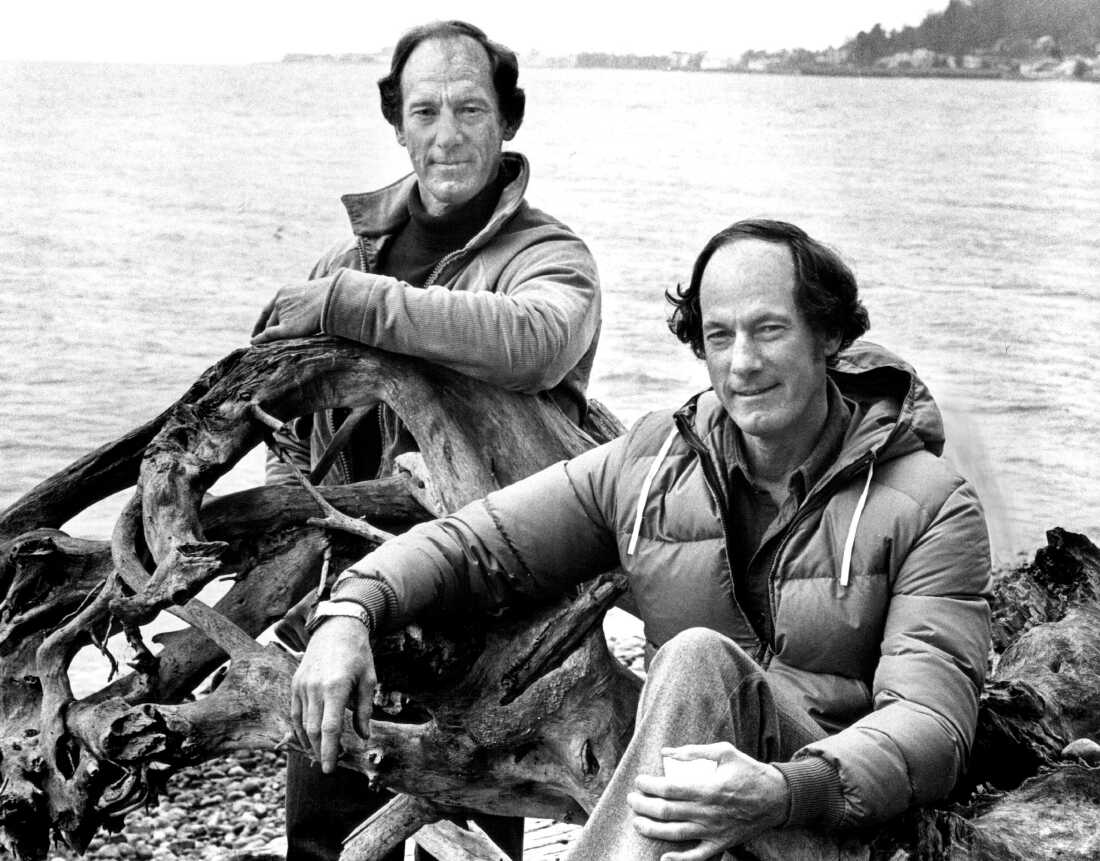
Lou Whittaker, left, and his brother Jim Whittaker, right, pose for a portrait at Jim’s house, in 1980, in Seattle.
Ann E. Yow/AP/The Seattle Times
hide caption
toggle caption
Ann E. Yow/AP/The Seattle Times
Jim Whittaker led many additional climbs, including the 1990 Mount Everest International Peace Climb, which brought together climbers from the U.S., the Soviet Union and China “to demonstrate what could be accomplished through cooperation and goodwill,” the family statement said.
“Jim was a lifelong advocate for peace and believed deeply in the ability of shared challenges in the natural world to unite people across borders and ideologies,” it said.
Whittaker himself said one of his proudest moments came in 1981, when he led 10 handicapped climbers up 14,410-foot Mount Rainier. For them, he said later, “that was Mount Everest.”
Whittaker scaled Mount Rainier more than 100 times but did not take its familiar flanks for granted. The caprices of the weather, even on a comparatively modest mountain, “can turn a good climber into a beginner” in a matter of hours, he once noted.
Former Washington Gov. Jay Inslee called Whittaker’s legacy “just as impressive, and just as lasting, as Mount Rainier itself.”
“He pulled many a climber up the peak,” Inslee wrote in a social media post Wednesday. “He did the same for all our spirits. He still does.”
After years of risk on the world’s most dizzying pinnacles, Whittaker said in a 1980 interview that he hoped to “die in my sleep with the television on.”
He is survived by his wife of 52 years, Dianne Roberts; sons Bob, Joss and Leif Whittaker; three grandchildren; and one great-grandchild.

What draws people into cults? A new book tracks the journeys of two followers

ChatGPT has a new $100 per month Pro subscription

Israeli man built bomb lab for Iranian plot targeting ex-PM Bennett, authorities say

Unearthed clip exposes shocking claim by Newsom’s wife about inmates at violent California prison

Woman discovers missing nose ring traveled to her lungs, causing month-long cough

Florida High School Football Rankings: Top 25 teams – Oct. 21

How old is Bo Nix? What to know about Oregon quarterback ahead of 2024 NFL Draft

Cleary's 21 help Le Moyne down Central Connecticut State 69-64 in OT

99th annual Pony Swim held in Virginia

Indiana Members Credit Union announced as new anchor tenant at Bottleworks District
Unearthed clip exposes shocking claim by Newsom’s wife about inmates at violent California prison

Gaza journalists mourn Al Jazeera’s Wishah, killed by Israel

Exclusive: Trump weighs pulling some US troops from Europe amid NATO strains, official says

Video: The Fragile Cease-Fire in Iran

Spanberger ripped after taking credit for billions in investments secured under GOP predecessor: ‘Pathetic’
-

 Atlanta, GA5 days ago
1 teenage girl killed, another injured in shooting at Piedmont Park, police say
-

 Education1 week ago
Video: We Put Dyson’s $600 Vacuum to the Test
-

 Movie Reviews1 week ago
Vaazha 2 first half review: Hashir anchors a lively, chaos-filled teen tale
-

 Georgia2 days ago
Georgia House Special Runoff Election 2026 Live Results
-

 Pennsylvania3 days ago
Parents charged after toddler injured by wolf at Pennsylvania zoo
-
 Milwaukee, WI3 days ago
Potawatomi Casino Hotel evacuated after fire breaks out in rooftop HVAC system
-

 Education1 week ago
Video: YouTube’s C.E.O. on the Rise of Video and the Decline of Reading
-
 Entertainment1 week ago
Inside Ye’s first comeback show at SoFi Stadium