News
Sleep training: Life preserver for parents or “symptom of capitalism”?


Todd Warnock/Getty Images

Todd Warnock/Getty Images
Well, I’m back. After a lengthy parental leave, when publication of the Planet Money newsletter decreased in frequency, I’m now working full-time and the newsletter will go back to being published weekly.
As always, I will continue to do my best to provide you with insights from the field of economics and keep you informed about what’s going on in the economy. And, don’t worry, this newsletter is not about to become all about babies. This week, however, it is. Now that I’m a working parent, I want to take just one brief moment to complain on behalf of all of us. Like millions of parents before me, I’ve discovered it’s hard to be productive when you’re sleep deprived.
There’s a ginormous mountain of studies that find that sleep deprivation is a serious drag on productivity. One recent study by economists Joan Costa-i-Font, Sarah Fleche, and Ricardo Pagan estimates that each additional hour of sleep per week increases the probability that a person is employed by 1.6 percentage points and increases a person’s weekly earnings by 3.4%.
Another study by economists Pedro Bessone and colleagues finds that it’s not necessarily just the quantity of sleep hours that matters for productivity, it’s also the quality of sleep. This checks out, personally.
The Modern Dilemma of Juggling Career and Kids
In some ways, the problem of sleep deprivation hurting productivity at work is a contemporary one. More than ever before, families have two parents who work outside the home. Historically, many women stayed at home and bore the brunt of baby-induced sleep deprivation. Today, more often than not, there are two drowsy parents who must go into work the next day and — not speaking from personal experience at all, ahem — may get into small tiffs at around 3 a.m. over whose turn it is to comfort or feed their crying baby.
Plus, thanks to efforts to combat Sudden Infant Death Syndrome (SIDS) — which, we should note, seem to have been extraordinarily successful — parents are now instructed to avoid co-sleeping and to do things like put their babies to sleep on their backs as opposed to their bellies. While such measures have been found to reduce the risk of SIDS, they also may make it harder for many babies to sleep because many of them naturally want to sleep on their parents or their bellies.
Sleep Training
For today’s parents, there’s a tantalizing solution to the problem of sleepless babies: sleep training. For many, “sleep training” is a mere euphemism for the most infamous and controversial method: Cry It Out. Basically, you put your baby in a crib or bassinet in a separate room and don’t come back until the morning. If they cry, so be it. The idea is they will learn to self-soothe and become good sleepers.
Not all forms of sleep training are so severe, but most do involve some tolerance for crying and, because of this, many categorize most approaches broadly under the umbrella of “cry it out.”
In her bestselling book Cribsheet: A Data-Driven Guide to Better, More Relaxed Parenting, from Birth to Preschool, economist Emily Oster reviews the evidence on sleep training and concludes, “The bottom line is that there is simply a tremendous amount of evidence suggesting that ‘cry it out’ is an effective method of improving sleep.”
That said, sleep training is pretty hard, strategically, physically, and emotionally. That’s why there’s a whole cottage industry of high-paid sleep trainers, books, consultants, podcasts, influencers, and so on, who help parents with all this. Recognizing that sleeplessness is a problem for employees to be the most productive, companies like Meta (aka Facebook) have begun subsidizing the cost of sleep training coaching for their workers.
The Online War Over Sleep Training
Ever since we had a baby — and apparently started googling baby-related stuff — my wife and I have found our social media feeds to be jam-packed with baby-rearing and sleep training content.
For example, my wife was targeted with a post from a baby sleep consultancy called Taking Cara Babies that marketed their services to us (and our employers). “It’s true! Taking Cara Babies has a way your company can give you the gift of sleep (which will help you thrive as an employee). For more information to send to your boss or HR department, head to my stories or comment.”
It seemed pretty innocuous. But the most liked comment was the following: “Wish we had actual parental leave like the rest of the modern world so we weren’t forced to sleep train and get back to work like good little capitalists.”
It turns out this sentiment can be found across the internet, in comments, on sites like Reddit and X (formerly Twitter), and by influencers. There’s a large community of parents who disparage sleep training — and, in particular, any form of cry it out — as basically a cruel practice that sacrifices our babies’ well-being on the altar of capitalism.
Whole Mother Therapy, which provides online therapy to parents, for example, argues on their blog that “Sleep training is a symptom of capitalism—it cuts parents off from the natural attachment and nurturance that is essential for infant and baby development.”
“Sleep training is breaking your child’s mind and nervous system to fit into the productivity model capitalism requires,” tweeted an X user named ℍℝ.
But is not wanting to be really sleep deprived only driven by economic concerns? If I had the luxury of not working, I probably would still want to be well-slept. And aren’t there a whole bunch of countries that have capitalist economies — but, at the same time, robust safety nets — that give parents greater opportunity to stay home and be sleep-deprived without having to go into work? I’ll let you be the judge.
One of the biggest schools that opposes sleep training, or at least strategies that tolerate baby crying, is known as attachment parenting. This approach advises parents against letting babies cry on the grounds that crying is an expression of distress and that it’s unnatural and cruel to not do everything in our power to prevent it. I have friends who pursued attachment parenting. They not only refused to let their babies cry at night without intervention, but they also let their babies sleep in their beds (which, by the way, is not recommended by health experts for at least the first six months of your baby’s life). And let me tell you, years later, their kids are still interrupting their sleep. Not for us.
Emily Oster points out that sleep training has sizable benefits for parents. She cites a randomized controlled trial that found that mothers “were less likely to be depressed and more likely to have better physical health” months after sleep training their babies. “This finding is consistent across studies,” Oster continues. “Sleep-training methods consistently improve parental mental health; this includes less depression, higher marital satisfaction, and lower parenting stress.”
But what about the baby’s mental and physical health? In reviewing the literature, Oster finds no credible evidence that babies’ long-term well-being is impaired by sleep training. “Fundamentally, the argument against sleep training is theoretical,” Oster argues. She admits that it’d be better if we had more studies on this. “And yes, it is possible that if we had more data, we would find some small negative effects,” she admits. But, at the same time, she says, it’s also possible that, by promoting good sleep hygiene, sleep training could actually be a benefit to babies. She concludes that “You’ll have to make a choice about this without perfect data.”
As for us, we’ve pursued a strategy that you might call sleep training lite. Basically, when our baby cries in the night, we either feed him if it’s been a while since he’s eaten or we hold his hand and sing Twinkle, Twinkle, Little Star to him while he stays in his crib. Honestly, it worked really well between months 4 and 7. But recently, he started teething, and… well, we’re both really tired. Take that, capitalism.

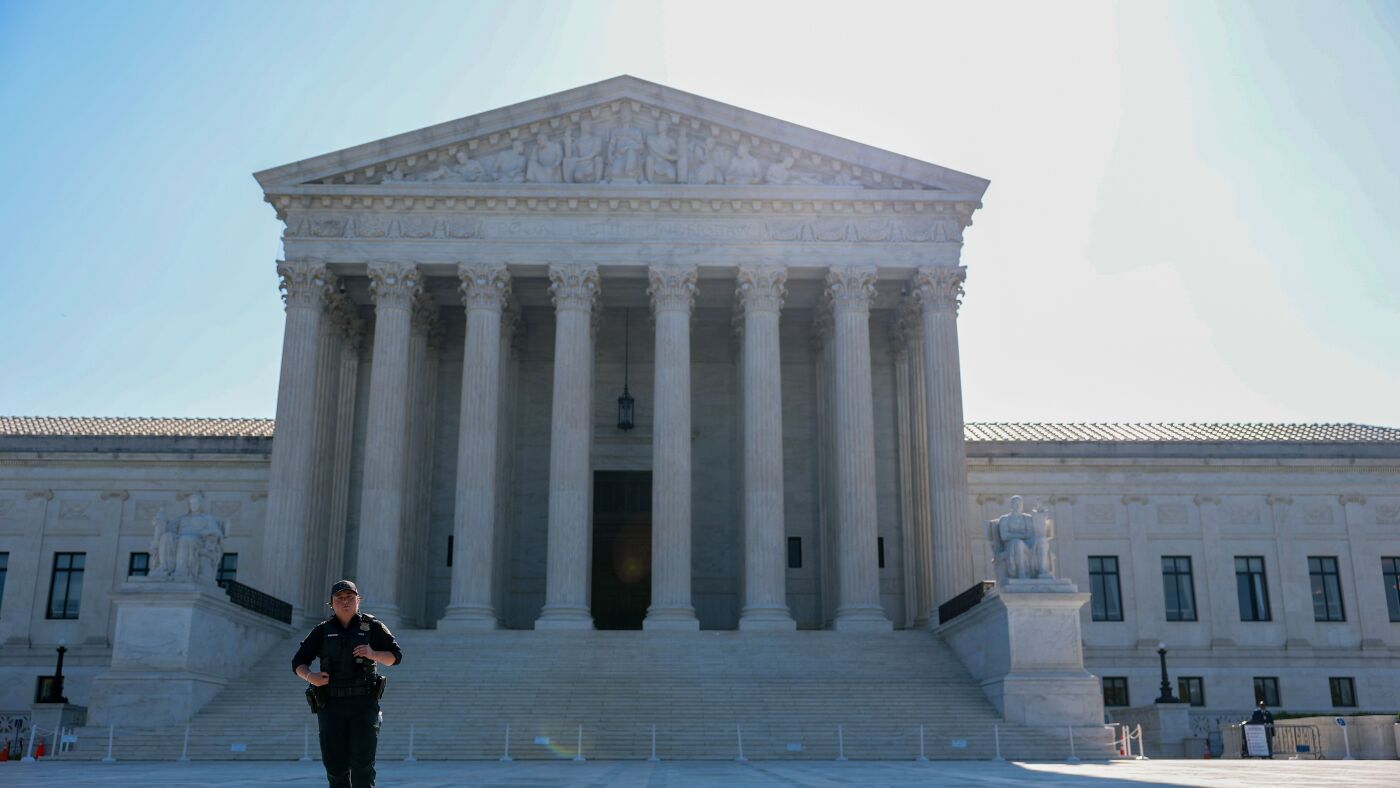
The U.S. Supreme Court
Tasos Katopodis/Getty Images
hide caption
toggle caption
Tasos Katopodis/Getty Images
The Supreme Court Tuesday upheld the long-established right of children born on U.S. soil to automatic American citizenship, regardless of their parents’ immigration status. In so doing, the court rejected President Trump’s most aggressive attempt to limit immigration in the United States.
Writing for the court majority, Chief Justice John Roberts traced birthright citizenship back to the founding of the nation. Just as the colonists demanded “the rights of Englishmen” more than 250 years ago, he said, Congress, after the Civil War, amended the Constitution to specify automatic citizenship for any child born on U.S. soil.
“Citizenship then and now was the right to have rights”—and the framers of the 14th amendment extended that promise to every free born person in this land. He concluded: “We keep that promise today.”
The vote was 6-to-3, depending on how you count it. Altogether, five justices signed on to the Roberts’ majority opinion. A sixth, Justice Brett Kavanaugh, agreed only that federal legislation enacted in the 1950s grants automatic citizenship for children born in the U.S.
Justice Clarence Thomas wrote the lead dissent, a 91-page opus that agreed with Trump’s assertion that the 14th amendment only applied to former slaves and their descendants. The Thomas dissent added ominously that he “was not sure that “today’s opinion will stand the test of time.” The dissent was joined by Justice Neil Gorsuch, with Justice Samuel Alito writing a separate dissent.
Justice Ketanji Brown Jackson, who, like Thomas is African American, responded to some of the themes in the Thomas dissent.
“Despite his longstanding endorsement of a colorblind society,” she wrote, “Justice Thomas now surprisingly suggests that the citizenship clause was a race-conscious remedial measure relating only to freed slaves.”
Cecillia Wang, legal director of the ACLU, who successfully argued the case at the Supreme Court, said President’s Trump failed attempt to limit birthright citizenship was transparent.
“A majority of the court saw through what the president was trying to do in spinning birthright citizenship as something that can flex and retract and expand depending on what the administration in power thinks about immigration policy,” she said.
Wang sees birthright citizenship as “much more fundamental than that.”
“It is part of how our country rejected caste distinctions and championed freedom and equality,” she said.
Yale law professor Akhil Amar called the court’s opinion a classic example of the court sticking to the original meaning of the Constitution. The text of the 14th Amendment, he said, “is about the child. It doesn’t say anything about parents.”
University of Virginia law professor Amanda Frost, however, was surprised and saddened that the court was so closely divided.
“The very length of the opinion,” she told NPR, plus “the fact that you had four justices say the Constitution does not require near universal birthright citizenship, which had been the understanding, that suggests that this is a fringe argument that the Trump administration has succeeded in moving into the mainstream, even though it has not succeeded in the end of the result.”
The issues in the birthright case focused in large part on the longstanding, and as of Tuesday, still standing, meaning of the 14th Amendment, which was enacted after the Civil War. It guarantees birthright citizenship to almost all persons born or naturalized in the United States. Chief Justice Roberts pointedly said the only exceptions written into the amendment were for certain Indian tribes, which were not subject to the laws of the United States at the time, and the children of foreign diplomats. That understanding was so well accepted that even in World War II, when Japanese citizens were confined to internment camps, their children, born in those camps, were automatically deemed to be American Citizens.
The Supreme Court’s decision Tuesday was the second time the justices have upheld birthright citizenship. The court’s previous decision came in 1898 in the case of Wong Kim Ark, born in the U.S. to Chinese parents. His great grandson, Norman Wong, issued a statement today saying, “My great grandfather, Wong Kim Ark, never set out to become a symbol. He was one man, only a cook, and yet he stood up for what was right, and I believe that it has made a difference. As a result, he stood up for the rights of all of us Americans – it just so happens that I am related to him. Today’s ruling shows that his victory remains as important now as it was in 1898.”
The high court also issued opinions in two other cases on Tuesday. In a 6-to-3, ideologically divided vote, the court upheld state laws that prevent transgender athletes from playing on women’s sports teams. Writing for the conservative majority, Justice Brett Kavanaugh said that the laws violate neither federal statutes nor the 14th Amendment. States, he said, have a legitimate interest in protecting the safety of sports, which he suggested could be compromised if transgender girls or women are allowed to play on female teams. Similarly, he said transgender athletes could also compromise fairness in athletic competition.
Sitting in the court chambers Tuesday when Kavanaugh summarized his opinion were not only his wife and mother, but his two daughters, whose athletic teams their father has long coached.
Justice Sonia Sotomayor, joined by her liberal colleagues, issued a partial dissent. She agreed with the majority that the benefits of sports are “immense,” but she wrote that these laws unconstitutionally deny transgender athletes the opportunity to play with their peers.
In a third ideologically divided case Tuesday, the Court struck down decades-long limits on the amount of money political parties can spend on candidates. The limits were challenged by the Republican National Committee. The decision may well increase by millions of dollars the amount of money that will pour into campaigns.

Rep. Thomas Kean Jr., R-N.J., arrives at the U.S. Capitol with his wife Rhonda Kean on June 30.
Anna Moneymaker/Getty Images
hide caption
toggle caption
Anna Moneymaker/Getty Images
New Jersey Republican Thomas Kean Jr. said it was struggles with depression that kept him away from Congress for nearly four months with no explanation to his constituents.
Kean last voted on March 5th, missing numerous votes and other appearances on Capitol Hill since. In April, House Speaker Mike Johnson told reporters he had spoken to Kean and that he was dealing with an undisclosed medical issue. Kean was not spotted until recently at his New Jersey home.
Speaking from the House floor on Tuesday, the second term lawmaker said he had checked into a hospital for testing several months ago after health concerns, and was subsequently diagnosed with depression.
“Talking about myself has never come naturally,” Kean said. “But I believe that I owe an explanation to the people of New Jersey’s seventh district, to my colleagues in this chamber and to the American people for my absence.”
Kean said he originally did not think his diagnosis would result in a long-term absence. Doctors recommended he remain in the hospital to address the illness, and it was his fastest route to recovery, he said.
“It is physical. It is emotional,” he said. “And until you experience it yourself, it is difficult to fully understand how powerful this illness could be.”
Kean said he miscalculated how long he would be away, estimating it would be a matter of weeks. However, he said like the roughly 48 million Americans who have battled the illness, he learned there is no timeline for recovery.
“I am grateful that I accepted help,” Kean said. “Today I stand before you healthier, stronger and excited to return to the work that I love.”
Kean’s absence proved a struggle for House Republicans, who contend with a razor thin majority to pass party priorities. For weeks, Kean and his office declined to share additional details on why he was away, feeding rumors and speculation and raising interest in a member known for his privacy.
Despite his absence, Kean won the GOP primary earlier this month to defend his seat in Congress in this fall’s midterm elections. He will face Democrat Rebecca Bennett, a former U.S. Navy helicopter pilot and healthcare executive.
Bennett has targeted Kean’s absence in her campaign. Democrats have said Kean’s 7th congressional district is a top target to flip in their pursuit of taking back the majority.
“Tom Kean Junior, wherever you are, you have failed this district,” Bennett told supporters at an event last week.
In a statement after Kean’s remarks on Tuesday, Bennett said she was relieved he was well and wished him good health.
“But let’s be clear: I got into this race because Tom Kean Jr. was failing our community long before this absence,” she said.
Kean is not the first member of Congress in recent years to speak publicly about their struggles with depression. Sen. John Fetterman, D-Pa., took leave from the Capitol in 2023 after he was diagnosed with the illness. In Fetterman’s case, his office announced the news within days of his starting treatment.
Kean was elected to Congress for his first term beginning in 2023, flipping a district that was represented by former Democratic Congressman Tom Malinowski.
He comes from a long line of politicians: His father, former New Jersey Gov. Thomas Kean Sr., was appointed by former President George W. Bush as a chair of the 9/11 Commission. Kean’s grandfather and great grandfather also served in Congress.

Members of the National Guard stand in front of a large image of U.S. President Donald Trump that hangs from the the Robert F. Kennedy Department of Justice Building on May 18, 2026 in Washington, D.C.
Andrew Harnik/Getty Images North America
hide caption
toggle caption
Andrew Harnik/Getty Images North America
WASHINGTON, D.C. — In a strongly worded letter to the head of Michigan’s National Guard, Gov. Gretchen Whitmer reiterated troops from her state are only to be used for operations surrounding America 250 celebrations in Washington, D.C., and not for President Trump’s long-running — and controversial — joint task force to fight crime. She said that she would pull her troops from the city if that is not the case, in the letter obtained by NPR.
“Please take all necessary measures to ensure the Michigan National Guard is only supporting the narrow and limited America 250 Mission and is in no way supporting the D.C. Safe and Beautiful Mission,” wrote Gov. Whitmer, referencing the official name for the federal task force.
Trump deployed hundreds of troops to Washington, D.C., in August of 2025, in what experts said was a stunning departure from governing norms. He said he did so to address rampant crime, despite declining crime rates at the time. The number of troops in the city has increased over time to more than 4,800 from Washington, D.C. and almost two dozen states, which until recently were exclusively Republican-led.
Michigan — which has 161 guard members currently in the city — is one of four Democratic-led states that sent members of their National Guard to D.C. in recent weeks, ahead of an influx of tourists for America 250 celebrations. North Carolina and Kentucky each sent one member of their guard, while Minnesota sent more than a hundred last week.
Kentucky confirmed to NPR Monday that it had recalled its one guard member over the weekend, after that member was “diverted to the task force by the federal government without the knowledge or consent of Gov. Beshear of the Kentucky Guard,” Scottie Ellis, a spokesperson for Gov. Beshear, wrote to NPR in an email.
When contacted by NPR, spokespeople for each respective Democratic governor’s office made it clear that their guard members were sent to help specifically with America 250, not for law enforcement purposes as part of the larger ongoing federal joint task force operation. All four states have been clear about their opposition to the Trump administration’s ongoing deployment of National Guard troops to D.C., filing an amicus brief in support of litigation challenging it as recently as May.
But in recent days, a video of troops identifying themselves as Michigan National Guard members patrolling the Georgetown waterfront — an upscale neighborhood more than a mile away from any official America 250 celebrations — began circulating on social media. NPR has authenticated the video. Whitmer’s office did not immediately respond to NPR’s request to verify that the troops were Michigan members.
All state guard members are currently in D.C. under Title 32 status, which essentially means that the federal government pays for the deployment, but the state governors maintain control and command of their troops. But former National Guard officials say it’s impractical for states to play a role in day-to-day activities in a complex national mission like what’s happening in D.C.
“If the National Guard has defined the America 250 Mission to extend beyond direct support for events celebrating the nation’s 250th anniversary, please let me know so we can ensure the Michigan National Guard’s efforts are carefully limited,” Gov. Whitmer’s letter reads.
It goes on to say that if that can’t be ensured, then Gov. Whitmer will “end Michigan’s support for the America 250 mission.”
Legal experts, like those at the Brennan Center for Justice who have closely been watching Trump’s ongoing deployment to D.C., worry that drawing a distinction between the America 250 celebration and the general mission of the joint task force in the city will prove difficult. The joint task force is largely carrying out high visibility presence patrols in residential neighborhoods, public parks and metro stations.
Troops from all four Democratic-led states are listed as part of the official federal joint task force numbers released to the public. Gov. Whitmer said the Michigan troops should not be included in that count.
The offices for other Democratic governors NPR reached out to about that list also said their guard members shouldn’t be included.
When asked about the confusion, a spokesperson for the joint task force told NPR that it is overseeing all guard members in D.C. for organizational purposes, but being on the list “does not change their specific mission.” The joint task force did not immediately respond to NPR’s request for comment as to why Michigan guard members were apparently in Georgetown, and if that was part of the America 250 operations.
-
News18 minutes ago
What the Supreme Court did on the final day of its term
-

 Los Angeles, Ca2 hours ago
Los Angeles County man convicted of sex trafficking, abusing woman he was dating
-

 Detroit, MI2 hours ago
Detroit Tigers tee off on New York Yankees with 5 homers in win
-

 San Francisco, CA2 hours ago
Popular brewery shutters San Francisco location amid industry woes
-

 Dallas, TX2 hours ago
Eight arrested after repeated attempts to enter World Cup matches without tickets
-

 Miami, FL2 hours ago
Reports: Heat add potent bench scorer in Tim Hardaway Jr.
-

 Boston, MA2 hours ago
Boston Pops gearing up for major July 4th celebration: ‘You only turn 250 once’ – Boston News, Weather, Sports | WHDH 7News
-

 Denver, CO2 hours ago
Colorado wildfires destroy more than 100 structures, force more evacuations

