Connect with us

News

Nasa may ask SpaceX to retrieve astronauts stuck at space station

Published

on

Nasa may ask SpaceX to retrieve astronauts stuck at space station

Unlock the Editor’s Digest for free

Nasa said on Wednesday it is considering tapping SpaceX to shuttle two astronauts back to Earth from the International Space Station following technical difficulties with the Boeing CST-100 Starliner spacecraft they took to get there.

Astronauts Sunita Williams and Barry Wilmore, who were supposed to return to Earth nearly two months ago, may now stay at the station until February. SpaceX had a mission to the space station planned for later this month to deliver crew and supplies, but the US space agency has now pushed it back until September to weigh whether it should bring the astronauts home.

The SpaceX mission may carry only two astronauts aboard instead of four, leaving two seats to ferry Wilmore and Williams home early next year. Officials from Nasa said they were still evaluating which spacecraft to use to bring Williams and Wilmore back, and the agency would decide in mid-August.

Advertisement

“We’re in a new situation in that we have multiple options,” said Nasa associate administrator Ken Bowersox. “We don’t just have to bring a crew back on Starliner. We can bring them back on another vehicle.”

“Reasonable people could take either path,” he added, but the agency was “getting more serious about evaluating our other options”.

The move would be a blow to Boeing, which is being scrutinised by regulators over the quality and safety of its processes to manufacture commercial aeroplanes. It plead guilty in July to defrauding the US Federal Aviation Administration.

Nasa astronauts Sunita Williams and Barry Wilmore are greeted by the crew of the International Space Station © AP

Starliner is meant to compete with billionaire Elon Musk’s SpaceX to bring crew and supplies to the space station. But the programme has had its own hurdles, coming in billions of dollars over budget and with multiple launch delays even before Williams and Wilmore lifted off from Cape Canaveral, Florida on June 5, with plans for an eight-day mission.

Since lift-off, helium has leaked from the Starliner and five of its thrusters have functioned improperly. Nasa officials said scientists and engineers were studying the problems to determine their cause.

Advertisement

If Nasa decides to transport Wilmore and Williams back to Earth via SpaceX, Boeing and the agency will need to reconfigure certain software parameters so that Starliner can undock from the space station automatically for its return, rather than requiring crew members to steer.

While Boeing was “very confident” that Starliner can bring the astronauts home, Bowersox said, some staff at Nasa were “more conservative”.

“The Nasa community in general would like to understand a little bit more of the root cause and the physics,” said Steve Stich, manager for Nasa’s commercial crew programme.

Boeing said on Wednesday that, “we still believe in Starliner’s capability and its flight rationale”, a term that means it is safe for a mission to continue. “If Nasa decides to change the mission, we will take the actions necessary to configure Starliner for an uncrewed return.”

Advertisement
Continue Reading
Click to comment

Leave a Reply

Your email address will not be published. Required fields are marked *

This site uses Akismet to reduce spam. Learn how your comment data is processed.

News

Satellite images show Iran school strike hit more buildings than earlier reported

Published

on

Satellite images show Iran school strike hit more buildings than earlier reported

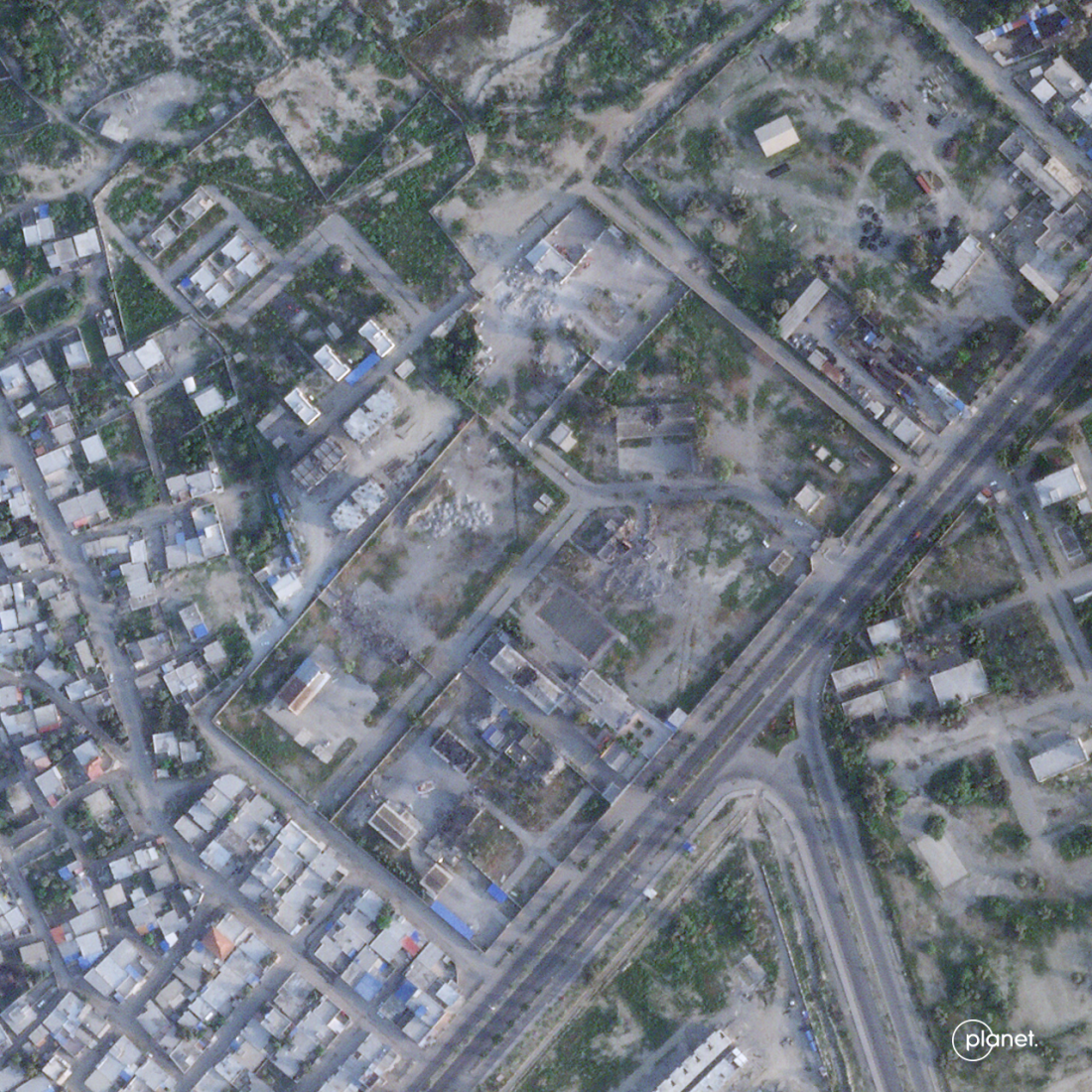
The bombing of an Iranian elementary school that killed some 165 people, many of them schoolgirls, included more targets near the school than has been initially reported, a review of commercial satellite imagery by NPR has found.

The images suggest that the school was hit on Saturday as part of a precision airstrike on a neighboring Iranian military complex — and that it may have been struck as a result of outdated targeting information.

The new images come from the company Planet and are of the city of Minab, located in southeastern Iran. They show that a health clinic and other buildings near the school were also struck. Three independent experts confirmed NPR’s analysis of the additional strike points.

Advertisement

The strike points “look like pretty clean detonation centroids,” said Corey Scher, a postdoctoral researcher at the Conflict Ecology laboratory at Oregon State University.

“These certainly appear like detonation sites,” agreed Scher’s colleague, Oregon State associate professor Jamon Van Den Hoek.

Jeffrey Lewis, a professor at Middlebury College who specializes in satellite imagery, said the imagery was consistent with a precision airstrike.

The images show “very precise targeting,” Lewis told NPR. “Almost all the buildings [in the compound] are hit.”

A satellite image of an Iranian Revolutionary Guard compound taken on March 4.

A satellite image of an Iranian Revolutionary Guard compound taken on March 4, several days after an airstrike destroyed a school on the edge of the compound. The image reveals that half a dozen other buildings in addition to the school were struck.

Planet Labs PBC

Advertisement


hide caption

toggle caption

Planet Labs PBC

Advertisement

Iranian state media said 165 people died in the bombing, which struck a girls’ school. The school was located within less than 100 yards of the perimeter of an Iranian Revolutionary Guard naval base, according to satellite images and publicly available information. The clinic was also located within the base perimeter, although both facilities had been walled off from the base.

Israel has denied involvement. “We are not aware at the moment of any IDF operation in that area,” Israel Defense Forces spokesperson Nadav Shoshani told NPR on Monday. “I don’t know who’s responsible for the bombing.”

At a press conference Wednesday morning, U.S. Defense Secretary Pete Hegseth said that the U.S. is looking into what happened at the school. “All I know, all I can say, is that we’re investigating that,” Hegseth said. “We, of course, never target civilian targets.”

Given Minab’s location in the southeastern part of Iran, Lewis believes it’s more likely the U.S. would have conducted the strike than Israel. As one gets farther south and east in Iran, “a strike is much more likely to be a U.S. strike than an Israeli strike because of the type of munitions and the geographic location,” he said.

Esmail Baghaei, the spokesman for Iran’s Foreign Ministry, called the strike “deliberate” and said that the U.S. and Israel bombed the school in part to tie up Iranian forces in the region with rescue efforts. “To call the attack on the girls school merely a ‘war crime’ does not capture the sheer evil and depravity of such a crime,” he said.

Advertisement

But Lewis said it’s more likely that the strike was the result of an error. Satellite images show that the school and clinic buildings were both once part of the base. The school was separated from the base by a wall between 2013 and 2016. The clinic was walled off between 2022 and 2024.

Lewis believes it’s possible American military planners had not updated their target sets.

“There are thousands of targets across Iran, and so there will be teams in the United States and Israel that are responsible for tracking those targets and updating them,” he said. “It’s possible that the target didn’t get updated.”

The Pentagon did not immediately respond to NPR’s request for additional information about the strike.

NPR’s Arezou Rezvani and NPR’s RAD team contributed to this report.

Advertisement
Continue Reading

News

Mojtaba Khamenei, son of former supreme leader, tipped to become Iran’s next head of state

Published

on

Mojtaba Khamenei, son of former supreme leader, tipped to become Iran’s next head of state

Mojtaba Khamenei, the second son of the assassinated Ali Khamenei, is being heavily tipped to succeed his father as supreme leader of Iran, which would pitch a hardliner into the task of steering the Islamic republic through the most turbulent period in its 48-year history and offer a powerful signal that, for now, it has no intention of changing course.

No official confirmation has been given and the announcement may be delayed until after the funeral of Ali Khamenei, which was on Wednesday postponed.

His son is believed to have been the choice of the Islamic Revolutionary Guard Corps (IRGC), and the Israeli defence minister, Gideon Saar, has warned he will be assassinated.

Ayatollah Seyed Khatani, a member of the Assembly of Experts, the body that chooses the new supreme leader, said the assembly was close to selecting a leader.

Rigid in his anti-western views, Mojtaba Khamenei is not the candidate Donald Trump would have wanted. Marco Rubio, the US secretary of state, said on Tuesday that Iran was run by “religious fanatic lunatics” – and Khamenei’s appointment is hardly likely to dispel that opinion.

Advertisement
‘They were going to attack first’: Trump gives update on Iran – video

The choice of supreme leader is made by the 88-strong Assembly of Experts, who in this case are picking from a field of six possible candidates. His election would be a powerful if unsurprising symbol that the government is not looking to find an accommodation with America.

Trump has said the worst-case scenario would be if Khamenei’s successor was “as bad as the previous person”.

There has been speculation for more than a decade that he would be his father’s successor, which grew when Ebrahim Raisi, the elected president and favourite of Khamenei, was killed in a helicopter crash.

Mojtaba Khamenei was born in 1969 and studied theology after graduating from high school. At the age of 17, he went to serve in the Iran-Iraq war, but it was not until the late 1990s that he came to be recognised as a public figure in his own right.

Advertisement

After the landslide defeat of Khamenei’s preferred candidate, Ali Akbar Nategh Nuri, in the 1997 presidential election, where he won only 25% of the final vote, various conservative Iranian groups realised the need to make changes to their structures and Mojtaba Khamenei was central to that project.

He was also seen as instrumental by reformists in suppressing the protests in 2009 that came after allegations the presidential election had been rigged, with his name chanted in the streets as one of those responsible. Mostafa Tajzadeh, a senior member of Iran’s reformist parties who was imprisoned after the vote, alleged that his and his wife, Fakhr al-Sadat Mohtashamipour’s, legal case was under the direct supervision of Mojtaba Khamenei.

In 2022 he was given the title of ayatollah – essential to his promotion. By then he was a regular figure by his father’s side at political meetings, as well as playing an influential role in the Islamic Republic’s Broadcasting Corporation, the government’s official media outlet often criticised for churning out dull political propaganda that many Iranians reject in favour of overseas satellite channels. He has also played a central role in the administration of his father’s substantial financial empire.

His closest political allies are Ahmad Vahidi, the newly appointed IRGC commander; Hossein Taeb, a former head of the IRGC’s intelligence organisation; and Mohammad Bagher Ghalibaf, the current speaker of the parliament.

His rumoured appointment and its hereditary nature has long been resisted by reformists. The former prime minister Mir Hossein Mousavi, referring to the long history of rumours about Mojtaba Khamenei succeeding his father as leader, wrote in 2022: “News of this conspiracy have been heard for 13 years. If they are not truly pursuing it, why don’t they deny such an intention once and for all?”

Advertisement

The Assembly of Experts, in response, denounced “meaninglessness of doubts” and said the assembly would select only “the most qualified and the most suitable”.

Israel on Tuesday struck the building in the Iranian city of Qom, one of Shia Islam’s main seats of power, where the assembly was scheduled, but the building was empty, according to IRGC-affiliated media.

Continue Reading

News

Video: Senators Question Kristi Noem on ICE Immigration Tactics

Published

on

Video: Senators Question Kristi Noem on ICE Immigration Tactics

new video loaded: Senators Question Kristi Noem on ICE Immigration Tactics

transcript

transcript

Senators Question Kristi Noem on ICE Immigration Tactics

Homeland Security Secretary Kristi Noem repeatedly refused to apologize for suggesting that Alex Pretti and Renee Good, two U.S. citizens shot and killed by agents, were domestic terrorists.

What we’ve seen is a disaster under your leadership, Ms. Noem. A disaster. What we’ve seen is innocent people getting detained that turn out are American citizens. I could talk about the culture that’s been created here. After the killings of Renee Good and Alex Pretti, when I spoke to Alex’s parents, they told me that you calling him a domestic terrorist — this was directly from them — the day after he was killed, a nurse in our V.A., Alex — one of the most hurtful things they could ever imagine was said by you about their son. Do you have anything you want to say to Alex Pretti’s parents? Ma’am, I did not call him a domestic terrorist. I said It appeared to be an incident of — I think the parents saw it for what it was. In a hearing — recent hearing before the HSGAC committee, C.B.P. and ICE officials testified under oath that their agencies did not inform you that Pretti was a domestic terrorist — during that hearing, stated during that hearing, I was getting reports from the ground, from agents at the scene, and I would say that it was a chaotic scene. How did you think that calling them domestic terrorists at that scene was somehow going to calm the situation? The fact that you can’t admit to a mistake, which looks like under investigation, it’s going to prove that Ms. Good and Mr. Pretti probably should not have been shot in the face and in the back. Law enforcement needs to learn from that. You don’t protect them by not looking after the facts.

Advertisement
Homeland Security Secretary Kristi Noem repeatedly refused to apologize for suggesting that Alex Pretti and Renee Good, two U.S. citizens shot and killed by agents, were domestic terrorists.

By Christina Kelso and Jackeline Luna

March 3, 2026

Continue Reading

Trending