News
Katie Ledecky tells NPR about her plans for the Paris Olympics — and L.A. in 2028


Katie Ledecky reacts after setting a world record and winning the Woman’s 1500m Final at the FINA Swimming World Cup in 2022.
Gregory Shamus/Getty Images
hide caption
toggle caption
Gregory Shamus/Getty Images

Katie Ledecky reacts after setting a world record and winning the Woman’s 1500m Final at the FINA Swimming World Cup in 2022.
Gregory Shamus/Getty Images
Katie Ledecky is used to getting medals.
She has 10 Olympic medals — seven of which are gold — and she has 26 world championship medals — 21 of those are gold.
All of that hardware has helped her earn the undisputed title as the greatest female swimmer of all time.
But on Friday, she will receive a different kind of medal: the Presidential Medal of Freedom, the highest award a civilian can get from the U.S. government.
Ledecky spoke to All Things Considered host Juana Summers about what the medal means to her, how she is thinking about the Paris Olympics in July-August, and why she has no plans to retire after this summer.
Juana Summers will be in Paris covering the Olympics for NPR. You can follow all her reporting on All Things Considered.
Ledecky with two gold and two silver medals at the Tokyo Olympics in 2021.
Laurence Griffiths/Getty Images
hide caption
toggle caption
Laurence Griffiths/Getty Images
This interview has been lightly edited for length and clarity.
Interview highlights
Juana Summers: Alright Katie, so this medal — does this one go in the same trophy cases as your Olympic medals? What do you think you’re going to do with it?
Katie Ledecky: Oh, I have not even thought of that yet! This is definitely one that’s very meaningful and very unique. And never in my wildest dreams would I have imagined I would be receiving this recognition. So I’m very, very honored.
Summers: Let’s look ahead if we can, because this could be another incredibly big year for you. The Summer Olympics start in just a few months in Paris — how are you feeling in the pool these days? Do you feel like you’re ready?
Ledecky: I’m ready. We have our Olympic trials in about a month now. So that’s what I’m gearing up for, I have one more meet before then. So everything is tracking well, my training is going well. And I’m really excited for hopefully the opportunity to represent the U.S. at a fourth Olympics. I can’t believe that I get this opportunity and it’s gonna be a great summer and I’m excited.
Summers: If the trials go your way, and you do indeed get to represent the U.S. at your fourth Olympic Games, do you know which event you will be most excited for?
Ledecky: Oh, well, I hope I’ll be competing in multiple events. And each one is special in a different way. The 800 free has always been my favorite and the event that I swam at my first Olympics in 2012, which I won gold at at age 15. So that’s one that I hold a special place for in my heart. But I love all my events. And I’m looking forward to each of the challenges that I’ll have with each of the races.
Summers: If you head to Paris, do you think they will be your last? Do you think we’ll see you come back for the 2028 games in Los Angeles?
Ledecky: I take things year by year, but right now, I definitely could see myself competing in 2028, with it being a home Olympics. It’s something that’s very unique. It’s something that not every Olympic athlete gets. And so I definitely know I’m not retiring after this summer and 2028 is very appealing. So I think, at this point, I want to be there, I want to compete in at least one event, maybe more. But again, plans can change. It’s a long ways away, my focus is solely on this summer in Paris at this moment.
Ledecky in the Women’s 800m Freestyle Final in Tokyo in 2021.
Tom Pennington/Getty Images
hide caption
toggle caption
Tom Pennington/Getty Images
Summers: You know, I have to say you have been such an inspiration for so many young women athletes, whether they are swimmers or competitors in other sports, just due to your dominance, the number of medals you’ve amassed, your longevity in your sport, and now receiving the Presidential Medal of Freedom, which is one of the highest awards a civilian can get in the United States. How do you think about your career, what you represent, what you show to a new generation of athletes, particularly women athletes?
Ledecky: Oh, thank you for the kind words. I tried to give as much as I can. And I hope that young girls look up to me and can see the work that I’ve put in and the results that I’ve had and what I’ve tried to accomplish in and out of the pool. I hope they see that and are inspired by it, whether they’re a swimmer or not.
I think, you know, I’ve learned a lot through the sport. And through this over a decade-long journey I’ve had at the international level, I’ve learned a lot about goal setting and dedication and resilience.
Summers: Is there a lesson or a story about resilience you would share for the folks who look to you as a role model?
Ledecky: Sure, I think one story that I think a lot of Olympic athletes would tell you is about our experience in 2020 and 2021 and the Olympics being postponed a year. In swimming, the Olympics is the pinnacle of our sport and we build four-year plans to peak at the Olympics and to be our very best. And so to have that pushed a year and to be kind of living under uncertain circumstances, and not knowing whether the Olympics would actually happen, I think took a lot of resilience for all of us, and we all had to adapt and train in backyard pools and do weightlifting in our homes or apartments and all those things.
So I learned a lot about myself during that time, learned that you can adapt and you can adjust to change. And certainly, we weren’t going through the worst of it during that time — I felt very lucky and fortunate to have a goal and something to work towards with the Olympics. I know that so many people during that time were suffering a lot more than we were. I think having those experiences have made me tougher, and really taught me that I’m able to adapt when things don’t go the way that I anticipate they’ll go.
Summers: Katie, whether Paris is your last Olympics, or you go to L.A., or even beyond, eventually, you will stop swimming competitively. What do you think about when you think about that future? Is that something you don’t even consider right now?
Ledecky: I haven’t thought about it too much. But for me, when I think of swimming, and I think of this career that I’ve had, I think of all the joy that I’ve had in the sport, and everything that I’ve been able to learn through the sport, all the people that I’ve gotten to meet through the sport, all the places that I’ve gotten to go through competitive swimming. And I think because of all that joy that I’ve experienced in the sport, it’s something that I’m never going to stop doing.
Of course, some day my competitive career will come to an end and I’m not going to be looking at the clock or having a coach get my times every every set. But I think I’ll always find myself going back to the pool and swimming some laps or splashing around. And it’s a place that I find so much joy.
As we get into the summer months, I hope that a lot of other people can find that joy and learn how to swim. It’s such an important life skill. And, in my view, the greatest sport on earth, and something that you can do for the rest of your life. I hope that I’ll be swimming into my 90s — I have a 98-year-old grandma, so I’m lucky to have some good genes there, and I hope that I’ll be able to stay healthy and happy, and happy in the pool and happy in the water. It’s definitely my happy place.


It’s a tiny restaurant in the Little Morocco neighborhood of Queens. But throughout this World Cup, it has swelled with pride, song and beating drums as the Moroccan national team has pushed its way deep into soccer’s biggest international tournament.
It’s a scene that has been echoed across the United States — in a multitude of languages and colors, as soccer fans from all over the world, many now making their homes in America, have packed bars, restaurants, living rooms and concert venues.
No matter where they came from or where they gathered, they all sought the same experience: a chance to watch their nations compete while surrounded by others who share passion and pride for the country they or their ancestors once called home.
Together, these fans have brought places throughout the United States to life.
Bosnia vs Qatar
Bosnians Rejoice in St. Louis, Mo.
Thousands of Bosnians settled in the St. Louis area during the 1990s, as war and genocide ripped their communities apart. The city is now home to more than 60,000 Bosnians, scores of whom gathered at Bevo Caffe Lounge on June 24 to watch Bosnia and Herzegovina play.
This is only the second time the team has qualified for the World Cup — and the first time it has reached the knockout round. Its reward: Meeting one of the hosts, the United States, on Wednesday in Santa Clara, Calif.
Haiti vs Brazil
In Miami, Little Haiti Comes to Life
More than 100,000 residents of Miami-Dade County, Fla., are of Haitian descent, and the Little Haiti neighborhood of Miami has long been their central hub.
During the World Cup, fans of Haiti’s team have flocked to the neighborhood, packing restaurants, bars and even parking lots to watch the action. Many have come wearing jerseys, while others simply dressed in the red and blue of the Haitian flag.
Haiti ended up in a tough group, losing all of its matches, including a 3-0 defeat to Brazil on June 19. But for some fans, the fact that the team had qualified at all was its one victory. Before this year, Haiti had played in only one other World Cup, in 1974.
Morocco
Moroccan Joy in Queens, N.Y.
Touria Lamtahaf worked as a chef four years ago at a restaurant in Astoria, Queens, in the heart of an enclave on Steinway Avenue known as Little Morocco.
After the Moroccan team upset Portugal in a World Cup quarterfinal, Ms. Lamtahaf remembers hundreds of Morocco fans surging onto Steinway Avenue, setting off flares and red smoke bombs to celebrate.
“It was a good memory for all of us,” she said. “We were very proud. You just needed something to be happy. After Covid, this was amazing.”
The neighborhood has long been a hub for immigrant communities from North African countries, including Egypt, and is also home to a large Greek community.
Many settled in Astoria decades ago, drawn by low rents and a neighborhood that could feel calm compared with other bustling parts of New York. Ms. Lamtahaf, who moved to the United States in 2007, said that she originally lived in Ridgewood neighborhood of Queens, but word of mouth led her to Astoria, where she now runs her own restaurant.
The restaurant, Dar Lbahja, is just a few blocks from where she used to work. Ms. Lamtahaf said that when she opened it just over a year ago, she wanted to create a space where people could not just eat, but also gather to watch soccer, like she did growing up with her father in Morocco.
“It was only one TV, and we had to watch with him,” Ms. Lamtahaf said. “So we grew up with the soccer.”
During this tournament, Morocco fans have packed into Dar Lbahja on game days, with many in Morocco’s red jersey, and others in the team’s white kit. They were rewarded with a berth in the knockout stages, and then again on Monday when their team won a tense matchup with the Netherlands in a penalty shootout.
Fans took to the streets in jubilant celebration, just as they did in 2022.
Kacem Ettahali, 19, of Houston, is spending the summer in New York for an internship and watched the first Morocco game of the tournament on June 13 at the restaurant.
After the team scored, Mr. Ettahali received a flurry of texts from his friends. “When they think of Morocco, they think of me,” he said.
He wasn’t the only Texan in the joint. Jori and Ahmed Lamghari traveled from the Dallas area because Ms. Lamghari, 43, wanted her husband to experience the city during the tournament. “I wanted him to get the New York World Cup vibe,” she said.
Mr. Lamghari, 33, said that “Moroccans make their own ambience,” adding, “We want to live it.”
France vs Norway
In Chicago, Hope for Another French Title
The French love a good outdoor drinking venue. For the country’s June 26 match against the rowing Norwegians, fans gathered on the outdoor patio of Soccer House in Chicago, a city whose deep French roots stretch back to the colonial days.
France is widely considered a tournament favorite, potentially giving its fans several more opportunities to celebrate.
Argentina vs Austria
In Provo, Utah, Messi Mania Is a Family Affair
Sporting the colors is intergenerational in Provo, Utah. Luis and Lidia Peve moved there 25 years ago, following a son who emigrated first, and decorated their home with small Argentina flags ahead of the team’s match against Austria on June 22.
As game time approached, about a dozen members of the family painted their faces with the sky blue and white of Argentina’s flag. Together, they sat around the TV with their eyes trained particularly on Lionel Messi, the team’s star, who is likely playing in his last World Cup.
He finished the game with three goals — a hat trick — and a new generation of fans in the Peve household.
D.R. Congo vs Colombia
In Silver Spring, Md., a Happy Return to the World Cup
Congolese fans in Silver Spring, Md., belted out their national anthem in a veterans hall, hands over their hearts, ahead of the country’s match against Colombia on June 23.
Refugee aid programs have resettled many Congolese families in the suburbs north of the nation’s capital, as their nation has been rived by war, unrest and now an Ebola outbreak.
The Congolese side lost its match to Colombia on that day. But the team managed to advance out of the group stage for the first time in its history. Before this World Cup, the country had been to the tournament only once, in 1974, when it lost all of its matches.
Portugal
A Block Party of Red and Green in Rhode Island
The go-to drink special last weekend in East Providence, R.I., was a vodka cocktail called the CR7. And you’d be hard-pressed to find a resident of the region who didn’t know it was in honor of Cristiano Ronaldo, the 41-year-old Portuguese striker who is playing in his sixth — and likely last — World Cup, wearing his famous No. 7.
The drink was served at the Portuguese restaurant O Dinis, a neighborhood staple. A large number of Portuguese immigrants settled in this corner of Rhode Island and nearby Massachusetts during the Industrial Revolution, finding work in the textile, whaling and manufacturing industries.
“Life is beautiful in Portugal,” said Natalia Paiva-Neves, who moved to the United States when she was 16 and now runs O Dinis, which was founded by her father. “But at the time, there was a lot of poverty, because there were no jobs, and there was no tourism. There was none of that stuff going on, so you had to find a means to provide for your family.”
After pre-gaming over CR7s, along with beer, wine, meats and shrimp, some fans walked from O Dinis to a watch party that stretched for two blocks, from a screen in the parking lot of nearby Cafe Alma to Campino’s, another Portuguese restaurant.
“It’s just a great feeling,” said Kevin Matos, the cafe’s owner. “Everybody’s enjoying themselves. It doesn’t matter the result on the screen.”
Some fans might not have agreed, though a scoreless draw sent both teams through to the knockout stage.
The block party, with hundreds of fans lining the streets, was in part the brainchild of East Providence’s mayor, Roberto DaSilva. “We had no idea that it’d be this many people showing up,” he said. “We thought we got a good crowd, but this is much more than than I ever expected.”
Some had to stand on their tiptoes see the screens. Others packed into shops to sit down and watch the game, while others pulled out their phones as they stood in line to buy beer and snacks from food trucks and vendors.
Mexico vs South Korea
A Backyard Party in a Texas Border Town
Roughly four out of five residents in the Texas border town of Weslaco are of Mexican descent, making the country’s June 18 match in Guadalajara feel like a home game.
For a youth soccer team, it was a chance to watch their heroes take another step toward the knockout rounds.
Under the night sky, they watched anxiously, breaking into dance after Mexico won.
Uruguay vs Spain
Elimination Brings Anguish to Uruguay Fans in Miami
Uruguay needed this one. The nation that hosted the first World Cup in 1930, winning the tournament that year and again in 1950, was on the brink of elimination last week against Spain — considered one of the strongest teams in the tournament.
Fans at Doña Paulina, a Uruguayan restaurant in Miami, anxiously watched their team fight for a chance to stay in the competition.
It wasn’t to be. Spain emerged victorious, 1-0.
Japan vs Tunisia
In San Diego, Fans Cheer the Samurai Blue
Their team is called the Samurai Blue, and the many Japanese fans living in Southern California — a diaspora that first settled there in the late 19th century as farmers and fishermen, and endured harsh incarceration during World War II — made their blue kits prominent as the team played its way through a so-called group of death.
They eventually earned a second-place finish to reach the round of 32. The result was a Monday matchup with Brazil, in which Japan fell 2-1.
Iran
In Los Angeles, Mixed Feelings About the Iranian Team
For Americans from Iran, supporting the Iranian national team has been a thorny issue.
Some have refused to even watch the matches. To them, the team feels like an extension of the government, whose persecution drove many to flee the country. It’s especially difficult as their new home, the United States, and their old home are at war.
“That’s a little conflict for me,” said Roozbeh Farahanipour, who helped lead an Iranian student uprising in 1999 and fled the country the following year, seeking political asylum in America. “I am a little different from other fans, because no way I can cheer or stand for either Islamic Republic of Iran’s national anthem, nor for the flags.”
He added, “I am American now. My flag is the U.S. flag.”
Others of Iranian descent have eagerly backed the national team and bristled at its travails, especially in Southern California, which was host to the team’s first match and is home to the largest diaspora of Iranians outside Iran. Many live, shop and eat in the Westwood area of Los Angeles, where an enclave has become known as Tehrangeles, after the Iranian capital.
Still, compared with those of other diasporas, gatherings to back the Iranian team have seemed smaller and more muted. Only a handful of fans gathered at Attari Sandwich Shop, a Persian eatery in the heart of Tehrangeles, during Iran’s June 21 match against Belgium at SoFi Stadium in nearby Inglewood, Calif.
Inside the restaurant, some fans anxiously watched the game over kebab plates and pastries. Others outside proudly waved their flags on the neighborhood thoroughfare, Westwood Boulevard.
Bijan Bahmani, who lives in Los Angeles, took his 2-year-old son to Iran’s match against New Zealand on June 15 in Inglewood with his father-in-law. While he opposes the Iranian regime and hopes for democracy one day, Mr. Bahmani said he still wanted to cheer to the national team.
“It’s complicated, because we have feelings a lot of different ways, with the complicated politics,” said Mr. Bahmani, 41, who moved to the United States in 2001. “I am definitely rooting for Iran because they represent Iran, not the government.”
Even as he took in the game with this family, Mr. Bahmani said the war was on his mind.
“I hope this peace lasts,” he said, referring to the current fragile cease-fire. “Every day, we’re worried.”
Cape Verde vs Saudi Arabia
Celebrating the Small but Mighty in New Bedford, Mass.
Every tournament has a surprise underdog. This year, it’s Cape Verde, a small island nation off the western coast of Africa. Its team had an opportunity on Friday to become the smallest country by population ever to advance to a World Cup knockout round.
The pivotal match drew people of Cape Verdean descent to a veterans hall in New Bedford, Mass., about an hour drive south of Boston. Like Portugal and Brazil, whaling and related industries brought a sizable population of immigrants from Cape Verde to southeastern New England.
A scoreless tie with Saudi Arabia was all it took for tears and roars to erupt in the veterans hall. Their team would keep playing, for at least one more game.
Brazil vs Haiti
A Brazilian Dance Party Near Boston
Massachusetts has a long history of Portuguese-speaking settlers, making Brazilians feel welcome in the Boston area. That’s especially the case in the southwest suburb of Framingham, Mass., where the Brazilian-born population rivals that of Boston.
They packed into Tropical Cafe, a Brazilian restaurant in Framingham, gathering around hightop tables as their team played Haiti on June 19. After Brazil secured a 3-0 win, fans made the restaurant an impromptu dance club to celebrate.
Germany vs Curaçao
In Texas, German Fans Root, and Eat, to Honor a Neighbor
Bratwurst and steins of beer accompanied the match at Bavarian Grill in Plano, Texas, a Dallas suburb, as Germany played Curaçao in Houston on June 14. But perhaps the city’s most important fan of the German team was not there.
Jürgen Mahneke, who was born in Braunschweig, Germany, immigrated to the United States in 1984, and worked in hotels across the country before settling in Plano.
He opened the restaurant in 1993, and died at age 67 on June 10, a day before the World Cup began.
His restaurant went on with the planned festivities. One of the managers said Mr. Mahneke would have wanted them to. His team won its opener, 7-1, but went home on Monday, falling to Paraguay in a heartbreaking penalty shootout — the opposite of Morocco’s elating win hours later.
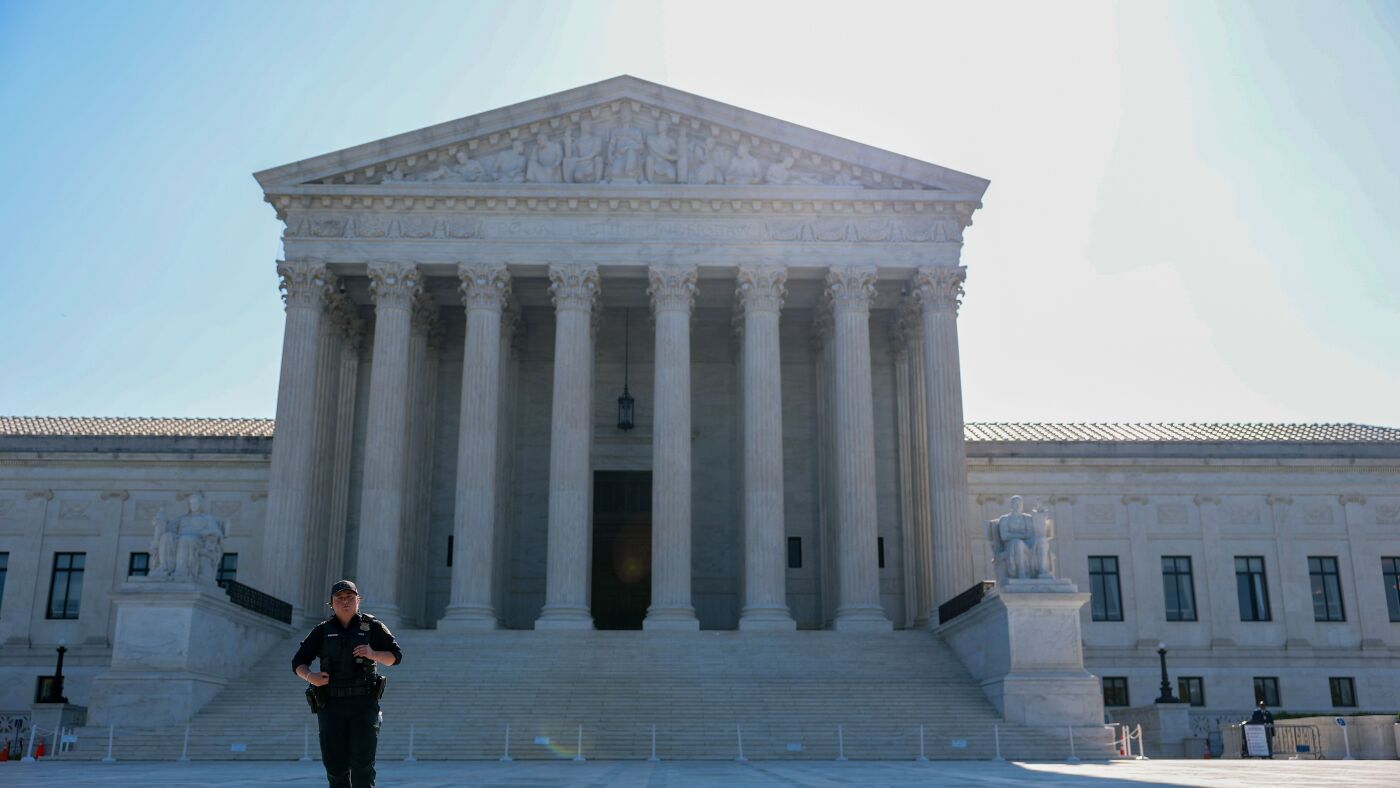
The U.S. Supreme Court
Tasos Katopodis/Getty Images
hide caption
toggle caption
Tasos Katopodis/Getty Images
The Supreme Court Tuesday upheld the long-established right of children born on U.S. soil to automatic American citizenship, regardless of their parents’ immigration status. In so doing, the court rejected President Trump’s most aggressive attempt to limit immigration in the United States.
Writing for the court majority, Chief Justice John Roberts traced birthright citizenship back to the founding of the nation. Just as the colonists demanded “the rights of Englishmen” more than 250 years ago, he said, Congress, after the Civil War, amended the Constitution to specify automatic citizenship for any child born on U.S. soil.
“Citizenship then and now was the right to have rights”—and the framers of the 14th amendment extended that promise to every free born person in this land. He concluded: “We keep that promise today.”
The vote was 6-to-3, depending on how you count it. Altogether, five justices signed on to the Roberts’ majority opinion. A sixth, Justice Brett Kavanaugh, agreed only that federal legislation enacted in the 1950s grants automatic citizenship for children born in the U.S.
Justice Clarence Thomas wrote the lead dissent, a 91-page opus that agreed with Trump’s assertion that the 14th amendment only applied to former slaves and their descendants. The Thomas dissent added ominously that he “was not sure that “today’s opinion will stand the test of time.” The dissent was joined by Justice Neil Gorsuch, with Justice Samuel Alito writing a separate dissent.
Justice Ketanji Brown Jackson, who, like Thomas is African American, responded to some of the themes in the Thomas dissent.
“Despite his longstanding endorsement of a colorblind society,” she wrote, “Justice Thomas now surprisingly suggests that the citizenship clause was a race-conscious remedial measure relating only to freed slaves.”
Cecillia Wang, legal director of the ACLU, who successfully argued the case at the Supreme Court, said President’s Trump failed attempt to limit birthright citizenship was transparent.
“A majority of the court saw through what the president was trying to do in spinning birthright citizenship as something that can flex and retract and expand depending on what the administration in power thinks about immigration policy,” she said.
Wang sees birthright citizenship as “much more fundamental than that.”
“It is part of how our country rejected caste distinctions and championed freedom and equality,” she said.
Yale law professor Akhil Amar called the court’s opinion a classic example of the court sticking to the original meaning of the Constitution. The text of the 14th Amendment, he said, “is about the child. It doesn’t say anything about parents.”
University of Virginia law professor Amanda Frost, however, was surprised and saddened that the court was so closely divided.
“The very length of the opinion,” she told NPR, plus “the fact that you had four justices say the Constitution does not require near universal birthright citizenship, which had been the understanding, that suggests that this is a fringe argument that the Trump administration has succeeded in moving into the mainstream, even though it has not succeeded in the end of the result.”
The issues in the birthright case focused in large part on the longstanding, and as of Tuesday, still standing, meaning of the 14th Amendment, which was enacted after the Civil War. It guarantees birthright citizenship to almost all persons born or naturalized in the United States. Chief Justice Roberts pointedly said the only exceptions written into the amendment were for certain Indian tribes, which were not subject to the laws of the United States at the time, and the children of foreign diplomats. That understanding was so well accepted that even in World War II, when Japanese citizens were confined to internment camps, their children, born in those camps, were automatically deemed to be American Citizens.
The Supreme Court’s decision Tuesday was the second time the justices have upheld birthright citizenship. The court’s previous decision came in 1898 in the case of Wong Kim Ark, born in the U.S. to Chinese parents. His great grandson, Norman Wong, issued a statement today saying, “My great grandfather, Wong Kim Ark, never set out to become a symbol. He was one man, only a cook, and yet he stood up for what was right, and I believe that it has made a difference. As a result, he stood up for the rights of all of us Americans – it just so happens that I am related to him. Today’s ruling shows that his victory remains as important now as it was in 1898.”
The high court also issued opinions in two other cases on Tuesday. In a 6-to-3, ideologically divided vote, the court upheld state laws that prevent transgender athletes from playing on women’s sports teams. Writing for the conservative majority, Justice Brett Kavanaugh said that the laws violate neither federal statutes nor the 14th Amendment. States, he said, have a legitimate interest in protecting the safety of sports, which he suggested could be compromised if transgender girls or women are allowed to play on female teams. Similarly, he said transgender athletes could also compromise fairness in athletic competition.
Sitting in the court chambers Tuesday when Kavanaugh summarized his opinion were not only his wife and mother, but his two daughters, whose athletic teams their father has long coached.
Justice Sonia Sotomayor, joined by her liberal colleagues, issued a partial dissent. She agreed with the majority that the benefits of sports are “immense,” but she wrote that these laws unconstitutionally deny transgender athletes the opportunity to play with their peers.
In a third ideologically divided case Tuesday, the Court struck down decades-long limits on the amount of money political parties can spend on candidates. The limits were challenged by the Republican National Committee. The decision may well increase by millions of dollars the amount of money that will pour into campaigns.

Rep. Thomas Kean Jr., R-N.J., arrives at the U.S. Capitol with his wife Rhonda Kean on June 30.
Anna Moneymaker/Getty Images
hide caption
toggle caption
Anna Moneymaker/Getty Images
New Jersey Republican Thomas Kean Jr. said it was struggles with depression that kept him away from Congress for nearly four months with no explanation to his constituents.
Kean last voted on March 5th, missing numerous votes and other appearances on Capitol Hill since. In April, House Speaker Mike Johnson told reporters he had spoken to Kean and that he was dealing with an undisclosed medical issue. Kean was not spotted until recently at his New Jersey home.
Speaking from the House floor on Tuesday, the second term lawmaker said he had checked into a hospital for testing several months ago after health concerns, and was subsequently diagnosed with depression.
“Talking about myself has never come naturally,” Kean said. “But I believe that I owe an explanation to the people of New Jersey’s seventh district, to my colleagues in this chamber and to the American people for my absence.”
Kean said he originally did not think his diagnosis would result in a long-term absence. Doctors recommended he remain in the hospital to address the illness, and it was his fastest route to recovery, he said.
“It is physical. It is emotional,” he said. “And until you experience it yourself, it is difficult to fully understand how powerful this illness could be.”
Kean said he miscalculated how long he would be away, estimating it would be a matter of weeks. However, he said like the roughly 48 million Americans who have battled the illness, he learned there is no timeline for recovery.
“I am grateful that I accepted help,” Kean said. “Today I stand before you healthier, stronger and excited to return to the work that I love.”
Kean’s absence proved a struggle for House Republicans, who contend with a razor thin majority to pass party priorities. For weeks, Kean and his office declined to share additional details on why he was away, feeding rumors and speculation and raising interest in a member known for his privacy.
Despite his absence, Kean won the GOP primary earlier this month to defend his seat in Congress in this fall’s midterm elections. He will face Democrat Rebecca Bennett, a former U.S. Navy helicopter pilot and healthcare executive.
Bennett has targeted Kean’s absence in her campaign. Democrats have said Kean’s 7th congressional district is a top target to flip in their pursuit of taking back the majority.
“Tom Kean Junior, wherever you are, you have failed this district,” Bennett told supporters at an event last week.
In a statement after Kean’s remarks on Tuesday, Bennett said she was relieved he was well and wished him good health.
“But let’s be clear: I got into this race because Tom Kean Jr. was failing our community long before this absence,” she said.
Kean is not the first member of Congress in recent years to speak publicly about their struggles with depression. Sen. John Fetterman, D-Pa., took leave from the Capitol in 2023 after he was diagnosed with the illness. In Fetterman’s case, his office announced the news within days of his starting treatment.
Kean was elected to Congress for his first term beginning in 2023, flipping a district that was represented by former Democratic Congressman Tom Malinowski.
He comes from a long line of politicians: His father, former New Jersey Gov. Thomas Kean Sr., was appointed by former President George W. Bush as a chair of the 9/11 Commission. Kean’s grandfather and great grandfather also served in Congress.
-

 Arizona2 minutes ago
Proposed data centers, ICE facility create mixed emotions in rural Arizona town
-

 Arkansas5 minutes ago
Central Arkansas bike trail breaks ground in Cabot – The Arkansas Leader
-

 California10 minutes ago
California bill to block registered sex offenders from local office rejected by Senate committee
-

 Colorado17 minutes ago
Where to watch Miami Marlins vs Colorado Rockies: TV channel, start time, streaming for July 1
-

 Connecticut20 minutes ago
Lamont signs law in Norwich to stop pay to contractors violating wages
-

 Delaware25 minutes ago
Delaware has gotten these 15 verbal commitments from football recruits
-
 Florida32 minutes ago
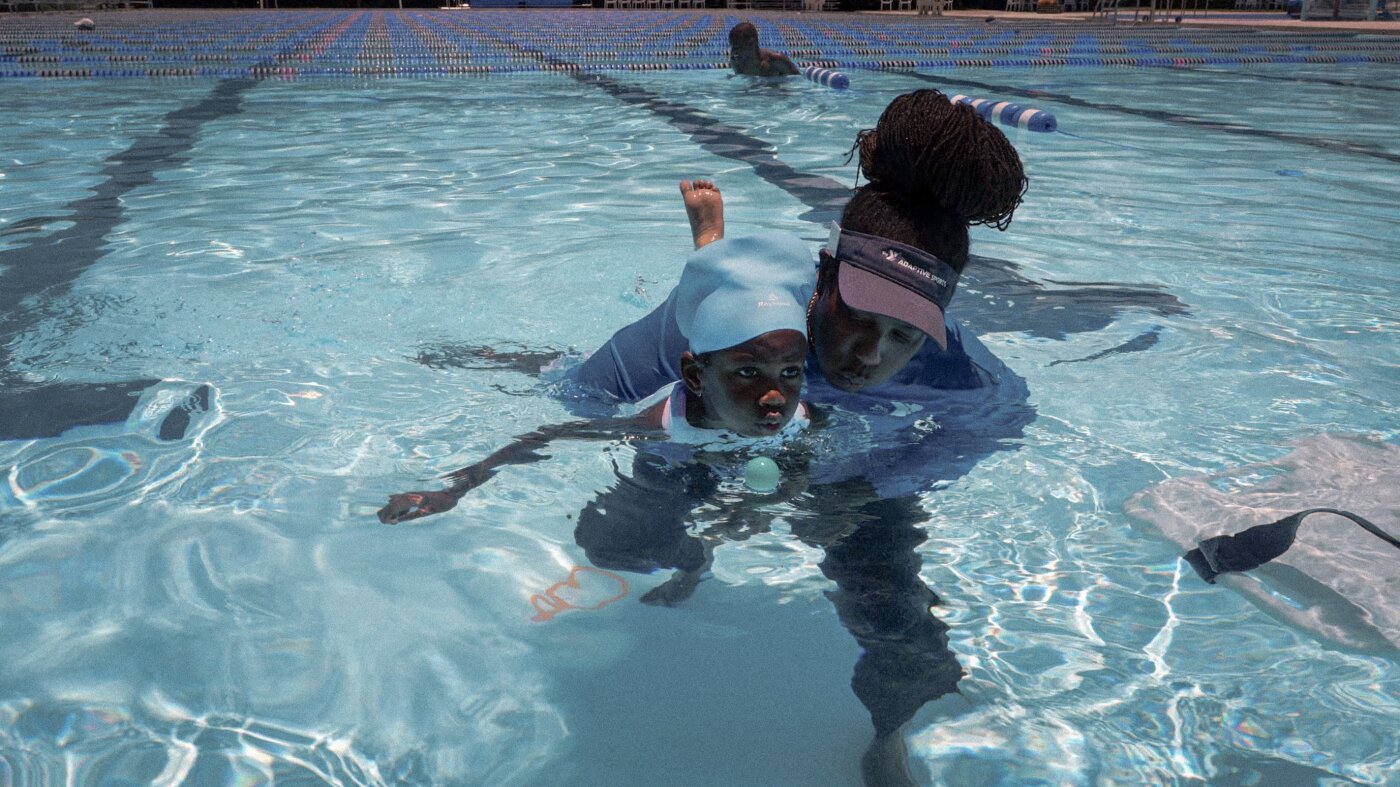
Kids with autism are prone to drowning. Florida is trying to prevent that
-

 Georgia35 minutes ago
Bradenton man wanted for murder is found hiding in Georgia

