Connect with us

News

Italy’s biggest refinery in crisis three years after sale by Russia’s Lukoil

Published

on

Italy’s biggest refinery in crisis three years after sale by Russia’s Lukoil

Italy’s largest refinery, which was sold by Moscow-based Lukoil after EU sanctions cut it off from Russian oil, is in crisis as the Greek billionaire who is now its majority investor and commodity giant Trafigura clash over the terms of a crude supply arrangement.

GOI Energy bought the ISAB plant in the Sicilian town of Priolo in 2023 with support from Trafigura in a last-minute deal that Franco-Israeli mining tycoon Beny Steinmetz helped arrange. The sale was approved by the Italian government but shrouded in mystery, with neither the buyer nor Rome disclosing the identity of its shareholders.

Documents seen by the Financial Times show that the largest investor in GOI’s controlling fund, Argus, at the time of the transaction was George Economou, a tycoon whose TMS Tankers was one of the biggest seaborne transporters of Russian oil following the 2022 full-blown invasion of Ukraine.

GOI and Trafigura gazumped a bid by rival trading house Vitol and US private equity group Crossbridge Energy Partners, and secured the deal despite opposition from the US government.

Economou invested in the refinery alongside Steinmetz and former Trafigura executive Michael Bobrov, according to the documents. Relations between the three men have since soured over money and the terms of a 10-year oil supply and marketing agreement signed with Trafigura, according to six people familiar with the situation.

Advertisement

Economou has argued that Trafigura is to blame for the refinery’s problems, complaining in meetings that the supply and offtake deal is overly favourable to the trading group, allowing it to protect its profits while the facility operates at a loss. Trafigura has said the refinery requires more investment to upgrade operations amid difficult market conditions.

Increased refinery operating costs resulting from higher prices of gas and carbon offsets are weighing on margins across Europe, making it difficult for all but the most efficient refineries to break even.

Moscow-based Lukoil sold the refinery in Sicily after EU sanctions cut it off from Russian oil © Natalia Kolesnikova/AFP/Getty Images

The infighting could threaten the survival of a facility that provides a fifth of Italy’s refining capacity, employs about 1,000 people directly and supports another 8,500 jobs in the local area.

It has also led to criticism of the Italian government, which approved the sale to GOI even though its largest investors had no experience of owning or operating refineries.

“These capital-intensive businesses require heavy investments, but they suffer volatile cash flow so the financial soundness of the buyer is a key element,” said Alan Gelder, vice-president of refining, chemicals and oil markets at Wood Mackenzie.

Advertisement

“In hindsight one could say the Italian government should have chosen another alternative than selling to [GOI Energy].”

Under the terms of the deal, GOI acquired the refinery while Trafigura agreed to provide working capital to fund its operations and, according to two people familiar with the agreement, paid GOI an upfront €30mn fee to supply the plant with crude oil and sell the refined product it produces for 10 years.

“Trafigura’s commercial arrangements with ISAB are at arm’s length and on market-based terms, in line with similar commercial agreements around the world,” Trafigura said in a statement to the FT.

“In difficult market conditions, the Priolo refinery needs substantial performance improvements and further investment to remain competitive. We have offered our assistance to ISAB and the Italian government to help secure a sustainable future for this important asset.”

ISAB lodged an application this year with Sicilian authorities to restructure the business through an out-of-court “negotiated settlement of a business crisis”.

Advertisement

Economou hopes to use the process to force a renegotiation or cancellation of the contract with Trafigura, according to two people familiar with the matter. Economou has also considered selling the refinery but the supply agreement has proved a major sticking point in conversations with prospective buyers, according to people familiar with the conversations.

At the time of the acquisition, Economou was presented to the Italian government as the ultimate beneficial owner of a Cypriot entity that held 52 per cent of the Argus Fund subunit, which controlled 70 per cent of GOI, according to the documents seen by the FT.

The rest of Argus Fund subunit was owned by an entity controlled by two foundations whose beneficiaries included Steinmetz’s children, the documents show.

Steinmetz’s connection to the refinery and his role in negotiating the deal with Italian authorities was revealed by the FT in 2023. 

In 2023 Economou decided to loan money to GOI Energy so it could repay an outstanding debt with Lukoil. In January last year, after GOI failed to repay the loan, he opted to convert it into equity and dilute the other shareholders, the documents show. The 71-year-old now controls 99 per cent of GOI’s shares through a complex fund structure.

Advertisement

GOI paid about €180mn for the plant, significantly outbidding Vitol and Crossbridge, which had offered roughly €55mn, according to two people familiar with the terms of the bids. They estimate that it also paid several hundred million euros for the oil on site at the time of the acquisition.

The Italian government approved the investment under the so-called gold power rule, which gives it the right to veto deals or impose requirements over the purchase of strategic assets.

At the time, Italian officials said they were reassured by the involvement of Trafigura and Bobrov, who is also an investor, alongside Steinmetz’s son-in-law, in Israel’s largest refinery. GOI had also offered reassurances about maintaining jobs and production levels, they said at the time.

News

Map: 4.9-Magnitude Earthquake Shakes Louisiana

Published

on

Map: 4.9-Magnitude Earthquake Shakes Louisiana

Note: Map shows the area with a shake intensity of 4 or greater, which U.S.G.S. defines as “light,” though the earthquake may be felt outside the areas shown.  All times on the map are Central time. The New York Times

A light, 4.9-magnitude earthquake struck in Louisiana on Thursday, according to the United States Geological Survey.

The temblor happened at 5:30 a.m. Central time about 6 miles west of Edgefield, La., data from the agency shows.

U.S.G.S. data earlier reported that the magnitude was 4.4.

As seismologists review available data, they may revise the earthquake’s reported magnitude. Additional information collected about the earthquake may also prompt U.S.G.S. scientists to update the shake-severity map.

Advertisement

Source: United States Geological Survey | Notes: Shaking categories are based on the Modified Mercalli Intensity scale. When aftershock data is available, the corresponding maps and charts include earthquakes within 100 miles and seven days of the initial quake. All times above are Central time. Shake data is as of Thursday, March 5 at 8:40 a.m. Eastern. Aftershocks data is as of Thursday, March 5 at 10:46 a.m. Eastern.

Continue Reading

News

Donald Trump has no ‘phase two’ plan for Iran war, says US senator

Published

on

Donald Trump has no ‘phase two’ plan for Iran war, says US senator

To read this article for free

Register now

Once registered, you can:

• Read free articles
• Get our Editor’s Digest and other newsletters
• Follow topics and set up personalised events
• Access Alphaville: our popular markets and finance blog

Continue Reading

News

Man accused of plot to assassinate Trump testifies Iran pressured him, says Biden and Haley were other possible targets

Published

on

Man accused of plot to assassinate Trump testifies Iran pressured him, says Biden and Haley were other possible targets

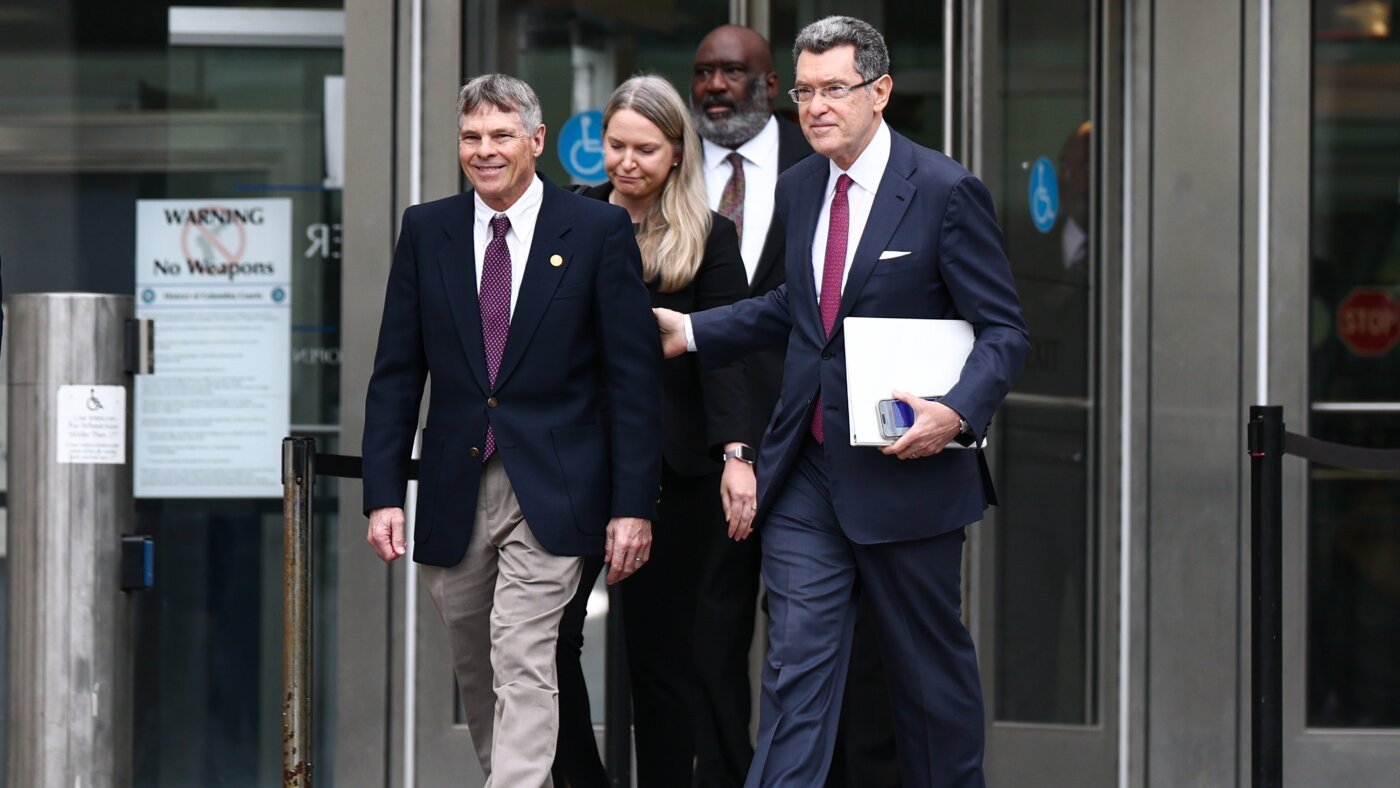
The allegation sounded like the stuff of spy movies: A Pakistani businessman trying to hire hit men, even handing them $5,000 in cash, to kill a U.S. politician on behalf of Iran ‘s powerful paramilitary Revolutionary Guard.

It was true, and potential targets of the 2024 scheme included now-President Donald Trump, then-President Joe Biden and former presidential candidate and ex-U.N. Ambassador Nikki Haley, the man told jurors at his attempted terrorism trial in New York on Wednesday. But he insisted his actions were driven by fear for loved ones in Iran, and he figured he’d be apprehended before anything came of the scheme.

“My family was under threat, and I had to do this,” the defendant, Asif Merchant, testified through an Urdu interpreter. “I was not wanting to do this so willingly.”

Merchant said he had anticipated getting arrested before anyone was killed, intended to cooperate with the U.S. government and had hoped that would help him get a green card.

U.S. authorities were, indeed, on to him – the supposed hit men he paid were actually undercover FBI agents – and he was arrested on July 12, 2024, a day before an unrelated attempt on Trump’s life in Butler, Pennsylvania.  During a search, investigators said they found a handwritten note that contained the codewords for the various aspects of the plot, CBS News previously reported

Advertisement

Merchant did sit for voluntary FBI interviews, but he ultimately ended up with a trial, not a cooperation deal.

“You traveled to the United States for the purpose of hiring Mafia members to kill a politician, correct?” Assistant U.S. Attorney Nina Gupta asked during her turn questioning Merchant Wednesday in a Brooklyn federal court.

“That’s right,” Merchant replied, his demeanor as matter-of-fact as his testimony was unusual.

The trial is unfolding amid the less than week-old Iran war, which killed Iranian Supreme Leader Ayatollah Ali Khamenei in a strike that Trump summed up as “I got him before he got me.” Jurors are instructed to ignore news pertaining to the case.

The Iranian government has denied plotting to kill Trump or other U.S. officials.

Advertisement

Merchant, 47, had a roughly 20-year banking career in Pakistan before getting involved in an array of businesses: clothing, car sales, banana exports, insulation imports. He openly has two families, one in Pakistan and the other in Iran – where, he said, he was introduced around the end of 2022 to a Revolutionary Guard intelligence operative. They initially spoke about getting involved in a hawala, an informal money transfer system, Merchant said.

Merchant testified that his periodic visits to the U.S. for his garment business piqued the interest of his Revolutionary Guard contact, who trained him on countersurveillance techniques.

The U.S. deems the Revolutionary Guard a “foreign terrorist organization.” Formally called the Islamic Revolutionary Guard Corps, the force has been prominent in Iran under Khamenei.

Merchant said the handler told him to seek U.S. residents interested in working for Iran. Then came another assignment: Look for a criminal to arrange protests, steal things, do some money laundering, “and maybe have somebody murdered,” Merchant recalled.

“He did not tell me exactly who it is, but he told me – he named three people: Donald Trump, Joe Biden and Nikki Haley,” he added.

Advertisement

In 2024, multiple sources familiar with the investigation told CBS News Merchant planned to assassinate current and former government officials across the political spectrum.

Merchant allegedly sketched out the plot on a napkin inside his New York hotel room, prosecutors said, and told the individual “that there would be ‘security all around’ the person” they were planning to kill.

“No other option”

After U.S. immigration agents pulled Merchant aside at the Houston airport in April 2024, searched his possessions and asked about his travels to Iran, he concluded that he was under surveillance. But still he researched Trump rally locations, sketched out a plot for a shooting at a political rally, lined up the supposed hit men and scrambled together $5,000 from a cousin to pay them a “token of appreciation.”

This image provided by the Justice Department, contained in the complaint supporting the arrest warrant, shows Asif Merchant. 

Advertisement

AP


He even reported back to his Revolutionary Guard contact, sending observations – fake, Merchant said – tucked into a book that he shipped to Iran through a series of intermediaries.

Merchant said he “had no other option” than to play along because the handler had indicated that he knew who Merchant’s Iranian relatives were and where they lived.

In a court filing this week, prosecutors noted that Merchant didn’t seek out law enforcement to help with his purported predicament before he was arrested. He testified that he couldn’t turn to authorities because his handler had people watching him.

Prosecutors also said that in his FBI interviews, Merchant “neglected to mention any facts that could have supported” an argument that he acted under duress.

Advertisement

Merchant told jurors Wednesday that he didn’t think agents would believe his story, because their questions suggested “they think that I’m some type of super-spy.”

“And are you a super-spy?” defense lawyer Avraham Moskowitz asked.

“No,” Merchant said. “Absolutely not.”

Continue Reading

Trending