News
ICE arrests Tufts University doctoral student and revokes her visa, school says


Federal immigration authorities arrested a Tufts University doctoral student from Turkey on Tuesday night, the latest in a string of arrests targeting international students for their Palestinian advocacy.
Rumeysa Ozturk, a PhD student in the graduate school of arts and sciences at the Massachusetts university, was arrested by Immigration and Customs Enforcement officers outside her off-campus apartment on her way to an Iftar dinner with friends, according to her attorney and activists.
In an email to the Tufts community, university president Sunil Kumar said the school was told that federal authorities terminated her visa status, “and we seek to confirm whether that information is true.”
The Independent has requested comment from ICE.
Ozturk, who is in the United States on a non-immigrant F-1 visa for international students, was meeting with friends to break her Ramadan fast when she was detained near her home in Somerville, attorney Mahsa Khanbabai said in a statement to The Independent.
“We are unaware of her whereabouts and have not been able to contact her,” she said.
Surveillance footage of the arrest shows plainclothes agents approaching her from the street. One officer, whose head is covered by sweatshirt hood, appears to approach her without identifying himself and then grabs her arm. Another officer approaches and takes her phone while she is placed in handcuffs. Three officers cover their faces with neck gaiters.
Tufts did not have any prior knowledge of the arrest “and did not share any information with federal authorities prior to the event,” Kumar wrote.
Kumar issued a reminder that the university has a protocol for how to respond to federal agents making “unannounced visits” on or off campus.

Ozturk’s attorney has filed a petition of habeas corpus challenging her arrest and detention. Massachusetts District Judge Indira Talwani is giving federal officials until Friday to respond to the complaint, and Ozturk cannot be moved outside the state without at least 48 hours of advance notice to the court, according to Talwani’s order.
Ozturk is a student at the university’s doctoral program for Child Study and Human Development, and graduated with a master’s degree from the Teachers College at Columbia University, according to her LinkedIn.
“I am passionate about researching children’s and adolescents’ digital media and technologies for caring, kind, and compassionate media environments,” she writes. “As an interdisciplinary media researcher and developmental scientist in training, I research children’s and adolescents’ positive development in a media-embedded, globalized, and connected world.”
Last year, in response to Israel’s ongoing devastation of Gaza, Ozturk co-authored an op-ed in The Tufts Daily newspaper calling on Kumar to “acknowledge the Palestinian genocide” and for the university to divest from companies with direct or indirect ties to Israel.
Ozturk is among dozens of students and professors identified by Canary Mission, a pro-Israel campaign that maintains a database intended to blacklist and intimidate activists the group accuses of promoting “hatred of the USA, Israel and Jews.”
“Efforts to deport students based on their speech or protected activism undermine America’s commitment to free expression,” Tyler Coward, lead counsel for government affairs for the Foundation for Individual Rights and Expression, told The Independent. “If ICE detained Ozturk based on her op-ed or activism, it’s a worrying escalation in an already fraught environment for college students here on student visas.”
Her arrest follows similar actions from federal authorities targeting student activists and students who have merely spoken in support of Palestine, none of whom have been accused of committing any crime. Donald Trump’s administration has zeroed in on campus activism at prestigious universities, where Israel’s war in Gaza has provoked a wave of demonstrations and protest encampments demanding an end to U.S. support for Israel’s devastation.
Students have been accused of supporting terrorism and violating the president’s executive orders directing federal agencies investigate and potentially remove non-citizens who “bear hostile attitudes toward its citizens, culture, government, institutions, or founding principles” and “advocate for, aid, or support designated foreign terrorists and other threats to our national security.”

On Tuesday, university professors and academic organizations from across the country filed a lawsuit accusing the Trump administration of violating the First Amendment through a “climate of fear and repression” on college campuses.
“Out of fear that they might be arrested and deported for lawful expression and association, some noncitizen students and faculty have stopped attending public protests or resigned from campus groups that engage in political advocacy,” according to the lawsuit.
“Others have declined opportunities to publish commentary and scholarship, stopped contributing to classroom discussions, or deleted past work from online databases and websites,” attorneys wrote. “Many now hesitate to address political issues on social media, or even in private texts. The [policy], in other words, is accomplishing its purpose: it is terrorizing students and faculty for their exercise of First Amendment rights in the past, intimidating them from exercising those rights now, and silencing political viewpoints that the government disfavor.”
On Tuesday, a federal judge in Manhattan blocked the Trump administration from deporting Yunseo Chung, a Columbia University student and lawful permanent resident who was the victim of the government’s “shocking overreach,” vilifying her political views and constitutionally protected right to protest, according to her attorneys.
Columbia graduate Mahmoud Khalil, a lawful permanent resident and prominent student activist accused of organizing “pro-Hamas” attacks on campus, is currently battling his removal from the United States after his shocking arrest in front of his wife, a U.S. citizen who is eight months pregnant, earlier this month. He is currently detained in Louisiana as his case moves jurisdictions to a federal court in New Jersey.



Hours after a bitter feud between the Pentagon and Anthropic ended with the Trump administration cutting off the artificial intelligence startup, Anthropic CEO Dario Amodei told CBS News in an exclusive interview Friday night he wants to work with the military — but only if it addresses the firm’s concerns.
“We are still interested in working with them as long as it is in line with our red lines,” he said.
The conflict centers on Anthropic’s push for guardrails that explicitly prevent the military from using its powerful Claude AI model to conduct mass surveillance on Americans or to power autonomous weapons. The Pentagon wants the ability to use Claude for “all lawful purposes,” and says it isn’t interested in either of the uses that Anthropic was concerned about.
The military gave Anthropic a Friday evening deadline to either meet its demands or get cut off from its lucrative Defense Department contracts. With the two sides still seemingly still far apart, President Trump on Friday ordered federal agencies to “immediately” stop using Anthropic’s technology. Then, Defense Secretary Pete Hegseth declared the company a “supply chain risk,” directing military contractors to also stop working with the AI startup.
In his interview later Friday, Amodei stood by the guardrails sought by Anthropic, which is the only company whose AI model is deployed on the Pentagon’s classified networks.
“Our position is clear. We have these two red lines. We’ve had them from day one. We are still advocating for those red lines. We’re not going to move on those red lines,” Amodei later said. “If we can get to the point with the department where we can see things the same way, then perhaps there could be an agreement. For our part and for the sake of U.S. national security, we continue to want to make this work.”
Amodei told CBS News that Anthropic has sought to deploy its AI models for military use because “we are patriotic Americans” and “we believe in this country.” But the company is worried that some potential uses of AI could clash with American values, he said.
Mass surveillance is a risk, Amodei argued, because “things may become possible with AI that weren’t possible before,” and the technology’s potential is “getting ahead of the law.” He warned that the government could buy data from private firms and use AI to analyze it.
In theory, artificial intelligence could also be used to power fully autonomous weapons that select targets and carry out strikes without any human input. Amodei said his company isn’t categorically opposed to those kinds of weapons, especially if U.S. adversaries develop them, but “the reliability is not there yet” and “we need to have a conversation about oversight.”
The Free Press: Will AI Doom Us All? The Market Can’t Decide
Since AI technology is still unpredictable, Amodei is concerned that autonomous weapons could target the wrong people by mistake. And unlike with human-powered weaponry, it’s not clear who is responsible for the decisions made by fully autonomous weapons.
“We don’t want to sell something that we don’t think is reliable, and we don’t want to sell something that could get our own people killed or that could get innocent people killed,” he said.
Amodei called the guardrails around surveillance and autonomous weapons “narrow exceptions,” and said the company has no evidence that the military has run into either of them.
The Pentagon’s position is that federal law already prevents it from surveilling Americans en masse, and fully autonomous weapons are already restricted by internal military policies, so there is no need to put restrictions on those uses of AI in writing.
Emil Michael, the Pentagon’s chief technology officer, told CBS News in an interview Thursday: “At some level, you have to trust your military to do the right thing.”
“But we do have to be prepared for the future. We do have to be prepared for what China is doing,” Michael said, referring to how U.S. adversaries use AI. “So we’ll never say that we’re not going to be able to defend ourselves in writing to a company.”
As a compromise, Michael said the military had offered written acknowledgements of the federal laws and military policies that restrict mass surveillance and autonomous weapons — though Anthropic said that offer was “paired with legalese” that allowed the guardrails to be ignored.
As the conflict between Anthropic and the Pentagon escalated this week, top military officials accused the company and Amodei of trying to impose their values onto the government. Hegseth called Anthropic “sanctimonious” and arrogant, Michael said that Amodei has a “God-complex” and Mr. Trump called the AI startup a “radical left, woke company.”
“Their true objective is unmistakable: to seize veto power over the operational decisions of the United States military. That is unacceptable,” Hegseth alleged.
Said Mr. Trump: “Their selfishness is putting AMERICAN LIVES at risk, our Troops in danger, and our National Security in JEOPARDY.”
Asked if weighty questions about AI guardrails should be left up to Anthropic rather than the government, Amodei told CBS News that “one of the things about a free market and free enterprise is, different folks can provide different products under different principles.”
He also said: “I think we are a good judge of what our models can do reliably and what they cannot do reliably.”
In the long run, he said, Congress should probably weigh in on AI safeguards.
“But Congress is not the fastest moving body in the world. And for right now, we are the ones who see this technology on the front line,” said Amodei.
With Anthropic and the Pentagon unable to reach a deal by Friday, the military is now expected to phase out its use of Anthropic’s AI technology within six months and transition to what Hegseth called “a better and more patriotic service.”
Hegseth also labeled Anthropic a “supply chain risk” and said all companies that do business with the military are now expected to cut off “any commercial activity with Anthropic.”
Amodei called that an “unprecedented” move for an American firm rather than a foreign adversary, and he said the government’s statements have been “retaliatory and punitive.” And he argued that Hegseth doesn’t have the legal authority to bar all military contractors from working with Anthropic, and can only stop them from using Anthropic for government contracts.
He also said that Anthropic hasn’t formally received any information from the Pentagon informing it of a supply chain risk designation, but “when we receive some kind of formal action, we will look at it, we will understand it and we will challenge it in court.”
Asked if he has a message for the president, Amodei said “everything we have done has been for the sake of this country” and “for the sake of supporting U.S. national security.”
“Disagreeing with the government is the most American thing in the world,” he said. “And we are patriots. In everything we have done here, we have stood up for the values of this country.”
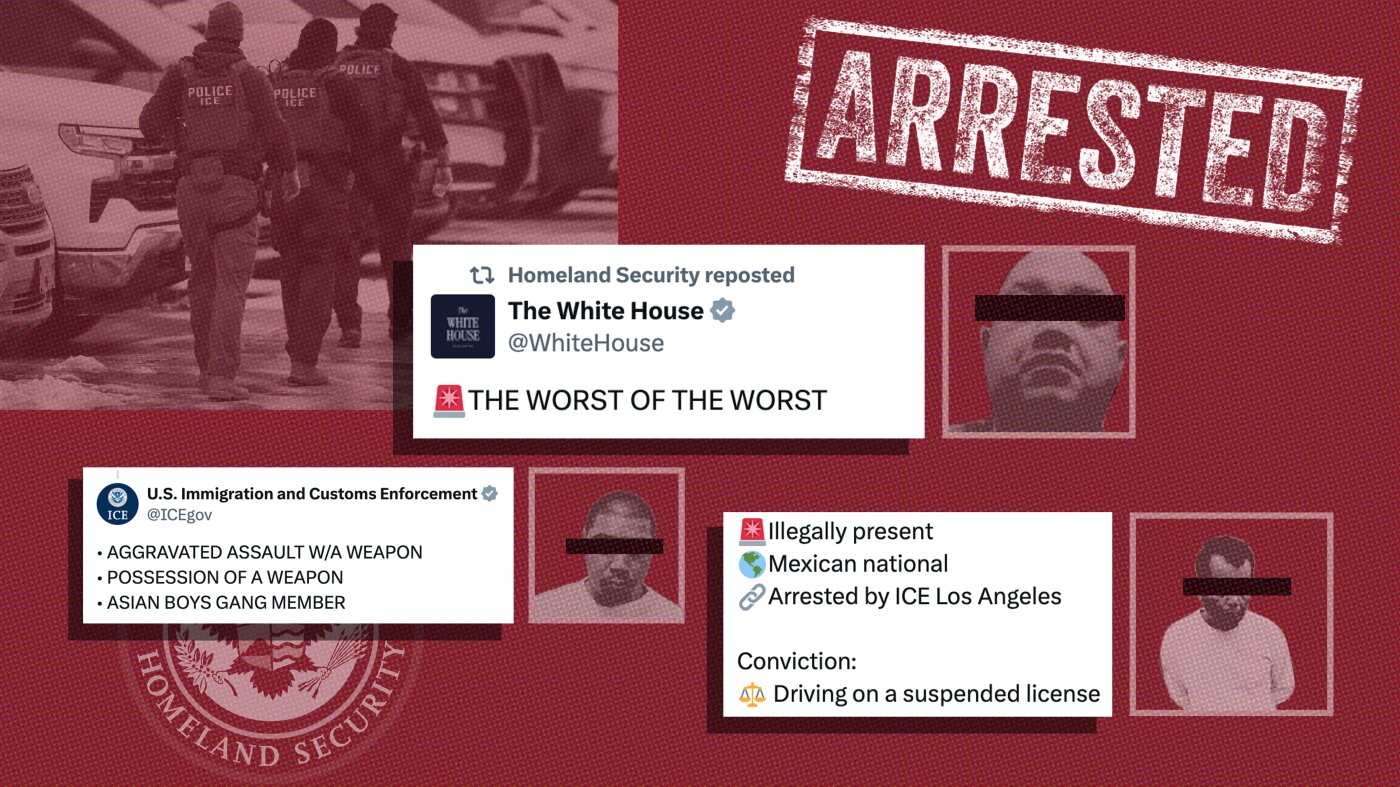
Getty Images, Dept. of Homeland Security and The White House via X/Collage by Emily Bogle/NPR
Two days after At Chandee, who goes by Ricky, was arrested by U.S. Immigration and Customs Enforcement, the White House’s X account posted about him, calling the 52-year-old the “WORST OF WORST” and a “CRIMINAL ILLEGAL ALIEN.”
Except that the photo the White House posted was of a different person. The post also incorrectly claimed Chandee had multiple felony convictions — he has one, for second-degree assault in 1993 when he was 18 years old. He shot two people in the legs and served three years in prison.
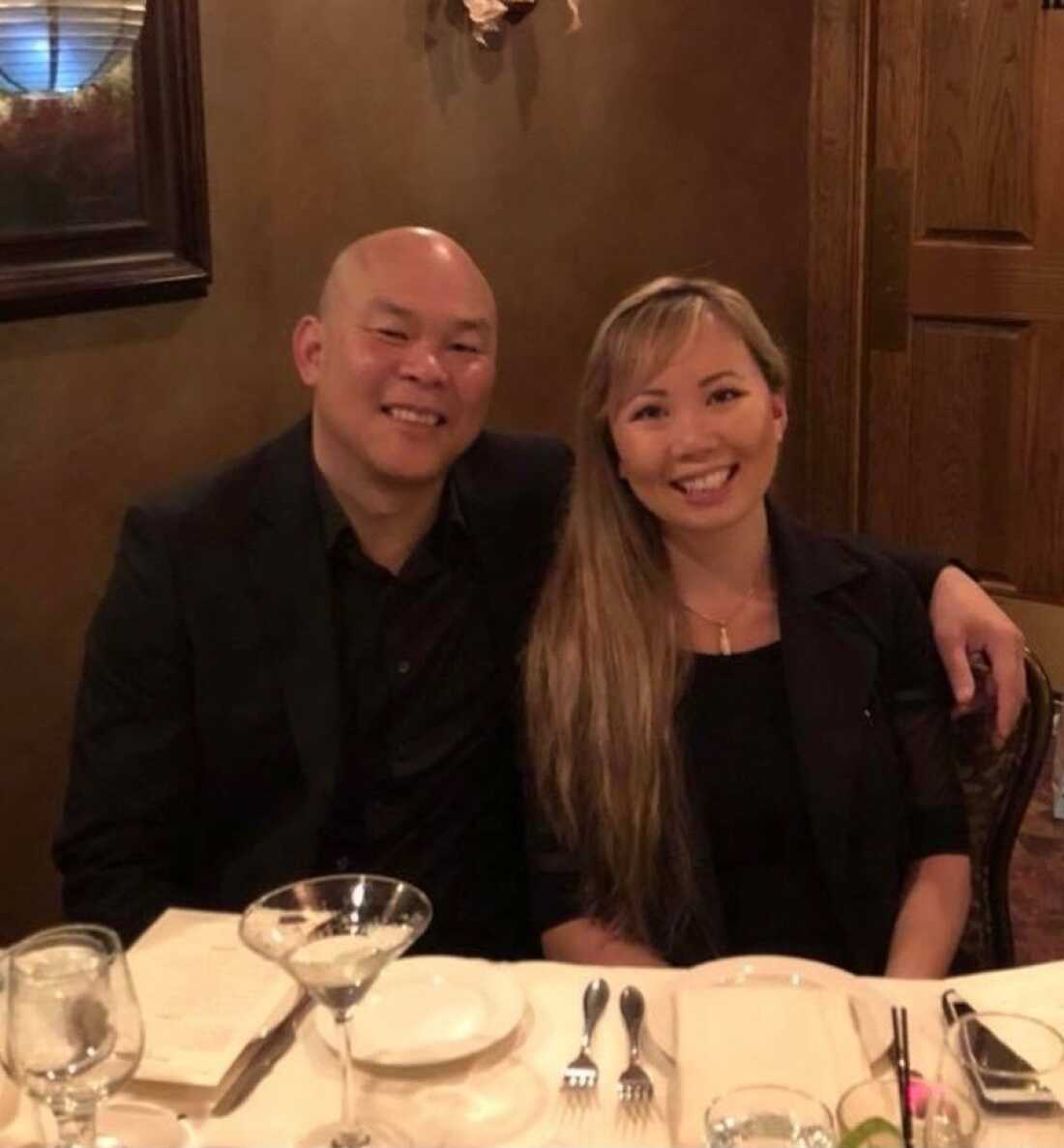
At “Ricky” Chandee with his wife, Tina Huynh-Chandee.
Via the Chandee family
hide caption
toggle caption
Via the Chandee family
Chandee, who came to the U.S. as a child refugee, was ordered to be deported back to his home country, Laos. But Laos had not been accepting all of the people the U.S. wanted it to, so the federal government determined that it was likely infeasible to deport him, his lawyer Linus Chan told NPR. Chandee therefore was granted permission to stay in the U.S. and work so long as he checked in with immigration authorities periodically. He has not missed a check-in in over 30 years and has not had another criminal incident.
People who know Chandee do not see him as “worst of the worst.”
After Chandee completed his prison sentence, he finished school and became an engineering technician. He worked for the City of Minneapolis for 26 years, became a father, and his son grew up to join the military.
In his free time, Chandee enjoys hiking and foraging for mushrooms, Minnesota Public Radio reported.
“We are proud to work alongside At ‘Ricky’ Chandee,” said Tim Sexton, Director of Public Works for the City of Minneapolis in a statement. “I don’t understand why he would be a target for removal now, why he was brutally detained and swiftly flown to Texas, or how his removal benefits our city or country.” Chandee is petitioning for his release in federal court.
Chandee’s case is not unique
Social media accounts from the White House, the Department of Homeland Security and other immigration agencies have spent much of the past year posting about people detained in the administration’s immigration crackdown, typically portraying them as hardened, violent criminals. That’s even as over 70% of the people detained don’t have criminal records according to ICE data.
NPR’s research of cases in Minnesota shows that while many of the people who have been highlighted on social media do have recent, serious criminal records, about a quarter are like Chandee, with decades-old convictions, minor offenses or only pending criminal proceedings. Scholars of immigration, media and criminal law say such a media campaign is unprecedented and paints a distorted picture of immigrants and crime.
A year into President Trump’s second term, the X accounts of DHS and ICE have posted about more than 2,000 people who were targets of mass deportation efforts. Starting late last March, DHS and ICE began posting on X on a near daily basis, often highlighting apprehensions of multiple people a day, an NPR review of government social media posts show.
Among the 2,000 people highlighted by the agencies, NPR identified 130 who were arrested by federal agents in Minnesota and tried to verify the government’s statements about their criminal histories.
In most of the social media posts, the government did not provide the state where the conviction occurred or the person’s age. Public court records do not tend to include photos so definitive identification can be a challenge.
NPR derived its findings from cases where it was able to locate a name and matching criminal history in the Minnesota court and detention system, in nationwide criminal history databases, sex offender databases, and in some cases, federal courts and other state courts.
In 19 of the 130 cases, roughly 1-in-7, public records show the most recent convictions were at least 20 years ago.
Seventeen of the 19 cases with old convictions did include violent crimes like homicide and first-degree sexual assault. ICE provided some of those names to Fox News as key examples of the agency’s accomplishments. “It’s the most disturbing list I’ve ever seen,” said Fox News reporter Bill Melugin on X, highlighting the criminal convictions of each person on the list.
For seven people, their only criminal history involved driving under the influence or disorderly conduct.

ICE agents approach a house before detaining two people in Minneapolis on Jan. 13.
Stephen Maturen/Getty Images
hide caption
toggle caption
Stephen Maturen/Getty Images
Six of the 130 Minnesota cases highlighted by the administration involved people with no criminal convictions. The government’s social media posts for those six instead rely upon the charges and arrests as evidence of their criminality, even though arrests don’t always lead to charges and charges can be dismissed.
In yet another case, the government highlighted a criminal charge even while noting it had been dismissed. (The person did have other existing convictions.)
For 37 of the 130 people, NPR was unable to confirm matching criminal history after consulting the databases and news coverage. Some of the names turned up no criminal history at all. The government said these people committed crimes ranging from homicide and assault to drug trafficking, and cited one by name to Fox News. NPR tried to reach out to all 37 people and their families for comment but did not receive a response from any.
In a statement to NPR, DHS’s chief spokesperson Lauren Bis did not dispute NPR’s findings or provide documentation where NPR wasn’t able to confirm matching criminal history.
“The fact that NPR is defending murderers and pedophiles is gross,” Bis wrote. “We hear far too much about criminals and not enough about their victims.” before listing four of the people with old convictions of homicide and sexual assault, underlining the date of deportation order for three of them.
Images designed to trigger emotion
The stream of social media posts with photos of mostly nonwhite people are meant to draw an emotional response, says Leo Chavez, an emeritus professor of anthropology at the University of California, Irvine. They “have been used repeatedly over and over to get people to buy into, really drastic, drastic and draconian actions and policies,” he said.
Chavez, whose most recent book is The Latino Threat: How Alarmist Rhetoric Misrepresents Immigrants, Citizens, and the Nation, recalls how political campaigns in past decades presented images of Latinos — often men — without context. “Just by showing their image, showing brown people, particularly brown men, it’s supposed to be scary.”
The fact that the government’s social media posts come with statements about criminal history as well as photos reinforces that emotional response, Chavez said. DHS has previously acknowledged inaccuracies on their website. But even if the department issues corrections, Chavez said, “the goal was actually achieved, which was to reinforce the criminality and the visualization.”
CNN’s analysis of DHS’s “Arrested: Worst of the Worst” website showed that for hundreds out of about 25,000 people posted on the website, the crimes listed were not violent felonies. Instead, DHS listed people with records that included traffic offenses, marijuana possession or illegal reentry. DHS said the website had a “glitch” that it will fix but also that the people in question “have [committed] additional crimes.”
“I’ve never seen anything like this when it comes to immigration enforcement in the modern era,” said Juliet Stumpf, a professor at Lewis & Clark Law School who studies the intersection of immigration and criminal law. She said the drumbeat of social media posts focused on specific individuals was like “FBI’s most wanted posters” or “like reality TV shows.”
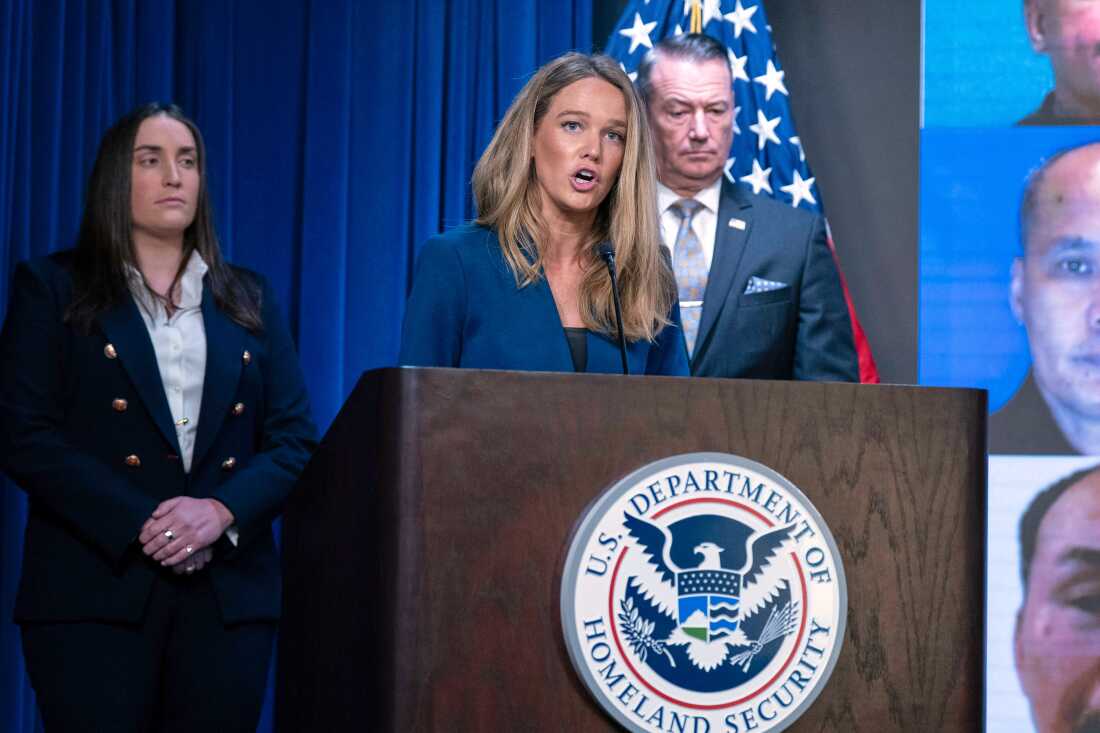
Then-DHS Assistant Secretary for Public Affairs Tricia McLaughlin, flanked by deputy director of U.S. Immigration and Customs Enforcement Madison Sheahan (left), and Acting director of U.S. Immigration and Customs Enforcement Todd Lyons, speaks during a news conference at ICE Headquarters, in Washington, D.C., on May 21, 2025.
Jose Luis Magana/AP
hide caption
toggle caption
Jose Luis Magana/AP
Stumpf drew a parallel with an incident from the 1950s when the U.S. government deported two permanent residents suspected of being communists. “The government was kind of proclaiming and celebrating their deportation because getting rid of these communists was making the country safer,” said Stumpf, “Maybe that’s comparable to something like [this].”
An analysis by the Deportation Data Project shows a dramatic increase in arrests of noncitizens without criminal records during President Trump’s current term compared to President Biden’s term.
“If you look at research, immigrants actually tend to commit fewer crimes than even U.S. citizens do. And that’s true of immigrants who have lawful status here and immigrants who don’t,” said Stumpf. “If we have a number of social media posts that are painting immigrants as the worst of the worst…it’s actually really putting out a distorted version of reality about who immigrants actually are.”
Some claims are disputed by other authorities
In some posts, DHS and ICE have also used photos of people and statements about their criminal histories to burnish the federal government’s accomplishments, defend their agents and criticize states like Minnesota. State and local authorities have in turn pushed back, and some of the federal government’s claims about the people it has detained have been met with setbacks in the courts.
DHS accused Minnesota’s Cottonwood County of not honoring detainers, written requests by ICE to hold prisoners in custody for a period of time so ICE can pick them up. In one post, the agency identified a person who was charged with child sexual abuse, writing “This is who sanctuary city politicians and anti-ICE agitators are defending.”
The Cottonwood County sheriff’s office said DHS’s post “misrepresented the truth” in their own post on Facebook. According to their account, the county did honor the detainer but ICE said it was unable to pick up the person before the order expired and the county had to release the suspect.
The Minnesota Department of Corrections wrote in a blog post that dozens of people DHS listed on its “Worst of the Worst” website were not arrested as DHS described, but were transferred to ICE by the state because they were already in state custody. The Corrections Department has since launched a page dedicated to “correct the Department of Homeland Security’s (DHS) repeated false claims.”
The “Worst of the Worst” website has some overlap with the department’s social media posts, but it contains a much larger number of people — over 30,000 nationally. It included a Colombian soccer star who was extradited to the U.S., tried in Texas, convicted of drug trafficking and served time in federal prison. The website incorrectly describes him as being arrested in Wisconsin. The soccer player, Jhon Viáfara Mina, recently finished his sentence early and returned to Colombia, according to Spanish newspaper El Diario Vasco.
In some instances, DHS and ICE wrote about incidents where they ran into conflict when carrying out arrests. In those posts, they named the arrestees and posted their photos. But in one case where the incident went to court, the government’s account of the events shifted. After a federal agent shot Julio C. Sosa-Celis in Minneapolis in January, DHS claimed he was lodging a “violent attack on law enforcement.” Assault charges against Sosa-Celis fell apart in court as new evidence surfaced, and the officers involved were put on leave.
Despite the fact that the charges were dropped, DHS’s post profiling Sosa-Celis remains online.

Former president Bill Clinton is scheduled to give deposition Friday to a congressional committee investigating his links to Jeffrey Epstein, one day after Hillary Clinton testified before the committee and called the proceedings “partisan political theatre” and “an insult to the American people”.
During remarks before the House oversight committee, Hillary Clinton, the former secretary of state, insisted on Thursday that she had never met Epstein.
The former Democratic president, however, flew on Epstein’s private jet several times in the early 2000s but said he never visited his island.
Clinton, who engaged in an extramarital affair while president and has been accused of sexual misconduct by three women, also appears in a photo from the recently released files, in a hot tub with Epstein and a woman whose identity is redacted.
Clinton has denied the sexual misconduct claims and was not charged with any crimes. He also has not been accused of any wrongdoing connected to Epstein.
Epstein visited the White House at least 17 times during the early years of Clinton’s presidency, according to White House visitor records cited in news reports. Clinton said he cut ties with him around 2005, before the disgraced financier, who died from suicide in 2019, pleaded guilty to solicitation of a minor in Florida.
The House committee subpoenaed the Clintons in August. They initially refused to testify but agreed after Republicans threatened to hold them in contempt.
The Clintons asked for their depositions to be held publicly, with the former president stating that to do so behind closed doors would amount to a “kangaroo court”.
“Let’s stop the games + do this the right way: in a public hearing,” Clinton said on X earlier this month.
The committee’s chair, James Comer, did not grant their request, and the proceedings will be conducted behind closed doors with video to be released later.
On Thursday, Hillary Clinton’s proceedings were briefly halted after representative Lauren Boebert leaked an image of Clinton testifying.
During the full day deposition, Clinton said she had no information about Epstein and did not recall ever meeting him.
Before the deposition, Comer said it would be a long interview and that one with Bill Clinton would be “even longer”.

How to have the best Sunday in L.A., according to Andy Richter

Why Iran resists giving up its nuclear program, even as Trump threatens strikes
Commentary: My toothache led to a painful discovery: The dental care system is full of cavities as you age

Prep talk: Councilmember looking into helping fix fire damage at Encino Franklin Fields

Israel strikes two schools in Iran, killing more than 50 people

Florida High School Football Rankings: Top 25 teams – Oct. 21

Cleary's 21 help Le Moyne down Central Connecticut State 69-64 in OT

How old is Bo Nix? What to know about Oregon quarterback ahead of 2024 NFL Draft

99th annual Pony Swim held in Virginia

Indiana Members Credit Union announced as new anchor tenant at Bottleworks District
Israel strikes two schools in Iran, killing more than 50 people

Anthropic CEO says he’s sticking to AI “red lines” despite clash with Pentagon

ICE blasts Washington mayor over directive restricting immigration enforcement

Did the EU bypass Hungary’s veto on Ukraine’s €90 billion loan?
How the federal government is painting immigrants as criminals on social media
-

 World2 days ago
Exclusive: DeepSeek withholds latest AI model from US chipmakers including Nvidia, sources say
-

 Massachusetts3 days ago
Mother and daughter injured in Taunton house explosion
-

 Montana1 week ago
2026 MHSA Montana Wrestling State Championship Brackets And Results – FloWrestling
-

 Louisiana5 days ago
Wildfire near Gum Swamp Road in Livingston Parish now under control; more than 200 acres burned
-

 Denver, CO3 days ago
10 acres charred, 5 injured in Thornton grass fire, evacuation orders lifted
-

 Technology1 week ago
YouTube TV billing scam emails are hitting inboxes
-

 Technology1 week ago
Stellantis is in a crisis of its own making
-

 Politics1 week ago
OpenAI didn’t contact police despite employees flagging mass shooter’s concerning chatbot interactions: REPORT