News
Biden isn't the first president to pardon a relative. Here's how the power works


President Biden and Hunter Biden, pictured in Nantucket, Mass., on Friday. Days later Biden announced he had pardoned his son, who was awaiting sentencing in criminal cases related to tax evasion and gun charges.
Mandel Ngan/AFP via Getty Images
hide caption
toggle caption
Mandel Ngan/AFP via Getty Images
The topic of presidential pardons is back in the spotlight this week after President Biden announced he signed a “full and unconditional” one for his son.
Hunter Biden was convicted earlier this year of federal gun charges for lying about his addiction to crack cocaine when he purchased a gun, and separately pleaded guilty to tax offenses for failing to pay at least $1.4 million in federal taxes. Sentences in both cases were scheduled to be handed down later this month.
The president has said publicly that he would not pardon his son — but reversed that promise in an announcement on Sunday in which he called the prosecution unfair and selective.

Biden blamed his opponents in Congress for instigating the charges against Hunter and unraveling his would-be plea deal through political pressure, though the special counsel leading the firearm probe has denied facing political interference.
In his statement, Biden said, “No reasonable person who looks at the facts of Hunter’s cases can reach any other conclusion than Hunter was singled out only because he is my son.”
“I believe in the justice system, but as I have wrestled with this, I also believe raw politics has infected this process and it led to a miscarriage of justice,” Biden added. “I hope Americans will understand why a father and a President would come to this decision.”
Biden’s decision was met with criticism from both sides of the aisle.
For one, his rationale closely echoes Donald Trump’s claims of a politicized Justice Department — even though the charges against Hunter Biden and Trump, the first president to be convicted of a felony, are very different. Trump was charged with trying to overturn the 2020 election and endangering national security through his handling of classified documents, though both cases were dismissed after his 2024 election victory.

Trump was quick to slam Biden’s pardon as an “abuse and miscarriage of Justice.” Even some Democrats — including Colorado Gov. Jared Polis, Arizona Rep. Greg Stanton and Colorado Sen. Michael Bennet— publicly denounced Biden’s decision. They warned it could set a dangerous precedent, especially before the return of Trump, who has vowed to pardon Jan. 6 rioters and baselessly suggested he could even pardon himself.
“Joe Biden put self before country, and just pardoned his son,” tweeted Joe Walsh, an anti-Trump former Republican congressman who had endorsed Biden. “And that selfishness took the ‘no one is above the law’ argument against Trump off the table.”
Presidential pardons have been commonplace since the days of George Washington, who forgave the two men convicted of treason for their role in the Whiskey Rebellion. Over the years, many have been cause for celebration as well as controversy.
What is a pardon?
Presidential pardon authority is inspired by early English law, which granted kings “the prerogative of mercy.”
Article II, Section 2 of the Constitution gives the president the power to “grant Reprieves and Pardons for Offences against the United States, except in Cases of Impeachment.”
“The U.S. Constitution grants the president of the United States what’s called unilateral clemency power,” explains Lauren-Brooke Eisen, the senior director of the Brennan Center’s Justice Program. “And you can think of clemency as the umbrella term.”
Acts of clemency include granting amnesty, reprieves, commutations, and pardons — the most expansive form of relief.
A full pardon releases the person from punishment and restores their civil liberties, including their right to vote, hold office and sit on a jury.
“Clemency really is an expression of mercy, and often tempers the very overly punitive, harsh, inequitable results that our criminal justice system produces,” says Eisen.
The Supreme Court has repeatedly recognized the president’s pardoning powers as relatively broad, “extending to ‘every offence known to the law’ and available ‘at any time after [a crime’s] commission, either before legal proceedings are taken or during their pendency, or after conviction and judgment,’ ” according to the Congressional Research Service (CRS).
In some rare cases, presidents have even pardoned individuals who had not been charged with a crime: Gerald Ford pardoned Richard Nixon after the Watergate scandal, and Jimmy Carter pardoned most Vietnam War draft dodgers, both charged and uncharged.
The only limits — at least according to the Constitution — are that a president can only grant pardons for federal criminal offenses, not state or civil offenses, and cannot issue pardons in cases of impeachment.
How have pardons typically been used?

President Gerald Ford pardoned former President Richard Nixon shortly after taking office in 1974, to which many historians attribute his election defeat two years later.
AFP/AFP via Getty Images/AFP via Getty Images
hide caption
toggle caption
AFP/AFP via Getty Images/AFP via Getty Images
Presidents have pardoned all sorts of federal offenses, from marijuana possession to mail fraud to murder. Somewhere along the way, they even started pardoning Thanksgiving turkeys to spare them from the dinner table.
Some pardons have involved high-profile figures: Andrew Johnson pardoned a doctor who treated John Wilkes Booth’s broken leg after he assassinated Abraham Lincoln, as well as thousands of Confederate soldiers and officials after the Civil War.
Warren Harding pardoned Socialist Party leader Eugene Debs after he was sentenced to a decade in prison for speaking out against World War I. Richard Nixon pardoned Teamsters leader Jimmy Hoffa during his 15-year prison sentence for jury tampering and fraud.
More recently, over 3,000 acts of clemency were granted in the four decades between the start of the Ronald Reagan and end of the Barack Obama administrations, according to the White House Historical Association.
But the number of pardons has varied widely between presidents.
Obama granted the most clemency actions — 1,927, of which 212 were pardons — of two-term presidents since the mid-20th century, according to the Pew Research Center. George W. Bush issued the fewest — 200, including 189 pardons.
Trump granted 237 acts of clemency during his first term, including 143 pardons and 94 commutations. His use of the power was relatively rare compared to many of his predecessors, but highly controversial because most of the people he helped had some sort of personal or political connection to him.
Have presidents pardoned relatives before?
Biden is now the third president to pardon a relative.
On his last day in office in 2001, President Bill Clinton pardoned his half-brother, Roger, who had pleaded guilty and spent a year in jail on drug charges.
That was one of a whopping 140 pardons that Clinton issued that day, and not the most controversial.
He got much more flack for pardoning Marc Rich, a disgraced financier who had fled to Switzerland after being indicted for evading more than $48 million in taxes, among other charges. Rich’s ex-wife Denise had donated over $1 million to Democrats and Clinton’s presidential library, raising questions and a Justice Department investigation into the pardon, which ultimately found no wrongdoing by Clinton.
Trump also issued a flurry of pardons — 74, to be exact — in the final hours of his first term, with recipients including his former chief strategist Steve Bannon, rapper Lil Wayne and Al Pirro, the former husband of Fox News commentator Jeanine Pirro.

He had previously pardoned many other members of his inner circle who had been charged with various crimes, including Republican operative Roger Stone, former campaign chairman Paul Manafort and Charles Kushner — the father of his senior advisor, and son-in-law, Jared Kushner.
Charles Kushner, himself a real estate billionaire, pleaded guilty in 2004 to filing false tax returns, lying to the Federal Election Commission and retaliating against a witness: his own brother-in-law.
The case, prosecuted by then-U.S. Attorney Chris Christie, led to Kushner attempting an elaborate blackmail plot against his brother-in-law and former employee, William Schulder, who had become a witness for federal prosecutors. He hired a prostitute to sleep with Schulder, secretly videotaped the encounter and mailed the recording to Schulder’s wife — his own sister — who turned it over to authorities.
Kushner served about two years in prison before his release in 2006, and Trump cited his philanthropic record “of reform and charity” when pardoning him in 2020. Over the weekend, Trump announced he intends to nominate Charles Kushner to serve as ambassador to France.
How does Hunter’s pardon fit into Biden’s clemency record?
Biden has pardoned 25 individuals and commuted 132 sentences during his tenure, according to Justice Department data. He has granted clemency to many more, including entire groups.
In 2022, he took executive action to pardon the more than 6,500 people convicted of simple marijuana possession under federal law and D.C. statute, which he expanded last year. Earlier this year, he issued a blanket pardon to LGBTQ+ service members removed from the military over their sexual orientation or gender identity.
Even so, Eisen says there is much more Biden could do before his term ends — including addressing the more than 8,000 petitions for clemency pending before his administration.
The Brennan Center, which describes itself as a nonpartisan law and policy organization, is among the groups urging the president to commute all death sentences to life without parole.

Last month, more than 60 members of Congress wrote Biden a letter asking him to use his authority to “help broad classes of people and cases, including the elderly and chronically ill, those on death row, people with unjustified sentencing disparities, and women who were punished for defending themselves against their abusers.”
While Biden’s most recent — and most personal — pardon is in the spotlight, Eisen hopes he will take this opportunity to afford the same grace to many others who are already serving what she calls excessive sentences.
“President Biden has until January 20 to provide clemency for thousands of individuals who are appropriate clemency candidates who are sitting in federal prison right now,” Eisen says. “So there’s plenty of time.”



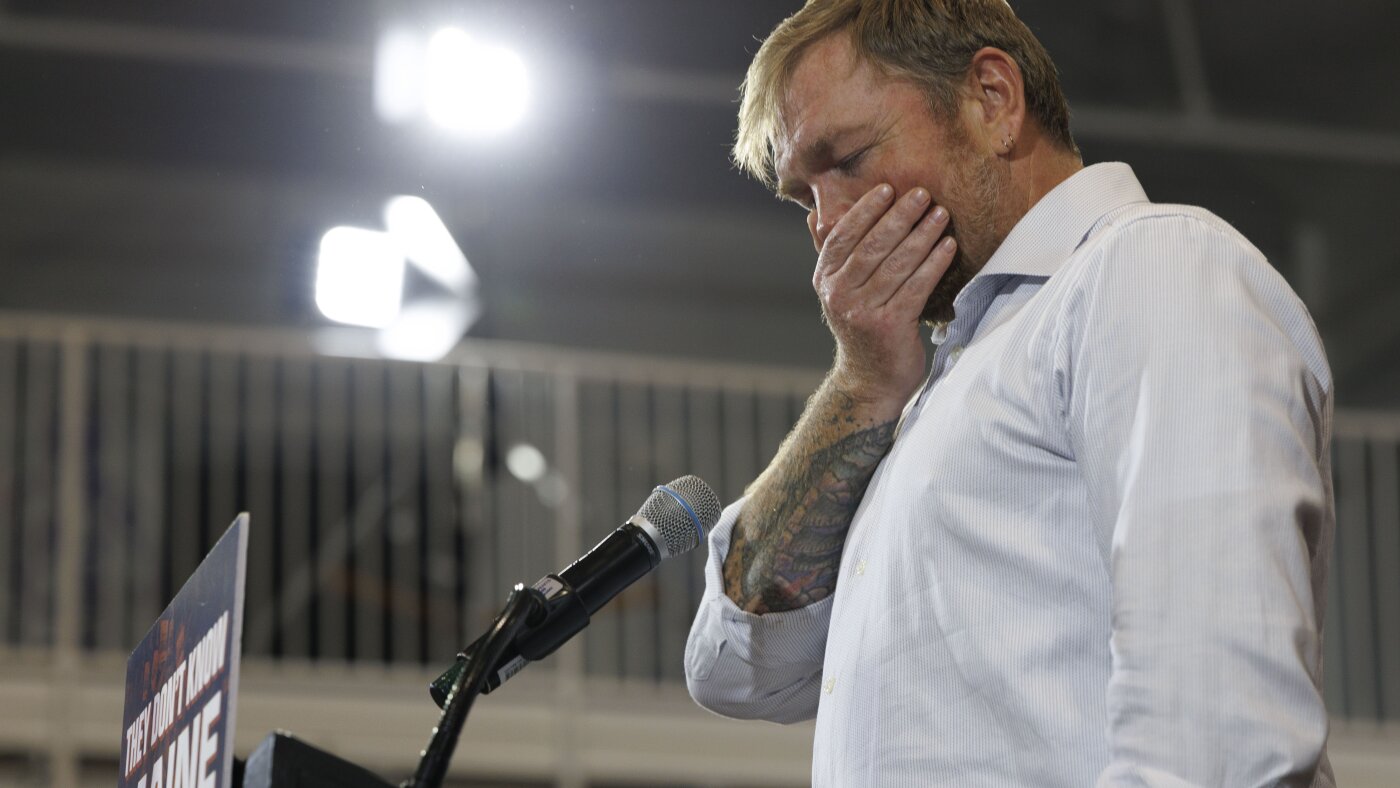
Now-former Democratic Senate candidate Graham Platner speaks at his primary election night event on June 9 in Blue Hill, Maine. Platner officially dropped out of the race July 10 following rape allegations from a former romantic partner that he denies.
CJ Gunther/Getty Images
hide caption
toggle caption
CJ Gunther/Getty Images
Graham Platner, Maine’s Democratic nominee for Senate, is officially out of the race.
The Maine Secretary of State said Platner filed the necessary paperwork to withdraw his candidacy two days after he announced he planned to do so following an accusation of rape by a former romantic partner. Platner denies the allegation.
The Maine Democratic Party has until July 27 to pick Platner’s replacement.
In his withdrawal notice, Platner said “people are desperate for change” and that’s why they voted “for a new kind of politics” by making him the Democratic nominee. He expressed gratitude for those who supported his campaign and said that he will continue to fight for “the movement we have built together and the future we believe in.”
He ended his notice with a strong statement aligned with the progressive platform.
“F*ck ICE. Free Palestine. Up the Hearts.”
Platner announced his plan to withdraw from the race in an 11-minute video he posted to social media on July 8. He said he had no choice but to suspend his campaign, citing it was no longer viable financially.
“We are going to lose our ability to fundraise. We are going to lose our ability to access voter data. We are going to lose all of the things that any campaign needs on the basic level simply to function,” he said.
Platner added that dropping out was not an admission of guilt. Rather, the decision, he said, is to keep the progressive movement in Maine alive to defeat Republican Sen. Susan Collins in November. Platner blamed the “political establishment” for his downfall and argued the goal was to force him out of the race.
“We built a campaign. We engaged in electoral politics. We motivated people. We banded together. We did it the way that we were told we are supposed to make change and we won. And now they are not going to let us have it. Not if it’s me,” he said.
Many powerful Democrats and progressives, including Sen. Bernie Sanders, an independent, urged Platner to step down.
Platner has had to answer to a waterfall of scandals since he launched his Senate bid. Despite those, he ran away with the nomination in the June 9 primary, securing more than 150,000 votes — more than any other Democratic Senate candidate in Maine’s history.
Platner ran on a progressive platform centered on affordability, universal health care and getting corporate money and influence out of politics. During his campaign, he generated an undeniable amount of enthusiasm, something the Maine Democratic Party will have to harness if it hopes to beat Collins in the general election.
Multiple people have already launched campaigns to replace Platner, including former state Sen. Troy Jackson and former CDC official Nirav Shah, who both ran unsuccessful bids for governor.
Platner called on the replacement process to reflect “the Mainers who on June 9 turned out and showed that they are desperate for a different kind of politics.”
“We were asking for real democracy, and we did it the right way. And we won. But now the ball is in the court of the Democratic establishment,” he added.
The Maine Democratic Party said that it intends to hold a new nominating convention where around 600 delegates will select Platner’s successor. Candidates have until July 15 to declare their intent to seek the nomination and gather signatures from at least 8 of Maine’s 16 counties. Party leadership added they will make the nomination process public and transparent.

A Waymo robotaxi drives in San Francisco’s North Beach neighborhood this week.
Heather Diehl/Getty Images
hide caption
toggle caption
Heather Diehl/Getty Images
Police in San Mateo, Calif., posted Monday on social media that they had apprehended a pair of teenagers from a Waymo driverless robotaxi after the company alerted authorities to suspected criminal activity. It’s the latest incident involving video surveillance of passengers and others by autonomous vehicles — raising questions about the limits of privacy in such vehicles.

The Facebook post by the San Mateo County Police said: “Parents do you know where your teens are? @waymo does!”
The 15-year-olds were allegedly drinking alcohol and shooting toy guns from the car, according to the police. They said Waymo’s systems detected behavior that then triggered a safety response, after which the company disabled the vehicle and contacted police.
Waymo’s cars, equipped with an array of cameras, microphones and other sensors to monitor passengers and other nearby vehicles, are becoming more common in cities across the United States. Experts say the detention of the two teens in San Mateo highlights a potential — but not inevitable — trade-off between privacy and convenience. It also questions the extent to which companies similar to Waymo are required to hand over private data, including audio and video of passengers, in situations where a crime is suspected.
NPR reached out to Waymo, which is owned by Alphabet, the parent company of Google, for comment on the details of the San Mateo incident and how the company responded, but did not hear back. But on its website, the company says that as many as 29 cameras in its autonomous cars provide an all-around view and “are designed with high dynamic range and thermal stability, to see in both daylight and low-light conditions, and tackle more complex environments.”
“There already exist laws that govern duty to report or even duty to protect” for carriers such as Waymo, according to Alessandro Acquisti, a professor of information technology at the MIT Sloan School of Management. “The privacy problems arise when and if driverless carrier companies used such laws or ethical obligations as a pretext for blanket, indiscriminate accumulation of identifiable data for unspecified future purposes.”
That includes not just monitoring people inside the cars, but outside too. Take, for example, a hit-and-run investigation last year in Los Angeles. Media reported that the police inquiry was aided by video captured by a Waymo taxi that had a clear view of the crime. Critics suggested at the time that authorities were using the company’s vehicles as a mobile surveillance platform. And during 2025 protests in Los Angeles against Immigration and Customs Enforcement crackdowns, demonstrators vandalized Waymos, apparently angry that video recorded by the vehicles could be used by police, although there is no evidence that happened.
In a transparency report, Google says it received nearly 290,000 requests from governments worldwide in the first six months of 2025 for disclosure of user information across all its platforms, including Waymo. The company says that in more than 80% of the requests in those six months, some information was disclosed. “Google carefully reviews each request to make sure it satisfies applicable laws. If a request asks for too much information, we try to narrow it, and in some cases we object to producing any information at all,” the company says.
In an email to NPR, San Mateo Police Department spokesperson Jeanine Luna said that detaining the teens in the Waymo on Monday was “wholly appropriate” under the circumstances. “We received the call of a ‘firearm’ being shot from a moving vehicle,” she said. “Furthermore, the occupants were described as being possibly ‘intoxicated.’” she said.
“Being that the vehicle was disabled (the occupants had every right to exit the vehicle before police arrival, but they did not), a high-risk traffic stop was conducted to ensure the safety of all involved,” Luna added. “They were not arrested and were released to their parents, however, potential charges are still pending dependent on what the video from inside the vehicle shows.”
Autonomous taxis represent an ethical gray area
Robotaxis began to roll out across the U.S. in December 2018, when Waymo launched in Phoenix. These services have been used for less than a decade — so the norms surrounding them aren’t settled, experts agree.
The Facebook post may make Waymo passengers wonder what triggers a police intervention, says Irina Raicu, director of the Internet Ethics program at Santa Clara University. She has used Waymo’s driverless taxis and says ethically, the privacy issues surrounding them sit in a gray area. “There’s something about being in a car without another person that makes you think it’s private.”
“With all these recording devices, we don’t see them, [and] they’re not these obvious things being stuck in our faces,” Raicu adds.
That brings up a key issue: informed consent, Acquisti says.
“It is not clear the extent to which passengers … are reminded that when they step into the car, that they are being monitored, and most likely they are not told in its entirety how the data will be used,” he says.
Bruce Schneier, a cybersecurity and privacy expert and professor at the Munk School at the University of Toronto, believes that Waymo does have a compelling interest in protecting its vehicles. He compares monitoring a robotaxi via cameras to a human taxi driver keeping an eye on passengers in the rearview mirror.
“Maybe the driverless car comes back … and it has all of its cushions slashed, and it’s like, ‘Who the hell did that? Let’s go and look at the tape,’” Schneier suggests. “You can’t have sex in the back of a taxi, right? Someone would say, ‘Stop it.’”
He concludes that some supervision makes sense. In an Uber rideshare, he notes, “most of the time there’s a camera recording the back seat.” (Uber says on its website that it allows drivers to install such cameras for the purpose of “fulfilling transportation services.”)

Waymo robotaxis, while a fairly common sight in the San Francisco Bay Area, are still a novelty in much of the country. And many people are hesitant to ride in one, according to a Pew Research Center poll published this month. The survey found that only 5% of Americans had ever ridden in a driverless car. Meanwhile, 71% of those polled said they would feel uncomfortable in one, with only 7% saying they would be “extremely or very comfortable” riding in one.
For that reason, experts who spoke with NPR said they were optimistic that it’s not too late to shift gears on privacy norms and policies surrounding these vehicles.
Acquisti doesn’t see why privacy measures can’t be built into driverless vehicles.
“I would immediately challenge the notion that people have to be monitored,” he says, noting that privacy-preserving technologies exist and can be installed.
“Driverless cars are coming, but they don’t have to come in this particular incarnation,” Raicu says. “They’re still being designed and redesigned. It’s early days.”

Donald Trump has terminated the remaining members of the independent, federal commission that assists election administration officials nationwide just a few months before the midterm elections, multiple outlets reported Thursday.
The remaining three commissioners of the four-member bipartisan commission were forced out on Thursday in different ways. The one Republican appointee resigned and the other two, Democratic appointees were notified of their terminations via email from the White House presidential personnel office.
“On behalf of President Donald J Trump, I am writing to inform you that your position as Commissioner of the Election Assistance Commission is terminated, effective immediately. Thank you for your service,” the email, seen by Reuters, said.
The White House did not immediately respond to a request for comment.
The Election Assistance Commission serves as a “national clearinghouse of information on election administration”, accredits testing laboratories and certifies voting systems, and maintains the national mail-voter registration form developed by the National Voter Registration Act of 1993, according to the commission’s website. The terminations follow Trump and top administration officials’ advocacy to change vote-by-mail requirements and investigations into the 2020 election outcome, which Trump lost to Democrat Joe Biden.
“It is irresponsible and dangerous that this Administration remains dead set on causing chaos for our election officials across this country,” Arizona secretary of state Adrian Fontes said in a Thursday statement. “This move undermines the integrity of nonpartisan election administration.”
The 2002 law that established the commission, the Help America Vote Act, states the president can appoint replacements to the commission.
It is unclear how Trump will move ahead with the commission.
Reuters contributed reporting
-

 Augusta, GA2 minutes ago
South Augusta YMCA will not renew Tobacco Road lease
-

 Washington, D.C7 minutes ago
Storm Team4 Forecast: Scattered showers and storms possible Saturday PM
-

 Cleveland, OH14 minutes ago
Cleveland’s First Round woes must end with the 2026 class
-

 Austin, TX17 minutes ago
Texas reports dozens of cyclosporiasis cases tied to contaminated fresh produce
-

 Alabama29 minutes ago
Small Plane Makes Emergency Landing In Peanut Field Near Florida-Alabama Line : NorthEscambia.com
-
Alaska32 minutes ago
An Alaska vacation can remind Israelis the world doesn’t revolve around them | The Jerusalem Post
-
 Arizona37 minutes ago
Arizona AG continues to investigate Glendale apartment complex after Friday deadline to fix A/C
-

 Arkansas44 minutes ago
Office of Keep Arkansas Beautiful Now Part of the ARDOT

