Wisconsin
Wisconsin clerk who failed to count November votes violated multiple policies, investigators say


MADISON, Wis. — The former clerk who somehow failed to count nearly 200 ballots in Wisconsin’s capital city didn’t break any laws but did violate multiple policies and her contractual duty to supervise elections and maintain professional standards, the results of a city-led investigation released Tuesday show.
Madison City Clerk Maribeth Witzel-Behl resigned earlier this month amid city and state investigations into her conduct during the November elections. She hasn’t spoken publicly about the uncounted ballots since they came to light in January, and it is unclear if she has hired an attorney. A possible telephone listing for her has been disconnected. She did not immediately respond to a Facebook message from The Associated Press on Tuesday seeking comment on the city findings.
According to the investigation, Dane County canvassers discovered 68 uncounted absentee ballots in a tabulator bin on Nov. 12, a week after the election, and another 125 uncounted ballots in a courier bag the first week of December.
The investigation did not shed any light on how the ballots were missed, saying the mistake appears to have been “primarily a process and training failure that could have been avoided” by keeping logs of courier bags and sealed envelopes at the polling place and training poll workers on the types of courier bags used to transport absentee ballots.
Witzel-Behl’s office still had opportunities to count the ballots after they were discovered but never did, the investigation concluded. The office didn’t notify the Wisconsin Elections Commission of the oversight until Dec. 18, almost a month and a half after the election and well after results were certified on Nov. 29.
Witzel-Behl told investigators that she told two staff members to contact the commission on Nov. 12. But the staffers said she never directed them to do that. A staffer whose name was redacted from the investigative summary said that he tried to inform the Dane County Clerk’s office in-person on Nov. 13 but that office had no evidence that anyone presented the issue.
Witzel-Behl told investigators she wasn’t aware of any uncounted votes until the week of Dec. 10, even though she apparently sent an email to her staff on Nov. 27 to keep the ballots sealed and record the voters as having participated.
She said that her deputy clerk told her there were uncounted ballots during the week of Dec. 10. The deputy told investigators no such conversation took place.
The investigation concluded that Witzel-Behl failed to demonstrate care and efficiency in the performance of her duties, prepare her office to deal with significant election administration issues, provide clear direction on handling uncounted ballots and maintain processes that allow every legal vote to count.
Her failure to directly notify the county clerk, the state elections commission, the city attorney and the mayor’s office amounted to violations of polices requiring employees to work efficiently and barring them from preventing others from carrying out their duties, the investigation concluded.
The uncounted votes would not have made a difference in any race or referendums question, but the investigators still called the oversight “an unprecedented failure of the election process.” Four voters whose ballots weren’t counted have filed claims for $175,000 each, the first step toward a class-action lawsuit.
The state elections commission’s investigation continues. Commission leaders announced earlier this month that they had deposed Witzel-Behl and planned to question more city workers.



No.

We found no evidence that liberal Wisconsin Appeals Court Judge Chris Taylor has supported allowing noncitizens to vote.
Taylor and conservative state Appeals Court Judge Maria Lazar are running in the April 7 Wisconsin Supreme Court election.
A Lazar ad claimed Taylor is “pushing for noncitizen voting.”
Lazar’s campaign cited:
Taylor’s opposition, while a Democratic state lawmaker, to the Republican-backed 2011 state law requiring identification to vote.
Her introduction of a 2017 bill, which did not become law. It would have provided driver’s licenses to unauthorized residents, but the licenses would have been labeled: “Not valid for voting purposes.”
Taylor’s opinion, in a 2024 appeals court ruling, which said absentee ballots count even if voters’ witnesses fail to give election clerks their full address. Citizenship is required to vote in Wisconsin, but Wisconsin election officials generally do not verify citizenship when a person registers.
Sources
This <a target=”_blank” href=”https://wisconsinwatch.org/2026/04/wisconsin-supreme-court-candidate-taylor-lazar-noncitizen-voting-election-campaign-ad/”>article</a> first appeared on <a target=”_blank” href=”https://wisconsinwatch.org”>Wisconsin Watch</a> and is republished here under a <a target=”_blank” href=”https://creativecommons.org/licenses/by-nd/4.0/”>Creative Commons Attribution-NoDerivatives 4.0 International License</a>.<img src=”https://i0.wp.com/wisconsinwatch.org/wp-content/uploads/2021/02/cropped-WCIJ_IconOnly_FullColor_RGB-1.png?fit=150%2C150&quality=100&ssl=1″ style=”width:1em;height:1em;margin-left:10px;”>
<img id=”republication-tracker-tool-source” src=”https://wisconsinwatch.org/?republication-pixel=true&post=1315652&ga4=G-D2S69Y9TDB” style=”width:1px;height:1px;”><script> PARSELY = { autotrack: false, onload: function() { PARSELY.beacon.trackPageView({ url: “https://wisconsinwatch.org/2026/04/wisconsin-supreme-court-candidate-taylor-lazar-noncitizen-voting-election-campaign-ad/”, urlref: window.location.href }); } } </script> <script id=”parsely-cfg” src=”//cdn.parsely.com/keys/wisconsinwatch.org/p.js”></script>

The president of Wisconsin’s largest mosque was detained by federal immigration agents, drawing accusations from local officials and religious leaders that the arrest was motivated by his statements against Israel.
Salah Sarsour, a Palestinian-born legal permanent resident of the United States, was taken into custody by nearly a dozen US Immigration and Customs Enforcement (ICE) agents on Monday in Milwaukee after he left his home, according to the Islamic Society of Milwaukee.
Supporters called for his immediate release on Thursday and his attorneys said he was detained on the grounds that he is a foreign policy threat. His attorneys say the claims have no merit.
Instead, they believe Sarsour, 53, was targeted for speaking out against Israel and for a conviction as a minor by Israeli military courts, which have faced scrutiny over allegations of limited due process and high conviction rates of Palestinians. Israel rejects those claims. The offenses included allegedly throwing rocks at Israeli officers, according to attorney Munjed Ahmad.
“Our government should not be doing the bidding of a foreign government,” Ahmad said of Israel. “There’s no question in my mind is that this is to stifle the discourse on the Palestinian narrative.”
Attorneys said Sarsour, born in the Israeli-occupied West Bank, has no criminal record in the US.
Sarsour’s attorneys have likened the case to that of Mahmoud Khalil, a former Columbia University activist who faces deportation because the federal government said he was a foreign policy threat.
An email message left on Thursday for ICE and the Department of Homeland Security was not immediately returned.
Sarsour has been the president of the Islamic Society of Milwaukee, the largest Islamic organization in the state, for five years. His attorneys say he’s held a green card for years and lived in the Milwaukee area. His wife and four adult children are US citizens.
His arrest prompted outcry from top elected officials, including Milwaukee’s mayor, Cavalier Johnson, who called it “an outrage”.
“He is a legal permanent resident. There is no substantive evidence he has done anything wrong,” Johnson said in a post on X. “This is another example of overreach and harm from the U.S. Immigration authorities.”
Sarsour is being held at county jail outside Indianapolis. His attorneys have filed a petition seeking his release.
“He is ready to fight tooth and nail to make sure that he’s not drug through the mud,” Ahmad said. “He wants to stay in this country.”

Westmoreland describes new state law targeting reckless drivers
Milwaukee Alderman Lamont Westmoreland, flanked by Common Council colleagues and Milwaukee Police Department Assistant Chief Craig Sarnow, discusses a pending state law that will allow police to crack down on reckless drivers.
A new state law allows police who suspect drugged driving to perform a rapid roadside test of the driver’s saliva to check for THC, opioids, meth and more, though police departments don’t appear ready to roll it out immediately.
State law already allows police to use breathalyzers to check blood-alcohol levels, but those devices don’t test for other intoxicating substances. The new law allows police to sample oral fluids – mainly saliva – when they suspect an OWI.
Law enforcement groups that advocated for the law change say drug impairment is more difficult to identify than alcohol intoxication. Plus, intoxication levels can decrease between the time police make a traffic stop and a blood sample is collected.
“Oral fluid screening would give officers an additional, objective tool to confirm the presence of drugs – much like a preliminary breath test does for alcohol – before making an arrest decision,” Dane County Sheriff Kalvin Barrett said at a December public hearing.
Wisconsin Act 99 became effective March 15, two days after Democratic Gov. Tony Evers signed it into law. The state Legislature passed it in February with bipartisan support.
Here’s what to know about the new law:
What does the law allow police to do when they suspect an impaired driver?
If police have probable cause to believe a driver is intoxicated, the officer can request a saliva or breath test, or both. That’s in addition to field sobriety tests.
The officer places a mouth swab inside the driver’s cheek or under the tongue and runs it through a handheld device, such as Abbott’s SoToxa or Alere DDS2.
The legislation was amended to allow the tests for suspected intoxicated operation of vehicles other than cars, such as boats, snowmobiles, ATVs, UTVs and more.
Are the oral drug tests admissible in court?
No. The test results aren’t admissible in court and must be destroyed or returned to the person after the test is completed.
The preliminary tests are used only to help police decide whether to make an arrest and pursue laboratory confirmation testing.
Have police in Wisconsin tried saliva drug tests before?
Yes. The Dane County and Manitowoc County sheriff’s offices piloted the program in 2016 and 2019, finding that oral fluid testing devices were accurate and consistent with blood tests.
Dane County conducted its study with the State Laboratory of Hygiene and published the results in an academic journal. The study found that 64% of participants arrested for an OWI also had one or more drugs in their blood, with THC the most common.
Manitowoc County worked with the State Laboratory of Hygiene and the Wisconsin State Patrol on its study, which collected 100 voluntary samples. Results showed 41% of OWI offenders were positive for THC, 20% for amphetamine and 14% for methamphetamine.
Which police agencies plan to use the new saliva drug test?
Wisconsin Chiefs of Police Association President Danny Thompson said he wasn’t aware of any agencies immediately using the test.
“Although this roadside test will be very beneficial to arresting dangerous, impaired drivers, we have not heard of any agencies ready to implement this kind of testing right away,” Thompson said in a statement to the Milwaukee Journal Sentinel.
A Milwaukee Police Department spokesperson said the department isn’t using the tests “at this time and are still looking into it.” A Milwaukee County Sheriff’s Office spokesperson didn’t respond to a request for comment.
The two departments that piloted the program also don’t plan to bring it back right away.
Manitowoc County Sheriff Daniel Hartwig said his office is monitoring guidance related to the new law but doesn’t have plans to implement it at this point. A Dane County Sheriff’s Office spokesperson said the county would use it “given the appropriate funding and resources.”
How much would the program cost?
Each SoToxa device appears to cost around $4,500 to $5,000, according to news reports on programs in North Dakota and San Diego.
Law enforcement groups said agencies in Wisconsin would likely pursue funding for the devices through federal grants.
Do other states use saliva screening?
Yes. A state-by-state analysis from the National Alliance to Stop Impaired Driving shows 10 states have statewide roadside oral fluid testing programs, and another eight have the program in some jurisdictions.
A 2021 report from the National Conference of State Legislatures found nearly half of states have the law, but few used it. One that does is Indiana, where over 200 handheld test devices are used across 110 law enforcement agencies.
Who authored and supported the law?
The bill was authored by Republicans, including Sen. Jesse James from Thorp and Rep. Barbara Dittrich from Oconomowoc. Several Democrats became cosponsors, including Rep. Lori Palmeri from Oshkosh and Rep. Ryan Spaude from Ashwaubenon.
Supporters of the bill included AAA Wisconsin, the Milwaukee Police Association, the Wisconsin Chiefs of Police Association and Mothers Against Drunk Driving. No groups registered in opposition to the bill.
What qualifies as operating while intoxicated in Wisconsin?
According to the Wisconsin Department of Transportation and state law, a driver is considered to be operating while intoxicated if:
- The driver is under the influence of an intoxicant, controlled substance or other drug that impairs their ability to safely operate a vehicle, even if the vehicle isn’t in motion at the time of the traffic stop.
- The driver has a detectable amount of a restricted controlled substance in their blood. That includes cocaine, heroin, meth, delta-9 THC (if at a concentration of one or more nanograms per milliliter in a person’s blood) and more.
- The driver has a BAC over what the law allows, such as above 0.08 for first-time offenders, 0.04 for commercial drivers or 0.02 for drivers with three or more prior OWIs.
Hope Karnopp can be reached at HKarnopp@usatodayco.com.

Idaho Needs to Reconsider AI Data Centers

To reach the Final Four, Illinois needed to think outside the box. And country.

4-star freshman defensive lineman back on the Indiana football roster

Where will Iowa basketball spending rank in transfer portal?

4-Round Kansas City Chiefs Mock Draft Following Pro Days

Florida High School Football Rankings: Top 25 teams – Oct. 21

How old is Bo Nix? What to know about Oregon quarterback ahead of 2024 NFL Draft

Cleary's 21 help Le Moyne down Central Connecticut State 69-64 in OT

99th annual Pony Swim held in Virginia

Indiana Members Credit Union announced as new anchor tenant at Bottleworks District

Video: Trump Struck Iran. Now Farmers Are Paying the Price.

What B-52 bombers bring to Iran fight — and what it means for the war now

Podcast: Hungary elects: what is at stake and who is likely to win?
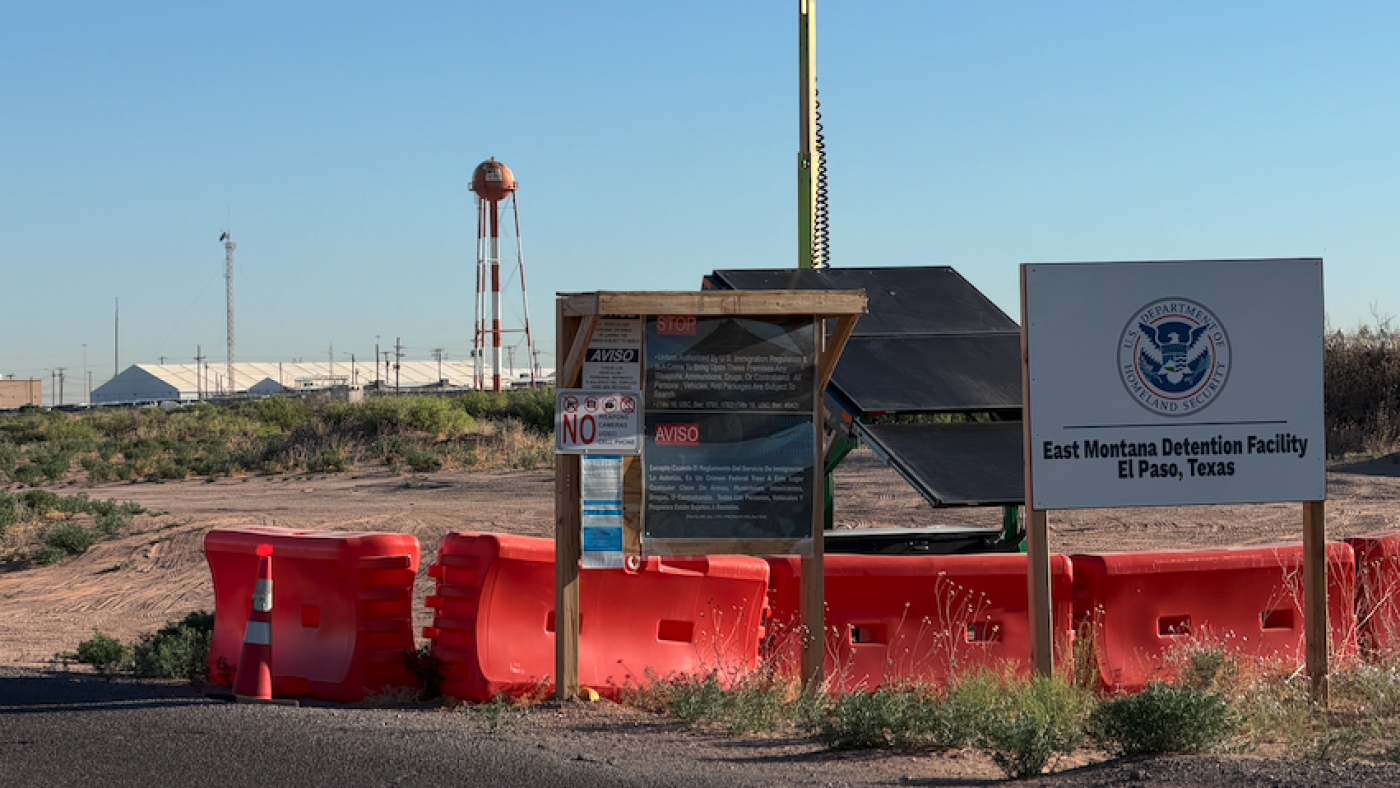
ICE detention deaths are on a record pace. One Texas facility bears the brunt

GOP rails against ‘s— sandwich’ deal as all eyes turn to House to end DHS shutdown
-

 South-Carolina5 days ago
South Carolina vs TCU predictions for Elite Eight game in March Madness
-

 Culture1 week ago
Wil Wheaton Discusses ‘Stand By Me’ and Narrating ‘The Body’ Audiobook
-

 Miami, FL1 week ago
Jannik Sinner’s Girlfriend Laila Hasanovic Stuns in Ab-Revealing Post Amid Miami Open
-

 Culture1 week ago
What Happens When We Die? This Wallace Stevens Poem Has Thoughts.
-

 Minneapolis, MN1 week ago
Boy who shielded classmate during school shooting receives Medal of Honor
-

 Vermont5 days ago
Skier dies after fall at Sugarbush Resort
-

 Education1 week ago
Video: Transgender Athletes Barred From Women’s Olympic Events
-

 Politics5 days ago
Trump’s Ballroom Design Has Barely Been Scrutinized