Iowa
Where will Iowa basketball spending rank in transfer portal?


You have to pay to play.
That’s the way the new world of college sports works, especially football and men’s basketball, the two moneymakers for programs across the country. The financial aspect of competing is looming larger than ever now, and to win in those sports, it requires serious financial backing.
It costs now to recruit top talent from high school and even more to lure in top talent from the transfer portal, which can infuse instant upgrades to a roster. The Iowa Hawkeyes had a portal-heavy roster this year during their magical Elite 8 run during March Madness and will once again be shopping for more high-end talent.
Iowa won’t just be among the big spenders in the Big Ten, but On3’s Pete Nakos believes Iowa is going to be among those big spenders in the sport of college basketball, potentially nearing double-figures in the millions.
The Next Tier: $8 to $10 million
Louisville, Texas A&M, Iowa, St. Louis, Providence and BYU make up the next tier of top spenders, all expected to spend over $8 million and can touch $10 million if they want. Other top spenders of note will likely be Virginia and Washington, among others.
Alabama was in the $8 to $10 million range this season, and the Crimson Tide are expected to have similar funding available. They will be able to crack into the next tier if they need to, sources said. – Pete Nakos, On3
Iowa’s first priority via the transfer portal is replacing the crater-sized hole in the starting lineup left by point guard Bennett Stirtz, who carried this team at times this year and was the engine that made this team go.
After that, Iowa needs to add size on the interior. While they were able to play most of the year, finding ways to win despite lacking some size, having a true big man only further unlocks Ben McCollum’s offense.
Contact/Follow us @HawkeyesWire on X (formerly Twitter) and like our page on Facebook to follow ongoing coverage of Iowa news, notes and opinions. Follow Riley on X: @rileydonald7



While most of the focus for the Iowa State Cyclones will be on the football program for the next couple of months, the basketball program will also be getting set soon for a new campaign. Coming off a strong season, expectations for them will be high.
The 2025-26 season will go down as a memorable one for the Cyclones. This was a team that exceeded most expectations and ended up being one of the best teams in the country.
Iowa State started out the campaign with a 16-0 record, and the group looked like a real contender. While there were some hiccups during a challenging conference schedule, the Cyclones were one of the best teams in the country.
In March Madness, Iowa State was a number two seed, proving to be one of the top eight teams in the country. As they get set for next season, their goal will undoubtedly be to be ranked highly again. However, they may have to prove themselves a bit.
Joe Lunardi of ESPN recently updated his very early bracketology report for the upcoming 2026-27 campaign for the Cyclones. After being a number two seed last year in the NCAA Tournament, he currently has them on the five line.
Iowa State Has Work To Do
While being a five seed in the NCAA Tournament would indicate a Top 25 season for the Cyclones, expectations for the program are higher than that at this point.
Iowa State has become one of the more consistent programs in the country over the last several years, and they will undoubtedly want to take a step forward this coming season.
Due to a lot of production leaving, it is understandable that how they are viewed now could be very different from how they are perceived come March. Due to all of the new players that are coming in, it is going to take time for them to gel.
The Cyclones have a few key returning players led by Killyan Toure, Jamarion Batemon, and Blake Buchanan. Both Toure and Buchanan were starters for the team last season, and that should remain the same this year. However, Batemon also played a significant role coming off the bench, and his scoring ability might put him next to Toure in the starting lineup this coming year.
Overall, while the team did lose a lot of production, they have a good amount of depth with the new players coming in and some key freshmen returning. If things go right and the team gels quickly, they should be better than a five seed.
 Add us as a preferred source on Google
Follow

Iowa State coach T.J. Otzelberger on Tre Singleton player comparisons
Iowa State coach T.J. Otzelberger on Tre Singleton player comparisons
It didn’t take Tre Singleton long to learn the lesson that has dawned on so many Iowa State basketball transfers before him.
“There’s not much to do around Ames,” the Northwestern transplant said July 14, “besides get better and be good at basketball.”
Perhaps not a slogan the Ames Chamber of Commerce will be adopting any time soon, but a sentiment – and, maybe, self-fulfilling prophecy – that the Cyclones themselves have turned into something of a brand, going back to the early days of Fred Hoiberg’s Transfer U tenure.
Get in the lab. Get better. Get wins.
Repeat.
“Cut all the distractions,” Singleton said of the setup. “It helps you key in on the things you need to work on to get better at.
“It helps me come in here every day with the focus of being better.”
That’s a focus Iowa State and its fans hope they’ll be able to appreciate this winter when Singleton is expected to take on a significant role for a Cyclones team that will reconfigure itself after losing three starters off last year’s Sweet 16 squad.
Most notably, Singleton has the look and feel of a Joshua Jefferson approximation. At least in terms of style and role. Expecting a transfer coming off a promising, but certainly not elite freshman season to just slide into the spot previously occupied by an All-American and first-round NBA Draft pick would probably be … unwise.
“I think it’s best to stay away from any comparisons to other guys because Tre needs to be the best version of himself,” said Iowa State coach T.J. Otzelberger. “There’s differences between him and Joshua, even though I know there’s a natural inclination to draw that comparison.”
That natural inclination comes from their similar size (both 6-foot-8 though Jefferson has 30 pounds on 215-pound Singleton), versatility as playmaking power forwards, ability to rebound and high-IQ play.
I think the expectation for Singleton (and Iowa State fans) is to see if the sophomore can operate in that same Jefferson role, if not with the same sort of production and overall impact.
“We see him as somebody who can create advantages for us offensively to make plays,” Otzelberger said. “He’s a gifted passer. He takes a lot of pride in making the right play.”
I think the high-end hope would be that Singleton can approach that Jeffersonian impact in a year or two.
“Tre,” Otzelberger said, “is a very gifted player.”
Singleton’s bet on Iowa State’s development model and the Cyclones’ bet on Singleton to maximize it seems like the sort of transfer portal match that’s often overlooked amid doom-and-gloom bellyaching about player movement.
I’m sure the dozens (dozens!) of Northwestern hoops fans would disagree, but Singleton’s move from a middling Big Ten program with a sparse NBA track record to a Big 12 contender with a strong developmental program seems like not only an inoffensive use of the portal but one that rewards both ascendant players and programs.
We’ll see how it plays out, but Singleton and Iowa State feels like a win-win marriage of skillset, opportunity and culture.
“I chose Iowa State,” Singleton said, “because it fits me as a person. “
Besides, Evanston has the lakeshore and a world-class city 20 miles away. Which, sure, I’d call amenities, but aspiring NBA players might consider distractions.
You take your wins where you can get them, I suppose.
Iowa State columnist Travis Hines has covered the Cyclones for the Des Moines Register and Ames Tribune since 2012. Contact him at thines@amestrib.com or (515) 284-8000. Follow him on X at @TravisHines21.

See the unique cotton candy art at the Iowa State Fair
Cotton candy has been a popular treat at the State Fair for decades, but one family is pushing the fluffy limit on the sweet classic.
It’s all about the food at the Iowa State Fair, and a panel of judges has named their top new foods coming to the fair in 2026.
From an initial list of 84 entries, the field was narrowed to 11 contenders. Judges tasted each of the 11 new foods and voted for three finalists during a Facebook livestream event from the fairgrounds on Tuesday, July 14.
Those three will compete for fairgoers’ votes for the 2026 Best New Food at the Iowa State Fair.
Last year, Winn & Sara’s Kitchen’s bacon chicken ranch eggroll took home the top honor.
These three finalists will face off in public voting Aug. 13-19 at the Iowa State Fair. The winner will be announced Aug. 21.
What are the top three new foods at the 2026 Iowa State Fair?
All-American Scrambled Egg Roll
Winn & Sara’s Kitchen will try for its third-straight win with a breakfast offering. The All-American Scrambled Egg Roll is stuffed with bacon, sausage, hash browns, eggs and cheddar, finished with cheesy ranch.
- Cost: $15
- Vendor: Winn & Sara’s Kitchen
- Where: Next to the craft beer tent, west of the Jacobson Building
Porky Parm Gnocchi
The Pork Parm Gnocchi features gluten-free potato gnocchi with sausage, parmesan cream and pesto. It’s topped with an America 250 flag and a suvenir piggy pal.
- Cost: $14
- Vendor: Destination Grille
- Where: Between the Jacobson Building and the Craft Beer Tent
Ultimate Minneapple Pie
An offering from a Minnesota State Fair vendor making its first Iowa State Fair appearance, the Ultimate Minneapple Pie includes fried apple pie with ice cream and apple syrup.
- Cost: $14
- Vendor: Minneapple Pie
- Where: Near the Anne and Bill Riley Stage
More standout new foods at the 2026 fair
Here are the eight other items that rounded out the top 11:
- 1776 Dubai Strawberries from The Strawberry Station, $19. Fresh strawberries topped with milk chocolate, pistachio crème and crunchy kataifi. Find it at West Marketplace.
- Cajun Cluck ’N’ Chaos from Cluckin’ Coop, $14. Cajun chicken sloppy joe with slaw, spicy pickles, pickled egg and pickle cotton candy. This lunch-cafeteria special is served right across the street from the Animal Learning Center at Little Hands on the Farm.
- Crunchy Lamb Wrap from HoQ, $19. Deep‑fried naan stuffed with risotto, lamb and cheese. Located east of the Administration Building.
- Garlic Dill Pickle Cheese Curds from Brad and Harry’s Cheese Curds, $9. Garlic‑dill mashup curds. You can find Brad and Harry’s Cheese Curds west of the Jacobson Building.
- Star Spangled Swine from Whatcha Smokin’ BBQ, $15. Pork belly with apple‑chipotle rub and honey crystals. Located next to the Iowa craft beer tent, west of the Jacobson Building.
- Strawberry Bliss from Iowa Specialty Crop Growers Association, $8. Shortbread, strawberry, meringue and milk chocolate. Located in the Agriculture Building, under the southwest stairs.
- Stuffed Tater Kegs from Tater Todd and Hot Doug’s, $10. Loaded potato bites with breakfast or cheese options. Located in front of the Agriculture Building.
- Sweet Americana from Over the Top, $13. Strawberry shortcake, lemon bar and blueberry crisp ice creams. Over the Top’s stand is on Grand Avenue, just outside the Varied Industries Building.
Previous winners of Best New Foods at the Iowa State Fair
- 2013: Zag’s Po Boys — Shrimp Corn Dog
- 2014: Multiple vendors — Funnel Cake on a Stick
- 2015: The Rib Shack — Ultimate Bacon Brisket Bomb
- 2016: Iowa Turkey Federation — Not Your Mamma’s Taco
- 2017: Steer ‘N’ Stein — Pork Almighty
- 2018: Applishus — Apple Eggroll
- 2019: G Mig’s Wrap Stand — Georgie’s Roast with the Most Wrap
- 2020: No fair due to COVID-19
- 2021: Cluckin’ Coop by the Iowa Egg Council/Iowa Poultry Association — Chicken Egg Salad with Fry Bread
- 2022: The Rib Shack — The Finisher
- 2023: What’s Your Cheez — Deep-Fried Bacon Brisket Mac-n-Cheese Grilled Cheese
- 2024: Winn & Sara’s Kitchen — Bacon Cheeseburger Eggroll
- 2025: Winn & Sara’s Kitchen — Bacon chicken ranch Eggroll
Cooper Worth is a service/trending reporter for the Des Moines Register. Reach him at cworth@gannett.com or follow him on X @CooperAWorth.
-
 Entertainment2 minutes ago
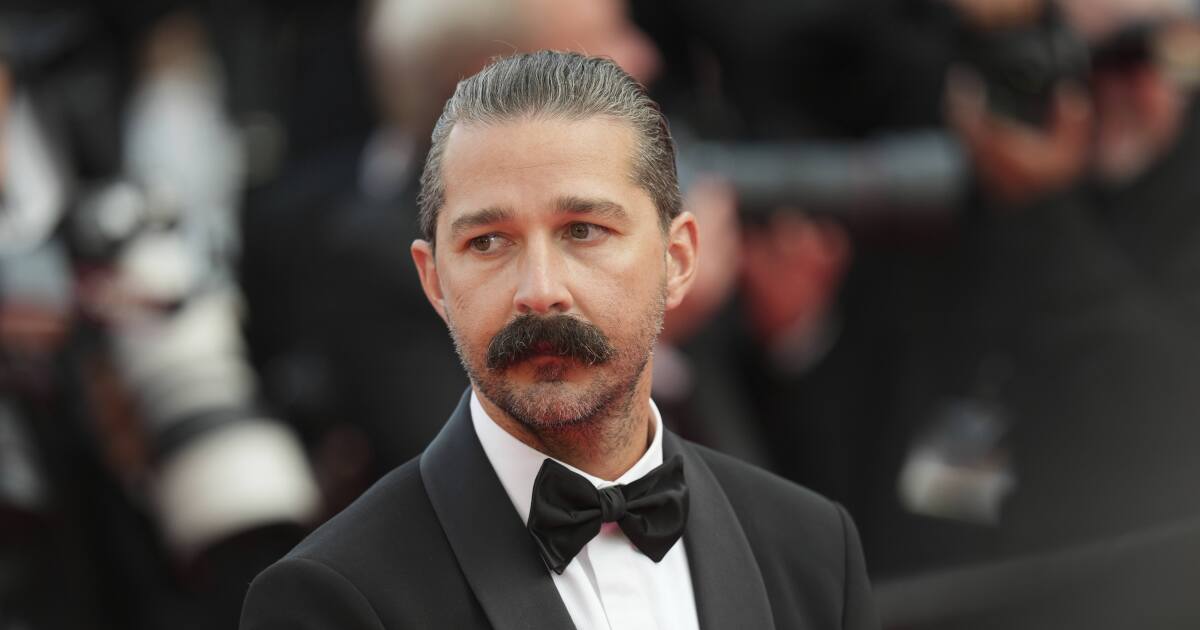
‘You’re scaring my people.’ Shia LaBeouf’s alleged stalker arrested after posting viral video
-
 Politics14 minutes ago
Californians back Becerra and reject AI data centers by big margins, poll finds
-
 Science21 minutes ago
How to eat safely amid outbreak of diarrhea-causing cyclosporiasis
-
 Sports27 minutes ago
Magical Lionel Messi leads Argentina past England for trip back to World Cup final
-

 World39 minutes ago
Toronto engulfed by wildfire smoke as US cities threatened
-
 News1 hour ago
Argentina is back in the World Cup final after a thrilling semifinal win over England
-

 Los Angeles, Ca3 hours ago
Remains of murder victim identified as missing Southern California millionaire
-

 Detroit, MI3 hours ago
4Warn Weather Alert: Wildfire smoke leading to ‘unhealthy’ air quality in Metro Detroit

