Midwest
These six states banned or limited DEI at colleges and universities in 2024

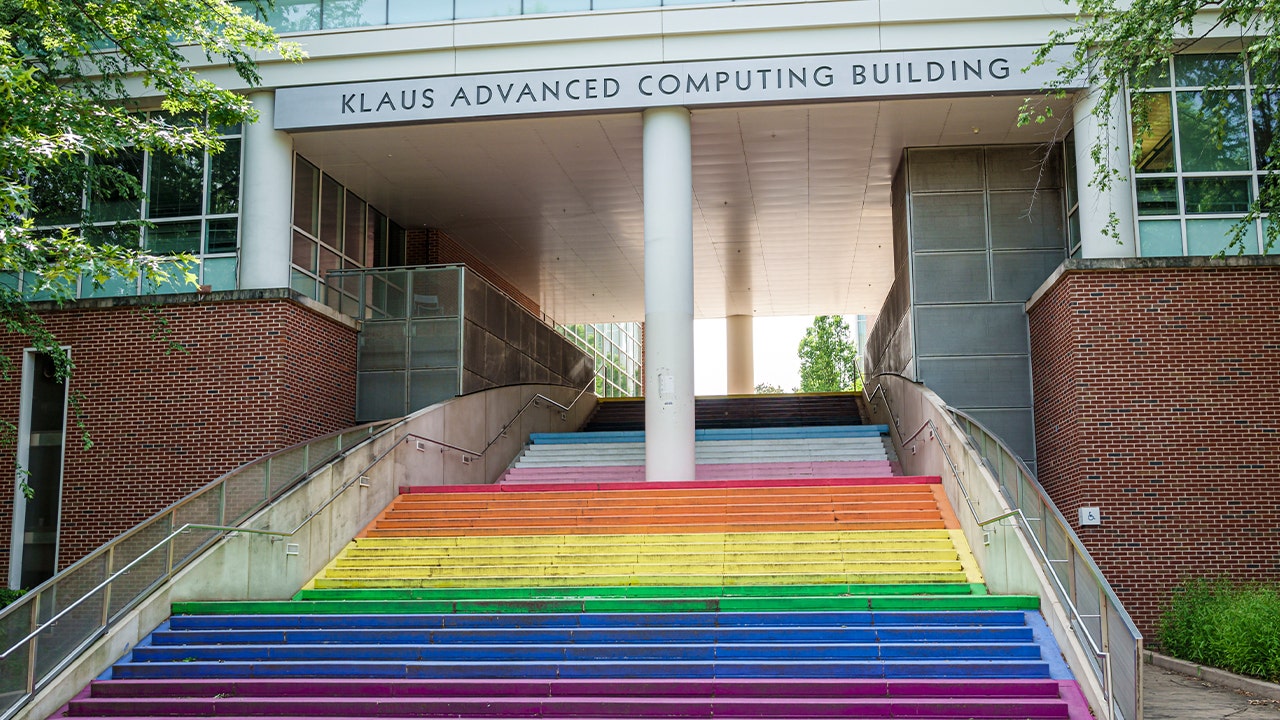
Six states, including one with a Democratic governor, have either banned or prohibited the use of diversity, equity, and inclusion (DEI) initiatives in public colleges and universities this year.
The practice of DEI in higher educational institutions has been controversial for several years, most frequently opposed by Republicans and described by critics, such as civil rights attorney Devon Westhill, as an “industry that pushes a left-wing, far-left ideological orthodoxy in essentially every area of American life.”
In 2024 alone, Alabama, Idaho, Iowa, Indiana, Kansas and Utah either banned or limited the use of such teaching or use in the application process in their state’s education system.
In January, Utah Gov. Spencer Cox, a Republican, signed legislation to prohibit institutions from engaging in “discriminatory practices” such as “that an individual, by virtue of the individual’s personal identity characteristics, bears responsibility for actions committed in the past by other individuals with the same personal identity characteristics.”
INDIANA UNIVERSITY COURSE TEACHES PEOPLE ARE INHERENTLY ‘OPPRESSORS’ BECAUSE OF THEIR RACE, SEX, RELIGION
The University of Utah campus is viewed from Rice-Eccles Stadium in Salt Lake City, Utah. (Rick Bowmer)
The anti-DEI law also banned schools from having any policy, procedure, practice, program, office, initiative, or required training that is referred to or called “diversity, equity and inclusion.”
In March, Republican Gov. Kay Ivey of Alabama signed SB 129 into law. It prohibits certain DEI offices, as well as the “promotion, endorsement, and affirmation of certain divisive concepts in certain public settings.”
The bill bans “divisive concepts,” such as “that any individual should accept, acknowledge, affirm, or assent to a sense of guilt, complicity, or a need to apologize on the basis of his or her race, color, religion, sex, ethnicity, or national origin” and “that meritocracy or traits such as a hard work ethic are racist or sexist.”
The legislation also required that restrooms be used on the basis of biological sex rather than gender identity, and that public institutions of higher education “authorize certain penalties for violation.”
Gov. Kay Ivey takes questions from reporters during a press conference at the Alabama State Capitol Building in Montgomery, Ala. (Reuters)
Also in March, Indiana adopted legislation to amend the duties of state educational institutions’ diversity committees and increase “intellectual diversity.” Additionally, the Indiana House introduced legislation to further prohibit DEI teachings in schools by mandating that educators “shall not promote in any course certain concepts related to race or sex.”
BIDEN EDUCATION DEPARTMENT SPENT OVER $1 BILLION ON DEI GRANTS: REPORT
Kansas Gov. Laura Kelly, a Democrat, allowed legislation prohibiting postsecondary educational institutions from engaging in certain DEI-related actions to become law without her signature. The bill, passed in April, imposes a $10,000 fine on any public institution that employs DEI practices in faculty hiring or student enrollment processes.
“While I have concerns about this legislation, I don’t believe that the conduct targeted in this legislation occurs in our universities,” Kelly wrote in her passage of the bill.
Iowa Gov. Kim Reynolds, another Republican, signed an education-funding bill in May that contained provisions to limit DEI in schools, just months after the state’s board of education began to scale back on such practices in higher education.
University of Iowa spring campus scene in Iowa City. (Don and Melinda Crawford/UCG/Universal Images Group)
The bill prohibits “any effort to promote, as the official position of the public institution of higher education, a particular, widely contested opinion referencing unconscious or implicit bias, cultural appropriation, allyship, transgender ideology, microaggressions, group marginalization, antiracism, systemic oppression, social justice, intersectionality, nee-pronouns, heteronormativity, disparate impact, gender theory, racial privilege, sexual privilege, or any related formulation of these concepts.”
Idaho became the latest state to determine that institutions may not “require specific structures or activities related to DEI.”
In December, the Idaho Board of Education unanimously agreed on a resolution requiring that institutions “ensure that no central offices, policies, procedures, or initiatives are dedicated to DEI ideology” and “ensure that no employee or student is required to declare gender identity or preferred pronouns.”
Other states, such as Florida, Texas and Tennessee, have all previously banned the practice of DEI in higher education.
Read the full article from Here



Braden Smith spent four seasons with Purdue basketball proving all the power conference programs who overlooked him missed out.
Now the former Boilermaker point guard has a chance to do the same in the NBA.
Smith, a Westfield native, is headed to the Pacers after Indiana traded for him when the Chicago Bulls selected him with the 38th pick in the 2026 NBA Draft, a source confirmed to IndyStar.
Smith is Purdue’s third draft pick in five years, joining lottery picks Jaden Ivey and Zach Edey among a group of now 11 NBA draft selections to play at Purdue under Matt Painter.
Here’s a look at Smith’s Purdue career and what he brings to the Pacers.
Before capping a career that includes two Big Ten regular season and two Big Ten Tournament championships, along with helping Purdue end a 44-year Final Four drought, Smith broke former Duke guard Bobby Hurley’s all-time NCAA assists record.
Along the way, Smith took home the 2025 Bob Cousy Award as the nation’s top point guard in a season where he also was the Big Ten Player of the Year. A two-time consensus first-team All-American, Smith finished his Purdue career eighth in career points (1,932), third in steals (249) and has the top three assist seasons in school history that helped add to his NCAA record total of 1,103.
Smith’s knock is his 5-foot-10 1/2 height measurement, but that didn’t deter him from being one of college basketball’s top players.
What Smith lacked in height, he made up for in basketball IQ. He’s lethal with a midrange jump shot and showcased an unblockable fadeaway that allowed him to shoot over lengthier defenders. He mastered manipulating defenses while playing with marquee big men the last four seasons.
His role in the NBA likely will be not require him to be the team’s primary playmaker immediately. Smith’s awareness of that fact pushed a more defensive-minded approach in preparation for the next level. At the NBA Draft Combine in May, Smith showed he’s capable of defending elite guards.
Smith is an elite competitor who never showed to shy away from the dirty work, which is something that can help him earn NBA minutes as a rookie while trying to find his footing in an unfamiliar backup role.
Nathan Baird and Sam King have the best Purdue sports coverage, and sign up for IndyStar’s Boilermakers newsletter.

CEDAR RAPIDS, Iowa (Iowa Capital Dispatch) – The majority of U.S. states will soon have to pay 5% to 15% of federal nutrition assistance benefits in their state, according to the U.S. Department of Agriculture’s release Wednesday of Supplemental Nutrition Assistance Program payment error rates.
House Resolution 1, commonly known as the One Big Beautiful Bill Act that was enacted in 2025, stipulated that states with SNAP payment error rates greater than 6% would be required to foot 5%, 10% or 15% of SNAP benefits costs in their state.
Iowa, with a payment error rate of 5.34% in 2025, is just one of nine states with an error rate below 6% and that won’t have to match a portion of the SNAP benefits it pays out, starting in October 2027.
According to USDA, SNAP payment error rates measure the accuracy of states in determining who is eligible for SNAP and how much they receive. The rate is calculated via a series of reviews from state and federal agencies where instances of overpayments and underpayments are identified.
USDA’s SNAP quality control page says errors are “largely unintentional” and might be the fault of a state agency or a SNAP household.
Eighteen states had payment error rates above the national average of 10.62%. Per the quality control process, these states will have to either pay USDA a determined amount, or invest 50% of that amount into activities that will fix the root causes of the payment errors.
USDA said that while the 2025 average payment error rate is a “modest” decrease from the 2024 average error rate of 10.93%, it represents $10.1 billion in improper payments.
Secretary of Agriculture Brooke Rollins said the latest payment error rates show that “state accountability is severely lacking” in SNAP.
“USDA has taken historic action to help interested states curb SNAP waste, and I hope other states, regardless of political leadership, prioritize needy families and the American taxpayer over politics,” Rollins said in a news release.
An analysis of H.R. 1 from the Congressional Budget Office estimated that the law, which included several changes to SNAP benefits in addition to the error rate cost share, would reduce federal spending on the SNAP benefits by $255 billion between 2025 and 2034. CBO also estimated that state spending on SNAP benefits would increase during the same period by $85 billion.
Critics of the bill said the cost shift to states would endanger the SNAP program and stress state budgets.
According to the 2025 error rates from USDA, 41 states had payment error rates above the 6% threshold set by the 2025 law. South Dakota had the lowest error rate at 2.47%. Idaho, Kentucky, Nebraska, Utah, Vermont, Wisconsin and Wyoming were the other states with rates below 6%. Alaska had the highest error rate of 23.15%.
The higher the error rate, the greater the share, up to 15%, the state will have to pay of its SNAP benefits, which are otherwise 100% footed by the federal government.
In addition to the cost share, states with a payment error rate in excess of 6% are required to submit a corrective action plan to the Food and Nutrition Administration, formerly known as the Food and Nutrition Service, to explain the root cause of the payment errors and how the state plans to correct the errors.
Copyright 2026 KCRG. All rights reserved.
-

 Connecticut2 minutes ago
Report details economic and racial disparities in Connecticut schools
-

 Delaware7 minutes ago
Delaware Justice Departing to Head Up New University Law Center
-

 Florida14 minutes ago
Florida man accused of supplying fentanyl that killed woman in Hillsborough County
-

 Georgia17 minutes ago
Miami lands elite Georgia duo: OL Kweli Fielder and QB CJ Cypher commit to the Hurricanes
-

 Hawaii22 minutes ago
Red Lobster exits Hawaii with closure of Waikiki location | Honolulu Star-Advertiser
-

 Idaho29 minutes ago
Large police presence near Taco Bell in Blackfoot – East Idaho News
-

 Illinois32 minutes ago
Illinois could face new costs because of high error rate in SNAP food aid
-

 Indiana37 minutes ago
Braden Smith to play for hometown Indiana Pacers after NBA draft selection, trade

