South Dakota
‘The kids are what you love:’ South Dakota foster families share their stories


Editor’s note: This is the eighth in a series of stories on children that Jackie Hendry, producer and host of South Dakota Public Broadcasting’s “South Dakota Focus” is writing for South Dakota News Watch. Each month, she previews the upcoming show.
SIOUX FALLS, S.D. – South Dakota has more children in the foster system than families to care for them. On average, there were more than 1,000 children in the system in any given month last year, but just over 800 foster families licensed statewide.
Children enter the system for a number of reasons, but the leading causes of foster placement in the state are neglect, parental substance abuse and parental incarceration, according to the National Data Archive on Child Abuse and Neglect.
The shortage of foster families is not a new problem.
In May 2021, Gov. Kristi Noem launched the Stronger Families Together initiative to highlight the need. In an email, a spokesperson for the Department of Social Services said 2,000 families have reached out for more information since the program’s launch, and 669 families have completed screening and training to become licensed foster care providers.
But the need persists.
“Foster families are needed in all communities across South Dakota, most critically in the western and central parts of the state,” the DSS spokesperson continued. “Foster families are needed for all ages and genders; however, there is a significant need for more Native American foster families. The Department also holds a need for foster families who can be available to care for sibling groups, older children, and children whose special needs require ongoing medical, mental health, and/or behavioral health care. Foster families capable of supporting services to address the developmental needs of children are also needed.”
Current foster families receive regular communication from the Department of Social Services on children who need placement options. Two foster families in the Sioux Falls area — where most foster families in the state are located — shared their stories in hopes of encouraging other families to get involved.
Serious problems are a small part of foster care
Tammy Vande Kamp is a nurse practitioner in the mental health field in Hartford. She initially learned about foster care from her husband’s family and then from a program at their church. Their first placement was a 10-day-old newborn they took home from the neonatal intensive care unit.
“He stayed with us for eight months, and then we were able to reunify him with his mom,” said Vande Kamp.
She and her husband have been foster parents for two years. Like many foster families, the Vande Kamps get regular emails from the Department of Social Services looking for placements for kids with nowhere else to go.
“I mean – we’re full. We have right now four foster children and two biological children living in our home, so we’re at capacity, and it’s sad,” said Vande Kamp.
She worries that press coverage of the foster system is too focused on the horror stories.
“We hear about the foster children that maybe run away. Or we hear about the foster parents that abuse the foster children or the kiddos that end up going home and they end up abused or unfortunately, maybe even they’re killed. It’s a very, very small part of foster care,” Vande Kamp said. “We have been fortunate to have some beautiful children in our home. Yes, there are challenging times. Yes, we have hard times, they have hard times. But there is so much good that comes out of them and us.”
Attachment to foster family helps kids later in life
While the common stigmas about foster care are likely one deterrent for potential foster families, another source of hesitation Vande Kamp often hears is a fear of getting too attached.
“I used to feel the same way,” she said. “I learned through classes and through the program that we were teaching them how to be attached. We’re trying to teach these children to attach so that when they’re older, when they’re adults, they can attach to other people. They can trust people.”
Vande Kamp said she was sad saying goodbye to her first foster child, but she was also happy to reunify him with his mother.
“I had a peace knowing that we gave him what he needed for the time he was with us,” she said. “I knew that we gave him the best of us that we could give him, and we gave him a good start for her to then continue on.”
There are several Facebook groups for foster parenting, including one Vande Kamp joined for foster parents in Minnehaha and Lincoln counties. She consistently saw posts asking for a support group for foster parents.
“So we started one,” said Vande Kamp.
Communities challenged to lend support beyond toys
What began as a gathering at a Scooters coffee shop now is a monthly meeting at Tre Ministries in Sioux Falls. She acknowledges it can be a safe place to vent, but it’s mostly an opportunity for foster parents to get advice from each other about state forms and available services.
“Because you can ask your social worker, but sometimes they’re busy and they don’t have time to call you back,” said Vande Kamp. “And for me personally, my best resource has been other foster moms who have been in this longer than I have.”
The informal support group is one kind of resource Vande Kamp sees lacking for foster families and the children they care for.
“I think we have great resources for things. We have great resources for clothes, diapers, toys,” said Vande Kamp. “We don’t have great resources for people.”
For example, Vande Kamp said she’d love to see a movement to provide frozen meals for foster families to occasionally ease the burden of meal prep on top of other obligations. More than that, she wants to see communities rise to the occasion to serve children in need.
“One thing my children don’t need more of is toys. They don’t need more toys. They don’t need another blanket. And they don’t need another stuffed animal. They need people,” she said. “They need other adults in their lives who can be positive role models. And certainly the Native American population of children need positive Native American role models.”
Indigenous foster care in short supply
Native American children made up 74% of children in the state foster system as of May 2023. The federal Indian Child Welfare Act prioritizes placing Native children with relatives or other Native families. But of the 808 state-licensed foster families in South Dakota last year, just 86 were Native American.
Brandy and Scott Louwagie of Sioux Falls were one of those families.
Brandy is a member of the Rosebud Sioux Tribe. They’ve been fostering for 10 years and have almost exclusively had Native children placed with them. The Louwagies adopted their three children from foster care and were fostering an infant girl earlier this month.
“The responsibility that comes with being an ICWA home is just making sure those children, if they’re connected with their culture, to continue that connection,” said Brandy. “And if they’re not, introduce them to that side of their culture so that if they are seeking that when they’re older or something, it’s not something brand new to them when they’re trying to seek that heritage.”
Brandy said her Native identity has helped her develop a rapport with the birth relatives of some foster placements.
“The primary goal is always reunification of a child with their biological family,” she said. “As foster parents, it’s our job and our duty to help with that.”
Brandy and Scott work for Daktronics, and both travel frequently for their role. One resource they rely on is child care.
“If we didn’t have child care, there’s absolutely no way we could foster,” she said.
“It’d be too much impact on our lives,” he added. “We’d have to get new jobs.”
The Lost Children: An Argus Leader/South Dakota Searchlight investigation into ICWA in South Dakota
Benefit is worth the time commitment
Like other foster families, the Louwagies regularly receive emails and phone calls about children who need a place to stay.
“Our licensing person just came in to relicense us,” Brandy said. “You tell them as a foster home how many children you can accept. … So she says, ‘I know your hands are full, but can you take on more kids?’ And we’re like, we can’t. We do what we can, as much as we can. But she said, ‘We have so many children who need a placement.’”
The Louwagies also hear prospective foster parents worry about the time commitment or that they would get too attached to kids they’d ultimately return back to their families.
“We are so busy all the time,” said Brandy, gesturing to Scott. “I mean, we have sports, doctors’ visits, both of us travel — so pretty much one of us is always doing almost everything. And the thing is, yeah, the kids are what you love. That’s the only reason we do foster care is because of the kids.”
Both Brandy and Scott agree that they keep fostering because they value the chance to give children a sense of safety and security in a traumatic point in their lives.
“You just have to understand: If I can take the hurt of a child away, that’s what we’ll do,” Brandy said.
How to watch ‘South Dakota Focus’ on SDPB
The next episode of “South Dakota Focus” airs on Thursday, April 25, at 8 p.m. Central time / 7 p.m. Mountain time. It can be viewed on SDPB-TV 1, Facebook, YouTube and SD.net
The episode includes:
- Stories from two former foster children who aged out of the child welfare system
- Stories from foster families about their challenges and what keeps them motivated to care for children
- The state Legislature’s creation of the Indian Child Welfare Advisory Council within the Department of Social Services



SIOUX FALLS, S.D. (Dakota News Now) – Spring planting season has officially begun, and Sioux Falls is taking new efforts to revitalize the city’s urban forest.
It’s all part of the new initiative through Sioux Falls and their CommuniTree program, which is going to plant roughly 150 plants a day to help protect and provide for our environment for decades to come.
This past fall, the city of Sioux Falls announced it had received a 3 million grant from the USDA Forest Service. The funds are being used to restore the city’s tree population by planting approximately 5000 trees over the course of a few years.
“If you have room to plant trees within the adjacent right-of-way and you have an approved planting permit, we will issue a $100 voucher per tree for the planting of those trees,” said Bryan Peterson, Urban Forestry Specialist. “Vouchers are only issued to approved planting locations. Vouchers are not issued to properties already enrolled in a city cost-sharing program focused on tree planting.”
Sioux Falls has lost 17,000 ash trees to the invasive emerald ash borers, and through the CommuniTree program, they hope to plant 1200 trees this spring. It’s voluntary, and residents have the option to choose from six trees.
“There’s a lot of trees and even within our park system where they get dinged with lawnmowers or string trimmers and that over time can actually kill the tree itself,” said Peterson in terms of how to take care of your trees.
Sioux Falls was selected for the grant based on the impact it would have on the city.
“We have several communities in Colorado that are currently working on them, but we also have some domestic grants that go directly through the state of South Dakota,” said Amanda Marr, who is with the USDA Forest Service. “And then South Dakota therefore passes it down through communities.”
After years of losing trees to invasive pests, Sioux Falls is turning over a new leaf. They encourage any resident to look into the program so they can help plant a tree in their own front yard and help make a difference.
Copyright 2026 Dakota News Now. All rights reserved.


Jefferson’s Makenzie Bierman discusses semifinal win over Lincoln
Makenzie Bierman drove in a team-high three runs in Jefferson’s semifinal victory over Lincoln.
The 2026 South Dakota High School Activities Association (SDHSAA) softball season is underway, and teams all across the state will be vying for the state championship title over the next two-plus months.
Here’s a rundown of each of the three classes and which teams can win the state championship, broken down into three tiers — defending champion, contenders and dark horses.
Class AA
Defending Champion: Sioux Falls Jefferson
Jefferson broke through in 2025 as the No. 4 seed, beating two-time state champion Sioux Falls Lincoln in the semis before shutting out Sioux Falls Washington in the championship game.
The Cavaliers’ pitching led the way last season, but Whitney Portner graduated, leaving Tya Devericks projected to hold down the circle the most. The now-junior pitcher recorded a 2.96 ERA with 28 strikeouts in 26 innings a season ago.
Devericks, Macy Bryant and Brooklyn Herrera form a three-headed monster at the top of Jefferson’s lineup that can compete with nearly any in the state.
Portner is a massive loss for a breakthrough Jefferson team, but the Cavaliers appear to have the pieces in place to repeat if things fall right.
Contenders: Sioux Falls Lincoln, Harrisburg, Sioux Falls Washington, Brandon Valley
Sure, this list includes the rest of the top five seeds from last year’s state tournament, but there’s a reason for all of them to be included.
Lincoln and Harrisburg are both off to 0-1 starts, but they have the track record to give some level of confidence they’ll be near the top of the state come postseason time. Lincoln lost a bunch of seniors from last year’s team, but won the first two SDHSAA state championships and has been the top seed all three years. Harrisburg has dealt with a little less roster turnover this year and was the No. 2 seed all three years, even if it only ended in one second-place finish.
Washington finished second last season with a relatively young roster, and it feels like the program has been ascending, even if the seeds have been relatively the same.
Brandon Valley has to replace nearly 100% of its innings pitched from last year, but most of the offense returns and the Lynx could very well slug their way to contention and their first state title since softball was officially sponsored by the SDHSAA in 2023.
Dark Horses: Tea Area, Sioux Falls Roosevelt, Rapid City Stevens, Brookings
There’s very few dark horses in Class AA, given there are only 17 teams, but all three have a case to break out this season.
Tea Area already has a win over Lincoln this season after finishing with a 6-11 record a season ago. The Titans’ early win can be great for confidence and propel them back to the top of the state after making back-to-back Class A state title games in 2023 and 2024.
Sioux Falls Roosevelt is returning lots of production from a young team in 2025. The Rough Riders didn’t get off to the best 2026 start with a big loss to Brandon Valley, but they have the potential to improve a ton throughout the season and make a leap into the upper tier of Class AA.
Rapid City Stevens went 16-4 a season ago and didn’t lose a ton of production, but the No. 6 seed in 2025 will seemingly always face an uphill battle with the travel required to get in games against Class AA competition.
Brookings had a dominant team in 2023 that fell just short and has lost in the SoDak 16 each of the last two years. The Bobcats had a stable of freshmen last year who can make a leap and bring Brookings softball back to the precipice of state title contention.
Class A
Defending Champion: West Central
West Central has been in each of the first three Class A state championship games, and the Trojans should be extremely strong again with a large senior class.
West Central has already dropped a 17-15 game to Madison to open the season, but a few losses crept into the regular season last year. The Trojans went 22-0 and won a state championship in 2023, and went 22-1 and dropped the state title game to Tea Area in 2024 before a 21-3 run to the state title a year ago.
This year’s crop of Class A softball appears to be even better than the past, and the Trojans will need to dig deep and pull out some tough games to repeat and win their third Class A state championship.
Contenders: Tri-Valley, Madison, Elk Point-Jefferson, Dell Rapids, Dakota Valley
This list essentially comprises the rest of the year in, year out contenders in Class A. All five teams consistently show up in the state tournament and beat each other as West Central mows down its opposition en route to the state championship game.
Tri-Valley was last year’s No. 2 seed and runner-up, and is already off to a 3-0 start in 2026. The Mustangs have most of the same roster as last year and will be able to plug in most of their holes with 2025 backups.
Madison has the aforementioned win over West Central already, but has taken a loss to Tri-Valley. The Bulldogs have consistently had an offense in the top third of Class A, but things can change quickly if the big-game run prevention shows up.
Elk Point-Jefferson, like Tri-Valley, is off to a 3-0 start. The difference is the Huskies haven’t quite faced the level of competition as the Mustangs. Elk Point-Jefferson has dispatched of that opposition accordingly, and early-season momentum is never a bad thing.
Dell Rapids has finished third each of the last three seasons, and lots of young talent returning can help the Lady Quarriers break through the barrier. Dell Rapids’ seed has gotten worse over the last three years, so there’s also the chance there’s another dip.
Dakota Valley has been the most up-and-down of the teams in this tier, bouncing from the third seed to seven seed year to year. The Panthers have a difficult early-season schedule, where a lot will be learned about this group.
Dark Horses: Beresford, Sioux Valley
This is a short list with the top contenders in Class A being so stable, but each team has a reason for being listed.
Beresford is off to a 2-0 start and has clubbed Class B’s Freeman/Marion/Freeman Academy and Castlewood. The Watchdogs’ next two games are against Madison and Dakota Valley, so their long-term viability in this race will be determined soon.
Sioux Valley is looking to build off a 16-8 2025 season with only two seniors to replace. The Cossacks have already lost a 6-2 game to Tri-Valley, but they need just a couple big wins to break through into the upper tier of the class.
Class B
Defending Champion: Deuel
This is the first defending champ who doesn’t have a clear path to a repeat due to the graduation of pitcher Katrina Hagberg. A strong pitcher can be overwhelming, especially at smaller schools, and losing that weapon can pose serious problems for a team that surrendered 43 runs in 24 games.
Also, Deuel only scored five runs in the last two state tournament games, fully relying on pitching and defense to beat elite competition.
Counting out the defending champs is never a good idea, especially with so much of the team coming back, but this feels like a year for the Cardinals to reset and find a new way to win games.
Contenders: Castlewood, Flandreau, Gayville-Volin, Florence/Henry, Bon Homme
The theme here is teams that didn’t lose their star pitcher or lots of seniors from last year, as pitching is at a premium in Class B.
Castlewood has lots of roster continuity, while also coming off a 16-6 season and a sixth-place finish in the state tournament. The Warriors won the 2023 championship and were second in 2024, and have a few tough tests against Class A teams lined up to determine how strong they really are.
Flandreau could technically be considered a dark horse given they weren’t in the state tournament a season ago, but the Fliers are off to a dominant 2-0 start with 32 runs scored. Flandreau could make a leap from a SoDak 16 appearance to a run in the Class B state tournament.
Gayville-Volin is also 2-0 this season, and the Raiders have won in a low-scoring game and had the offense go for 16 runs. The Raiders made a run to the state championship game as the No. 6 seed, and this could be the year they bump up a step and win it all.
Florence/Henry is another example of a team that went to the state tournament and has a lot of roster continuity. The Watchdog Classic on May 9, will determine a lot about how the Falcons will fare this season, with Beresford, Dell Rapids, Tri-Valley and West Central all set to test Florence/Henry.
Bon Homme was the No. 2 seed in 2025 and had a dynamic offense, scoring 27 runs in three games at the state tournament. The Cavaliers’ offense remains mostly intact and hasn’t gotten on the field yet, but appears to be the best in Class B.
Dark Horses: Scotland/Menno, Chester, Clark/Willow Lake
There’s a few teams that can break into the Class B state championship picture, but they all have different ways of doing it.
Scotland/Menno is already 2-1 on this young season, and the Trappers have dominated their two inferior opponents this year. Scotland/Menno made the state tournament in 2024 and could be returning in 2026.
Chester already has a huge win after being upset in the SoDak 16 a season ago. The Flyers have five seniors and five players who are freshmen or younger, so they could have some ups and downs and get hot at the right time.
Clark/Willow Lake has started 1-2, but played a couple very close, low-scoring games against Avon and Elk Point-Jefferson. The Cyclones have a very young team and could also cause problems if things come together throughout the season.

South Dakota is separated from Central Europe by about 4,000 miles. On the outside, it seems the two have little to nothing in common, but longstanding partnerships known as “sister cities” have forged a deep bond between the Mount Rushmore State and the country of Germany.
It makes sense as approximately 34% of South Dakotans identify with German heritage. But these connections go far beyond just family trees.
From the Black Hills to the banks of the Big Sioux River, here are the four South Dakota communities that have found their ‘twins’ across the Atlantic Ocean.
Credit: Canva
Sioux Falls, South Dakota – Sister City: Potsdam, Germany
Credit: Canva
Sioux Falls and Potsdam have been ‘Sister Cities’ since 1990. That year stands out as it was just one year prior when the Berlin Wall fell, uniting East and West Germany after nearly 45 years of being apart. Potsdam is located in the former East Germany and has a similar population to that of Sioux Falls, at around 184,000 residents. It’s famous for its Sanssouci Palace and for being the spot of the legendary ‘Potsdam Conference’ of 1945, in which the allied powers of the United States, United Kingdom, and Soviet Union decided on Post-WW2 order.
Other sister cities include Rapid City and Apolda, Germany. This partnership began in 1994 and contrasts the ‘City of Bells’ (Apolda) with the ‘City of Presidents’ (Rapid City). Both towns have a great respect for public art and historic landmarks.
There are also the sister cities of Vermillion and Ratingen. Established in 1969, this is by far the oldest partnership of all the cities on the list. The two have traded students in an exchange program for decades and have also shown their friendship in other ways. In Ratingen, the Vermillionring and the South Dakota Bridge were built to honor the partnership. In Vermillion, Ratingen Square was inaugurated back in 2010.
Finally, much like Sioux Falls and Potsdam, the cities of Brookings and Schwanewede began their partnership back in 1990. The two have one big thing in common, too, as they’re both college towns. It has since become a very active exchange, particularly focusing on student programs and cultural visits that highlight their shared agricultural and university-town identities.
Even more surprising, Potsdam isn’t Sioux Falls only sister city. The other is found in Northern Ireland, and you can read all about it in this article.
10 Smallest Towns in South Dakota

April Snow Too Little, Too Late To Save Wyoming’s Historically Low Snowpack

Crypto Investment Scams Were the Most Costly Type of Fraud in the U.S. in 2025

Landscape of Climate Finance in Ethiopia – CPI

Health and fitness boost: four outdoor exercise sites on the way

Super Duperr Movie Review: A wild ride filled with laughter and emotion

Florida High School Football Rankings: Top 25 teams – Oct. 21

How old is Bo Nix? What to know about Oregon quarterback ahead of 2024 NFL Draft

Cleary's 21 help Le Moyne down Central Connecticut State 69-64 in OT

99th annual Pony Swim held in Virginia

Indiana Members Credit Union announced as new anchor tenant at Bottleworks District

Ilhan Omar calls Trump an ‘unhinged lunatic,’ urges booting him out of office
Between Budapest and Brussels: Péter Magyar’s political tightrope
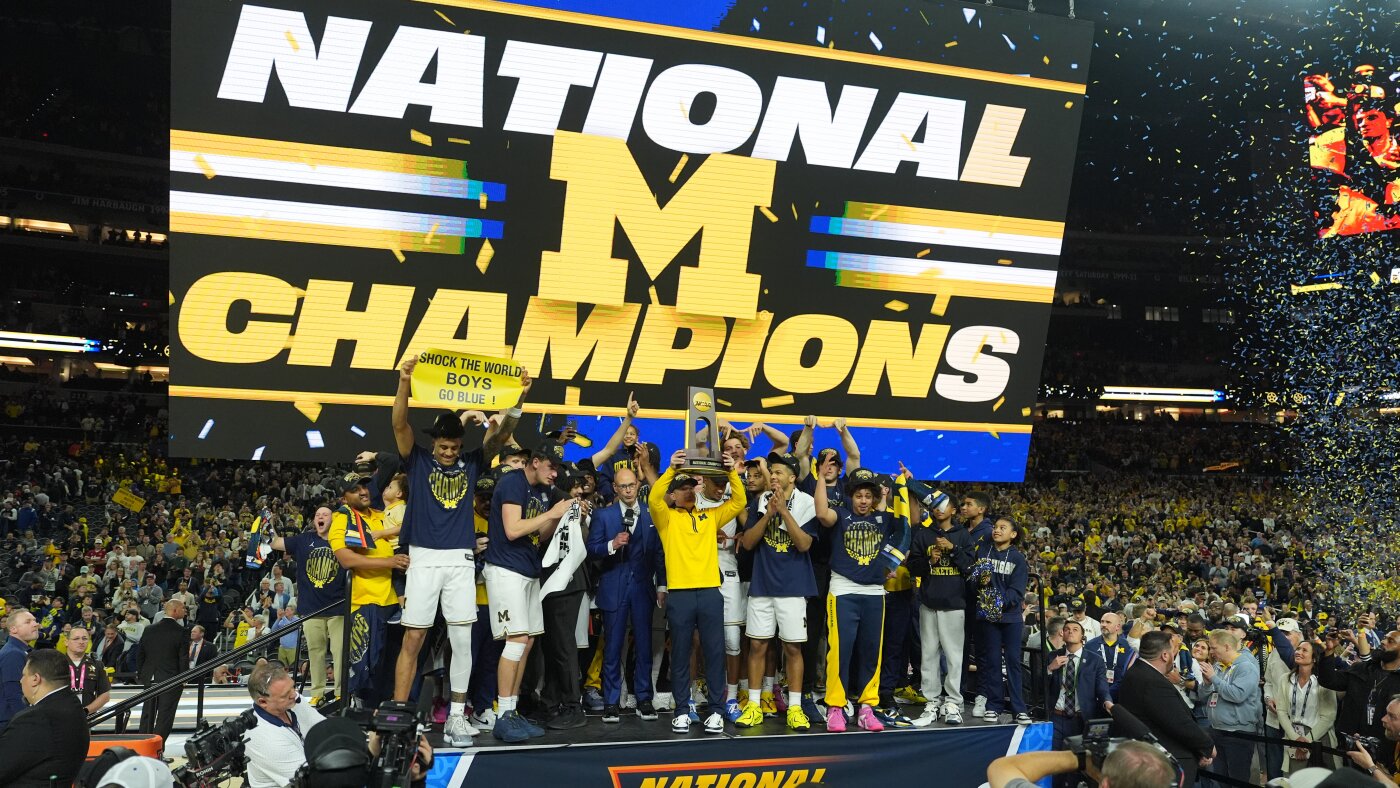
Michigan muscles its way to program’s 2nd NCAA basketball title, beating UConn

Map: Minor Earthquake Strikes Near San Diego

Trump claims he’d win as the president of Venezuela — just needs to ‘quickly’ learn Spanish
-

 Atlanta, GA2 days ago
1 teenage girl killed, another injured in shooting at Piedmont Park, police say
-

 South-Carolina1 week ago
South Carolina vs TCU predictions for Elite Eight game in March Madness
-

 Movie Reviews5 days ago
Vaazha 2 first half review: Hashir anchors a lively, chaos-filled teen tale
-

 Vermont1 week ago
Skier dies after fall at Sugarbush Resort
-

 Politics1 week ago
Trump’s Ballroom Design Has Barely Been Scrutinized
-

 Politics1 week ago
JD Vance says he was ‘obsessed’ with UFOs, believes aliens are actually ‘demons’
-
 Entertainment5 days ago
Inside Ye’s first comeback show at SoFi Stadium
-

 Politics1 week ago
Jeffries declines to break with indicted Democrat after ethics panel’s guilty verdict