Education
Liz Moore on ‘Long Bright River’ and the Slow Burn of Success


No matter how you slice it, Liz Moore has arrived.
This month, an adaptation of her blockbuster novel “Long Bright River” started streaming on Peacock. And her next book, “The God of the Woods,” now on the best-seller list for 36 weeks (and counting), will soon hit the million mark in sales — a distinction normally reserved for celebrities and novelists recognizable by last name alone.
Moore isn’t one of those authors. But, over the past two decades, she’s proved to be “a writer who can do anything,” as her editor Sarah McGrath put it.
Moore taps into an elusive sweet spot between literary and commercial fiction, populating vividly drawn settings with characters who seem to live, breathe and make terrible mistakes along with the rest of us. Her novels can be enjoyed by, say, a teenage girl and her 50-something father, defying genre and categorization to such an extent that, from one to the next, a reader might not register that they’re written by the same person.
“I get messages saying, I loved your new book. Do you have any others?” Moore, 41, said during an interview at a cafe in Philadelphia. “Or they’ll call ‘The God of the Woods’ my second book because ‘Long Bright River’ was my first that broke out.”
In fact, “The God of the Woods,” a mystery about siblings who disappear 14 years apart, is Moore’s fifth book. She wrote her first, “The Words of Every Song,” while she was a student at Barnard College. Shortly after she graduated in 2005, she signed on with an agent who’d come to campus for a panel on the publishing industry.
“I reached out and said, ‘I have this manuscript of interconnected stories about the music industry. Would you be interested in looking at it?’ She said yes,” Moore recalled. “Only in retrospect do I realize what a lucky break that was.”
At the time, Moore was more focused on singing than she was on fiction: Her folk album, “Backyards,” came out in 2007, the same year as “The Words of Every Song.” But it was her prose that attracted attention: The rock critic Robert Christgau described Moore’s book in The New York Observer as “likable, well-rendered, sweet.” He also praised her “wholesome values.”
In her early 20s, Moore worked in the editorial department of the Morgan Library and at Matt Umanov Guitars in the West Village. Gradually, she said, “I gave myself permission to think, Maybe fiction is something I could pursue in a more serious way.”
She got an M.F.A. at Hunter College, where she studied with Nathan Englander and Colum McCann and started working on her second novel, “Heft.” Her first agent had left the industry, and a second one, with whom she worked for more than a year, ultimately declined to represent the project.
After a dozen or so rejections, she signed on with Seth Fishman at the Gernert Company, who sold “Heft” and a third novel, “The Unseen World,” to W.W. Norton & Company. Both are tender and brainy — the literary equivalent of folk songs, with characters who hold the note.
“‘Heft’ did better than expected and ‘The Unseen World’ did more poorly than expected,” Moore said. The latter, which a Times reviewer called “fiercely intelligent,” came out in July 2016, two months after Moore’s daughter was born.
“I didn’t know how hard it would be when I agreed to go on tour with a newborn,” Moore said. “I was pumping in the bathroom. I was sleep deprived. I thought it would be possible and it was just …” She didn’t finish the sentence.
During that time Moore wasn’t sure she’d be able to complete another book, let alone sell it. But she kept writing and teaching — first at Holy Family University in Philadelphia, then at Temple University, where she now directs the graduate-level writing program.
“I was raised never to quit a day job,” Moore said. “I also love the community of teaching.”
“Long Bright River” grew out of a photo essay Moore worked on in 2009, when she first moved to Philadelphia. Jeffrey Stockbridge, a photographer, took pictures of women in the Kensington neighborhood who were struggling with addiction, and Moore wrote their stories. After the piece was published in “The Rust Belt Rising Almanac” (2013), she kept going back to Kensington, leading free writing workshops at a women’s day shelter for two years.
A story started to take shape, about a detective searching for her sister, who’s addicted to drugs.
“Since birth, I’ve been surrounded by family members in various states of active use or recovery,” Moore said. “I never name who they are, I don’t wish to speak for them or tell their stories, but my own story is being well versed in the language of addiction.”
Moore worked on “Long Bright River” for about four years, her average germination period. In 2018, Gernert sold the book to McGrath at Riverhead in a heated auction.
“I’m always looking for literary fiction that can reach a wide audience,” McGrath said. “I didn’t know I was looking for a police detective in Philadelphia. But Liz writes rich characters with such compassion, and she creates a real sense of place.”
The book, which came out on Jan. 7, 2020, was an instant best seller, a ”Good Morning America” Book Club pick and one of Barack Obama’s favorite books of 2020.
“It forced open certain conversations that had been buried in my family,” Moore said. “That was cathartic for everybody.”
About two months later, when the Covid pandemic struck, she was teaching a full course load via Zoom while caring for her daughter, who was 3, and her son, then 10 months old.
Moore said, “My husband and I built an improvised playpen in the living room.” They took turns working on the upper floor of their South Philadelphia rowhouse. Eventually Moore started waking up at 5 o’clock in the morning so she could squeeze in a few hours of writing.
“‘The God of the Woods” started “as an act of desperation, of trying to find out who I was again,” she said. “I went into autopilot and thought, I just have to do this.”
The book was “hellish” to write, Moore admitted: “It has so many characters. It has so many timelines. I never outline, so I just write and experiment and fail.”
Her approach brings a sense of immediacy to the mysteries surrounding the missing Van Laar children, who are practically royalty in the small Adirondack town where their wealthy family summers as a verb. One has the sense of the two cases being cracked in real time, even though the bulk of the action takes place in 1975.
The setting held particular meaning for Moore: Her ancestors settled in the Adirondacks, her grandmother was born nearby and her family still has a cabin in the southern part of the region. “It’s a special, almost spiritual place for us,” Moore said.
“The God of the Woods” was a Book of the Month Club pick and was voted in as the “Tonight Show” summer read for 2024. The book gained momentum from there, becoming such a stalwart on the best-seller list that the Riverhead team no longer calls Moore to announce the news. She receives a weekly email instead, and she doesn’t take it for granted.
Moore seemed pleased, if cautiously so, about the fandom she’s amassed in the past five years. “I’m incredibly pessimistic and superstitious as a rule,” she said.
“Liz deserves everything she’s gotten. No one deserves it more,” the author Carmen Maria Machado said. Several years ago, the two started a group for women writers in Philadelphia, which includes Asali Solomon, Kiley Reid, Emma Copley Eisenberg and Sara Novic, among many others.
Machado went on: “Liz has this instinct for community. She’s incredibly generous. And she’s a deeply empathetic writer, which I think is her superpower.”
For the Peacock adaptation of “Long Bright River,” Moore brought her collaborative knack to the writers’ room. “It’s the closest experience I’ll have to being good at sports, because it is so much the product of a team,” she said.
The show was mostly filmed in New York City, but includes graffiti by Philadelphia artists and appearances by Kensington residents, including the head of the St. Francis Inn, the outreach organization where Moore used to lead writing workshops.
“I use 3 P’s as a handy teaching tool, but it’s also the way I write books,” Moore said. “Place comes first. Then people, then problems.”
With her Temple students, Moore is sanguine about the reality of a writing career.
“I say, I still have a day job and you probably will too,” she explained. “But hopefully you can find beauty in art outside of work. If that means keeping a journal in which you write once a week, that too is meaningful. It serves as a huge comfort to me to know that even if all of this goes away I will still have that, quietly, in my life.”



In our national memory, George Washington is a mythic figure, cast in metal, carved in stone. His leadership, first as general, then as president, is so intertwined with the roots of this country that it is sometimes hard to separate the man from the idea of America. How does one imagine the living presence of such an icon, much less embody him?
There is a small fraternity of men bold enough to try. At historical parks and commemorations from Virginia to Seattle, these interpreters (their preferred term) transform themselves into Washington. Each has his own approach, but what all their representations seek to capture is a legacy that has endured from his time to ours. If America, at least in part, is an idea, then our national project becomes, like theirs, an act of interpretation, an imperfect attempt to translate some idealized vision into the messy reality of our own time.
— Ezekiel Kweku
“By some strange quirk
of genetics, I have
Washington’s exact
dimensions. Where my
sleeves fall on my wrist,
the size of my chest, the
size of my thighs, where
the breeches fall to my
knees, are all identical.”
John Koopman, 67, often performs
while riding his horse, Bear. He
has portrayed Washington for 20 years.
James Fryer, 70, wears a replica of a general’s uniform that Washington designed himself. He recently completed training to portray Washington for the nonprofit Historic Philadelphia.
“Some people portray George as a marble statue. I don’t do a marble George. I am interested in talking to everyone, even those who yell at me because George was a slave owner. I want to respect them, try to educate them, or maybe even inspire them.”
Vern Frykholm, 77, was moved to bring his interpretation of Washington to Washington State, where he lives, after seeing a 2011 performance in Pennsylvania.
Dean Malissa, 73, signs his personal
correspondence, including emails,
as Washington did: “Your Most Humble
and Obedient Servant.” He became
the Official George Washington
at Mount Vernon in 2004, and held
that role for nearly 20 years.
“I describe him sometimes as just a dude. I look at him and think, I could see myself in the same world, making similar bad decisions or similar good decisions.”
Daniel Cross, 39, portrayed a young Washington at Virginia’s Colonial Williamsburg until last year. He now works with organizations around the country.
Curt Radabaugh, 62, has 13,000 history books in his personal library, including several hundred about Washington. He is a veteran of the U.S. Marines and a retired police officer.
“He’s a mentor, a father
figure, and not only in the
sense that he’s a patriarch
of the country. Because
I grew up without a
father, he kind of became
my surrogate father.”
Brian Hilton, 58, says he researches
Washington’s era every morning before
his children get up and at night after
they go to bed. He is a high school history
teacher near Richmond, Va.
Daniel Shippey, 57, partners on interpretations with his wife, Kelly, who portrays Martha Washington. Kelly researched 18th-century hair techniques to create her husband’s costume hairstyle. They live in Virginia.
“You’re playing the myth of George Washington as well as the historical figure. I make his voice a little firmer and deeper than it probably was in real life. I play him a little funnier than he probably was. In reality, if you came to see him, he probably wouldn’t talk to you as much as I do.”
Doug Thomas, 53, is Washington’s second cousin nine times removed.
John Godzieba, 67, has reenacted
the crossing of the Delaware as
Washington every Christmas for the
past 16 years at Pennsylvania’s
Washington Crossing Historic Park.
“In many ways I don’t look like him. My eye color is wrong. My nose is wrong. My hair color is wrong. I wouldn’t have cast myself in this role.”
Ron Carnegie, 64, has portrayed Washington at Colonial Williamsburg for 20 years.
Ryan Williams, 37, is a veteran who specializes in playing a young Washington during the French and Indian War. He lives in Virginia.
“Some people portray
Washington almost
like a superhero.
I like to bring out that
he has faults. He’s a
person like you or me.”
Michael Grillo, 64, is a historical
tailor who hand-sews his own clothes
for reenactments. He also makes
period props, including two American
battle flags and pewter mugs
engraved with Washington’s crest.
Martin Schoeller is a photographer and director known for his close-up portraits of everyone from world leaders and celebrities to female bodybuilders. For this project, he used a large format camera to photograph 13 historical interpreters of George Washington — many of whom arrived in full uniform — over three days in Virginia and New York City.
Additional reporting by Tenzin D. Tsagong. Interviews have been edited and condensed for length and clarity. Top quotes from Brian Hilton, Daniel Shippey and Daniel Cross.
Produced by Sara Barrett, Danny DeBelius and Sam Whitney. Additional production by Olivia James.
One task the robots can take from us? Cleaning. Especially hard-to-access windows. So when writers Caroline Mullen and Evan Dent found this little guy — whose government name is “EcoVacs Winbot Mini” — they were intrigued. Could he clean the uncleanable? Caroline and Evan put their robot friend to the test at both the Wirecutter office and a high-rise apartment. Is a robo-window cleaner more effective than scrubbing yourself?

new video loaded: School Year Cut Short and Aid Delivery Slowed Amid Fuel Crisis in Cuba

By McKinnon de Kuyper
June 22, 2026
-
Culture35 minutes ago
Which Version of the ‘Odyssey’ Should You Read?
-
 Lifestyle38 minutes ago
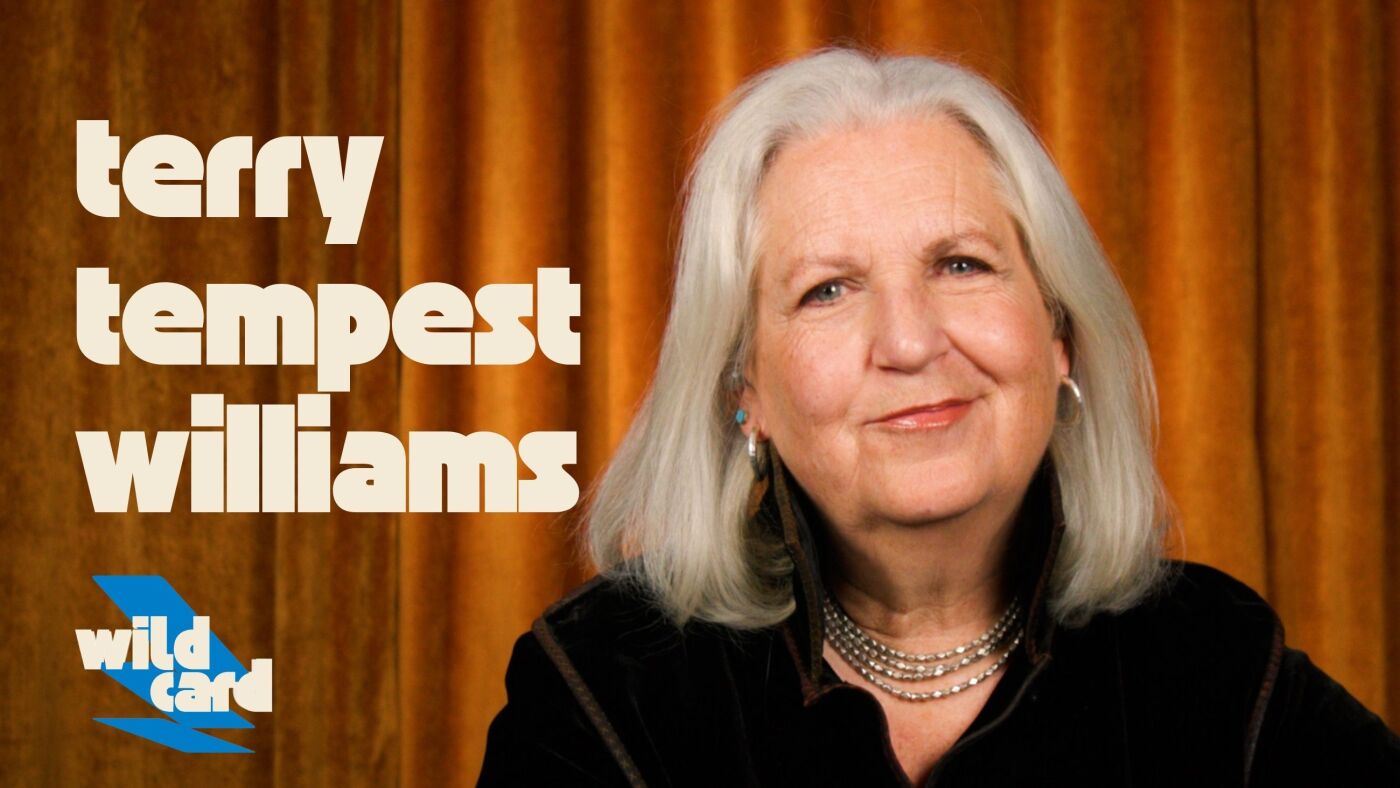
Terry Tempest Williams on why women with big ideas get labeled ‘crazy’ : Wild Card with Rachel Martin
-

 Technology50 minutes ago
Google’s Nest Thermostat has hit its best price of the year
-

 World53 minutes ago
Argentinian flight instructor jumps to death from plane, 22-year-old student forced to land alone
-

 Politics58 minutes ago
Omar’s disclosures erased millions, leaving her with potential negative net worth. She won’t explain why.
-

 Health1 hour ago
Dr Oz links obesity to chronic disease surge, says GLP-1s can ‘jumpstart’ better health
-

 Sports1 hour ago
Pirates star pitcher makes unfortunate history after being taken out in middle of perfect game bid
-

 Technology1 hour ago
Medical identity theft follows you into the doctor’s office

