South Dakota
State lawmakers reject expansion of free school meals in South Dakota


PIERRE — Lawmakers narrowly rejected
a bill
Monday that would have given more low-income students free school meals.
The state House Education Committee voted 8-7 to defeat the legislation.
“These are South Dakota’s most vulnerable families and kids,” Rep. Kadyn Wittman, D-Sioux Falls, told the committee. She said 7,580 South Dakota children would have been helped by the legislation.
The bill would have prohibited charging students who qualify for
federal reduced-price meals
. Those students’ parents or guardians make as little as $25,636 to $36,482 annually. Children of parents making less already qualify for free meals.
The bill also would have required school districts to ensure parents or legal guardians of eligible students complete and submit a federal school meal application annually. Proponents said doing so would ensure children eligible for federal programs are benefitting from them.
The state Department of Education would have been responsible for reimbursing school districts for the cost of providing the additional meals. The annual cost would have been about $579,000, according to the state Legislative Research Council.
The bill’s proponents described that as a price worth paying.
“It’s our responsibility as leaders and human beings to ensure that no child in South Dakota has to learn on an empty stomach,” testified Jesse Severson, with Hungry Hearts, a nonprofit helping low-income families.
Gay Anderson, the child nutrition coordinator for the Sioux Falls School District, and Krista Leischner, the student nutrition manager for Rapid City Area Schools, also testified in favor of the bill.
“Food insecurity is a reality in our state,” Leischner told the committee. “Food insecurity is not something students should experience in school walls. While I do not see this bill as ‘the’ answer, I do see this bill as a step in the right direction.”
Governor Kristi Noem’s Bureau of Finance and Management Commissioner Jim Terwilliger testified that “the goals of this bill are well-intentioned” but “there is no free lunch, meaning someone still has to pay.”
Terwilliger said the school lunch programs are “already heavily subsidized by the federal government.” He said the bill takes a burden currently being lifted by nonprofits and philanthropists and puts it on the shoulders of state taxpayers. Across the state, private efforts have helped cover unpaid school lunch bills; for example, 1,800 students’ lunch debts in the Sioux Falls School District were paid off by donations.
Terwilliger said the bill’s proponents would continue to push for more free meals if the bill passed.
“I believe this would just be the first step,” he said. “And more steps would be coming in the future.”
Wittman countered, saying that “if we want South Dakota to pull ahead in terms of test scores, lowering absenteeism, having better health outcomes for our kids, I can’t think of a better investment.”
Rep. Phil Jensen, R-Rapid City, motioned to defeat the bill. He said it’s the responsibility of the church to care for the needy, not the government.
“We are to be the hands and feet of Jesus, and by doing so, we can meet the needs of this effort,” Jensen said. “I think if anybody wanted to donate money, they could donate money to this cause. And as a Republican, I believe in less government and less intrusion in our lives. Nowhere in the constitution or state constitution does it say anything about feeding school children.”
Retired educator Rep. Roger DeGroot, R-Brookings, said his fellow lawmakers on the committee were losing sight of the point of the bill.
“Somehow we got involved in all kinds of different rabbit holes,” he said. “I don’t think it’s the responsibility of somebody running a public school program to run around and work with churches to raise money.”
Rep. Tim Reisch, R-Howard, expressed fiscal concerns.
“I don’t think it’s the state’s obligation to shore up something when the federal government already has a program in place,” he said.
Reisch said the federal debt is a “bigger burden to the youth of this nation than, probably, shortcomings in meal programs.”
Wittman said she does not plan any attempts to revive the bill this legislative session.
— This story can be found on South Dakota Searchlight’s website. South Dakota Searchlight provides free news and commentary on critical issues facing the state.

The South Dakota Lottery offers multiple draw games for those aiming to win big.
Here’s a look at June 27, 2026, results for each game:
Winning Powerball numbers from June 27 drawing
03-16-28-30-59, Powerball: 11, Power Play: 2
Check Powerball payouts and previous drawings here.
Winning Lotto America numbers from June 27 drawing
03-08-18-22-39, Star Ball: 06, ASB: 02
Check Lotto America payouts and previous drawings here.
Winning Dakota Cash numbers from June 27 drawing
02-21-25-30-32
Check Dakota Cash payouts and previous drawings here.
Winning Millionaire for Life numbers from June 27 drawing
26-32-38-51-52, Bonus: 05
Check Millionaire for Life payouts and previous drawings here.
Feeling lucky? Explore the latest lottery news & results
Are you a winner? Here’s how to claim your prize
- Prizes of $100 or less: Can be claimed at any South Dakota Lottery retailer.
- Prizes of $101 or more: Must be claimed from the Lottery. By mail, send a claim form and a signed winning ticket to the Lottery at 711 E. Wells Avenue, Pierre, SD 57501.
- Any jackpot-winning ticket for Dakota Cash or Lotto America, top prize-winning ticket for Lucky for Life, or for the second prizes for Powerball and Mega Millions must be presented in person at a Lottery office. A jackpot-winning Powerball or Mega Millions ticket must be presented in person at the Lottery office in Pierre.
When are the South Dakota Lottery drawings held?
- Powerball: 9:59 p.m. CT on Monday, Wednesday, and Saturday.
- Mega Millions: 10 p.m. CT on Tuesday and Friday.
- Lucky for Life: 9:38 p.m. CT daily.
- Lotto America: 9:15 p.m. CT on Monday, Wednesday and Saturday.
- Dakota Cash: 9 p.m. CT on Wednesday and Saturday.
- Millionaire for Life: 10:15 p.m. CT daily.
This results page was generated automatically using information from TinBu and a template written and reviewed by a South Dakota editor. You can send feedback using this form.


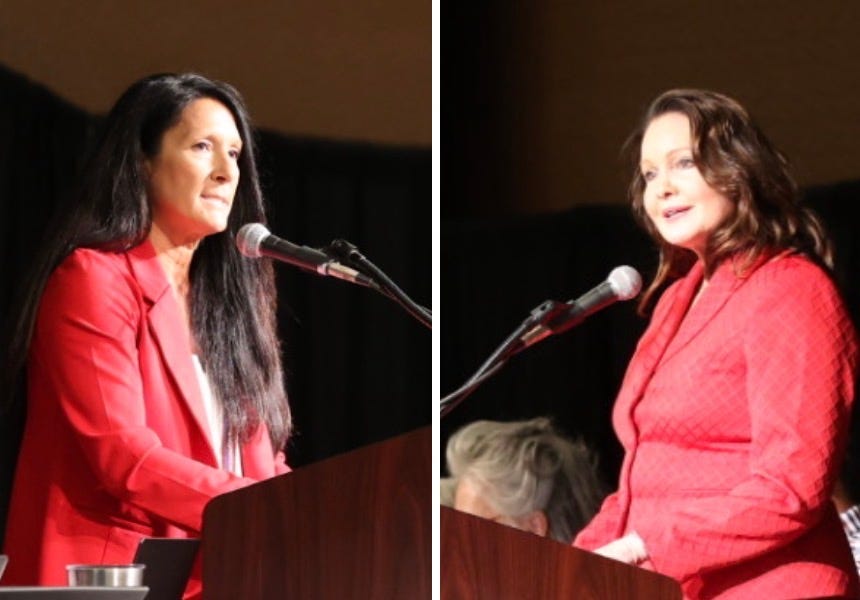
South Dakota is getting another chief elections officer.
Secretary of State Monae Johnson failed to win the Republican nomination for a second term during the South Dakota Republican Party Convention Saturday in Rapid City, where GOP delegates instead favored another Pierre outsider to oversee the state’s elections for the next four years.
“When this office runs well, you don’t notice it. When it doesn’t, you feel it everywhere,” Rep. Heather Baxter told a capacity crowd of delegates and attendees at The Monument events center, where she received nearly 60 percent of votes cast by more than 700 party delegates.

Populist push falls short in South Dakota GOP contest for Public Utilities nod



South Dakota
Work, housing and staffing: How South Dakota’s corrections chief aims to keep inmates from returning

SIOUX FALLS – South Dakota’s repeat offense rate for people who leave prison can return to the low point it saw a a dozen years ago, the state’s corrections secretary said Tuesday.
Nick Lamb, now six months into his role atop the Department of Corrections, laid out the agency’s plan Tuesday at the Correctional Rehabilitation Task Force at its meeting in Sioux Falls. The plan includes work release programs, residential housing for inmates and a top-to-bottom restructuring of how the department operates.
Recidivism measures how many inmates return to prison within three years of their release. The figure for South Dakota stood at
50%
in the most recent data, which was based on the performance of inmates released in 2021.
South Dakota’s lowest recidivism rate in the last two decades was 39% in 2014.
“We’ll get back there,” Lamb said Tuesday.
Lamb told reporters after the meeting he wants “to start getting in the business of closing prisons” during his tenure.
“Our population is too high for our state,” Lamb said. “We need to get our population down, but we’ve got to give the offenders the tools they need that they haven’t always had.”
Several recommendations presented on Tuesday, by Lamb and other criminal justice experts, will require more staff and funding.
State Rep. John Hughes, R-Sioux Falls, worries that the Legislature’s budget-setting committee will balk at new spending.
“My concern is that we put all these elaborate proposals together, then when we get to appropriations we’re going to hit the wall,” Hughes said.
Inmates return to work release
Under Lamb’s predecessor, Kellie Wasko, pay for inmate work performed outside the prison walls
was increased to minimum wage
. After that policy change, fewer communities and organizations contracted inmate workers for community service jobs.
Rep. Tim Reisch, R-Howard, said most of the roughly 250 minimum-security prisoners he oversaw during his tenure as corrections secretary participated in work release.
“They got up and they all had jobs. They were used to getting out of bed, going to work, getting in a habit of that,” Reisch said.
When he toured the prison last year, fewer than 20 were working, he said.
Lamb has cut inmate wages below minimum wage since he started.
“We reached out to a lot of these communities, basically asking if they need help,” Lamb said. “We lowered the wage, which upset some people, but we need them out working.”
This summer, inmates will work at Sioux Falls parks and at its regional landfill, and they’ll prepare the fairgrounds in Huron for the State Fairgrounds in August. They’ll also help out during Riverboat Days in Yankton, and pitch in on tournament preparation for the National Field Archery Association.
Statewide residential facilities planned
Lamb also wants to establish a residential corrections program. He shared a presentation showing how such a program
operated in Iowa
, where he served as deputy director of institutional operations for the Iowa Department of Corrections before his move to South Dakota.
In Iowa, most residential facilities were filled with people on probation, parole or work release. He envisions a similar program in South Dakota, with housing outside of traditional prison settings designed to help transition back into the community, but he hasn’t finalized details or a timeline.
“We’re going to try it,” Lamb said. “I’ll be honest, I haven’t talked to the lieutenant governor or anybody else about it, but we need to try it. It works.”
The program has been in Iowa for decades. Iowa’s three-year recidivism rate peaked at 38.9% in 2019 and has since fallen to 32.8%, based on the
latest data available
.
“I’m not trying to throw you a sales pitch,” Lamb said, but residential programming is “a good idea.”
Lamb said he doesn’t want to replace programs like the one run by the Sioux Falls-based nonprofit St. Francis House, but to add to it.
St. Francis House doesn’t cap how long residents can stay and limits rent to $250 a month. Lamb said a state-run program would include a time limit and higher rent.
A lack of “felon-friendly housing” is a major driver of recidivism, said Sioux Falls Mayor Paul TenHaken, who’s leaving his position soon after two terms in office. The problem won’t improve without government involvement, he added.
“If the state ever chooses to invest in St. Francis House programming, it’s money well spent,” TenHaken said.
Justice Center recommendations
The percentage of inmates who got rehabilitative programming increased from 27%to 44% between 2023 and 2025, according to a report presented Tuesday by the Council for State Governments Justice Center.
The national nonprofit was contracted to analyze the state’s prison system and help guide the task force’s work.
Despite the gains in programming, the group reported, 46% of inmates released in 2025 received none. Access was also limited by where inmates were held, due to space and staffing restrictions.
The justice center recommended several changes, including:
- Creating a rehabilitation and reentry division and hiring several new positions.
- Creating a centralized waitlist for programs.
- Streamlining the program catalog to reduce overlap and fill gaps.
- Sequencing programming to cover an inmate’s entire stay, rather than stacking programs in the last few months of their sentence.
- Creating a dedicated parole violation program track.
Many of those recommendations hinge on hiring and retaining adequate staff — one of the department’s most significant challenges, according to the group.
Sara Friedman, program director with the Justice Center, said her team consistently heard in interviews that the department tends to shift employees around when attempting new initiatives, rather than hiring. That creates gaps for inmates seeking programming.
Sometimes, for example, shifting staffing patterns will leave facilities without enough security staff to transport inmates to classrooms.
“Technically, you’re fully staffed, but you’re fully staffed so thinly that the moment one thing goes wrong, the waterfall effect is people are not getting their rehabilitative services,” Friedman said.
Lamb told South Dakota Searchlight after the presentation that he wasn’t surprised by the staffing recommendations. The department lacks adequate staff to backfill for sick or vacationing employees, he said, though he didn’t say how many more employees would need to be hired to address the issue.
The department is already working to create the new rehabilitation and reentry division and centralize its scheduling.
The task force plans to meet two more times before it’ll finalize its recommendations for the Legislature ahead of the next session, which starts in January.
— This story was originally published on southdakotasearchlight.com.
-

 Hawaii7 minutes ago
Volcano Watch: A hui hou to a giant of volcanology – West Hawaii Today
-

 Idaho9 minutes ago
Idaho celebrates grand opening of first new state park in over 2 decades – East Idaho News
-

 Illinois15 minutes ago
Southern Illinois Airport Authority celebrates 76 years with ‘Big Bang Birthday Bash’
-
 Indiana22 minutes ago
Sparks make dubious WNBA history in defensive collapse against Indiana
-

 Iowa25 minutes ago
What Phil Steele Got Right – And Wrong – About Iowa Football Preseason All-Big Ten Picks
-

 Kansas25 minutes ago
Kansas City's four World Cup home teams are all headed to the knockout stage
-

 Kentucky37 minutes ago
Kentucky State Police accepting applications for Cadet Class 108; application deadline Oct. 15
-
 Louisiana39 minutes ago
Letlow, Davis advance in Louisiana’s U.S. Senate race

