South Dakota
A bipartisan push to make air travel easier for new parents packing breast milk and formula • South Dakota Searchlight


As the summer travel season approaches, new parents may be navigating airports with their babies — and the complexities of keeping them fed. Despite federal guidelines for airport agents laying out how to treat nursing moms, stories about problem encounters with security sometimes go viral.
In 2023, actress and singer Keke Palmer said she was at Houston airport when she faced threats to throw out her 16 ounces of breast milk. A year earlier, engineer and science TV host Emily Calandrelli said U.S. Transportation Security Administration officers escorted her out of line and made her check her partially thawed ice packs, which are used to keep breast milk cool.
“It was a very traumatizing experience, and it also didn’t align with what the TSA policies were, which state that you’re allowed to have them for medically necessary purposes,” Calandrelli told States Newsroom.
In May 2022, she went on her first work trip away from her 10-week-old baby and was traveling from Los Angeles to Washington, D.C. Calandrelli planned on pumping after going through security at LAX, but TSA officers drilled her with questions about what the ice packs were for and said it wouldn’t have been an issue if her breast milk was already pumped.
“I spoke to three different males who worked at TSA, and I requested to speak to a woman but wasn’t able to,” she said.
Five-year FAA bill clears U.S. House, boosting flights into Washington, D.C.
Like Palmer, she shared the experience with her legions of social media followers. Calandrelli said the agency later apologized. TSA issued a statement shortly after the incident: “Our employees go through regular training to effectively engage and screen diverse traveler populations, including those who are breastfeeding and/or traveling with breast milk.”
Both women’s experiences violate TSA guidelines: formula, breast milk, toddler drinks and baby food are allowed on planes and carry-ons in quantities greater than 3.4 ounces. Breast milk, formula and ice packs — along with other cooling accessories — are considered medically necessary. Passengers are advised to let TSA officers know they’re carrying these items when arriving at airport security.
Even though these protections exist, many lactating parents still encounter problems during air travel, and these issues carry physical and emotional side effects, according to Tina Sherman, a doula and interim executive director at the U.S. Breastfeeding Committee.
“Lactating parents have to pump on a fairly regular basis to be able to continue to keep up their supply,” Sherman said.
When they can’t express milk or that cycle is interrupted, mothers experience pain or breast leaks, she said. In some cases, long delays in pumping can lead to mastitis — an infection that causes swelling in the breasts and cracked nipples. Emotionally, being prevented or delayed from expressing milk can make parents feel anxious, embarrassed and stressed, Sherman said.
Calandrelli’s plight two years ago led her to reach out to her local California congresswoman. U.S. Democratic Rep. Katie Porter first introduced legislation to strengthen existing protections for breastfeeding parents in August 2022.
“You have to have clear instructions and clear rules, and have people follow them in order for moms to be able to meet the standards,” Porter said. “There’s a lot of obstacles to breastfeeding. There’s a lot of challenges to feeding a baby and traveling with a baby.”
The Bottles and Breastfeeding Equipment Screening (BABES) Enhancement Act would require “hygienic handling of breast milk and baby formula” by TSA officers and private security companies. Porter’s bill would direct airport officials to “minimize the risk for contamination” of breast milk, formula and infant drinks, along with ice or freezer packs and related cooling accessories.
Under the proposal, the agency must consult with maternal health organizations — March of Dimes, Association of Maternal and Child Health Programs, American College of Obstetricians and Gynecologists, and the Society for Maternal-Fetal Medicine — to determine what policies and regulations need to be updated as pumping technology and best practices for breast milk storage evolve, she said.
BABES Act is an update to a 2016 law that required TSA training on special screening procedures for nursing parents. The original law also made it legal to carry larger amounts of breast milk, formula and infant drink — juice or purified water — in airports and on planes.
Reps. Maria Elvira Salazar, a Florida Republican, and Eric Swalwell, a California Democrat, are the lead co-sponsors in the House. Democratic Sens. Tammy Duckworth of Illinois and Mazie Hirono of Hawaii, along with GOP Sens. Steve Daines of Montana and Ted Cruz of Texas sponsored the bill in the upper chamber.
The bipartisan bill didn’t go anywhere last session, but Porter reintroduced the proposal. She said the bill is set to be heard in the Senate Commerce, Science and Transportation Committee soon.
As a mother of three, Porter is acutely familiar with the problems that come with traveling with infants. Her children are adolescents and teens now, but when they were babies, lactation stations in airports were uncommon. She said a flight attendant once told her to stop nursing her baby while the plane was still on the ground. Porter said she was angry and scared, but mostly “worried about my baby, who was hungry.”
As for her bill, she recognizes that TSA agents have a hard job. But the BABES Act will help them “have clear rules and better training so that they’re not put in challenging situations when they’re dealing with frustrated parents,” she said.
Making travel for lactating parents easier could chip away at larger stigma about breastfeeding, advocates said. More than 80% of babies are breastfed in infancy, and 58% are still getting some breast milk by the time they’re 6-months-old, according to the U.S. Centers for Disease Control and Prevention.
Still, earlier this month, an ad for lactation cookies featuring a cooking star’s covered breasts and pregnant belly was temporarily removed from a Times Square billboard, according to The New York Times.
“Normalizing breastfeeding and lactation is really critical to families being able to meet their breastfeeding goals,” Sherman said.
GET THE MORNING HEADLINES DELIVERED TO YOUR INBOX




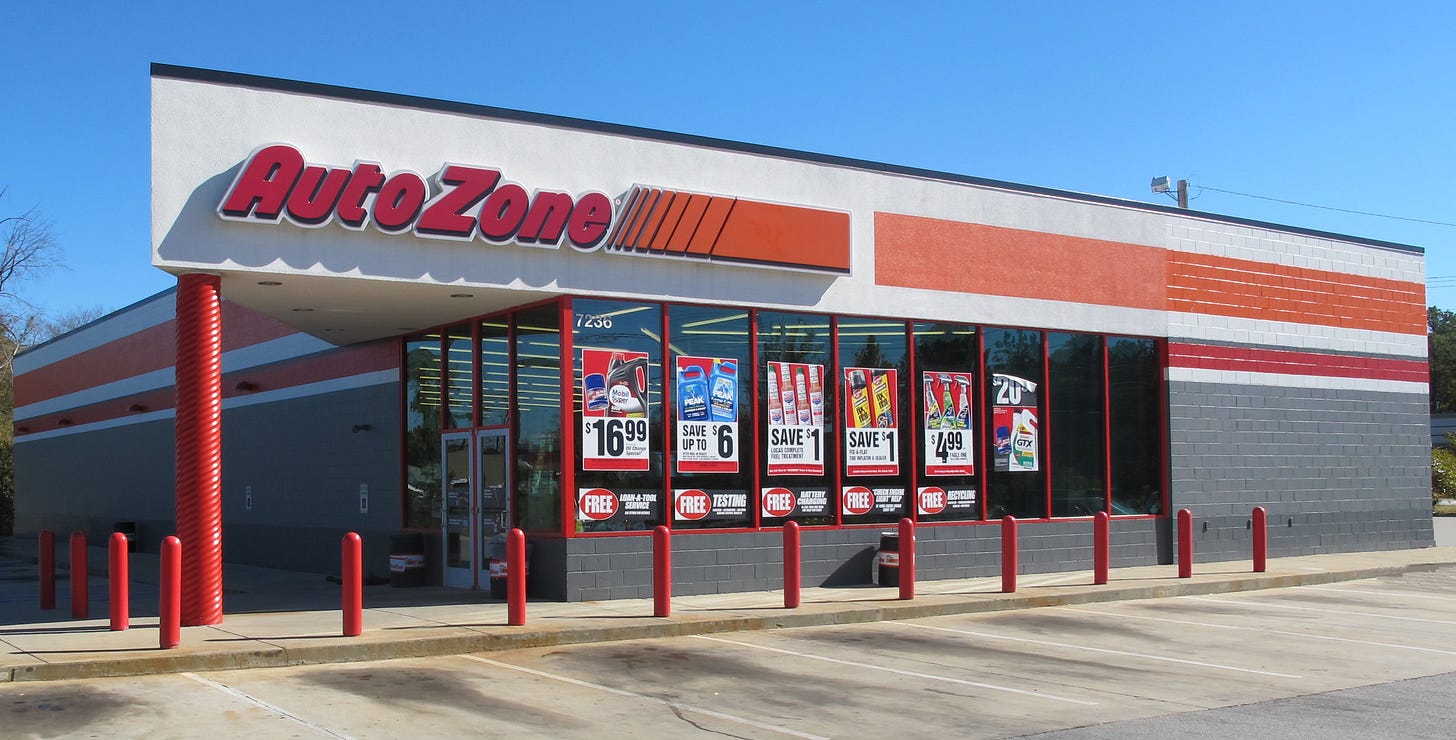
Two men who worked as managers at AutoZone stores in South Dakota have filed suit against the company, alleging the auto parts chain exploited them by not paying overtime.
Jay Grigsby was an employee of an AutoZone in Spearfish from 2021 to 2022, and Zakk Gill worked at the Rapid City AutoZone from 2013 to 2020. Both men had been plaintiffs in a class-action lawsuit brought in Montana. That suit – Richter v. AutoZoners represented plaintiffs in Montana, South Dakota, Wyoming and Idaho.
AutoZone filed a motion to have that lawsuit decertified as a class action. Last month, a judge ruled against the company, but the judge did rule he lacked jurisdiction over non-Montana residents, and the case for them was dismissed, albeit without prejudice, which allows them to refile a new case.




SIOUX FALLS, S.D. (Dakota News Now) – Spring planting season has officially begun, and Sioux Falls is taking new efforts to revitalize the city’s urban forest.
It’s all part of the new initiative through Sioux Falls and their CommuniTree program, which is going to plant roughly 150 plants a day to help protect and provide for our environment for decades to come.
This past fall, the city of Sioux Falls announced it had received a 3 million grant from the USDA Forest Service. The funds are being used to restore the city’s tree population by planting approximately 5000 trees over the course of a few years.
“If you have room to plant trees within the adjacent right-of-way and you have an approved planting permit, we will issue a $100 voucher per tree for the planting of those trees,” said Bryan Peterson, Urban Forestry Specialist. “Vouchers are only issued to approved planting locations. Vouchers are not issued to properties already enrolled in a city cost-sharing program focused on tree planting.”
Sioux Falls has lost 17,000 ash trees to the invasive emerald ash borers, and through the CommuniTree program, they hope to plant 1200 trees this spring. It’s voluntary, and residents have the option to choose from six trees.
“There’s a lot of trees and even within our park system where they get dinged with lawnmowers or string trimmers and that over time can actually kill the tree itself,” said Peterson in terms of how to take care of your trees.
Sioux Falls was selected for the grant based on the impact it would have on the city.
“We have several communities in Colorado that are currently working on them, but we also have some domestic grants that go directly through the state of South Dakota,” said Amanda Marr, who is with the USDA Forest Service. “And then South Dakota therefore passes it down through communities.”
After years of losing trees to invasive pests, Sioux Falls is turning over a new leaf. They encourage any resident to look into the program so they can help plant a tree in their own front yard and help make a difference.
Copyright 2026 Dakota News Now. All rights reserved.


Jefferson’s Makenzie Bierman discusses semifinal win over Lincoln
Makenzie Bierman drove in a team-high three runs in Jefferson’s semifinal victory over Lincoln.
The 2026 South Dakota High School Activities Association (SDHSAA) softball season is underway, and teams all across the state will be vying for the state championship title over the next two-plus months.
Here’s a rundown of each of the three classes and which teams can win the state championship, broken down into three tiers — defending champion, contenders and dark horses.
Class AA
Defending Champion: Sioux Falls Jefferson
Jefferson broke through in 2025 as the No. 4 seed, beating two-time state champion Sioux Falls Lincoln in the semis before shutting out Sioux Falls Washington in the championship game.
The Cavaliers’ pitching led the way last season, but Whitney Portner graduated, leaving Tya Devericks projected to hold down the circle the most. The now-junior pitcher recorded a 2.96 ERA with 28 strikeouts in 26 innings a season ago.
Devericks, Macy Bryant and Brooklyn Herrera form a three-headed monster at the top of Jefferson’s lineup that can compete with nearly any in the state.
Portner is a massive loss for a breakthrough Jefferson team, but the Cavaliers appear to have the pieces in place to repeat if things fall right.
Contenders: Sioux Falls Lincoln, Harrisburg, Sioux Falls Washington, Brandon Valley
Sure, this list includes the rest of the top five seeds from last year’s state tournament, but there’s a reason for all of them to be included.
Lincoln and Harrisburg are both off to 0-1 starts, but they have the track record to give some level of confidence they’ll be near the top of the state come postseason time. Lincoln lost a bunch of seniors from last year’s team, but won the first two SDHSAA state championships and has been the top seed all three years. Harrisburg has dealt with a little less roster turnover this year and was the No. 2 seed all three years, even if it only ended in one second-place finish.
Washington finished second last season with a relatively young roster, and it feels like the program has been ascending, even if the seeds have been relatively the same.
Brandon Valley has to replace nearly 100% of its innings pitched from last year, but most of the offense returns and the Lynx could very well slug their way to contention and their first state title since softball was officially sponsored by the SDHSAA in 2023.
Dark Horses: Tea Area, Sioux Falls Roosevelt, Rapid City Stevens, Brookings
There’s very few dark horses in Class AA, given there are only 17 teams, but all three have a case to break out this season.
Tea Area already has a win over Lincoln this season after finishing with a 6-11 record a season ago. The Titans’ early win can be great for confidence and propel them back to the top of the state after making back-to-back Class A state title games in 2023 and 2024.
Sioux Falls Roosevelt is returning lots of production from a young team in 2025. The Rough Riders didn’t get off to the best 2026 start with a big loss to Brandon Valley, but they have the potential to improve a ton throughout the season and make a leap into the upper tier of Class AA.
Rapid City Stevens went 16-4 a season ago and didn’t lose a ton of production, but the No. 6 seed in 2025 will seemingly always face an uphill battle with the travel required to get in games against Class AA competition.
Brookings had a dominant team in 2023 that fell just short and has lost in the SoDak 16 each of the last two years. The Bobcats had a stable of freshmen last year who can make a leap and bring Brookings softball back to the precipice of state title contention.
Class A
Defending Champion: West Central
West Central has been in each of the first three Class A state championship games, and the Trojans should be extremely strong again with a large senior class.
West Central has already dropped a 17-15 game to Madison to open the season, but a few losses crept into the regular season last year. The Trojans went 22-0 and won a state championship in 2023, and went 22-1 and dropped the state title game to Tea Area in 2024 before a 21-3 run to the state title a year ago.
This year’s crop of Class A softball appears to be even better than the past, and the Trojans will need to dig deep and pull out some tough games to repeat and win their third Class A state championship.
Contenders: Tri-Valley, Madison, Elk Point-Jefferson, Dell Rapids, Dakota Valley
This list essentially comprises the rest of the year in, year out contenders in Class A. All five teams consistently show up in the state tournament and beat each other as West Central mows down its opposition en route to the state championship game.
Tri-Valley was last year’s No. 2 seed and runner-up, and is already off to a 3-0 start in 2026. The Mustangs have most of the same roster as last year and will be able to plug in most of their holes with 2025 backups.
Madison has the aforementioned win over West Central already, but has taken a loss to Tri-Valley. The Bulldogs have consistently had an offense in the top third of Class A, but things can change quickly if the big-game run prevention shows up.
Elk Point-Jefferson, like Tri-Valley, is off to a 3-0 start. The difference is the Huskies haven’t quite faced the level of competition as the Mustangs. Elk Point-Jefferson has dispatched of that opposition accordingly, and early-season momentum is never a bad thing.
Dell Rapids has finished third each of the last three seasons, and lots of young talent returning can help the Lady Quarriers break through the barrier. Dell Rapids’ seed has gotten worse over the last three years, so there’s also the chance there’s another dip.
Dakota Valley has been the most up-and-down of the teams in this tier, bouncing from the third seed to seven seed year to year. The Panthers have a difficult early-season schedule, where a lot will be learned about this group.
Dark Horses: Beresford, Sioux Valley
This is a short list with the top contenders in Class A being so stable, but each team has a reason for being listed.
Beresford is off to a 2-0 start and has clubbed Class B’s Freeman/Marion/Freeman Academy and Castlewood. The Watchdogs’ next two games are against Madison and Dakota Valley, so their long-term viability in this race will be determined soon.
Sioux Valley is looking to build off a 16-8 2025 season with only two seniors to replace. The Cossacks have already lost a 6-2 game to Tri-Valley, but they need just a couple big wins to break through into the upper tier of the class.
Class B
Defending Champion: Deuel
This is the first defending champ who doesn’t have a clear path to a repeat due to the graduation of pitcher Katrina Hagberg. A strong pitcher can be overwhelming, especially at smaller schools, and losing that weapon can pose serious problems for a team that surrendered 43 runs in 24 games.
Also, Deuel only scored five runs in the last two state tournament games, fully relying on pitching and defense to beat elite competition.
Counting out the defending champs is never a good idea, especially with so much of the team coming back, but this feels like a year for the Cardinals to reset and find a new way to win games.
Contenders: Castlewood, Flandreau, Gayville-Volin, Florence/Henry, Bon Homme
The theme here is teams that didn’t lose their star pitcher or lots of seniors from last year, as pitching is at a premium in Class B.
Castlewood has lots of roster continuity, while also coming off a 16-6 season and a sixth-place finish in the state tournament. The Warriors won the 2023 championship and were second in 2024, and have a few tough tests against Class A teams lined up to determine how strong they really are.
Flandreau could technically be considered a dark horse given they weren’t in the state tournament a season ago, but the Fliers are off to a dominant 2-0 start with 32 runs scored. Flandreau could make a leap from a SoDak 16 appearance to a run in the Class B state tournament.
Gayville-Volin is also 2-0 this season, and the Raiders have won in a low-scoring game and had the offense go for 16 runs. The Raiders made a run to the state championship game as the No. 6 seed, and this could be the year they bump up a step and win it all.
Florence/Henry is another example of a team that went to the state tournament and has a lot of roster continuity. The Watchdog Classic on May 9, will determine a lot about how the Falcons will fare this season, with Beresford, Dell Rapids, Tri-Valley and West Central all set to test Florence/Henry.
Bon Homme was the No. 2 seed in 2025 and had a dynamic offense, scoring 27 runs in three games at the state tournament. The Cavaliers’ offense remains mostly intact and hasn’t gotten on the field yet, but appears to be the best in Class B.
Dark Horses: Scotland/Menno, Chester, Clark/Willow Lake
There’s a few teams that can break into the Class B state championship picture, but they all have different ways of doing it.
Scotland/Menno is already 2-1 on this young season, and the Trappers have dominated their two inferior opponents this year. Scotland/Menno made the state tournament in 2024 and could be returning in 2026.
Chester already has a huge win after being upset in the SoDak 16 a season ago. The Flyers have five seniors and five players who are freshmen or younger, so they could have some ups and downs and get hot at the right time.
Clark/Willow Lake has started 1-2, but played a couple very close, low-scoring games against Avon and Elk Point-Jefferson. The Cyclones have a very young team and could also cause problems if things come together throughout the season.

Fire damages apartment complex in northwest Oklahoma town

Kentucky showing interest in Oregon forward Kwame Evans Jr.

Pa. data centers: How lawmakers are responding, from electricity and water use to tax breaks

Hate self-checkout at the grocery store? A RI bill to limit it is back.

Former South Dakota AutoZone workers say they were bilked out of overtime pay

Florida High School Football Rankings: Top 25 teams – Oct. 21

How old is Bo Nix? What to know about Oregon quarterback ahead of 2024 NFL Draft

Cleary's 21 help Le Moyne down Central Connecticut State 69-64 in OT

99th annual Pony Swim held in Virginia

Indiana Members Credit Union announced as new anchor tenant at Bottleworks District

Ilhan Omar calls Trump an ‘unhinged lunatic,’ urges booting him out of office
Between Budapest and Brussels: Péter Magyar’s political tightrope
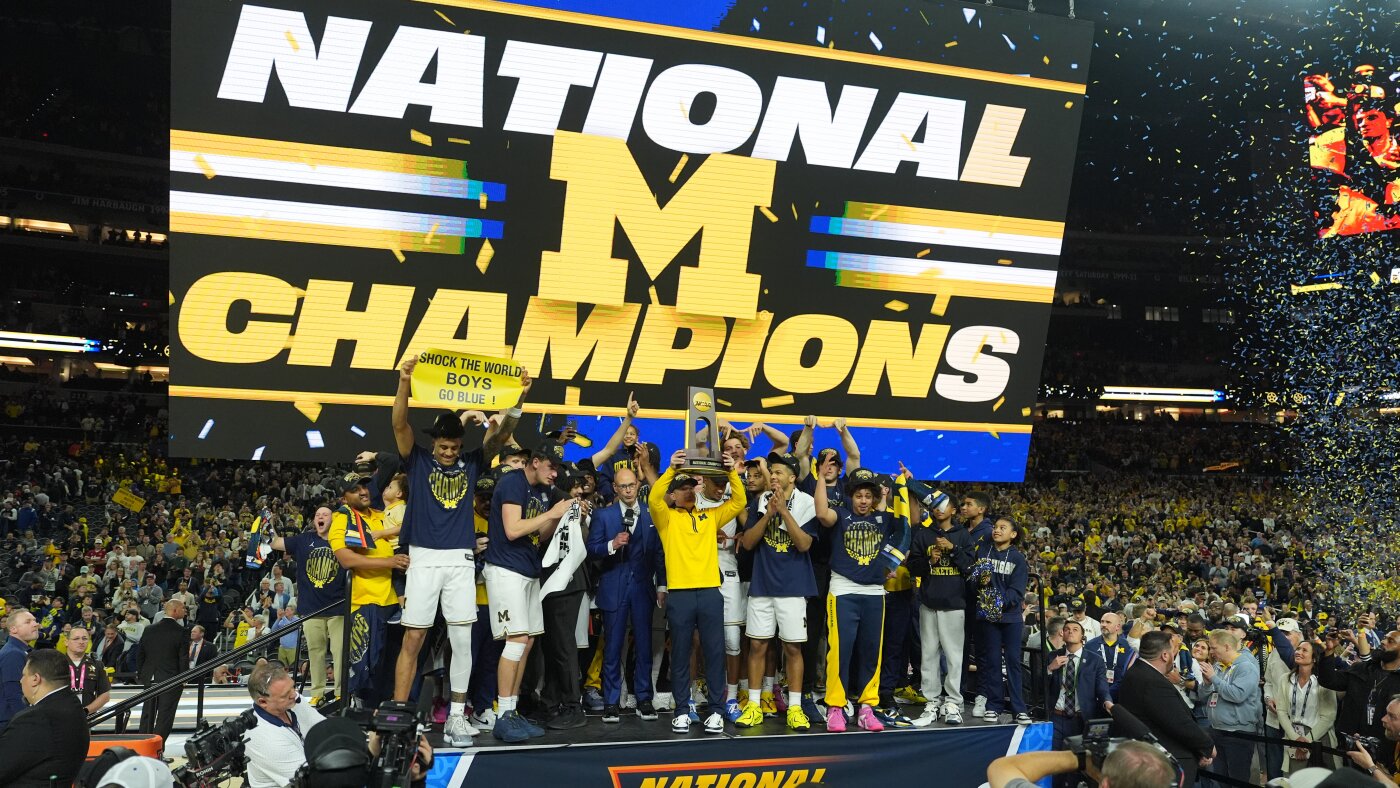
Michigan muscles its way to program’s 2nd NCAA basketball title, beating UConn

Map: Minor Earthquake Strikes Near San Diego

Trump claims he’d win as the president of Venezuela — just needs to ‘quickly’ learn Spanish
-

 Atlanta, GA2 days ago
1 teenage girl killed, another injured in shooting at Piedmont Park, police say
-

 South-Carolina1 week ago
South Carolina vs TCU predictions for Elite Eight game in March Madness
-

 Movie Reviews5 days ago
Vaazha 2 first half review: Hashir anchors a lively, chaos-filled teen tale
-

 Vermont1 week ago
Skier dies after fall at Sugarbush Resort
-

 Politics1 week ago
Trump’s Ballroom Design Has Barely Been Scrutinized
-

 Politics1 week ago
JD Vance says he was ‘obsessed’ with UFOs, believes aliens are actually ‘demons’
-
 Entertainment5 days ago
Inside Ye’s first comeback show at SoFi Stadium
-

 Politics1 week ago
Jeffries declines to break with indicted Democrat after ethics panel’s guilty verdict