South Bend first baseman Josiah Hartshorn and right-hander Mason McGwire were named to the Futures Game roster.
Midwest
Republican Eric Hovde seeks to flip Democrat Baldwin's seat red in Wisconsin Senate race

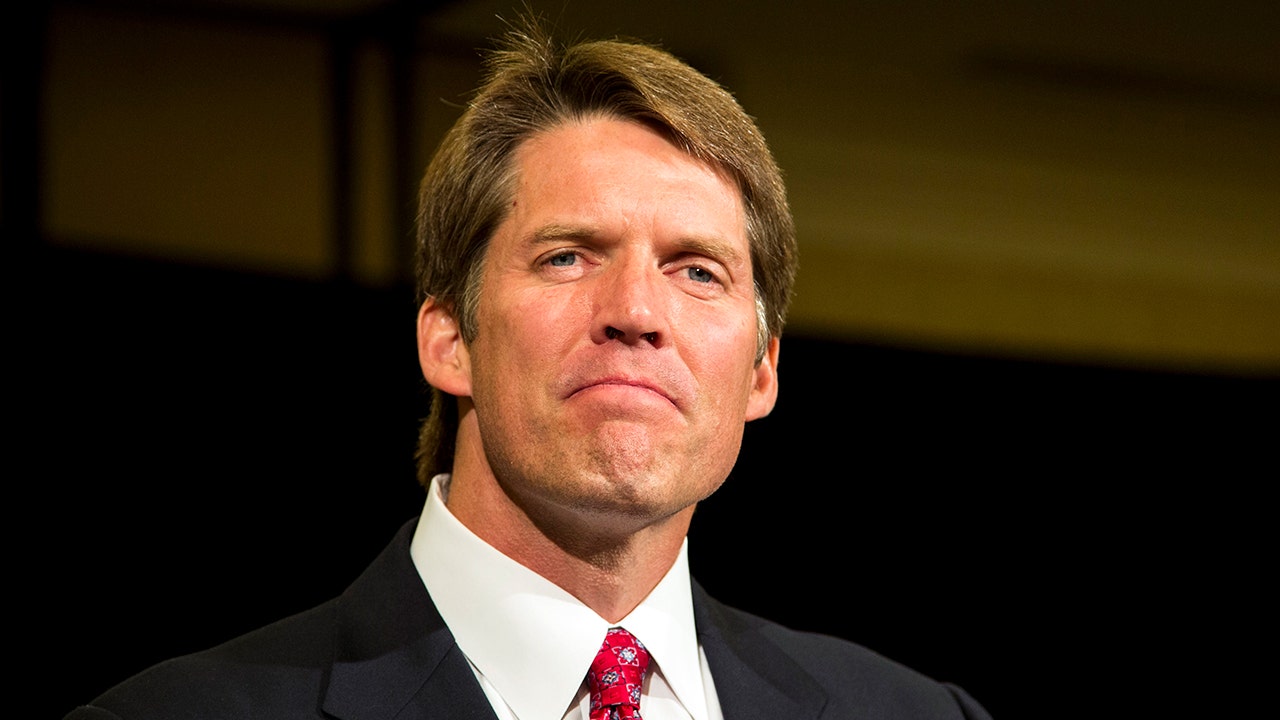
Republican businessman and real estate mogul Eric Hovde launched his bid for the U.S. Senate against Wisconsin Democratic incumbent Sen. Tammy Baldwin on Tuesday, saying in a video that “America is slipping away” and “everything is going in the wrong direction.”
This is Hovde’s second Senate campaign; he ran in 2012 but lost in the GOP primary to former Gov. Tommy Thompson. Baldwin went on to win election that year and is now seeking a third term in battleground Wisconsin.
Hovde planned to hold his first campaign event later Tuesday with an event at a building developed by his real estate company. In a video posted on his campaign website, Hovde mentioned the economy, health care, crime and “open borders” as issues he will focus on during the campaign.
WISCONSIN LAWMAKERS VOTE ON TAX CUTS, VETO POWERS AND HUNTING FEES IN FINAL SESSION PUSH
“I believe we need to come together and find commonsense solutions,” Hovde said in the video.
Reelecting Baldwin to a third term is critical for Democratic hopes to maintain majority control of the Senate. Democrats are defending 23 seats in the Senate in November, including two held by independents who caucus with Democrats. That’s compared with just 11 seats that Republicans hope to keep in their column.
Baldwin’s campaign branded Hovde as “an out-of-touch megamillionaire” in a fundraising email sent minutes after his campaign website went live. Baldwin’s campaign said Hovde would “rubber stamp” the agenda of Republican Senate Leader Mitch McConnell.
“Hovde would vote to pass a national abortion ban, raise taxes on working families and seniors while cutting Social Security and Medicare, and repeal the Affordable Care Act,” Wisconsin Democratic Party spokesperson Arik Wolk said separately.
Eric Hovde, candidate for the U.S. Senate, gives his concession speech to supporters during his election night party Tuesday Aug. 14, 2012 in Peawaukee, Wis. The Republican businessman and real estate mogul launched his bid for the U.S. Senate against Wisconsin Democratic incumbent Sen. Tammy Baldwin, Tuesday, Feb. 20, 2024, saying in a video that “America is slipping away” and “everything is going in the wrong direction.” This marks the second Senate campaign for Hovde, who ran in 2012 but lost in the GOP primary to former Gov. Tommy Thompson. (AP Photo/Tom Lynn)
The National Republican Senatorial Committee, the campaign arm of Senate Republicans, is backing Hovde.
“Eric Hovde’s experience as a job creator rather than a career politician makes him a strong candidate to flip Wisconsin’s Senate seat this year,” said Montana Sen. Steve Daines, chair of the NRSC, in a statement.
Other Republicans are considering challenging Hovde for the nomination. Scott Mayer, a Franklin businessman, and former Milwaukee County Sheriff David Clarke are also considering Senate runs. Other higher profile Republicans, including U.S. Reps. Tom Tiffany and Mike Gallagher, opted against running.
Mayer’s campaign had no comment Tuesday.
WISCONSIN GOV. EVERS SIGNS NEW LEGISLATIVE MAPS INTO LAW AFTER REPUBLICANS PASS THEM
Wisconsin’s primary is scheduled for Aug. 13.
In his 2012 race, Hovde described himself as a free-market conservative. He campaigned as a supporter of overturning the Affordable Care Act, the national health care law signed by former President Barack Obama, an abortion opponent and supporter of overturning Roe v. Wade. The U.S. Supreme Court did that in 2022, fueling wins by Democratic candidates that year who supported abortion rights. Baldwin has already said she plans to highlight abortion rights in this year’s Senate race.
Hovde’s business empire includes Hovde Properties, a real estate development company founded by his grandfather in 1933, and three banking companies. He is CEO of Sunwest Bank, has appeared in television commercials for them that air out west, and owns a $7 million estate in Laguna Beach, California, in addition to his property in Madison.
He returned to Madison in 2011 after living in Washington, D.C., for 24 years.
Democrats have branded Hovde as a carpetbagger who left his California mansion to run for Senate in Wisconsin, where he was born and raised.
Baldwin most recently won reelection by 11 points in a race that was seen as a model for how to run as a Democrat statewide in Wisconsin. She is a tireless campaigner, garnered broad support, including among independents and voters outside of Democratic strongholds in Madison and Milwaukee, and she raised millions of dollars to fuel the successful bid.
Read the full article from Here

Continue Reading

This is episode one of Illinois 250 on Community Voices. This is a special six-part series exploring Illinois connections to the 250th anniversary of the United States, created in partnership with Illinois Humanities.
Record an Illinois Voices 250 story – Explore the Passport to Illinois
As the nation marks the 250th anniversary of the Declaration of Independence, Illinois is taking a uniquely inclusive approach to the milestone—asking residents across all 102 counties to help tell the story of what America and Illinois mean through their own lived experiences.
On Community Voices, Illinois Humanities Executive Director and Illinois 250 Commission Chair Gabrielle Lyon joined storyteller Jitesh Jaggi to introduce Illinois Voices 250, a statewide storytelling initiative that invites people to record conversations about family, community, freedom, belonging, and the ideals that continue to shape the nation.
Rather than focusing solely on famous figures or historic events, the project seeks to preserve the voices of everyday Illinoisans. Through a partnership with StoryCorps Studios, anyone can record a conversation using a smartphone and contribute to a growing archive that future generations will be able to hear.

Jaggi, who immigrated to Chicago from Mumbai, India, shared how Illinois quickly became home and why he believes personal stories are the best way to capture the state’s remarkable diversity. He hopes families, friends, and even strangers will use the project as an opportunity to discuss what patriotism, opportunity, and community mean to them.
Lyon also highlighted the free Passport to Illinois, a guide featuring more than 60 historic sites, museums, monuments, and heritage trails that connect local history to the nation’s founding ideals.
Together, the initiatives aim to ensure that America’s 250th anniversary reflects the voices of all Illinoisans—not just those remembered in history books.

Illinois 250 on Community Voices is a special series exploring Illinois connections to the 250th anniversary of the United States, created in partnership with Illinois Humanities.
This 6-part series uplifts stories of people and places in Illinois that have helped bring the ideals of the Declaration of Independence to life and shaped the story of our nation. Production assistance from Alison Cuddy.
Transcipted by AI with human review for readability and accuracy.
Randy Eccles:
This is Community Voices. I’m co-host Randy Eccles. We are exploring Illinois connections to the 250th anniversary of the United States in partnership with Illinois Humanities. This six-part series uplifts stories of people and places in Illinois that have helped bring the ideals of the Declaration of Independence to life and shaped the story of our nation.
Today, we’ll be exploring the general theme of Illinois 250, Illinois the crossroads, the story of Illinois and the Declaration of Independence. Our guests are Gabrielle Lyon, Executive Director of Illinois Humanities and the Chair of the Illinois 250 Commission, and Jitesh Jaggi, an Indian immigrant storyteller and coach who has shared on The Moth Radio Hour. Gabrielle, how is Illinois commemorating the 250th anniversary of the country?
Gabrielle Lyon:
Here in Illinois, we’re really excited about the way the commission has set out the goals. The number one thing is making sure that we’re being inclusive, accessible, and statewide. Secondly, we’ve picked some themes that have resonated with people. The themes that are organizing all the programs and that people are excited about are “We the People,” sense of place, and enduring history. What we’re seeing in all 102 counties is that power of place most strongly. People are stepping up to uplift the local stories that most matter to them and where they live and connecting those to the national commemoration.
Randy Eccles:
This is each person’s story in Illinois, both historically and in the current moment.
Gabrielle Lyon:
In Illinois, we certainly had the westernmost battle of the American Revolution, but at the time of the signing of the Declaration of independence, there was a lot more going on here that was connected to the history of the French Empire and, of course, Native Americans. What we’re doing in Illinois is saying, look, this anniversary is about the Declaration of Independence and those ideas. There are some signature programs that all communities are invited to take part in — recognizing volunteers and service, connecting to a program called the Passport to Illinois, where you can travel to some of the sites and monuments and museums that connect the people and places in Illinois to the national story, and the project that Illinois Humanities is leading called Illinois Voices 250, where we’re going around and asking people from across the state, what matters to you in this moment? What is it that you want to make sure is remembered, not just 50 years from now, but even 250 years from now?
Randy Eccles:
Jitesh, you’re a storytelling expert. You’ve been on a variety of types of platforms telling stories. You coach storytelling. How does that play in commemorating this anniversary?
Jitesh Jaggi:
Our number one goal here is to make sure that we have an equal representation. We want to make sure all 102 counties in Illinois are represented. Where I come in as a storyteller is I want to get people to reflect together on this idea of America that was born 250 years ago. How did that idea play out for them, their families, for Illinois? I want to hear what specific personal stories they have. These stories will be the stand-in for how the idea of America turned out, but especially for Illinois. How do people interact with this country of theirs, this state of theirs? The idea of personal stories is, we don’t necessarily only want people to opine. We want them to bring in who they are. At the end, we will see this disparate image of so many diverse lives put together. Hopefully, that gives you a nice bouquet of what Illinois represents. This is how people who have a relationship with Illinois relate to being an American.
Randy Eccles:
A lot of this you’re hoping to accomplish through this Illinois Voices 250 project. Can you elaborate on that, Gabrielle?
Gabrielle Lyon:
When we knew that this anniversary was coming up, the 250th anniversary of the Declaration of Independence, Illinois Humanities asked, “What’s the best way for us to be inclusive and put people’s lives and stories at the center?” We developed a partnership with StoryCorps Studios.
We’ve set up a plan to collaborate with partners across the state where people are going to be invited, with folks like Jitesh helping, to be in conversation with one another. We’re asking people to think about these questions. What’s a story that you want to make sure gets passed down? When have you felt proud or conflicted about this country? What does life, liberty, pursuit of happiness mean now? What do you want it to mean 50 years from now? If we don’t make and protect that kind of space, those conversations can’t happen.
What’s most important is we the people. What makes us a country is a set of shared beliefs, not our backgrounds, not our lineage, not how much money we make. It’s the idea that we share beliefs about what kind of life we want to be able to live and how we’re going to have the freedoms to live in those ways. That’s the intent behind Illinois Voices. I’m excited to have Jitesh partnering with us because he does a great job getting people to talk about their lives and what matters to them.
There’s no town that must wait for instructions from the commission. There’s no person who might want to tell their story that has to wait to do it through Illinois Humanities. Everything is DIY. In the case of Illinois Voices, you can go to il250.org and it will guide you through how to record, how to save the recording, and how to make sure that your conversation is recorded. If you’re a grandma with a grandchild, if you’re part of a church book group and you’re meeting on a Sunday, you can sit down with a phone connected to the internet and record your story. That’s one of the most important things here in Illinois, making sure the full diversity of who we are, our labor history, women’s history, innovations and abolition work, underground railroad, that’s all history, but we’re still making — we the people — right now.
Randy Eccles:
Jitesh, I’m going to put you on the spot and ask for an elevator version of an Illinois Voices 250 story of your relationship to Illinois. Could you do something off the cuff?
Jitesh Jaggi:
Illinois across the country is seen as a safe space for immigrants, especially immigrants of all kinds. It was the same for me. I came to Chicago about seven years ago. I’m an immigrant myself from Mumbai, India. I was born in a refugee camp in Mumbai. Life was so different there. As soon as I came here, within six months, I talked like the people around me. I knew the language, I knew the mannerisms, and I felt so included. What other place can you feel like home within months of arrival? I had never taken the CTA. I had never been to the school system.
Folks are so open sharing their stories. All I need to do is sit on my front stoop. People come by and they share their life stories. We are doing the same, but at scale. I will have this recorder in my hand. I hope to get each passerby to stop and share their story with me. Hopefully, I get to share my story with them, too.
This is a very Illinois story. My story is a very Illinois story. story. An immigrant comes from a different country, gets settled, and now is given the opportunity to record other people’s stories. I still need to be assimilated more. But here is Gabrielle reaching out to me, saying, “No, no, no. Not only are you… we see you as one of us. We want you to have a say and contribute to capturing these other stories and other voices.” I feel no other place could I have had this opportunity.
Randy Eccles:
What tips would you give someone to prepare for something like this?
Jitesh Jaggi:
Nobody has to be prepared for this. All they need to do, if you see me or my colleague Sophia, we are going to be present in a lot of spaces in Illinois. Make sure that you are updated with our calendar. We will also promote it on social media. We will post in advance where we will be. I will welcome people, and my job is to make them feel safe and comfortable. All they need to do is have a conversation. I don’t need to be a part of it. If there are, say, a mother and a daughter walk up to the Illinois Humanities booth, my goal is going to be get them to talk to each other. One person asks the question to another. Even within our families, we don’t always get the opportunity to talk about these bigger picture things. We don’t usually get the opportunity to talk about things that are not day-to-day, like, what do you think about America? What is your relationship with this country? Where do you see this country going? What are the things that you’re proud of? What challenges do you see in our future? I want more families, friends, and even strangers to ask each other these questions because that gives you a richer picture. There’s no prep needed. I will have prompts for our interviewees. Hopefully, they feel that this is a very organic, natural conversation, except it will be archived.
Gabrielle Lyon:
We kicked off Illinois Voices very momentously at the Abraham Lincoln Presidential Library and Museum. A woman heard that morning there’s going to be an Illinois Voices event. I can have a conversation with a friend. She texted her friend and said, “How about you join me over at the museum and let’s just have a conversation.” This woman is a member of the Daughters of the American Revolution. She brought her friend who grew up in a small town in New Mexico.
I had the privilege of overhearing their conversation. They talked about what it was like to be little girls growing up. The ways in which they started to make sense of the world. Then we also heard this story, not just about what it meant for one of these women to feel patriotic at this moment, but to feel that it was important to reflect on what that patriotism meant to her. I couldn’t get over my privilege — here are these two friends, they’ve known each other for years, and they’re talking about these deeply meaningful things they’ve never talked about before.
It came about because a woman heard this is going on. Do you want to meet me over at the museum? Let’s have this conversation. The sweep of things they talked about, childhood, hopes, dreams, raising their families, moving across the country, being married to a veteran, all these things, which are the stuff of life. That’s the fabric that is unique in the United States. We are the most diverse democracy. We’re not perfect. We’ve come a long way. We have a heck of a long way to go. But the diversity and richness are things that are the American experiment, and there’s no comparison anywhere in the world.
Randy Eccles:
This is Community Voices. We’re discussing the Illinois Voices 250 project, which is part of the overall Illinois 250 celebration, part of the 250th anniversary of the Declaration of Independence for the United States of America. We’re joined by Gabrielle Lyon and Jitesh Jaggi, who are with Illinois Humanities, our partner in this, introducing this Community Voices series. One of the things I found interesting when I looked through the IL250.org site, is this concept of the passport. Tell us more about that.
Gabrielle Lyon:
The Illinois America 250 Commission spent a lot of time last year talking with people about what was most important to them. Themes came up that were shared from Rockford to the west side of Chicago to Effingham, a few things:
One, the places where people live really matter to them, and they want the stories of those places connected to this national story.
The second is this idea that people don’t know the incredible richness we have. That’s part of what this series NPR Illinois is producing is pointing to.
The Passport to Illinois has 60-plus memorials, monuments, museums, and sites. It has seven heritage byways. It’s organized regionally, and it’s a keepsake pocket guide. You can put it in your back pocket. You can jump into the car or go someplace nearby and find out some of the history that happened here and only here in Illinois.
We have great partnership with the Department of Tourism and Enjoy Illinois. There’s not just the opportunity to visit these places, but you can go onto the website IL250.org and see what else is connected while you’re around there. There’s never been a passport to Illinois. You can experience the full sweep of 250 years of history from long before the United States was established, for example, Cahokia Mounds. To some of the Civil War sites that are relevant, to the places where Abraham Lincoln uplifted the ideals of the Declaration, but also the labor movement, the women’s movement. One of my favorite monuments of all in the state is the Elijah P. Lovejoy monument. It’s in a cemetery in Alton, and it’s a testament to Elijah P. Lovejoy, who was an abolitionist, he was a journalist, with a trailblazing commitment to freedom of speech.
What happened right here in Illinois? That’s what the passport is. It’s free. You can download it online and you can pick it up at public libraries and sites all over the state. You can find out about it at IL250.org.
Randy Eccles:
Do you get it stamped like a passport at places?
Gabrielle Lyon:
Some places will have stamps, but more importantly, we’ve designed them so that people can make their own notes and keep their own memories, make sketches. We’re really hoping this is something that lasts beyond 2026 for people.
Randy Eccles:
What would you like the Illinois 250 project to have as an impact on the future?
Gabrielle Lyon:
First and foremost, I really hope that the Illinois America 250 has helped people Take some time to make sense of this milestone in a way that’s personal and meaningful for them.
Secondly, to all the towns and municipalities listening, it’s not too late to become a partner, to share your events, to populate this calendar. My hope is that we’re going to look back on this year and feel like we were able to stand up and commemorate and pay attention to the things that most matter to us at this extraordinary milestone.
Randy Eccles:
Jitesh, anything you’d like to leave us with?
Jitesh Jaggi:
I often look back and think, “What if we had recordings from 1850s or 1900s? Early 1900s people sharing their thoughts on America.” We can change that now. 50 years from now, 100 years from now, I hope that people look back at this archive, the Illinois 250 archive, and it paints a robust picture of what America and what Illinois stands for, contributed by not just historians, but also people. I’m really looking forward to what we do in the next few months, but also what it represents to look back in the future.
Gabrielle Lyon:
One of the reasons that Illinois Voices is so important from my perspective is… 1776 left out a lot of voices. The bicentennial 1976 left out a lot of voices. And this is an effort, a humble one, to include everybody and invite everyone to share their voice during this milestone.
Randy Eccles:
Gabrielle Lyon, Jitesh Jaggi, thank you for joining us. Illinois Humanities is a great partner in this series and more segments on what makes Illinois 250 such an important time for all of us in Illinois. Discover more about the celebration of the 250th anniversary of the United States, visit IL250.org or this station’s website.
Gabrielle Lyon:
Thank you.
Jitesh Jaggi:
Thank you.

INDIANAPOLIS (WISH) — Calling all artists! The Indiana Department of Natural Resources is accepting art and photo submissions to use for the hard-card licenses for hunting, fishing, and trapping.
A press release from DNR Wednesday said Hoosiers of all ages can enter up to two of their nature and wildlife-themed works of art for a chance to be featured on next year’s cards. The cards will be available for purchase in early 2027.
Five entries will be chosen. All 2-D mediums — photography, painting, drawing, graphic design — are eligible. Art generated by artificial intelligence (AI) will not be accepted.
This year’s categories include Deer, Wild Turkey, Fish, Wildlife (Other), and Indiana Landscapes.
Artists can submit their art to DFWcontests@dnr.IN.gov. The entry submission deadline is July 31, by 11:59 p.m. ET.
More information and contest guidelines can be found here.

Right-hander Kenten Egbert went back from Triple-A Iowa to High-A South Bend.
Right-hander Eduarniel Núñez, whom the Cubs designated for assignment last week, cleared waivers and was assigned to Iowa.
The Cubs signed third baseman Michael Hallquist from the Milwaukee Milkmen of the independent American Association and assigned him to South Benc.
Everyone lost tonight. That stinks.
The Iowa Cubs were chicken against the Toledo Mud Hens (Tigers), 7-4.
Starter Doug Nikhazy didn’t make it out of the first inning. Nikhazy got pummeled for five runs on two hits and four walks while just retiring one batter. At least that one out was a strikeout.
Aaron Bummer made his Cubs debut in this game, pitching the sixth inning. Bummer faced four batters and retired three of them. The other one hit a solo home run. Bummer did not have a strikeout.
Liam Hendriks made his Cubs debut in the bottom of the seventh. He allowed a single and a walk, but no runs in his one inning of work. Hendriks struck out two.
Left fielder BJ Murray hit his tenth home run of the year with the bases empty in the sixth inning. Murray went 1 for 3 with a walk. He scored twice.
Right fielder Ben Cowles was 3 for 4 with a steal. He singled home Murray in the fourth innning.
Second baseman Owen Miller went 2 for 4 with a double and two steals, one of which was a steal of home as part of a double steal with Cowles. He drove in one with an RBI groundout. Miller also scored one run.
The double steal of second and home.
The Knoxville Smokies got squeezed by the Columbus Clingstones (Braves), 8-3.
Brooks Caple gave the Smokies a good start, but he ended up getting the loss anyways. Caple allowed two runs on three hits over five innings. He walked two and struck out three.
This game 2-1 Columbus until Frankie Scalzo Jr. gave up six runs in the top of the ninth.
Center fielder Andy Garriola hit a two-run home run in the bottom of the ninth, his 17th on the season. Garriola went 1 for 4.
First baseman Edgar Alvarez was a perfect 3 for 3 with two doubles and a walk. He drove in one run.
The South Bend Cubs were dropped by the Beloit Sky Carp (Marlins), 9-8 in ten innings.
Mason McGwire threw the first three innings and surrendered one run on three hits. McGwire struggled with control as he walked three and hit two batters. McGwire struck out two.
After the Cubs failed to score in the top of the tenth, Grayson Moore entered the game, trying to send the game to the 11th inning. Instead, he gave up a walk-off two-out RBI double. Moore’s final line was one run on one hit over two-thirds of an inning. The run was earned—the automatic runner was doubled off of second on a lineout. Moore did not walk anyone but he did hit a batter who turned out to be the winning run.
South Bend blew a 7-1 lead in this game after five-and-a-half innings.
In his affiliated baseball debut, second baseman Michael Hallquist hit a two-run home run in his first at-bat in the second inning. Hallquist went 1 for 4 with a walk and two runs scored.
Catcher Logan Poteet hit his first South Bend home run in the sixth inning with the bases empty. It was Poteet’s 15th overall home run. Poteet went 2 for 4 with a walk. He scored two runs and had two RBI.
DH Jose Escobar connected on a solo home run in the top of the seventh. It was his fourth home run with South Bend and sixth overall. Escobar went 1 for 4 with a walk and two runs scored.
Poteet’s round-tripper.
Jose Escobar really got a hold of this one.
The Myrtle Beach Pelicans were allergic to the Hickory Crawdads (Rangers), 6-2.
David Bracho started, gave up one run in the first, three in the second and two in the third. Bracho’s final line was six runs on seven hits over three innings. He walked three and struck out two.
Yoendris Gonzalez and Anhuar Garcia then each threw three innings of no-run, no-hit baseball. Both of them struck out five. Gonzalez walked one. Garcia hit one batter. It was Garcia’s Myrtle Beach debut.
Catcher Jairo Diaz hit an RBI double in the bottom of the ninth. He was 1 for 4.
Highlights, such as they are.
-
 Arizona50 seconds ago
Records: Toddler found alive in hospital morgue after being pronounced dead by Arizona doctor
-

 Arkansas8 minutes ago
Get to know: Arkansas QB commitment Cason Myers | Arkansas Democrat Gazette
-

 California10 minutes ago
California gets Bruce Lee Day in a first for US state’s Chinese Americans
-

 Colorado16 minutes ago
Colorado governor fires two clemency board members who spoke out about Tina Peters’ commutation | CNN Politics
-

 Connecticut23 minutes ago
Police investigating double homicide in Hartford
-

 Delaware26 minutes ago
65-year-old Delaware man killed after camel falls on him, police say
-

 Florida31 minutes ago
New Florida domestic violence laws take effect, adding tougher penalties and new victim protections
-

 Georgia38 minutes ago
Georgia launches address protection program for violence, trafficking survivors

