Midwest
Rail safety reform efforts stalled in Congress a year after Ohio train derailment

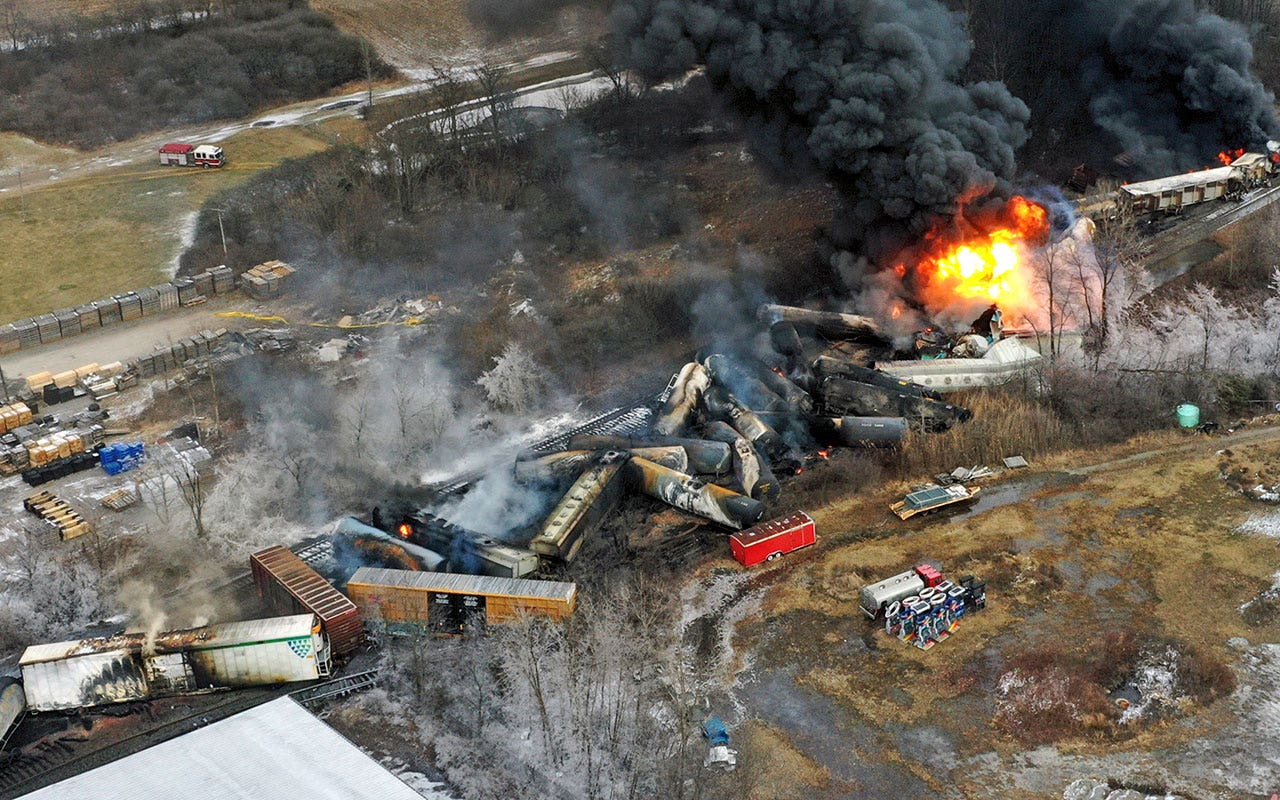
- Congress has yet to take significant action on railroad safety reforms despite ongoing concerns following last year’s train derailment in Ohio.
- The railroad safety act, which proposes federal standards for two-person crews on freight trains, has not advanced to a full Senate vote.
- Despite bipartisan support for the bill, opposition from the railroad industry, which is lobbying against certain provisions.
The changes railroads announced after last year’s fiery crash in East Palestine, Ohio, haven’t yet made a major difference, statistics show, and reforms have stalled in Congress.
A few key measures in the latest Federal Railroad Administration statistics, including the total number of train accidents, worsened over the first 11 months of last year compared to the same period in previous years. Meanwhile there were some improvements with other numbers, like total derailments.
The overall picture is that rail safety hasn’t significantly improved in recent years — and as the Norfolk Southern derailment in East Palestine last Feb. 3 and others demonstrate, just one derailment can be disastrous when hazardous chemicals are involved. The small town near the Ohio-Pennsylvania border is still struggling to recover a year later.
BIDEN TO TRAVEL TO EAST PALESTINE NEARLY ONE YEAR AFTER TRAIN DERAILMENT DISASTER
U.S. Transportation Secretary Pete Buttigieg said there was a meaningful 15% decrease in derailments along mainline tracks after Congress responded to a number of high-profile train crashes involving crude oil in the early 2010s. “Progress has plateaued as derailments and preventable incidents are happening at an unacceptable rate,” Buttigieg said, urging Congress to pass the reforms now.
Portions of a Norfolk Southern freight train that derailed on Feb. 3, 2023, in East Palestine, Ohio, are seen here. The major freight railroads all promised safety improvements after the fiery derailment, but they have yet to make a meaningful improvement in the safety statistics and efforts to reform the industry have stalled in Congress. (AP Photo/Gene J. Puskar, File)
The railroad industry defends its record as the safest way to transport hazardous materials over land — something the head of the National Transportation Safety Board agreed with in recent testimony in the House — though officials acknowledge the railroads need to continue improving safety. And the Association of American Railroads trade group says most of the measures railroads promised to take last spring weren’t completed until late last year, so they aren’t yet reflected in the numbers.
What’s the industry’s safety record?
Safety statistics are mixed for the six biggest freight railroads that dominate the industry — Norfolk Southern, CSX, Union Pacific, CPKC, Canadian National and BNSF.
For the majority of 2023 the total number of train accidents increased slightly to 4,845, including more than 600 deaths.
When comparing 2022 and 2023, the total number of derailments declined about 2.6% — but there were still nearly three derailments a day nationwide. Railroads point out that roughly two-thirds of those crashes happen at slow speeds in railyards and don’t cause significant damage.
How many costly derailments are there?
There were 53 major derailments last year causing damage over $1 million, a surge of nearly 33%. Norfolk Southern has said the cost of the East Palestine derailment has already topped $1.1 billion, and that total will continue to grow with cleanup costs and lawsuit settlements.
The number of total crashes caused by the same issue as the eastern Ohio derailment more than doubled nationwide last year to 19. Overheating bearing failures remain a small fraction representing less than 2% of all accidents.
Are railroads getting riskier?
All 13 railroad unions have sounded the alarm about the dangers of the lean operating model that has cut roughly one-third of the industry’s rail jobs. The unions say that as a result of these cuts, inspections are rushed — or done by less qualified workers — and everyone remaining is overworked. They also say companies may be neglecting to do preventative maintenance.
“East Palestine was no surprise,” said Jared Cassity, the safety chief at the SMART-TD union, which represents conductors. “The next East Palestine, at least at this pace that we’re going, is imminent to some degree.”
The railroads defend their operating model — which relies on fewer trains that have grown much longer — as simply helping them make the best use of their locomotives, tracks and crews without jeopardizing safety, and the Federal Railroad Administration says safety statistics haven’t gotten significantly worse since they started using it.
But Tony Cardwell who leads the Brotherhood of Maintenance of Way Employes Division union, which represents track maintenance workers, said the railroads are under pressure to cut costs from “vulture capitalist” investors.
Over the past year, the railroads have agreed to provide paid sick leave to most of their workers for the first time and improve the way engineers and conductors are scheduled in order to help reduce fatigue.
What have railroads done to improve safety?
Last year, the major freight railroads installed hundreds of new trackside detectors to spot overheating bearings, as part of their goal of adding roughly 1,000 of those nationwide to make the average spacing between them 15 miles (24 kilometers) in most places.
All railroads will now stop trains when bearings detect a gap of more than 170 degrees from the outside air, and there are new standards to help them better track when bearings start to heat up to catch issues sooner.
Railroads have also been installing complex portals filled with cameras, other sensors and advanced detectors to spot problems as they’re moving.
Norfolk Southern also took additional steps like hiring a consultant from the nuclear power industry to review its safety practices, establishing a pilot program so employees can anonymously report safety concerns and changing rules for train assembly to better balance the weight of heavy cars and hazardous materials.
“We’re always going to strive to get better at safety,” Norfolk Southern CEO Alan Shaw told The Associated Press. “There’s no one thing that you do. It’s a bunch of different things.”
Why hasn’t Congress acted?
The railroad safety act has yet to get a vote in the full Senate — or even a hearing in the House. The measure would call for the creation of federal standards for those trackside detectors, increased inspections by qualified employees and two-person crews on every freight train.
Ian Jefferies with the AAR trade group says railroads haven’t opposed the bill outright — but they are fighting several provisions like the two-man crew requirement and locomotive inspection rules. They say such changes aren’t related to what caused the East Palestine wreck. After all, that train had three crew members, and the railcar — not a locomotive — had the flaw. The railroads also want a cost-benefit analysis to be done on the rules.
OHIO RESIDENTS GRAPPLE WITH LONG-TERM IMPACTS OF EAST PALESTINE TRAIN DERAILMENT
House Republicans say they want to wait for the final NTSB report before they act, so they can be sure that any new regulations are directly related to the cause of the East Palestine derailment. The report won’t be out until sometime this summer.
Democratic Ohio Sen. Sherrod Brown, who was part of the bipartisan group that proposed the bill, blames railroad industry lobbying from keeping the act from advancing.
“It goes down to the power of the rail industry. I mean the fact that Norfolk Southern and other railroads have continued to oppose this bill,” Brown said. “They’ve always put profits over people.”
Read the full article from Here


A pair of John Blackwell’s former teammates wasted no time expressing how they felt about his departure.
The Wisconsin Badgers men’s basketball squad took a huge hit on April 6 when its star point guard announced he’d be entering the transfer portal.
Blackwell posted a farewell message that received mixed reactions, but both Nolan Winter and Austin Rapp expressed their gratitude for getting to play alongside the Michigan native.
“My brother!! Coming into college with you, it’s meant everything to do it by your side. Through all the ups and downs we went through, I won’t forget a second of any of it… go do what you do JB. For life,” Winter wrote.
Rapp added, “Gonna miss big bro, appreciate this year with you John Blackwell.”
Winter has been with the Badgers since the 2023-24 season, the same year Blackwell joined the program. Rapp, the Portland transfer, only was able to spend one year with Wisconsin’s guard who averaged just shy of 20 points per game.
Badgers fans are still awaiting decisions from Winter and Rapp, though neither has indicated they’ll be continuing their collegiate careers elsewhere.
Contact/Follow @TheBadgersWire on X (formerly Twitter) and like our page on Facebook to follow ongoing coverage of Wisconsin Badgers news, notes and opinion.


Detroit Red Wings lost, 5-4, to Minnesota Wild in NHL action at Little Caesars Arena on Sunday.
The Red Wings rallied from a 4-1 deficit in the third period but lost, 5-4, to the Wild at Little Caesars Arena.
A pair of struggling Eastern Conference teams in desperate need of a win will square off at Little Caesars Arena in Detroit on Tuesday night.
The Columbus Blue Jackets have lost six straight games while the Detroit Red Wings have dropped six of their last eight. Both clubs are trying to revive their fading playoff hopes.
Columbus (38-27-12, 88 points) lost at home to the Winnipeg Jets 2-1 on Saturday. The frustrated Blue Jackets held a team meeting following the defeat.
“I’ll just keep our conversation in here because we’re a better team than what we’ve shown and just talked about it,” Blue Jackets defenseman Zach Werenski (Grosse Pointe) said. “We’re not eliminated. We’re still in it and I believe in this group. I believe we can get it done and it’s just doing it.
“I mean, we did it for two months. The last two weeks obviously haven’t gone our way, but it’s in the room and it’s on us to just pull it out and get it done.”
Columbus’ offense has stalled during the slide, scoring a total of 10 goals.
“We create the second most chances on the forecheck in the entire league,” Blue Jackets coach Rick Bowness said. “Yet we want to get inside the blue line and make cute little plays against good teams that aren’t working. And they’re not working. So, I have to get after them. They’ve got to change their mindset.”
Werenski believes the team needs a singular mindset on Tuesday.
“We can’t worry about what other teams do or whoever we have after Detroit,” he said. “Our focus just has to be on Detroit, and after that we’ll figure it out.”
The Red Wings (40-29-8, 88 points) rallied from a 4-1 third-period deficit to tie Minnesota on Sunday. But Patrick Kane, who scored the tying goal, took a damaging tripping penalty which led to Kirill Kaprisov’s game-winner for the Wild with 1:51 remaining.
“We get the comeback and take a penalty 150 feet from our net not even in the play. It hurts,” Red Wings coach Todd McLellan said.
Detroit has five games remaining and might need to win them all to end a nine- year playoff drought.
“(We need to) play like we did in the third period more of the game,” Red Wings center J.T. Compher said. “We gave ourselves a chance. If we start better, it makes a little easier on us. The way we played in the third, we have to play for the rest of the games remaining.”
Detroit won its first meeting with Columbus this season on Alex DeBrincat’s overtime goal on Nov. 22. The Blue Jackets pulled out a 6-5 shootout victory in the second matchup on Dec. 4.
Draisaitl may not be ready for playoff opener
Out with a lower-body injury since March 15, Edmonton Oilers star forward Leon Draisaitl might miss the beginning of the Stanley Cup playoffs, coach Kris Knoblauch told reporters on Monday.
“Leon is going to be on the ice this week and I don’t anticipate him playing any games in the regular season, and in the playoffs, sometime in the first round if things go well,” Knoblauch said.
“I’m not ruling that out (first game of the playoffs), but I would just anticipate sometime in the first (round). There’s a period of time we anticipated his return and we said it was going to be right around the end of the regular season, at the start of playoffs.”
Despite missing the last nine games, Draisaitl entered Monday as the NHL’s fifth-leading scorer this season, posting 97 points (35 goals, 62 assists) in 65 games.
With five games left in the regular season, the Oilers (39-29-9, 87 points) are tied atop the Pacific Division with the Anaheim Ducks entering the week, and begin a three-game road trip Tuesday in Utah against the Mammoth. Edmonton closes the regular season on April 16, two days before the start of the postseason.
A three-time All-Star, Draisaitl has been a beast in the past two postseasons, helping Edmonton advance to the Stanley Cup Final in 2024 and 2025, losing to the Florida Panthers both times. In the 2025 playoffs, he compiled 33 points (11 goals, 22 assists), following a 31-point postseason (10 goals, 21 assists) the previous spring.
Fellow Oilers forward Zach Hyman, who is out with an undisclosed injury, will likely miss the road trip, which includes games at the San Jose Sharks and Los Angeles Kings. The 33-year-old has 51 points (31 goals, 20 assists) in 57 games this season.
“Hyman, I would think he’s going to play one if not two games before the end of this season,” Knoblauch said. “So, this week he’s out and not playing.”
Last season, Draisaitl missed the final seven games with an undisclosed injury, but returned for the opener of the postseason to help lead Edmonton back to the Cup Final.

Breaking down the Brewers’ big-league extension for Cooper Pratt
On the ‘Microbrew’ podcast, Curt Hogg and JR Radcliffe discuss the surprising nature of the Cooper Pratt extension.
BOSTON – It transcends jersey color, roster construction, what year it is and whoever happens to be on the mound: When Willson Contreras plays the Milwaukee Brewers, he is going to get mad.
The latest chapter in a decades-long inevitability between player and opponent occurred April 6 at Fenway Park. Contreras, now with the Boston Red Sox, was wearing different colors from each of the previous, interdivisional spats with Milwaukee, but it looked the same as each of the prior phases.
A Brewers pitcher hit Contreras, and he did not appreciate it.
The fireworks in Fenway occurred in the third inning when a sinker from Brandon Woodruff grazed the top of Contreras’ hand – though the visiting side, including Willson’s younger brother and Brewers catcher William Contreras, thought otherwise. The pitch was up but hardly in, just off the plate to the inside by a couple of inches.
The Red Sox first baseman immediately slammed his bat in frustration and began taking steps toward the mound before redirecting his path to first base. All the while, he harped toward Woodruff.
“That’s how he plays,” said William Contreras.
This was not just a one-off; there is history there. Plenty of it.
It was the 24th time Contreras had been hit by the Brewers in 121 games and the sixth time that Woodruff had hit him, both facts that were quickly brought up after the Brewers’ 8-6 win.
Contreras, 33, has long viewed it as purposeful by the Brewers, dating back to even the days of Craig Counsell as manager when Milwaukee and the Chicago Cubs played dozens of fierce games over the years.
“It’s not just the hit by pitch, it’s the 24th pitch they’ve hit me in my career,” Contreras said. “Twenty-fourth. That’s the sixth time [Woodruff] has hit me and they always say, ‘I’m not trying to hit you.’ That gets old.”
On the other side, the Brewers insist they aren’t trying to hit Contreras, but rather it’s a byproduct of playing so often over the years and his proclivity to lean over the plate. Contreras, after all, is plunk-prone. He ranks second among active players in hit by pitches.
To relitigate all the hit-by-pitches (and, in most cases, ensuing dust-ups) would be a task too arduous for this space, but there are many. They date back to his tenure with the Cubs, which began in 2016, and up until this night in Boston the most recent dustup was last June.
There has been strife over more than just being hit by pitch, too. Last year, Rhys Hoskins got into it with Contreras over what the Brewers perceived to be a dirty play at first base involving now-Sox teammate Caleb Durbin.
Some in the Brewers clubhouse also quietly stewed about Contreras stepping out of the box and onto home plate as Jacob Misiorowski delivered a pitch to try and throw him off during his MLB debut last June.
Safe to say the Brewers are over it.
“We’ve seen that skit for the last 10 years,” Brewers outfielder Christian Yelich said. “It’s nothing new.”
Contreras, though, is not.
“Next time they hit me again, I’m going to take one of them out,” he said. “That’s the message.”
The ordeal puts the younger Contreras in a difficult spot, effectively having to choose between his brother and his team whenever the sides play. But William is also leaving no questions to where his allegiances lie when the dust flies up during play.
“He’s my brother – after we leave the stadium,” he said.
William attempted to calm Willson down once again after the Woodruff hit by pitch, but to no avail.
“I tried, but it’s impossible,” little brother said.
Willson continued barking toward the mound after getting to first, only ceasing because he had to run two pitches later to second base, where he went in with cleats high and took a chunk of shortstop David Hamilton’s pant legs with him.
“We’ve been through this – it’s, what, nine years for me? – It seems like every year,” Woodruff said. “He’s trying to play a game and he’s trying to get his side fired up. Once I knew what was going on, I wasn’t going to let it affect me on the mound. I knew I had a job to do. I knew the pitch count was still down, even though I had given up a few runs. And I knew the bullpen was short. So I knew I needed to go out there and just keep competing.”
A riled-up Contreras kept burning the Brewers with his bat as the game went on, getting a hit in each of his next three at-bats, including a mammoth solo homer in the ninth.
The Brewers, though, got the final word in the series opener.
“That was a great win,” Yelich said. “It was a ‘toughness’ win from the guys. Got down early, it was cold out there, we got a short bullpen and we found a way to win. We’re willing to grind with anybody. Just really proud of the guys for stepping up and finding a way there, just willing it.”
Now, we wait and see what’s next.

Tennessee Basketball Loses A Freshman Guard To The Transfer Portal | Rocky Top Insider

Gov. DeSantis to join Texas governor for Texas Stock Exchange event in Miami

Taylor Frankie Paul faces protective order hearing in Utah after ‘Bachelorette’ cancellation

Hour-by-hour: See when to expect steady snow Tuesday in Vermont, New York

Former Virginia Gov Glenn Youngkin hints at political future, says he’s ‘chomping at the bit’ after exit

Florida High School Football Rankings: Top 25 teams – Oct. 21

How old is Bo Nix? What to know about Oregon quarterback ahead of 2024 NFL Draft

Cleary's 21 help Le Moyne down Central Connecticut State 69-64 in OT

99th annual Pony Swim held in Virginia

Indiana Members Credit Union announced as new anchor tenant at Bottleworks District

Ilhan Omar calls Trump an ‘unhinged lunatic,’ urges booting him out of office
Between Budapest and Brussels: Péter Magyar’s political tightrope
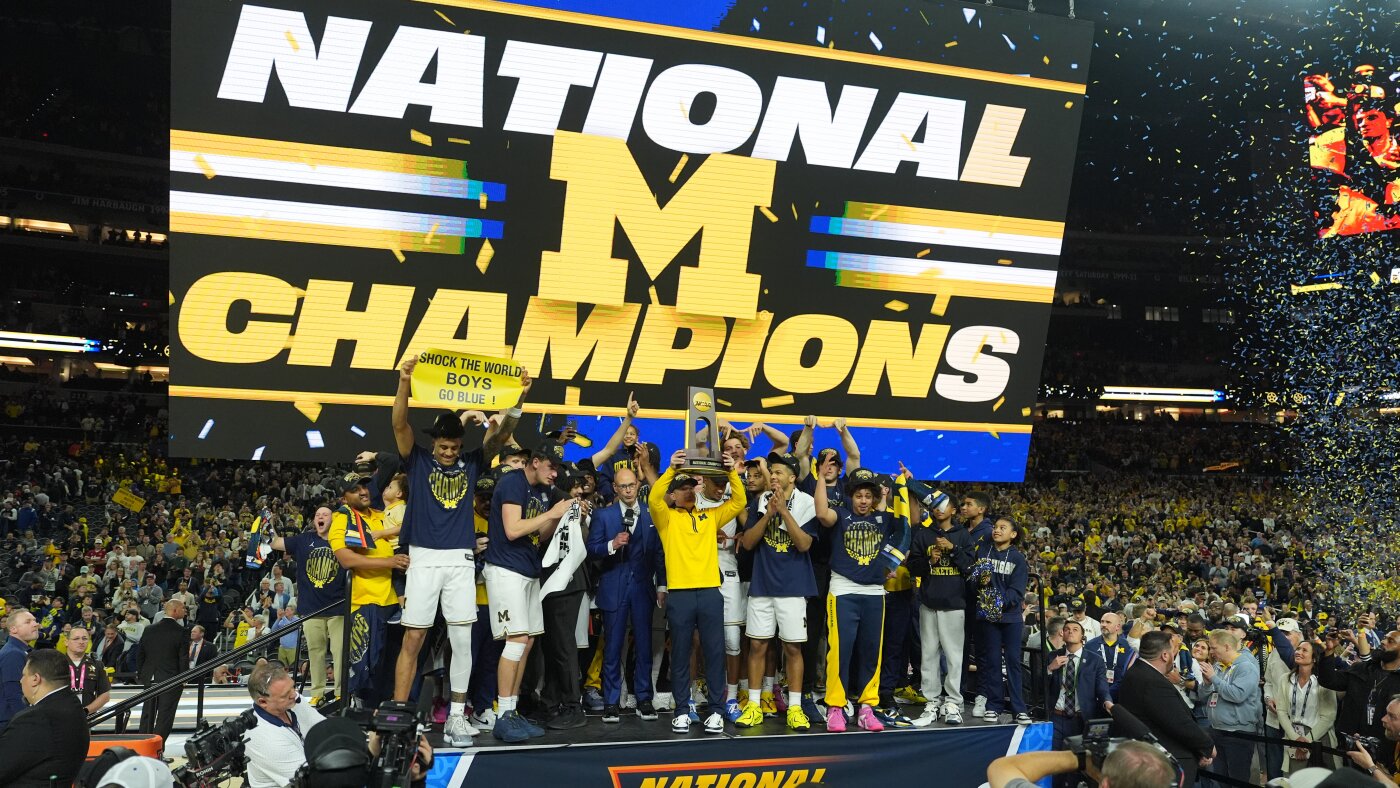
Michigan muscles its way to program’s 2nd NCAA basketball title, beating UConn

Map: Minor Earthquake Strikes Near San Diego

Trump claims he’d win as the president of Venezuela — just needs to ‘quickly’ learn Spanish
-

 Atlanta, GA2 days ago
1 teenage girl killed, another injured in shooting at Piedmont Park, police say
-

 South-Carolina1 week ago
South Carolina vs TCU predictions for Elite Eight game in March Madness
-

 Movie Reviews5 days ago
Vaazha 2 first half review: Hashir anchors a lively, chaos-filled teen tale
-

 Vermont1 week ago
Skier dies after fall at Sugarbush Resort
-

 Politics1 week ago
Trump’s Ballroom Design Has Barely Been Scrutinized
-

 Politics1 week ago
JD Vance says he was ‘obsessed’ with UFOs, believes aliens are actually ‘demons’
-
 Entertainment5 days ago
Inside Ye’s first comeback show at SoFi Stadium
-

 Politics1 week ago
Jeffries declines to break with indicted Democrat after ethics panel’s guilty verdict