Midwest
On this day in history, February 18, 1931, award-winning American author Toni Morrison is born in Ohio

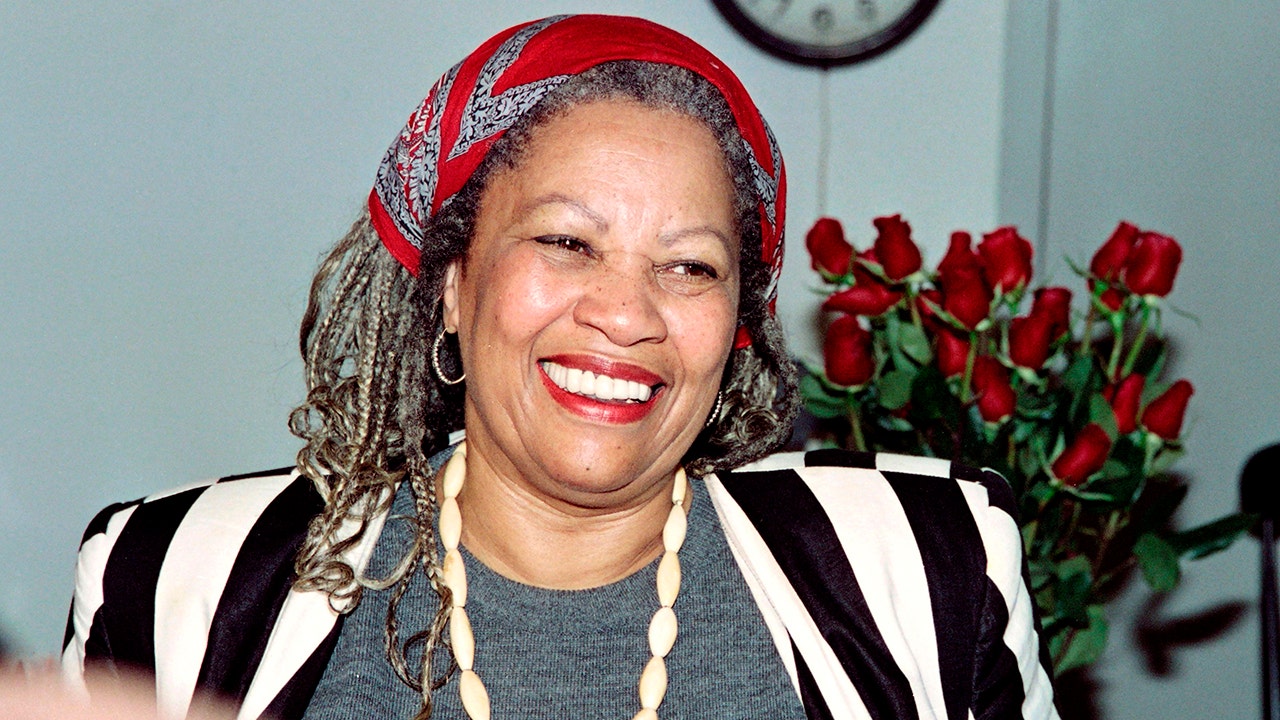
American author and Nobel Prize winner Toni Morrison was born on this day in history, Feb. 18, 1931.
Morrison was born the second of four children in Lorain, Ohio, and was given the birth name Chloe Anthony Wofford, according to the National Women’s History Museum.
As a child, Morrison focused on her studies and became an avid reader.
ON THIS DAY IN HISTORY, FEB. 17, 1801, JEFFERSON IS ELECTED PRESIDENT AS PARTY POLITICS DIVIDE NEW NATION
She was a member of her school’s debate team and yearbook staff and went on to become the head librarian at the Lorain Public Library.
Morrison converted to Catholicism at the age of 12 and was baptized under the name Anthony after Saint Anthony of Padua — taking the nickname Toni, the National Women’s History Museum reports.
Author Toni Morrison speaks at a Newsday book and author luncheon at the Huntington Town House in Huntington, New York, on Oct. 18, 1977. (J. Michael Dombroski/Newsday RM via Getty Images)
In 1949, Morrison moved to Washington, D.C., to attend Howard University, an historically Black college.
ON THIS DAY IN HISTORY, JANUARY 20, 1930, BUZZ ALDRIN IS BORN, MOON WALKER TAUGHT MANKIND ‘SKY IS NOT THE LIMIT’
Morrison frequently toured the then-racially segregated south with the university’s theatrical group called the Howard University Players.
Morrison graduated with her bachelor’s degree in English and furthered her education at Cornell University where she earned her Master of Arts degree in English.
Pulitzer Prize-winning author Toni Morrison in New York City in 1979. (Jack Mitchell/Getty Images)
After graduating in 1955, Morrison went on to teach English at Texas Southern University, then returned to teach at Howard University.
Upon returning to her alma mater, Morrison taught civil rights activist Stokely Carmichael and met her husband, Harold Morrison.
‘HARRY POTTER’ AUTHOR J.K. ROWLING SAYS PEOPLE ‘MISUNDERSTOOD’ HER COMMENTS ABOUT BIOLOGICAL SEX
Morrison taught at Howard for seven years before accepting a job as an editor for textbooks at Random House publishing in Syracuse, New York.
Two years later, Morrison moved to the company’s New York City branch and began editing fiction and books written by Black authors.
Novelist Toni Morrison discusses her venture into playwriting in Albany, New York, on Dec. 23, 1985. (Getty Images)
Morrison published her first book, “The Bluest Eye,” at 39 years old in 1970.
This book was followed by her second novel, “Sula,” and her third, “Song of Solomon,” in 1977, which turned Morrison into a household name, according to the museum.
CLASSIC AUTHORS QUIZ! HOW WELL DO YOU KNOW THE FACTS ABOUT THESE GREAT AUTHORS AND THEIR WORKS?
In 1987, Morrison released her novel, “Beloved,” based on the true story of an enslaved woman.
This book was a bestseller for 25 consecutive weeks — and won the Pulitzer Prize for fiction.
Nobel laureate Toni Morrison (front, in black dress) accepts the applause of partygoers Susan Taylor, Rita Dove, Oprah Winfrey, Angela Davis, Maya Angelou and others in Winston-Salem, North Carolina. (Will And Deni McIntyre/Getty Images)
Morrison became the first Black woman to be presented with the Nobel Prize in Literature in 1993.
She was also honored with the National Book Foundation’s Medal of Distinguished Contribution to American Letters three years later.
BLACK HISTORY MONTH QUIZ: TEST YOUR KNOWLEDGE OF THIS MONTH OF TRIBUTE
“Beloved” was adapted into a film in 1998, starring major players like Oprah Winfrey, Danny Glover, Thandiwe Newton and Kimberly Elise.
While continuing her writing career, Morrison worked as a professor in the Creative Writing Program at Princeton University and wrote children’s books with her son.
U.S. author Toni Morrison smiles in her office at Princeton University in New Jersey, while being interviewed by reporters on Oct. 7, 1993. (DON EMMERT/AFP via Getty Images)
Morrison received an honorary doctorate degree from the University of Oxford, according to the museum, and was consistently praised for her work.
In 2000, the Library of Congress named Morrison a Living Legend, the National Women’s History Museum reports.
She also earned the Presidential Medal of Freedom in 2012 — the same month she published her last book with her son.
Morrison died on Aug. 5, 2019, in New York after complications with pneumonia.
For more Lifestyle articles, visit www.foxnews.com/lifestyle.
Read the full article from Here


Indiana basketball sharpshooter Lamar Wilkerson is known for his generosity.
Upon joining the Hoosiers, he gave a tidy sum of his NIL earnings to his previous program, Sam Houston State.
“I was blessed to be able go from that, from not having a lot, to being here, having a lot more than I even knew what to do with,” Wilkerson said at the time. “I just thought, I can give them this.”
He upped the ante on IU’s Senior Night, giving his mother a Cadillac after the Hoosiers throttled Minnesota.
You could imagine her reaction.
Want more Hoosiers coverage? Sign up for IndyStar’s Hoosiers newsletter. Listen to Mind Your Banners, our IU Athletics-centric podcast, on Apple Podcasts, Spotify or wherever you get your podcasts. Watch the latest on IndyStar TV: Hoosiers.


5 key issues the Iowa Legislature faces in the 2026 session
Eminent domain, property taxes and DOGE cuts are all on the table for legislators this session.
Repeat offenders convicted of multiple serious crimes would receive a mandatory 20-year prison sentence under a bill passed by House lawmakers.
House lawmakers debated for more than an hour about high costs, lack of prison space and the bill’s impact on Black Iowans before voting 68-23 to pass House File 2542, sending it to the Iowa Senate.
Seven Democrats, including Minority Leader Brian Meyer, D-Des Moines, joined Republicans in voting in favor of the bill.
“It will put public safety first,” said the bill’s floor manager, Rep. Steven Holt, R-Denison. “It will ensure that the debt to victims and society is paid. It will prioritize victims and public safety over criminals. It will establish real and effective deterrence that is nonexistent in our current system. It will reduce chaos and violence in our society.”
Here’s what to know about the bill.
What would the House Republican three strikes bill do?
Iowans who accumulate three strikes would face a mandatory 20-year prison sentence, with no parole, under the bill.
That would replace Iowa’s current law that says habitual offenders must serve a minimum three-year prison sentence before they are eligible for parole.
All felonies, as well as aggravated misdemeanors involving sexual abuse, domestic abuse, assault and organized retail theft would be considered level-one offenses that are worth one full strike.
Other aggravated misdemeanors, as well as serious misdemeanors involving assault, domestic abuse and criminal mischief would be considered level-two offenses worth half a strike each.
Lawmakers amended the bill to remove theft, harassment and possession of a controlled substance from the crimes that would count toward a person’s strikes.
And the amendment specifies that the bill would only apply to convictions that occur beginning July 1, 2026.
If someone is arrested and convicted of multiple offenses, only the most serious charge would count towards the defendant’s strikes.
Convictions would not count toward someone’s total if more than 20 years passes between a prior conviction and their current conviction.
Rep. Ross Wilburn, D-Ames, tried unsuccessfully to amend the bill to say that only a violent crime would qualify as someone’s third strike, but Republicans rejected the amendment.
“The bill still scores murder, felony embezzlement and felony theft the same, even though they are very different crimes,” Wilburn said. “One point is one point and three gets you 20 years with no ability for parole or judicial discretion.”
Holt said the legislation leaves room for judicial and prosecutorial discretion.
“There are deferred sentences, there are plea bargains,” he said. “There is plenty of opportunity for grace and judicial discretion in the legislation that we are proposing.”
Bill could cost millions, require Iowa to build a new prison, agency says
A fiscal analysis of the bill by the nonpartisan Legislative Services Agency said it could cost Iowa nearly $165 million more per year by 2031 based on the cost of housing inmates for longer prison stays.
- FY 2027: $33 million
- FY 2028: $66 million
- FY 2029: $99 million
- FY 2030: $132 million
- FY 2031: $164.9 million
The agency said if the bill had been in effect between fiscal year 2020 and fiscal year 2025, there would have been 5,373 people who qualified for the 20-year mandatory minimum sentence.
“An increase in the prison population due to increased (length of stay) will require the DOC to build additional prison(s),” the agency states. “The size, security and other features that a future prison may require cannot be determined, but costs would be significant.”
The analysis noted that South Dakota appropriated $650 million last fall to build a 1,500-bed prison.
As of March 1, the Iowa Department of Corrections’ website describes the state’s prison system as being overcrowded by 25%, with 8,705 inmates compared to a capacity of 6,990.
The Office of the State Public Defender could see a projected cost increase of $1.6 million due to an increased number of trials resulting from the legislation.
But the agency’s estimates come with a caveat — the Department of Corrections did not respond to its requests for data.
“The LSA has not received a response to multiple requests for information from the DOC,” the note states. “Without additional information, the LSA cannot estimate the total fiscal impact of the bill.”
Holt called the fiscal note “an embarrassment to the Department of Corrections” and “an agenda masquerading as math.”
“It is clear, in my judgment, that because they did not like the legislation they went all out and extreme to create a fiscal note that cannot be taken seriously in its assumptions,” he said. “It assumes that nothing will change, that there will be no deterrent factor and that the numbers will continue as usual.”
Black Iowans would be disproportionately impacted by the law
The Legislative Services Agency analysis says the bill “may disproportionately impact Black individuals if trends remain constant.”
Of the 29,438 people convicted in fiscal year 2025 of felonies and aggravated misdemeanors that constitute a level one offense under the bill, the agency said about 70% were White, 22% were Black and 9% were other races.
Iowa’s overall population is 83% White, 4% Black and 13% other races, the agency said.
It’s not clear how the bill’s impact would change to account for the House amendment removing some crimes from counting towards the three strikes.
“Expanding three-strike laws will intensify disparities — and that’s what this statement shows — by mandating longer sentences, limiting judicial discretion,” Wilburn said. “We already have a habitual offender statute. We already have one in place. We have a 10-year low in recidivism in our correctional system.”
Rep. Angel Ramirez, D-Cedar Rapids, said California’s three strikes law, passed in the 1990s, worsened racial disparities, and “Iowa is about to repeat the same mistake.”
“I urge every member here, do not pass legislation that our own minority impact statement tells us will deepen inequality in our state,” Ramirez said.
Holt said minority communities in Iowa are impacted by crime and that the legislation “will make citizens of all colors safer.”
And he said the minority impact statement “tells only one side of the story, doesn’t it? It tells the criminal’s story. What about the victim’s story?”
“What about the mother who will continue to tuck her kids in at night and read them Bible stories because she never became the next victim of a violent career criminal?” he said. “Where is that data point in the minority impact statement?”
House lawmakers also approved separate legislation that would increase Iowa’s statewide bond schedule, Senate File 2399.
That bill passed on a vote of 74-19.
Iowans could see more information on judges’ rulings
Iowans would have access to more information about judges’ rulings ahead of the state’s judicial retention elections under a separate measure, House File 2719, which passed on a 73-19 vote.
The Iowa secretary of state’s office would be required to publish information including:
- The percentage of cases in which the judge set a bond amount lower than the state’s bond schedule
- The frequency that the judge releases someone on their own recognizance for a violent offense compared to a nonviolent offense
- The frequency that the judge’s final sentence is lower than statutory recommendations or a prosecutor’s recommendations
- The number of times the judge issues a deferred judgement, deferred sentence or suspended sentence
- The number of times the judge’s rulings are reversed on appeal due to abuse of discretion or error of law
- The average time it takes the judge to rule on a motion or case
- The number of cases the judge has resolved compared to the number of cases on the judge’s docket
The data would have to be displayed with a five-year trend line beginning five years after the bill takes effect.
The Secretary of State’s Office would also be required to maintain a searchable database of all judicial opinions and orders for the judge’s current term and the preceding six years. The decisions would be redacted when appropriate.
And judges would have the opportunity to write a 2,000-word personal statement on their judicial philosophy or data trends present in their rulings.
Stephen Gruber-Miller covers the Iowa Statehouse and politics for the Register. He can be reached by email at sgrubermil@registermedia.com or by phone at 515-284-8169. Follow him on X at @sgrubermiller.

TOPEKA, Kan. (WIBW) – Below is a look at the results from Wednesday night’s high school basketball sub-state semifinals in Northeast Kansas.
Editor’s Note: This story will be updated with what schools are hosting when that information becomes readily available.
WIBW Scoreboard
BOYS
6A Boys West Sub-State: Wednesday’s sub-state semifinal results
- Topeka High 57, Washburn Rural 50 (will play Maize Saturday)
- Junction City 70, Dodge City 56 (will play Derby Saturday)
- Manhattan 58, Wichita-Northwest 56 (will play Wichita-East Saturday)
4A Boys East Sub-State: Wednesday’s sub-state semifinal results
- Rock Creek 62, Louisberg 57 (will play Bishop Miege Saturday)
- Atchison 74, Wamego 43
- Hayden 72, Independence 56 (will play Atchison Saturday)
- Eudora 76, Santa Fe Trail 68
GIRLS
5A West Girls: Wednesday’s sub-state semifinal results
- Hays 80, Topeka West 18
- Eisenhower 55, Seaman 41
- Kapaun Mt. Carmel 71, Emporia 41
5A East Girls: Wednesday’s sub-state semifinal results
- Shawnee Heights 89, Sumner 15 (will play Pittsburg Saturday)
- Basehor-Linwood 74, Highland Park 28 (will play Piper Saturday)
3A Pomona-West Franklin Girls: Wednesday’s sub-state semifinal results
- Osage City 75, Columbus 31 (will play Frontenac Saturday)
3A Sabetha Girls: Wednesday’s sub-state semifinal results
- Silver Lake 48, Nemaha Central 26 (will play Riley County Saturday)
- Riley County 51, Jeff West 40 (will play Silver Lake)
Copyright 2026 WIBW. All rights reserved.

Watch Indiana basketball’s Lamar Wilkerson give his mom a Cadillac

Iowa House OKs ‘3 strikes’ bill with 20-year prison terms. What to know

RESULTS: NE Kansas high schools to play Saturday after Wednesday sub-state wins

Northern Kentucky claims 4 titles at Class 3A indoor track state meet

Shavers leads ULM past Louisiana 79-63

Florida High School Football Rankings: Top 25 teams – Oct. 21

Cleary's 21 help Le Moyne down Central Connecticut State 69-64 in OT

How old is Bo Nix? What to know about Oregon quarterback ahead of 2024 NFL Draft

99th annual Pony Swim held in Virginia

Indiana Members Credit Union announced as new anchor tenant at Bottleworks District

DHS defends McLaughlin against allegations husband’s company profited millions from ad contracts: ‘Baseless’

Sánchez defies Trump in political gamble as Madrid say no to war

Satellite images show Iran school strike hit more buildings than earlier reported

US submarine sinks Iranian warship by torpedo in a first since World War II

Which oil and gas facilities in the Gulf have been attacked?
-

 World1 week ago
Exclusive: DeepSeek withholds latest AI model from US chipmakers including Nvidia, sources say
-

 Massachusetts1 week ago
Mother and daughter injured in Taunton house explosion
-

 Wisconsin3 days ago
Setting sail on iceboats across a frozen lake in Wisconsin
-

 Maryland4 days ago
AM showers Sunday in Maryland
-

 Denver, CO1 week ago
10 acres charred, 5 injured in Thornton grass fire, evacuation orders lifted
-

 Florida4 days ago
Florida man rescued after being stuck in shoulder-deep mud for days
-

 Oregon6 days ago
2026 OSAA Oregon Wrestling State Championship Results And Brackets – FloWrestling
-

 Massachusetts2 days ago
Massachusetts man awaits word from family in Iran after attacks