Ohio
Education advocates want voters to decide on DEI ban in Ohio colleges, universities

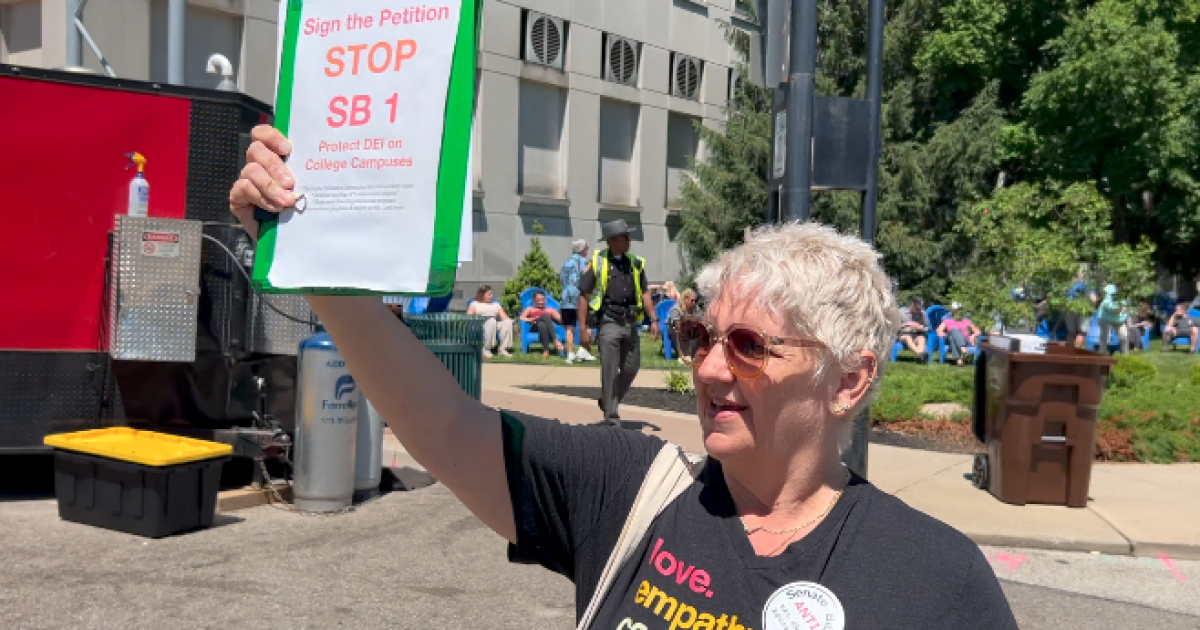
CINCINNATI — Education advocates were out in the Cincinnati streets Monday trying to push back against Senate Bill 1 (SB 1), which would ban diversity, equity and inclusion (DEI) in state colleges and universities.
“It is a way to erode public higher education in Ohio. So the bill is designed to eliminate programs and services that are based on identity groups,” said Kate Durso, the southwest regional captain advocating against SB 1.
SB 1, or the “Ohio Higher Education Act,” was signed into law by Gov. Mike DeWine on March 28. The law goes into effect on June 27.
Facebook: Ohio Senate Republicans
The law bans DEI from trainings, orientations, offices, positions or new institutional scholarships at state colleges or universities. Other policies in the Ohio Higher Education Act include a required American civics literacy course, prohibiting full-time university faculty from striking and automatically eliminating any university degree program that awards fewer than five degrees per year on a three-year rolling average.
SB 1’s text states that the law is meant to support “intellectual diversity” at state colleges and universities.
In February, WCPO 9 reported on SB 1 after the state’s Senate passed the legislation. One Republican senator explained why supporters are cracking down on DEI on college campuses.
“Rather than fostering equality, DEI enforces racial divisions, prioritizes group identity over individual merit and creates (the) very discrimination it claims to be fighting,” said state Sen. Andrew Brenner (R-District 19).
Watch to learn more about how advocates are challenging SB 1 and what it means for Ohio’s higher education landscape:
Volunteers look for support to fight Ohio’s ban on DEI at state colleges
An excerpt from SB 1 describes how teachers are expected to enable free thought and discussion under this legislation:
“Affirm and declare that faculty and staff shall allow and encourage students to reach their own conclusions about all controversial beliefs or policies and shall not seek to indoctrinate any social, political, or religious point of view;”
Senate Bill 1
I met with Kate Durso and her team of volunteers, who disagree with the lawmakers behind SB 1.
WCPO 9 News

“I would say that this bill, in fact, does not promote more inclusive conversation. It actually creates boundaries and barriers against civil discourse,” Durso said.
A member of Durso’s volunteer team told me that SB 1 is pushing her away from her home state.
“Yeah, I graduated from UC, University of Cincinnati, in 2023, and I’m pursuing law school now. And this bill, SB 1, was one of the reasons that I’m not staying in my hometown of Cincinnati for law school; it just scares me too much,” Erin Tedtman said.

WCPO 9 News
Now, she is one of the local advocates in an initiative to move the law to a ballot issue this fall.
Advocates sent a referendum petition to Attorney General Dave Yost’s office in April. That process required 1,000 signatures. Once the AG’s office approved the first part of the referendum, the volunteers’ efforts expanded. The volunteers have to collect 250,000 signatures across at least 44 of Ohio’s 88 counties, as Durso explained. Their deadline is June 25.
“We need to hit a certain percentage within each of those counties based on the 2022 gubernatorial election,” Durso said.
The volunteer captain said that her team and others across Ohio are trying for as many signatures as possible, because some may be marked invalid, which could occur even with a slight mistake.
“If someone accidentally writes their first and last name in the same box instead of following the directions on the form or includes the wrong address,” Durso said.
As a lifelong educator, Durso told me this is her way of advocating for students and staff she works with.



Amanda-Clearcreek honors Ohio Air National Guard member Capt. Seth Koval
Amanda-Clearcreek honors Ohio Air National Guard member Capt. Seth Koval
The remains of three Ohio airmen who were killed in the crash of their KC-135 refueling plane in Iraq earlier this month will be returned this weekend, according to a family member of one of the deceased.
The airmen, identified as Master Sgt. Tyler Simmons, 28, of Columbus; Capt. Curtis Angst, 30, of Wilmington, and Capt. Seth Koval, 38, of Stoutsville, will be brought back March 29 to Rickenbacker Air National Guard Base near Columbus, said Charles Simmons, Tyler’s father.
“Tyler will have a hero’s welcome, because he is a hero,” said Charles.
The Columbus Division of Police will be involved in the funeral procession when the airmen’s remains are transferred from the airport to funeral homes, said Columbus police Sgt. James Fuqua. That will take place between 1 p.m. and 2 p.m. March 29, said Fuqua.
The airmen’s remains first arrived back in the U.S. on March 18 with a dignified transfer taking place at Dover Air Force Base in Delaware.
Curtis, Angst, and Simmons were members of the 166th Air Refueling Squadron connected to the 121st Air Refueling Wing based at Rickenbacker Air National Guard Base in Columbus.
The airmen, as well as three other servicemembers, died on March 12 when their KC-135 tanker crashed in western Iraq during a mission in support of Operation Epic Fury in Iran. The cause of the crash, which occurred in friendly airspace, has not been publicly identified. U.S. Central Command has said the incident did not involve hostile or friendly fire, and military experts have theorized the crash may have been the result of a collision with a second KC-135 that sustained heavy damage to its tail fin but landed safely at an airport in Tel Aviv, Israel.
Reporter Bethany Bruner can be reached at bbruner@dispatch.com.
Reporter Shahid Meighan can be reached at smeighan@dispatch.com, at ShahidMeighan on X, and at shahidthereporter.dispatch.com on Bluesky.

COLUMBUS, Ohio (WSYX) — Thousands of people are expected to head to downtown Columbus for the 23rd annual Home Improvement Show this weekend.
Organizers say visitors can find ideas for everything from small interior design projects to major renovations.
The event is being held at the Ohio Expo Center and includes seminars, exhibits and demonstrations from local and national companies.
The show begins at noon Friday and runs until 6 p.m.
It continues Saturday from 10 a.m. to 6 p.m. and Sunday from 11 a.m. to 5 p.m.
Adult tickets cost $5 at the door.

Matt Patricia’s contract extension earlier this offseason included a pay raise that figures to make him the highest-paid assistant coach in college football this year.
But Patricia, who will make $3.75 million in guaranteed compensation as Ohio State’s defensive coordinator in 2026, also held an appreciation for his situation.
“Ohio State is such a special place, not only just the history, the tradition, the football program, the school, but the people here,” Patricia said. “Having a chance to have a little stability with my family, it’s hard when you have to move your family around, your kids and the new school and all that.”
Before he joined Ryan Day’s staff last year, the 51-year-old Patricia had bounced around as an assistant in the NFL for much of the decade.
He spent 2021 and 2022 in a variety of roles with the New England Patriots, then a year as a defensive assistant with the Philadelphia Eagles. He took off from coaching in 2024. The frequent relocation gave him perspective.
“We had an unbelievable experience settling into Columbus,” Patricia said. “Everybody’s been so nice and welcoming. It feels like home. It’s a big deal for us to be in a place where everybody’s happy. That’s really important.”
Patricia had a significant impact on the Buckeyes in his first year replacing Jim Knowles. Despite heavy roster attrition following their national championship season, he kept the defense atop the Football Bowl Subdivision. For the second straight season, no one allowed fewer points than Ohio State.
The 9.3 points per game allowed by the Buckeyes were the fewest by any defense since Alabama in 2011.
The success made Patricia a hot commodity on the coaching market, rebuilding his reputation as a sharp and creative football mind only a decade removed from his tenure as a Super Bowl-winning defensive coordinator for the Patriots. He was a finalist for the Broyles Award as the nation’s top assistant.
Patricia said he heard about opportunities in the NFL and elsewhere across the college football landscape, though none of them would pry him away from Ohio State.
“It wasn’t necessarily something where you’re looking to leave,” Patricia said, “but you do have to listen when those things come up. I’m just glad everything worked out.”
His challenge in his second season mirrors his previous one, as the Buckeyes are again managing the loss of eight starters on defense.
But unlike 2025, they have fewer returning pieces, relying on a larger class of transfers to help fill the holes on the depth chart.
“With as much coming into the program for the first time, not only are you trying to catch them up on the football scheme, but you’re also trying to catch them up on everything else,” Patricia said. “This is how we work, this is how we do things, this is the standard we’re looking for, this is how we practice, this is how we prepare, this is how we go to school. That has to be also taught. It becomes a lot, but that’s why you bring in the right guys that have the mental makeup to do all that.”
Joey Kaufman covers Ohio State football for The Columbus Dispatch. Email him at jkaufman@dispatch.com and follow him on @joeyrkaufman on X.

‘Look, it’s a lawsuit!’ Lion King composer sues comedian for $27 million over song translation

Don’t want to miss the bloom? This L.A. scientist created a poppy forecast

DHS attorney said agents in Los Angeles should have ‘started hitting’ protesters, emails show
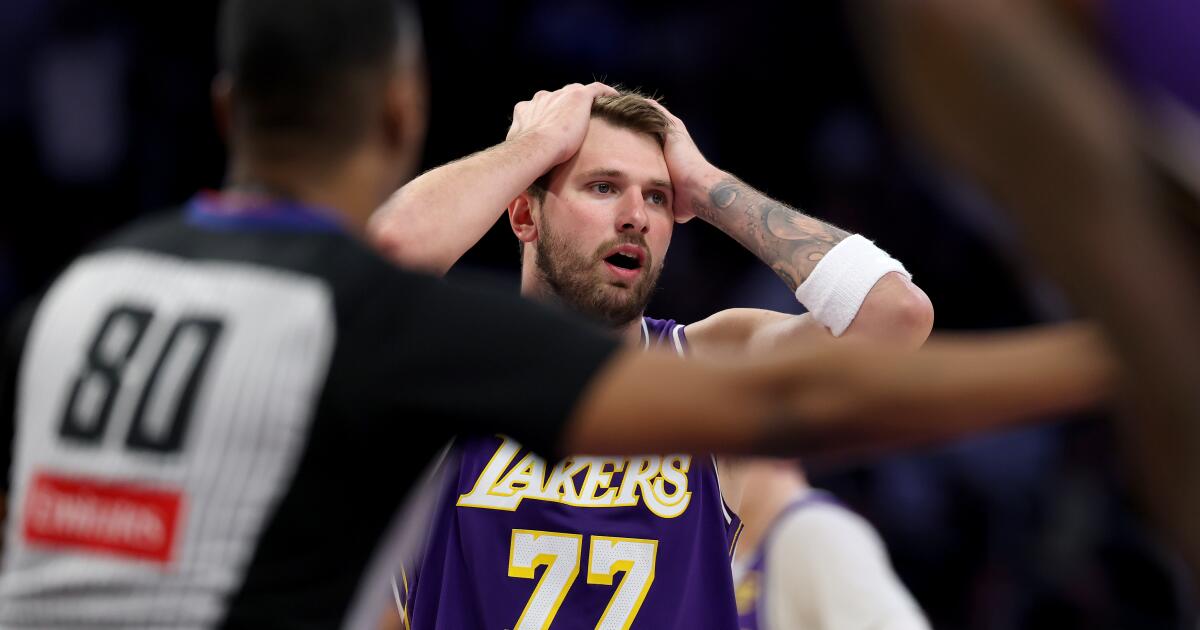
Lakers beat Nets, but Luka Doncic is facing suspension again after 16th technical

EU Parliament unblocks key political hurdle in digital euro talks

Florida High School Football Rankings: Top 25 teams – Oct. 21

How old is Bo Nix? What to know about Oregon quarterback ahead of 2024 NFL Draft

Cleary's 21 help Le Moyne down Central Connecticut State 69-64 in OT

99th annual Pony Swim held in Virginia

Indiana Members Credit Union announced as new anchor tenant at Bottleworks District
EU Parliament unblocks key political hurdle in digital euro talks

Man arrested in plot to firebomb Palestinian activist’s home after undercover op

WATCH: Senate hearing goes silent after Angel Father confronts top Dem over daughter’s death

US diplomat Marco Rubio denounces settler violence, tolls in Hormuz strait

Iran-linked hackers have breached FBI Director Kash Patel’s personal emails | CNN Politics
-

 Detroit, MI1 week ago
Drummer Brian Pastoria, longtime Detroit music advocate, dies at 68
-

 Movie Reviews1 week ago
‘Youth’ Twitter review: Ken Karunaas impresses audiences; Suraj Venjaramoodu adds charm; music wins praise | – The Times of India
-

 Sports7 days ago
IOC addresses execution of 19-year-old Iranian wrestler Saleh Mohammadi
-

 New Mexico5 days ago
Clovis shooting leaves one dead, four injured
-
 Business1 week ago
Disney’s new CEO says his focus is on storytelling and creativity
-

 Technology6 days ago
YouTube job scam text: How to spot it fast
-

 Tennessee4 days ago
Tennessee Police Investigating Alleged Assault Involving ‘Reacher’ Star Alan Ritchson
-

 Texas1 week ago
How to buy Houston vs. Texas A&M 2026 March Madness tickets