North Dakota
North Dakota Outdoors: Who doesn’t love having monarch butterflies?


Submitted Photo
Future of monarch butterfly hanging in balance. Photo from NDGF.
Revering walleye, pheasants, or bucks is about as Midwestern as loving summertime baseball, hot dogs and mom. In an honest conversation you’ll hear an underscoring appreciation for pike, meadowlarks and monarchs. Who doesn’t love the fight of a northern, the sound a meadowlark makes perched on a fence post? When a monarch is found in the garden many will find it a perfect time to take a moment’s break, wipe the sweat off the brow and appreciate the beauty of these summer staples.
But as has been documented, the future of the monarch is hanging in the balance.
Endangered Species Act listing proposal
The U.S. Fish and Wildlife Service reopened the public comment period for a proposed rule to list the monarch butterfly as a threatened species under the Endangered Species Act. The proposed rule includes species-specific protections and flexibilities to encourage conservation of the butterfly under section 4(d) of the ESA. The comment period is reopened until May 19, to give all interested parties an additional opportunity to comment on the proposed rule, which was published on Dec. 12, 2024. Comments that were previously submitted do not need to be resubmitted as they are already incorporated into the public record and will be fully considered in the final listing determination.
Public comments are an integral part of the ESA listing determination process, and the USFWS recognizes the complexity of the information requested for public comment in the proposed rule. By reopening the public comment period, the agency is ensuring everyone has a chance to share information relevant to the conservation status of the species, including the associated 4(d) rule and proposed critical habitat designation.
The reopening of the public comment period for the monarch butterfly will publish in the Federal Register Reading Room. Information about how to submit comments can be found on regulations.gov by searching for docket number FWS-R3-ES-2024-0137.
Everyone can play a role in saving the monarch butterfly. Because of the species’ general habitat use and wide distribution, all sectors of society have an opportunity to participate in a broad range of conservation efforts throughout the butterfly’s range.
More about
monarch in ND
Monarchs are typically found in areas with a high number of nectar sources. While domestic plants are used, native flowers are preferred. Monarchs in the caterpillar stage rely exclusively on milkweed so areas with a high density of milkweed will contain both caterpillars and adult monarchs.
Key areas, conditions for monarch in ND
Monarchs are found throughout North Dakota. Areas with a higher density of native prairies would be more likely to support monarchs.
Problems which may affect species
The loss of habitats that contain milkweed is the primary cause for this species’ decline. Loss of habitat with high quality nectar sources for adults, such as native prairies, is also a concern. Connectivity between usable habitats is a concern.
Other natural or manmade factors
The use of herbicide for weed control at certain times of the year in native prairie tracts may be a detriment by reducing nectar sources for the butterfly. Insecticide use near populations may also be a factor.
Previous research
or surveys
The University of Minnesota has done feeding studies of the monarch. Iowa St. University has looked at the effects of herbicide use on monarchs. Royer surveyed butterflies at a number of sites in North Dakota.
Management recommendations
– Develop pollinator habitat.
– Protect and manage high quality native prairie.
– Develop connectivity between quality habitat.
– Delay haying of habitat until after end of adult flight.
– Plant milkweed and native nectar plants to improve habitat.
– Avoid broadcast spraying of pesticides and herbicides at known sites to minimize loss of adults and nectar sources.
You can learn more about the monarch butterfly, the monarch listing proposal, and how to help conserve monarch butterflies at fws.gov/monarch.



The Denver Broncos made their big splash this offseason trading for wide receiver Jaylen Waddle to bolster their offense. The position is now five deep at the position with Waddle, Courtland Sutton, Marvin Mims Jr., Troy Franklin, and Pat Bryant.
The receiving corps has a lot of talent, but also a lot of questions. Sutton isn’t getting any younger and has a significant cap hit in 2027. Additionally, it’s the last year of Mims’ rookie contract. In my opinion, the Broncos don’t have a long-term replacement in the mix for Sutton at the X position, which could be an area they seek to address in the 2026 NFL Draft.
Advertisement
The Broncos utilizing their second-round selection on a wide receiver is very unlikely. However, a player I believe they will carry a relatively high grade on his North Dakota State standout Bryce Lance. Lance broke out in 2024 during the Bison’s last FCS title with 75 receptions for 1,053 yards and 17 touchdowns catching passes from Cam Miller. This past year, he had 51 receptions, 1,070 receiving yards, and 8 touchdowns with projected Day 2 pick Cole Payton throwing him the ball.
He checks a lot of the boxes Head Coach Sean Payton covets at the position. Not only that, but I also believe he has the ability to be an explosive X receiver at the next level. Let’s do a deep dive regarding his strengths and weaknesses, and why and when the Broncos should consider selection him in this year’s draft.
Player Profile: Bryce Lance — Wide Receiver — North Dakota State
Height: 6’3” | Weight: 204 pounds | Arm Length: 32-1/8” | Hand Size: 9-1/4” | Age: 23 Years Old
Advertisement
40-Yard Dash: 4.34 seconds | 10-Yard Split: 1.49 seconds | 3-Cone Drill: 7 seconds
Vertical: 41.5” | Broad Jump: 11’1” | 20-Yard Shuttle: 4.15 seconds
Statistics: 57 games played, 26 starts, 127 receptions with 2,157 receiving yards. 25 receiving touchdowns, as well as 121 rushing yards and two rushing touchdowns.
Film Room & Highlights
Hart’s Scouting Report
Positives:
-
Good size and frame to handle being an X receiver on the outside in the NFL
-
Elite athlete who has top-tier speed and vertical playmaking ability
-
One of the most productive wide receivers in college football the past two seasons with a penchant for touchdowns and big-time plays that move the chains
-
Incredible ball tracker down the field with a knack for coming down with highlight reel catches in the endzone, much like Sutton
-
Amongst the best in this class most with respect to efficiency on outs, posts, corners, screens, and nine routes
-
Top-notch hops and strong hands who routinely comes down with contested catches
-
Ample special teams experience serving primarily in that fashion for the Bison in 2022 and 2023 after his redshirt season
Negatives:
-
Despite tremendous downfield speed, he doesn’t sport much short area quickness
-
Will likely need to add some strength and weight to handle the rigors of the next level
-
Route refining and release at the line of scrimmage will need some work to take on NFL caliber talent
-
Doesn’t have a lot of drops, but would like to see better catching technique, too often body catching instead of extending out and plucking from the air
Hart’s Projection: Top 75 Selection — Late Second Round, Early Third Round Value
Why the Denver Broncos should consider drafting Lance
After a quiet start to their free agency period, the Broncos took the NFL and media waves by storm acquiring Waddle for their first and third round picks in this year’s draft. It’s safe to say it is no longer a primary need for the team. However, it’s certainly a position where a long-term vision may come into focus during this year’s draft endeavors.
Advertisement
Do I think the Broncos will use their top selection in this year’s draft on another wide receiver? No. Do I believe they should be interest in a player with Lance’s skillset, upside and ability? Absolutely. Sutton has been a good wide receiver for the franchise for years. In fact, I think he is a player underappreciated by most of the fan base. Nevertheless, it’s a possibility, especially if he has a drop in production this season, that Denver could move on from him at the end of this season. His 2027 cap hit is just over $28 million dollars.
Lance has some work to do transitioning from the FCS to NFL, but his elite athleticism and playmaking ability are enticing. He is arguably this draft’s best deep ball receiver and sported over 20 yards per reception this past season. That’s an area where Denver struggled with during their ‘25, especially Troy Franklin, whose deep ball tracking and contested catch ability are subpar.
He checks a lot of boxes, and I believe is a player the Broncos’ brass will think highly of. Whether or not that results in them drafting him is an entirely different matter. They certainly have bigger needs, though I think the Bison standout is a great fit for Denver’s offense and boasts the potential to be Sutton’s heir at the X position.
I have Lance ranked as a Top 75 player with a late-second round, early third-round grade. The Broncos are scheduled to pick at 62 overall, which may be a bit too early for him. Perhaps in a trade down scenario, the odds could pick up a bit. Overall, I love the fit, but it seems unlikely the FCS superstar ends up sporting a Broncos’ cap on draft day.

BISMARCK, N.D. (KFYR) – Did you know that North Dakota has 63 wildlife refuges? That is more than any other state! These refuges are places where the land and water are protected to preserve the homes of animals dependent on the land.
North Dakota’s refuges are home to many animals, including moose, badgers, coyotes and more than 250 kinds of birds.
You can visit many of North Dakota’s wildlife refuges, including Audubon National Wildlife Refuge in McLean County, Lake Zahl National Wildlife Refuge in Williams County and Slade National Wildlife Refuge in Burleigh County.
Activities can range from fishing and hunting to enjoying hiking trails and photography.
Copyright 2026 KFYR. All rights reserved.

Former Wisconsin Badgers men’s basketball wing Jack Robison announced he’d be transferring to North Dakota State University.
The Bison landed the 6-foot-6 forward who still has two years of eligibility remaining.
The 2026 Summit League Champions finished the 2025-26 season 27-8 overall as they suffered a 92-67 defeat in the NCAA Tournament to No. 3 Michigan State.
With only two seniors on their roster a year ago, NDSU is looking to pick up right where they left off. Robison didn’t have a ton of playing time in his two-year career with the Badgers, but his 30 appearances helped him get his feet wet.
Robison averaged 1.8 minutes per game in 2025-26, which was up from the 1.2 he averaged as a freshman. Not only were his minutes up, but he appeared in four more games as he was beginning to catch Greg Gard’s attention.
The Badgers have a ton of turnover heading into 2026-27, but Robison was the first to announce where he’d be heading. Wisconsin still awaits John Blackwell’s decision to see if he’s staying in the Big Ten or not, but Badgers fans at least know where they can follow Robison’s career for potentially his final two collegiate seasons.
Contact/Follow @TheBadgersWire on X (formerly Twitter) and like our page on Facebook to follow ongoing coverage of Wisconsin Badgers news, notes and opinion.

Pushback grows over Texas governor’s threat to withhold public safety money

Zion National Park closes popular trail during ongoing search and rescue operation – KSLNewsRadio

Tornado with winds up to 90mph touches down in Vermont amid storms

Car crashes into Murphy’s Irish Pub patio on the Oceanfront

How will Trump get out of his fight with Pope Leo?

Florida High School Football Rankings: Top 25 teams – Oct. 21

How old is Bo Nix? What to know about Oregon quarterback ahead of 2024 NFL Draft

Cleary's 21 help Le Moyne down Central Connecticut State 69-64 in OT

99th annual Pony Swim held in Virginia

Indiana Members Credit Union announced as new anchor tenant at Bottleworks District

Grieving mothers scorch Dem lawmaker after he pivots during hearing to attack ‘MAGA Republicans’

Pressure mounts on Peru’s election authorities amid presidential race delay

Tornadoes touch down in Rochester area

Minnesota Republicans reveal which far-left candidate they want to challenge in open Senate race

Swedish rights groups slam ‘honest living’ criteria for migrants
-

 Ohio4 days ago
‘Little Rascals’ star Bug Hall arrested in Ohio
-

 Arkansas1 week ago
Arkansas TV meteorologist Melinda Mayo retires after nearly four decades on air
-

 Austin, TX1 week ago
ABC Kite Fest Returns to Austin for Annual Celebration – Austin Today
-

 Politics3 days ago
Dem fundraising giant in the hot seat as GOP lawmakers demand answers over dodged subpoena
-
 Science3 days ago
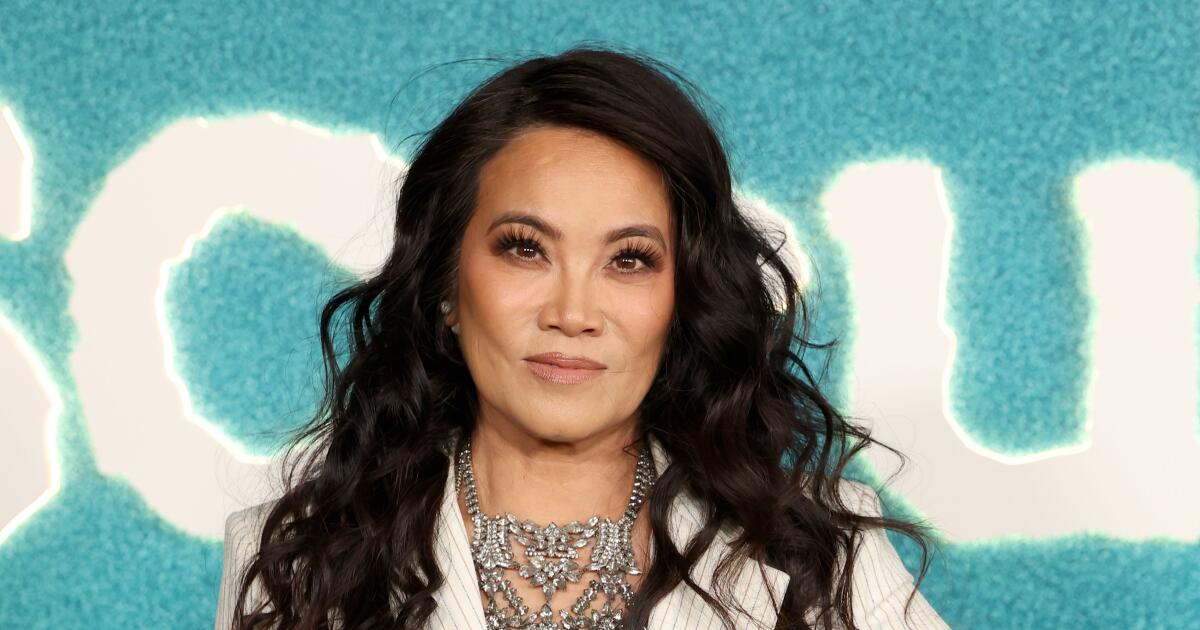
‘Dr. Pimple Popper’ Sandra Lee had a stroke last fall. Here’s how the TV doc is bouncing back
-

 Politics6 days ago
Trump blasts Spanberger ahead of Virginia meetings, says state faces tax base exodus like New York, California
-

 Health1 week ago
Woman discovers missing nose ring traveled to her lungs, causing month-long cough
-

 Detroit, MI1 week ago
Byron Allen’s “Comics Unleashed” replacing Colbert’s “Late Show”