North Dakota
North Dakota Moves to Protect Crypto ATM Users


Lawmakers in North Dakota have introduced a bill aimed at curbing cryptocurrency fraud and protecting its residents. House Bill 1447 was submitted on January 15 in response to an alarming $6.5 million in crypto-related fraud losses reported by 103 residents in 2023. The proposed legislation, sponsored by Representative Steve Swiontek, seeks to establish measures to safeguard consumers and address vulnerabilities in crypto ATM transactions.
The bill outlines specific restrictions, including a $1,000 daily withdrawal limit on crypto ATMs and a cap on transaction fees at $5 or 3% of the withdrawal amount, whichever is higher. These limits are designed to reduce financial exploitation and ensure fair use of these machines.
Lisa Kruse, commissioner of the North Dakota Department of Financial Institutions, emphasized the importance of these measures, citing the growing number of complaints regarding crypto-related fraud. Speaking to the House Industry, Business, and Labor Committee, Kruse highlighted that crypto scams are becoming more sophisticated, leading to substantial financial losses for the state’s residents.
The situation in North Dakota mirrors national trends. According to an FBI report released in September 2024, Americans lost $5.6 billion to cryptocurrency fraud in 2023. Among these losses, 5,500 cases involved crypto ATMs, with over $189 million in damages. This highlights the need for enhanced consumer protections, particularly in high-risk areas like crypto ATMs, which have become a target for fraudulent schemes.
Representative Steve Swiontek pointed out the security gaps in crypto ATMs compared to traditional banking ATMs. He argued that these vulnerabilities allow criminals to exploit the system for illicit activities, creating a pressing need for regulation.
The proposed bill also addresses the risks faced by older residents, a demographic that is frequently targeted by fraudsters. Josh Askvig, the North Dakota director of the American Association of Retired Persons (AARP), stressed that protecting elderly residents is a critical aspect of the legislation. Many older individuals are less familiar with cryptocurrency, making them more susceptible to scams. To counter this, the bill mandates that crypto ATMs display clear warnings about potential fraud and encourage users to contact law enforcement if they suspect any fraudulent activity. These warnings would also remind users that funds lost in scams may not be recoverable.
While the bill has garnered support for its consumer protection goals, it has also faced opposition from some crypto ATM operators. During the hearing, Kevin Lolli, a representative of CoinFlip, one of the largest crypto ATM providers in the U.S., raised concerns about the impact of the proposed fee and transaction limits on operators. He explained that the current fees, which range from 8% to 20%, are necessary to cover the costs of hardware, maintenance, and rental payments to businesses hosting the machines. Reducing fees, Lolli argued, could make it financially unfeasible for operators to continue offering services, thereby limiting access to cryptocurrency in North Dakota.
Despite these concerns, Lolli expressed support for the consumer protection aspects of the bill, acknowledging the importance of educating users about potential risks. He argued that striking a balance between consumer safety and the viability of crypto ATM operations is crucial to fostering a sustainable and secure crypto ecosystem.
The proposed legislation is part of a broader effort to address the challenges posed by the rapid growth of cryptocurrency. As adoption increases, so do the risks of fraud and exploitation, especially in areas where regulations are still catching up. North Dakota’s initiative could serve as a model for other states looking to implement similar safeguards.
The debate around House Bill 1447 also raises a critical question: how can regulators effectively protect consumers without stifling innovation in the crypto space? While the restrictions aim to reduce fraud, critics argue that excessive limitations could hinder the growth of the local cryptocurrency industry. Balancing security with accessibility is a challenge that both regulators and industry stakeholders must navigate carefully.
The outcome of North Dakota’s efforts will likely provide valuable insights for other states grappling with similar issues. If the bill is passed, it will establish new standards for crypto ATM operations and offer a layer of protection for residents, particularly those most vulnerable to scams. However, the discussion surrounding this legislation underscores the complexities of regulating a rapidly evolving industry while preserving its core principles of accessibility and innovation.
North Dakota’s approach to addressing crypto fraud is a reminder of the importance of proactive regulation in safeguarding consumers. As the cryptocurrency market continues to grow, initiatives like House Bill 1447 will play a key role in shaping the future of digital finance.



BISMARCK, N.D. – Gov. Kelly Armstrong today announced the opening of the application period for school, community and church bands, orchestras and choirs across North Dakota to apply to serve as the Governor’s Official State Band/Orchestra Program and Choral Program for the 2026-2027 school year.
The Governor and First Lady will select the two groups from the applications received based on musical talent, achievement and community involvement. The governor may invite the groups to perform at official state functions held throughout the 2026-2027 school year, including the State of the State Address in January 2027 at the Capitol in Bismarck.
Interested groups should submit an application with a musical recording to the Governor’s Office by 5 p.m. Monday, May 4. The Governor’s Band/Orchestra Program and Governor’s Choral Program will be announced in May. Please complete the application and provide materials at https://www.governor.nd.gov/governors-chorus-and-bandorchestra-program-application.
North Dakota
Greenpeace seeks new trial, claiming jury pool biased in case over Dakota Access Pipeline
Greenpeace has asked for a second trial after a judge entered a $345 million judgment against the organization in a landmark case brought by the developer of the Dakota Access Pipeline.
The case “threatens to result in one of the largest miscarriages of justice in North Dakota’s history,” attorneys for the environmental group wrote in a brief filed last week.
After a three-week trial roughly a year ago, a Morton County jury directed Greenpeace to pay Energy Transfer about $667 million, finding the environmental group at fault for inciting illegal acts against the company during anti-pipeline protests in North Dakota in 2016 and 2017 and for publishing false statements that harmed Energy Transfer’s reputation.
Greenpeace denies Energy Transfer’s claims and maintains that it brought the lawsuit to hurt the environmental movement.
Southwest Judicial District Judge James Gion in October slashed the jury’s award to $345 million, though he didn’t finalize the award until late February.
Greenpeace is now taking steps to fight the judgment, which includes its motion for a new trial.
The environmental group’s reasons for the request include claims that the jury instructions and verdict form contained errors, and that Energy Transfer was allowed to present unfair and irrelevant evidence to jurors. The group also alleges the jury pool was biased.
Greenpeace says the jury’s award assumes that Greenpeace was entirely responsible for any injury Energy Transfer sustained related to the protests. Jurors were not given the opportunity to consider whether Greenpeace was only at fault for a portion of the damages, the organization wrote in its brief.
Attorneys for Greenpeace also referenced the mailers and other media circulated to Mandan and Bismarck residents before the trial that contained anti-Dakota Access Pipeline protest and pro-energy industry content.
The environmental group seeks a new trial in Cass County, arguing in part that the jury pool in the Fargo area would be more fair because its residents did not directly experience the Dakota Access Pipeline protests and because the local economy is less dependent on the energy industry.
If Greenpeace’s request for a new trial is denied, it plans to appeal the case to the North Dakota Supreme Court, the organization has said.
Greenpeace previously asked for the trial to be moved from Morton County to Cass County in early 2025, which Gion and the North Dakota Supreme Court denied.
The lawsuit is against three separate Greenpeace organizations — Greenpeace USA, Greenpeace International and Greenpeace Fund.
Energy Transfer as of Wednesday morning had not submitted a response to Greenpeace’s motion for a new trial. Previously, the company has defended the jury’s verdict and disputed Greenpeace’s claims that the court proceedings were not fair.
Energy Transfer has indicated it may appeal Gion’s decision to reduce the award to $345 million.
Greenpeace will not have to pay any of the $345 million judgment for at least a couple of months, Gion ruled Tuesday.
Court documents indicate that the organization could have to pay a bond of up to $25 million while appeals proceed, though the environmental group has asked the judge to waive or reduce this amount. Gion has not decided on this motion.
He noted that obtaining such a large bond will be challenging.
“The magnitude of this matter defies simple decisions,” Gion wrote.
Energy Transfer in court filings urged the judge to require Greenpeace to post the full $25 million.
Any bond money Greenpeace provides would be held by a third party while the appeals proceed, according to Greenpeace USA.
Greenpeace International has filed a separate lawsuit in the Netherlands that accuses Energy Transfer of weaponizing the U.S. legal system against the environmental group. Energy Transfer asked Gion to order that the overseas suit be paused while the North Dakota case is still active, which Gion denied. The company appealed his ruling to the North Dakota Supreme Court, which has yet to make a decision on the matter.

(Photo by Jeff Beach/North Dakota Monitor)
(North Dakota Monitor) – The cost of the power line and substation needed by a data center north of Fargo has risen from $75 million to $110 million, but developers say the data center company will still cover the entire cost of the project.
Applied Digital needs the project to power its data center being built between Fargo and Harwood. The data center requires 280 megawatts of power at peak demand.
Applied Digital will pay for the project but it will be owned by Grand Forks based, Minnkota Power Cooperative.
The North Dakota Public Service Commission held a hearing in Fargo on what is known as the Agassiz Transmission Line and Substation.
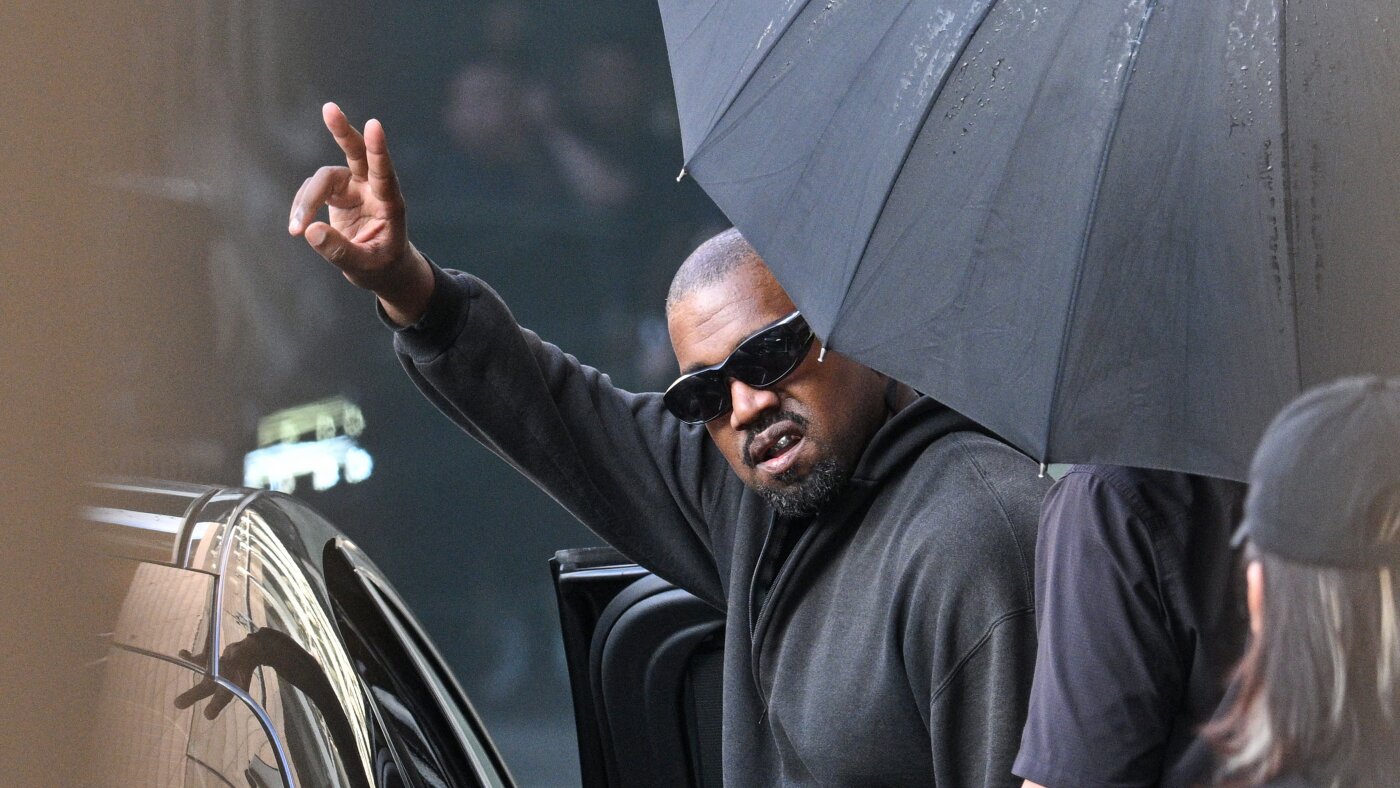
A music festival booked Kanye West, now known as Ye, and lost major sponsors

Gemini is making it faster for distressed users to reach mental health resources

CENTCOM commander directed strike against an IRGC headquarters in underground facility: sources

Ilhan Omar calls Trump an ‘unhinged lunatic,’ urges booting him out of office

Drinking habits of parents may be more contagious than they think: ‘Greater risk’

Florida High School Football Rankings: Top 25 teams – Oct. 21

How old is Bo Nix? What to know about Oregon quarterback ahead of 2024 NFL Draft

Cleary's 21 help Le Moyne down Central Connecticut State 69-64 in OT

99th annual Pony Swim held in Virginia

Indiana Members Credit Union announced as new anchor tenant at Bottleworks District
Ilhan Omar calls Trump an ‘unhinged lunatic,’ urges booting him out of office
Between Budapest and Brussels: Péter Magyar’s political tightrope

Michigan muscles its way to program’s 2nd NCAA basketball title, beating UConn

Map: Minor Earthquake Strikes Near San Diego

Trump claims he’d win as the president of Venezuela — just needs to ‘quickly’ learn Spanish
-

 Atlanta, GA2 days ago
1 teenage girl killed, another injured in shooting at Piedmont Park, police say
-

 South-Carolina1 week ago
South Carolina vs TCU predictions for Elite Eight game in March Madness
-

 Movie Reviews5 days ago
Vaazha 2 first half review: Hashir anchors a lively, chaos-filled teen tale
-

 Vermont1 week ago
Skier dies after fall at Sugarbush Resort
-

 Politics1 week ago
Trump’s Ballroom Design Has Barely Been Scrutinized
-

 Politics1 week ago
JD Vance says he was ‘obsessed’ with UFOs, believes aliens are actually ‘demons’
-
 Entertainment5 days ago
Inside Ye’s first comeback show at SoFi Stadium
-

 Atlanta, GA1 week ago
Fetishist ‘No Kings’ protester in mask drags ‘Trump’ and ‘JD Vance’ behind her wheelchair