Nebraska
Nebraska Community Blood Bank hosts Team Goose Blood Drive in honor of cancer survivor


LINCOLN, Neb. (KOLN) – The Nebraska Community Blood Bank teamed up with one very strong Nebraska kid who won her battle with leukemia back in 2022. The two are on a mission to help others that find themselves in her shoes.
Haylee Werth, a 10-year-old who others have nicknamed “the Goose,” went through 26 months of treatment, and she’s had several blood transfusions during her fight with cancer.
Now, she hosts what’s called the Team Goose Blood Drive in Waverly every year, asking for others to donate to the blood bank. Haylee’s mom said without those blood transfusions, her daughter likely wouldn’t have made it.
“There’s no substitute for blood, so we relied on that just to get her through treatment and keep her alive during that time. They do supply the blood at the Children’s Hospital where she was treated, so it’s kind of cool to see that whole process and now be able to have those donations come back to other kids that are going through the same thing.“
According to the Nebraska Community Blood Bank, roughly one in seven hospital admissions require a blood transfusion.
Click here to subscribe to our 10/11 NOW daily digest and breaking news alerts delivered straight to your email inbox.
Copyright 2025 KOLN. All rights reserved.



Crops-RFP-040626
Nebraska is heading into the 2026 growing season with limited precipitation and groundwater resources. Growers are also facing rising input costs and declining commodity prices, forcing many to rethink how much risk they can afford to carry with irrigated corn and soybeans.
“In years like this, even small shifts in cropping strategy can help protect both yield and profitability,” said Dipak Santra, Nebraska Extension Alternative Crops Breeding specialist at the University of Nebraska-Lincoln Panhandle Research Extension and Education Center. “Alternative crops such as proso millet and field pea offer lower water and nitrogen requirements, making them potential tools for reducing risk in water-limited systems.”
Water limitations are not the only concern for farmers this season. The risk of yield loss could be exacerbated by skyrocketing N-fertilizer prices resulting from the war in the Middle East. The U.S. fertilizer industry depends heavily on imports, and the nation’s prices have reportedly jumped roughly 32 percent in the past few weeks. Prices are expected to rise if the international crisis is prolonged.
“With spring planting approaching, these price increases present additional challenges for producers already managing tight margins,” said Rituraj Khound, UNL post-doctoral research associate. At the same time, corn and soybean market prices have declined by 50 percent and 40 percent, respectively, since 2022.
ALTERNATIVE CROPS
Santra and Khound suggest growers consider alternative cereal millet (proso millet and/or grain sorghum), a crop recognized for its ability to efficiently utilize moisture for producing a considerable yield. Its shallow, fibrous root system effectively takes up early-season water from the topsoil while conserving deeper soil water for subsequent crops.
“Another crop, field pea, is a widely grown pulse crop that is gaining popularity in Nebraska and global health food markets as a source of plant proteins due to its nutrient-dense seeds,” Santra said. “It is also suitable for animal feed as soybean.”
Field peas provide several advantages. Biological nitrogen (N) fixation, enhanced rotation efficiency with cereals, reduced fertilizer requirements, and adaptation to semi-arid conditions due to its early maturity and low seasonal water use. Field pea also helps interrupt common disease cycles when introduced into cereal rotations.
Nebraska is among the states with notable field pea production. In 2025, USDA NASS cited Nebraska farmers harvested approximately 566,667 bushels of field peas from 20,000 acres of farmland.
Dryland millet and peas are both low-input crops that require considerably less seasonal precipitation and minimal fertilizer and herbicide applications, thereby reducing production costs.
In addition to lowering input requirements, both crops contribute to soil health. Field pea supports soil fertility through biological nitrogen fixation and enhanced soil microbial activity, while millet increases soil organic matter deposition, improves soil aggregation, and helps reduce erosion. Together, these crops offer a practical way to improve system resilience and maintain productivity in water-limited environments.
In the face of a challenging growing season, Nebraska farmers could consider diversifying their farms by planting a small portion (e.g., 10-25 percent of the total acreage) of corn with millet, depending on feasibility and resources available on their farms. A similar approach could be used to reduce risk in soybean systems by allocating a portion of acres to dryland field pea.

Source link

OMAHA, Neb. (WOWT) – On Tuesday, Nebraska lawmakers could pass a bill making it easier for your student to attend a trade school.
Demeria Bruce has owned Fulton Homes Education Center in Millard since 2020. They are an accredited postsecondary school providing training in the healthcare industry.
Since the pandemic, she says the need for certified healthcare workers is growing.
“A lot of people are getting older so healthcare workers are really tremendous right now,” said Bruce. “Home healthcare, hospitals, especially geriatrics, working in long term care, stuff like that.”
Nebraska State Treasurer Joey Spellerberg is optimistic LB 748 can help fill a crucial need for skilled labor in the state.
“These are jobs that are needed in Nebraska and to expand 529 to use those funds for those types of education purposes is just great,” said Spellerberg.
If passed, 748 would match federal changes to 529 plans by raising the amount you can use per year from $10,000 to $20,000 for K-12 education.
“That starts in January of 2029 and at that point you will be able to use those dollars for tutoring, books, for other things associated with your education,” explained Spellerberg.
The bill would also allow for that money to be used for trade schools. The hope is to get more people certified in a trade to fill gaps in many industries around the state.
“It is not just a 4 year university, its not just a community college now. It’s looking what the future workforce looks like in Nebraska and making sure those dollars that you save can be used to fill the jobs that we have.”
It is something that will help folks like Demeria Bruce get more students certified.
“I think the proposed bill is really going to help out because that short term education would really help people especially now,” said Bruce. “If they have bills and stuff like that they can come and get their certification and get out there and start to work.”
First Alert 6 spoke with Denise Magill who owns Quality Career Pathways. She agrees the bill is a great step in getting more people into the workforce.
“What LB 748 does is a great way for people to figure out through a certificate if this is the career path that they want to go before they continue to invest more and commit more financially,” explained Magill.
Magill tells First Alert 6 says these certificates are just the tip of the iceberg and could lead to more programs becoming available.
“We have been exploring mental health certificates and things to advance just to build upon even more,” said Magill.
Demeria Bruce tells First Alert 6 Fulton Homes is also expanding its programing later this year. She is partnering with Non-Stop Development to include training for the construction industry.
LB 748 will hit the legislature floor for a final reading Tuesday morning. Lawmakers will vote to pass the bill after debate.
Copyright 2026 WOWT. All rights reserved.

Nebraska women’s basketball is set to lose another player to the transfer portal on Wednesday night. Forwardcenter Petra Bozan announced she was entering the transfer portal.
Bozan had a productive career in Lincoln. Over two seasons, she appeared in 65 games, starting 19 of them. The 2025-26 season saw her score 6.6 points per game, grab 3.4 rebounds per game, and shoot 51.1% from the field.
She scored a career-high 17 points on eight-of-12 shooting in a victory against Penn State in December. Bozan was able to parlay that success into a run in the NCAA Tournament. She averaged six points and three rebounds in two games of the NCAA Tournament.
This marks the second player who plans to enter the portal for Amy Williams’ bunch. Jessica Petrie entered the portal in March. Now, this will allow the program to be active in the offseason, with multiple roster spots open.
Contact/Follow us @CornhuskersWire (https://twitter.com/CornhuskersWire) on X (formerly Twitter) and like our page onFacebook (https://www.facebook.com/CornhuskersWire) to follow ongoing coverage of Nebraska news, notes and opinions.

Alabama Football Spring Practice Report before A-Day Scrimmage

Opinion: Alaska needs to curb crypto-kiosk scams
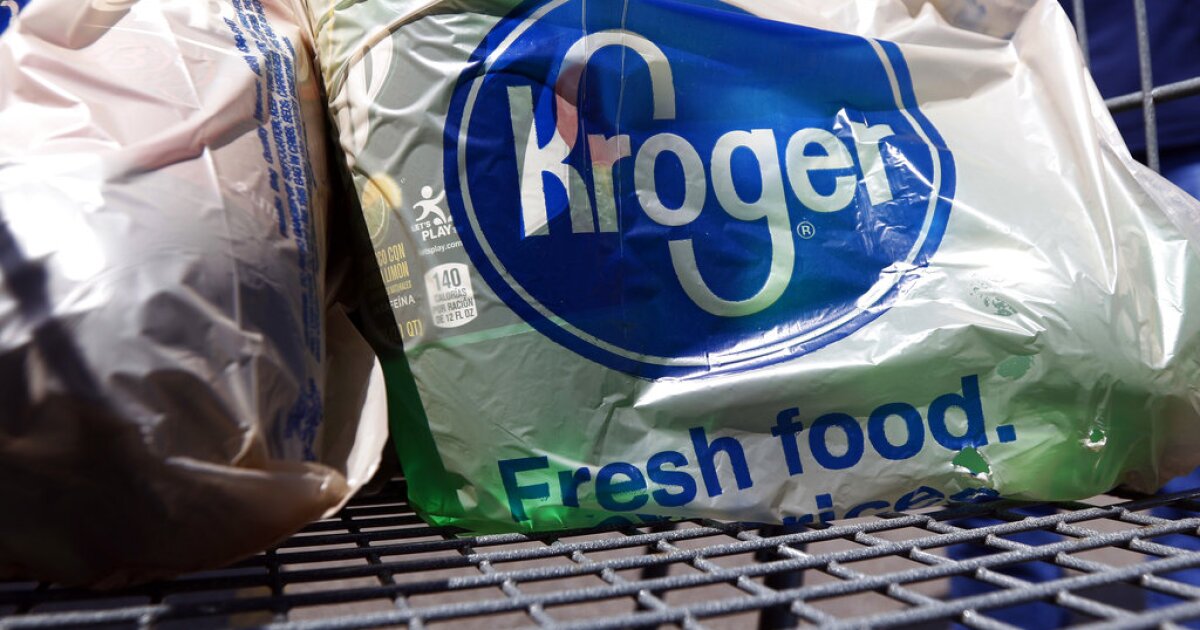
Kroger, Albertsons sued by Arizona, seven other states seeking antitrust lawsuit expense reimbursement

Drug Take Back Day returns to Arkansas this month; promotes safe drug disposal

Trump Won This Latino California District; Now Independents Will Decide Who Holds It

Florida High School Football Rankings: Top 25 teams – Oct. 21

How old is Bo Nix? What to know about Oregon quarterback ahead of 2024 NFL Draft

Cleary's 21 help Le Moyne down Central Connecticut State 69-64 in OT

99th annual Pony Swim held in Virginia

Indiana Members Credit Union announced as new anchor tenant at Bottleworks District

Ilhan Omar calls Trump an ‘unhinged lunatic,’ urges booting him out of office
Between Budapest and Brussels: Péter Magyar’s political tightrope

Michigan muscles its way to program’s 2nd NCAA basketball title, beating UConn

Map: Minor Earthquake Strikes Near San Diego

Trump claims he’d win as the president of Venezuela — just needs to ‘quickly’ learn Spanish
-

 Atlanta, GA2 days ago
1 teenage girl killed, another injured in shooting at Piedmont Park, police say
-

 South-Carolina1 week ago
South Carolina vs TCU predictions for Elite Eight game in March Madness
-

 Movie Reviews5 days ago
Vaazha 2 first half review: Hashir anchors a lively, chaos-filled teen tale
-

 Vermont1 week ago
Skier dies after fall at Sugarbush Resort
-

 Politics1 week ago
Trump’s Ballroom Design Has Barely Been Scrutinized
-

 Politics1 week ago
JD Vance says he was ‘obsessed’ with UFOs, believes aliens are actually ‘demons’
-

 Politics1 week ago
Jeffries declines to break with indicted Democrat after ethics panel’s guilty verdict
-
 Entertainment5 days ago
Inside Ye’s first comeback show at SoFi Stadium