Missouri
The short version: Who won, what passed Nov. 5 in Missouri general election


Missouri voters have been casting ballots for more than a week, and many of the election results were known by late Tuesday. But not all.
Here is an overview of everything on the ballot in Springfield as well as the top leaders elected in Missouri and across the U.S.
Early Wednesday morning, former president Donald Trump appeared headed to the White House. Missouri was solidly red, supporting the Republican ticket Trump and running mate JD Vance. Trump was leading Vice President Kamala Harris and the Democratic ticket in projected Electoral College votes, though results were still being counted in a number of battleground states either candidate would need to win.
Republican incumbent Josh Hawley secured a second term in the seat he took from Democrat Claire McCaskill in 2018. His chief challenger was Democrat Lucas Kunce, a former Marine and military lawyer who raised significant money in his long-running bid for the seat.
Lt. Gov. Mike Kehoe will be Missouri’s 58th governor.
Kehoe, a Jefferson City Republican endorsed by Parson, defeated state Rep. Crystal Quade, a Springfield Democrat who serves as minority leader in the Missouri House, in what was a comparatively frugal campaign.
With Kehoe running for governor, the race for lieutenant governor was open. Republican Dave Wasinger, a St. Louis attorney emerged the winner in a crowded GOP primary and won the position, which serves as the next in line to the governor and breaks tie votes in the state Senate.
State Sen. Denny Hoskins, the Republican candidate, declared victory late Tuesday, succeeding outgoing Secretary of State Jay Ashcroft, who lost a bid for governor in the Republican primary.
Incumbent Vivek Malek, a Republican appointed by the governor in 2022, secured a full term as the state’s chief financial officer, responsible for managing annual state revenues, directing bank services and overseeing the state’s investment portfolio.
Incumbent Andrew Bailey, a Republican, was appointed the Missouri Attorney General by Gov. Mike Parson, taking office in January 2023 after Eric Schmitt was elected to represent Missouri in the U.S. Senate. He won his first election Tuesday.
In southwest Missouri, first-term Republican Rep. Eric Burlison retained the 7th District seat he won two years ago after U.S. Rep. Billy Long vacated the seat to run for Senate.
Missouri legislative races
All seats in the Missouri House of Representatives were up for a vote in the election, along with one of the state Senate seats in the Springfield area. Winners in Springfield-area districts include:
Senate District 29
- Mike Moon – Republican – winner
House District 129
- John Black – Republican – winner
House District 130 – Incumbent Republican Bishop Davidson was ahead in early totals but many votes remained uncounted late Tuesday due to delayed results in Greene County.
- Bishop Davidson – Republican
- Leslie Jones – Democratic
House District 131 – Incumbent Republican Bill Owen was ahead in early totals but many votes remained uncounted late Tuesday due to delayed results in Greene County.
- Bill Owen – Republican
- Ashley Cossins – Democratic
House District 132 – Democratic candidate Jeremy Dean was ahead in early totals but many votes remained uncounted late Tuesday due to delayed results in Greene County.
- Jeremy Dean – Democratic
- Stephanos Freeman – Republican
House District 133 – Incumbent Republican Melanie Stinnett was ahead in early totals but many votes remained uncounted late Tuesday due to delayed results in Greene County.
- Melanie Stinnett – Republican
- Derrick Nowlin – Democratic
House District 134
- Alex Riley – Republican – winner
House District 135 – Incumbent Democrat Betsy Fogle was ahead in early totals but many votes remained uncounted late Tuesday due to delayed results in Greene County.
- Betsy Fogle – Democratic
- Michael Hasty – Republican
House District 136 – Incumbent Democrat Stephanie Hein was ahead in early totals but many votes remained uncounted late Tuesday due to delayed results in Greene County.
- Stephanie Hein – Democratic
- Jim Robinette – Republican
House District 137
- Darin Chappell – Republican – winner
House District 138
- Burt Whaley – Republican – winner
House District 139
- Bob Titus – Republican – winner
House District 140
- Jamie Ray Gragg – Republican – winner
There’s was only one contested race for Greene County office, for the District 2 seat on the county commission. With half of the country’s precincts reported, incumbent John Russell, a Republican, was leading Democratic candidate Tim McGrady by a margin of more than 10 percentage points.
Other county races, all featuring Republican incumbents running unopposed, included:
Greene County Sheriff – Jim C Arnott – winner
Greene County Assessor – Brent Johnson – winner
Greene County Treasurer – Justin R. Hill – winner
Greene County Public Administrator – Sherri Eagon Martin – winner
Final results were not available by late Tuesday night but all the judges up for retention votes on Springfield-area ballots were poised to remain in office. They included:
- Judge Kelly C. Broniec of the Missouri Supreme Court
- Judge Ginger K. Gooch of the Missouri Supreme Court
- Judge Becky J.W. Borthwick of the Court of Appeals – Southern District
- Judge Jennifer R. Growcock of the Court of Appeals – Southern District
- Judge Derek A. Ankrom of the Circuit Judge – Circuit 31 – Div 1
- Judge Kaiti Greenwade of the Circuit Judge – Circuit 31 – Div 2
- Judge Dan Wichmer of the Circuit Judge – Circuit 31 – Div 3
- Judge T. Todd Myers of the Circuit Judge – Circuit 31 – Div 4
- Judge Jerry A. Harmison, Jr. of the Circuit Judge – Circuit 31 – Div 5
- Judge Joshua B. Christensen of the Circuit Judge – Circuit 31 – Div 6
- Judge Andy Hosmer of the Associate Circuit Judge – Circuit 31 – Div 23
- Judge Kirsten Poppen of the Associate Circuit Judge – Circuit 31 – Div 24
- Judge Josephine (Jody) L. Stockard of the Associate Circuit Judge – Circuit 31 – Div 25
- Judge Ron Carrier of the Associate Circuit Judge – Circuit 31 – Div 26
A question asking Springfield voters to replace the city’s expiring 3/4-cent sales tax — which since 2009 has funded the shortfall in the city’s police and fire pension fund — with a new combination of taxes of equal amount appeared to be approved late Tuesday. With 46 of 56 precincts reporting, votes in favor were well ahead, with the tax garnering more than 62% of the vote.
Amendment 2, which would legalize sports betting in Missouri, was slightly ahead in the vote tally but results were not final late Tuesday.
Amendment 3, enshrining abortion-rights protections in the state’s constitution, was approved Tuesday.
Amendment 5, which would amend the state constitution and expand riverboat gambling in Missouri to allow a casino on the Osage River, had not been called late Tuesday but was trending toward defeat in late results.
This amendment, which would have allowed the state to levy court fees to support salaries and benefits for current and former sheriffs, prosecuting attorneys and circuit attorneys, was trending toward defeat Tuesday.
Amendment 7, placed on the Nov. 5 ballots by the Missouri legislature, alters the state constitution to effectively ban ranked-choice voting in the state, as well as stipulating that only U.S. citizens can vote. It passed decisively Tuesday.
Proposition A was approved Tuesday, increasing the minimum wage in Missouri — which currently stands at $12.30 an hour — and requiring employers to provide paid sick leave. It calls for Missouri’s minimum wage to increase to $13.75 an hour on Jan. 1, 2025, then to $15 an hour in 2026, with adjustments each year after that based on the Consumer Price Index. Employers would be required to provide one hour of paid sick leave for every 30 hours worked.



Missouri
Missouri bill that would split Jackson County and Kansas City gets little support from lawmakers

A Missouri House committee had its first hearing this week on a proposed constitutional amendment that would split Kansas City and Jackson County upon approval by voters.
The legislation is nicknamed “Jackxit,” a nod to Brexit, the withdrawal of the United Kingdom from the European Union in 2020.
Republican state Rep. Mike Steinmeyer is sponsoring the bill. He said eastern Jackson County voters feel underrepresented in the county government, and this legislation would give them the power to change that.
At the hearing, committee members listened to Steinmeyer’s presentation of the bill before asking questions and sharing their thoughts.
Democratic state Rep. Bridget Walsh Moore compared what the bill proposes to “The Great Divorce” that saw the legal separation of the city of St. Louis from St. Louis County in 1876.
Several committee members criticized a part of the bill that says if it’s signed into law, the question of whether to split the county in two would appear on the Missouri ballot every 10 years.
Moore called it a “never-ending clause.”
“There’s a provision that says every 10 years this has to go back on the ballot, whether you like it or not,” Moore said. “And we’re going to keep voting on it, until you vote the way we think you should.”
Democratic state Rep. Jeff Hales said the bill’s language suggests the question would reappear on the ballot every 10 years until it’s approved by voters.
“Why does it end when it’s approved if the importance and the value here is giving the voters of Jackson County a right to weigh in on their charter and their government?” Hales said.
Steinmeyer said that clause exists to give Jackson County voters the opportunity to weigh in on their form of government.
“It gives them the right to speak and say we want change, or we want to abolish and start over,” Steinmeyer said. “That’s all we’re asking for.”
Democratic state Rep. Ashley Aune questioned how the ballot question would protect the right of voters. Steinmeyer said it protects their right to vote and be heard, specifically on their governance.
Lobbyist Shannon Cooper testified on behalf of the city of Kansas City, the Greater Kansas City Chamber of Commerce and the Civic Council of Greater Kansas City. He said during a public comment period that the bill was “the most befuddling piece of legislation” that he’s had to testify for or against.
Cooper brought up the historic recall election of County Executive Frank White Jr. and said the recall showed the system Steinmeyer is trying to fix with this bill can work.
“If the voters are not happy, they can deal with their problems,” Cooper said. “They’ve proven that in the last year.”
No action was taken on the bill, and it is not yet scheduled for a future hearing.
Missouri
Kansas City, Missouri, City Council voted Thursday to approve the city’s $2.6 billion budget for 2026-27
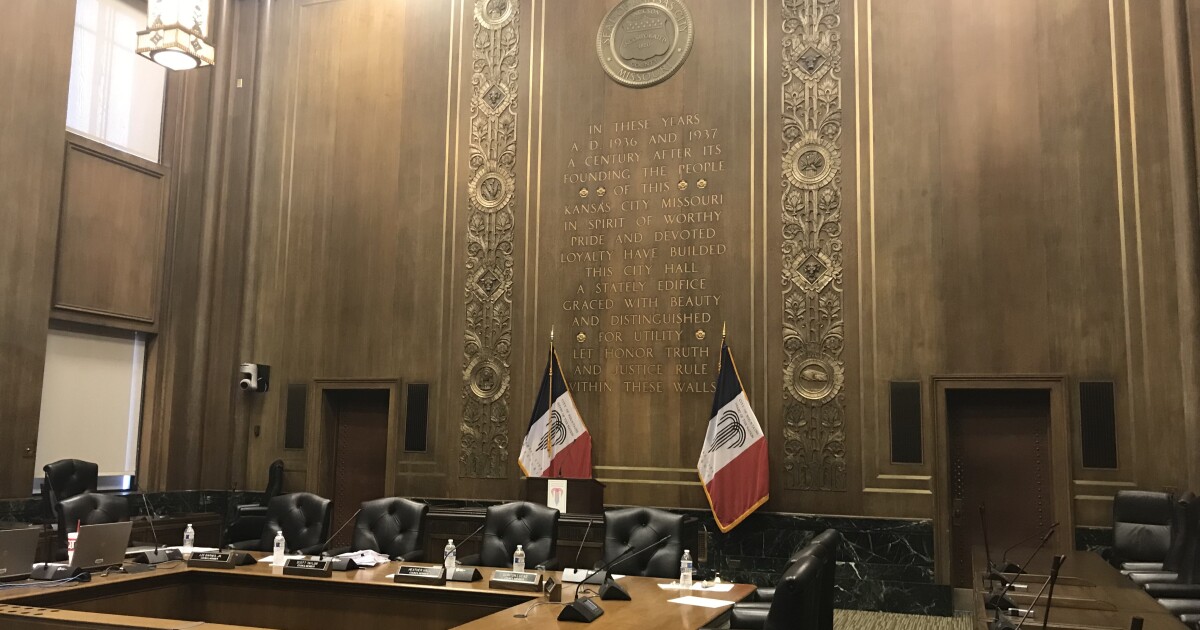
KANSAS CITY, Mo. — The Kansas City, Missouri, City Council voted Thursday to approve a $2.6 billion budget for the city’s fiscal year of 2026-27.
The budget includes $744 million in spending for public safety, including $26.3 million for a new Department of Community Safety and $4.2 million to hire 50 new KCMO Police Department officers, along with 10 call takers and 10 dispatchers.
“Our budget respects the strong fiscal foundation the taxpayers have helped Kansas City build, maintaining a rainy-day fund of over $200 million, increasing road resurfacing, hiring more public safety and city workers, and investing in all Kansas City neighborhoods,” Mayor Quinton Lucas said in a news release from the city. “In a city that can walk and chew gum, we are proud to welcome the world while delivering strong basic services for Kansas City’s families.”
The council voted to spend $83.8 million for the Kansas City Area Transportation Authority to provide bus services, but the KCATA may have to make cuts in bus services even with a $6 million boost in funding from the city.
In addition, the council approved spending $39.4 million for citywide street resurfacing and $1.5 million for tearing down dangerous buildings.
“This budget reflects a collaborative effort across the city, and provides a clear path for Kansas City to keep moving forward with discipline, accountability and a focus on service,” City Manager Mario Vasquez said in the news release. “Thank you to the council for its thoughtful deliberation and input in crafting this budget.”
More information on the fiscal year 2026-27 budget can be found on the city’s website.
—
The Missouri Lottery offers several draw games for those aiming to win big.
Here’s a look at March 25, 2026, results for each game:
Winning Powerball numbers from March 25 drawing
07-21-55-56-64, Powerball: 26, Power Play: 4
Check Powerball payouts and previous drawings here.
Winning Pick 3 numbers from March 25 drawing
Midday: 3-2-0
Midday Wild: 7
Evening: 0-0-5
Evening Wild: 5
Check Pick 3 payouts and previous drawings here.
Winning Pick 4 numbers from March 25 drawing
Midday: 2-6-3-9
Midday Wild: 4
Evening: 9-5-6-8
Evening Wild: 1
Check Pick 4 payouts and previous drawings here.
Winning Cash Pop numbers from March 25 drawing
Early Bird: 07
Morning: 09
Matinee: 04
Prime Time: 14
Night Owl: 07
Check Cash Pop payouts and previous drawings here.
Winning Show Me Cash numbers from March 25 drawing
12-14-22-26-28
Check Show Me Cash payouts and previous drawings here.
Winning Powerball Double Play numbers from March 25 drawing
35-38-41-43-62, Powerball: 08
Check Powerball Double Play payouts and previous drawings here.
Feeling lucky? Explore the latest lottery news & results
Are you a winner? Here’s how to claim your lottery prize
All Missouri Lottery retailers can redeem prizes up to $600. For prizes over $600, winners have the option to submit their claim by mail or in person at one of Missouri Lottery’s regional offices, by appointment only.
To claim by mail, complete a Missouri Lottery winner claim form, sign your winning ticket, and include a copy of your government-issued photo ID along with a completed IRS Form W-9. Ensure your name, address, telephone number and signature are on the back of your ticket. Claims should be mailed to:
Ticket Redemption
Missouri Lottery
P.O. Box 7777
Jefferson City, MO 65102-7777
For in-person claims, visit the Missouri Lottery Headquarters in Jefferson City or one of the regional offices in Kansas City, Springfield or St. Louis. Be sure to call ahead to verify hours and check if an appointment is required.
For additional instructions or to download the claim form, visit the Missouri Lottery prize claim page.
When are the Missouri Lottery drawings held?
- Powerball: 9:59 p.m. Monday, Wednesday and Saturday.
- Mega Millions: 10 p.m. Tuesday and Friday.
- Pick 3: 12:45 p.m. (Midday) and 8:59 p.m. (Evening) daily.
- Pick 4: 12:45 p.m. (Midday) and 8:59 p.m. (Evening) daily.
- Cash4Life: 8 p.m. daily.
- Cash Pop: 8 a.m. (Early Bird), 11 a.m. (Late Morning), 3 p.m. (Matinee), 7 p.m. (Prime Time) and 11 p.m. (Night Owl) daily.
- Show Me Cash: 8:59 p.m. daily.
- Lotto: 8:59 p.m. Wednesday and Saturday.
- Powerball Double Play: 9:59 p.m. Monday, Wednesday and Saturday.
This results page was generated automatically using information from TinBu and a template written and reviewed by a Missouri editor. You can send feedback using this form.

Another state bans ‘gas station heroin’ as officials warn of deadly risks

Tiger Woods involved in rollover crash in Florida less than 2 weeks before Masters: reports

Fox News AI Newsletter: Family turns down $26M from AI giant to keep farmland

Commentary: How a custody fight over an old dog showed why lawyers should never trust AI to tell the truth
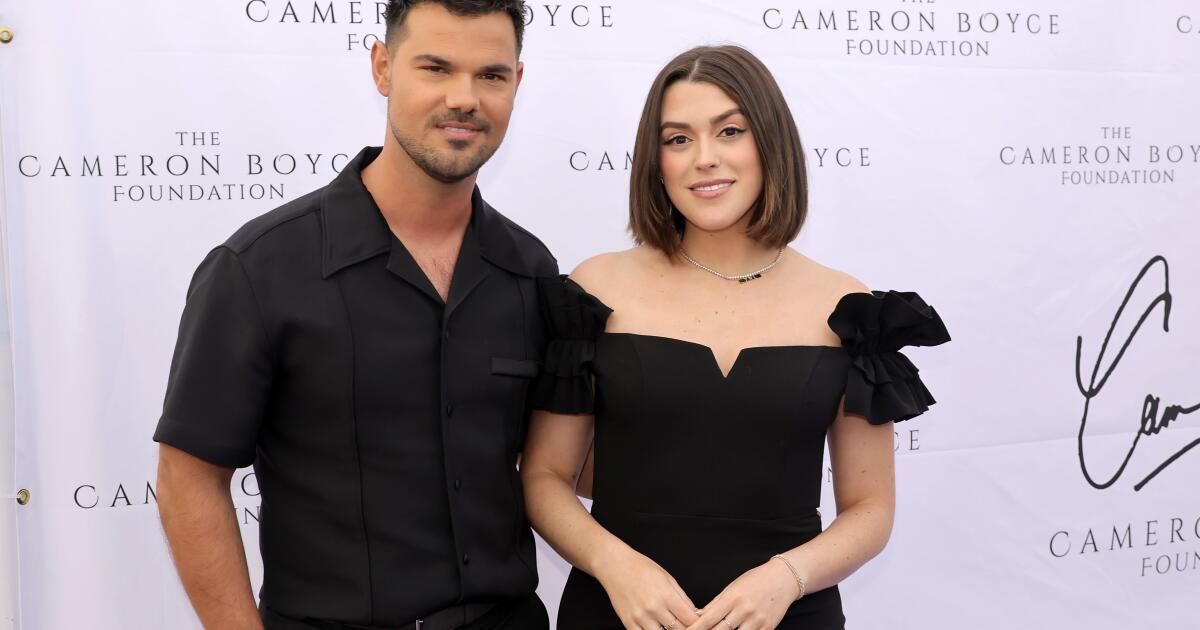
The two Taylor Lautners announce a baby Lautner is on the way

Florida High School Football Rankings: Top 25 teams – Oct. 21

How old is Bo Nix? What to know about Oregon quarterback ahead of 2024 NFL Draft

Cleary's 21 help Le Moyne down Central Connecticut State 69-64 in OT

99th annual Pony Swim held in Virginia

Indiana Members Credit Union announced as new anchor tenant at Bottleworks District

US diplomat Marco Rubio denounces settler violence, tolls in Hormuz strait

Iran-linked hackers have breached FBI Director Kash Patel’s personal emails | CNN Politics

Live: CPAC 2026 Day 2

Video: Will ICE Change Under Its New Leader?

DHS shutdown breakthrough comes at cost for Republicans as funding fights nears end
-

 Detroit, MI1 week ago
Drummer Brian Pastoria, longtime Detroit music advocate, dies at 68
-

 Movie Reviews1 week ago
‘Youth’ Twitter review: Ken Karunaas impresses audiences; Suraj Venjaramoodu adds charm; music wins praise | – The Times of India
-

 Sports6 days ago
IOC addresses execution of 19-year-old Iranian wrestler Saleh Mohammadi
-

 New Mexico5 days ago
Clovis shooting leaves one dead, four injured
-
 Business1 week ago
Disney’s new CEO says his focus is on storytelling and creativity
-

 Technology5 days ago
YouTube job scam text: How to spot it fast
-

 Tennessee4 days ago
Tennessee Police Investigating Alleged Assault Involving ‘Reacher’ Star Alan Ritchson
-

 Texas1 week ago
How to buy Houston vs. Texas A&M 2026 March Madness tickets