Missouri
Officers and crew members of USS Columbia visited one of its namesake cities last week


The commanding officer of the U.S. Navy Los Angeles Class attack submarine USS Columbia encountered a pleasant coincidence Wednesday when visiting Columbia.
The submarine and Flat Branch Pub and Brewing both are celebrating 30-year anniversaries. The vessel’s mess hall is known as Flat Branch Café.
“The Flat Branch anniversary is a happy accident for us,” said Cmdr. Brad Foster, noting this week’s visit was coordinated via the Mayor’s Task Force on the USS Columbia and Friends of the USS Columbia Submarine SSN-771 headed up by chair Anne Moore of D&M Sound. “My first tour on submarines was on the Columbia, so I knew her from before. When I got this command, I remembered there was this lady that worked in Columbia, Missouri.”
So, he reached out to Moore about a visit to one of the vessel’s namesake cities. Others are in Illinois and South Carolina.
Columbia could see a crew member return visit in October 2025, based on a recent task force meeting agenda.
Those who were here this week were Foster; Lt. j.g. Zachary Rosen, the junior officer of the year; Chief Petty Officer and Missouri native Matt Choiniere; and Petty Officer 1st Class Billy Kilmer, the junior sailor of the year.
Along with recognition at Tuesday’s city council meeting, the crew members met with the University of Missouri ROTC, visited Columbia College and its veterans center, presented at Benton Elementary School, which has a roughly decade-long relationship with USS Columbia, Foster said, and the meet-and-greet event Wednesday at Flat Branch.
The visit this week was about getting familiar with the submarine’s namesake city, so that information can be brought back to the upward 150-strong crew, Foster said.
“This city is great,” he said, adding students at Benton Elementary had lots of questions to ask. “(Columbia College) does a lot with satellite campuses to help service members get a college degree. … Long story short, we’ve seen an awful lot of Columbia and everything we have seen has been great.”
Columbia has been very welcoming, Foster said. He also was impressed by how many people in the community know the connections between the city and the submarine.
Making the Columbia connection
The USS Columbia is stationed at Pearl Harbor in Hawaii. When the relationship first was established, it was overseen by then Mayor Mary Anne McCollum and the submarine itself was sponsored by former first lady Hillary Clinton.
The vessel is unique in that it is known as “the last slider,” said Columbia Mayor Barbara Buffaloe, who issued a proclamation about the city’s affiliation with the USS Columbia.
“When the submarine was christened, Mayor McCollum and a delegation traveled to Groton, Connecticut for that ceremony,” she said. “It was the last time a submarine was launched by dramatically sliding 1,400 feet down a wooden ramp into the river.”
The relationship with Flat Branch and naming of the mess hall came from when then crew members had come to work out the namesake city details and ate at Flat Branch Pub, which was greatly enjoyed, Buffaloe said. Some of the interior design and even some of the equipment was designed in Columbia, thanks to D&M Sound, she added.
“The crew’s entertainment system was a gift from all three namesake cities and custom designed by Moore. The submarine proudly displays the black and gold from (the University of Missouri) with banners and posters from Mizzou athletics,” Buffaloe said.
The USS Columbia will be in service at least another 10 years, Foster said. Around the time it reaches the 40 years of service mark, the U.S. Navy will make a determination on whether that service will continue, he said.
Charles Dunlap covers local government, community stories and other general subjects for the Tribune. You can reach him at cdunlap@columbiatribune.com or @CD_CDT on Twitter. Subscribe to support vital local journalism.



SALINA, Kan. (KWCH) – A Missouri man was arrested after allegedly making a bomb threat at a Salina car wash, prompting an evacuation and police response.
According to the Salina Police Department, officers responded around 4 p.m. on Thursday to a report of a bomb threat at Blue Beacon Truck Wash, located at 2303 N. 9th Street.
Police said Brandon Skaggs, 33 of DeSoto, Missouri, entered the business and made a comment referencing terrorism, raising concern among employees. Authorities said Skaggs later went into the pump room and turned off multiple breakers before leaving the scene.
The business was evacuated as precaution while officers investigated the threat. After searching the property, police said no explosive devices were found.
The Kansas Highway Patrol later located Skaggs’ vehicle traveling on I-70 near milepost 287 and took him into custody.
Skaggs was transported back to Salina and booked into the Salina County Jail on charges including criminal threat and trespassing.
Copyright 2026 KWCH. All rights reserved. To report a correction or typo, please email news@kwch.com

A lawyer for a company hoping to break into Missouri’s gambling market told a state Senate panel Wednesday, April 1 that unregulated slot machines are siphoning millions from schools and that lawmakers should respond by legalizing video lottery games.
Matt Hortenstine, chief counsel for Illinois-based J&J Ventures, called enforcement efforts a “whack-a-mole” game unless retailers have a ready replacement for the machines currently proliferating in convenience stores, bars and fraternal halls around the state. If a particular form of unregulated game is found to be illegal under Missouri gambling laws, he said, developers will change the games and the process will start all over again.
Local law enforcement doesn’t have the resources to match the game vendors, he said.
“The court can only address what comes before the court, that singular machine that is the subject matter of that criminal enforcement, and industry will adapt to it,” Hortenstine said.
Hortenstine was testifying April 1 during a hearing of the Select Committee on Gaming in support of a House-passed bill that would give the Missouri Lottery Commission the authority to license video games for installation in retail locations across the state.
During the hearing, the five-member committee heard conflicting arguments.
Promoters said video lottery would produce badly needed revenue for education and help retailers sustain their businesses. Opponents said lawmakers should let law enforcement push the unregulated games out of the state and that the bill violates constitutional restrictions on gambling and the way tax money from gambling is used.
The bill has been one of the most heavily lobbied of the session. J&J employs 23 lobbyists, including 15 hired since the start of 2025. Torch Electronics of Wildwood, one of the biggest purveyors of the unregulated slot machines, employs 13 lobbyists.
And all the players in the gambling industry have been heavy political contributors, giving $3.3 million to campaigns since the start of 2025. Casinos oppose the bill because they operate the only legal slot machines in the state. And Torch, which in past years opposed the legislation, is neutral this year because the bill does not bar the company from becoming licensed to provide video lottery terminals.
The bill narrowly passed the House and it faces an uncertain future.
Senate President Pro Tem Cindy O’Laughlin, a Shelbina Republican who chairs the committee, told reporters after the hearing that her resistance to expanding gambling has not changed.
“My position is that it is detrimental to family security,” O’Laughlin said.
O’Laughlin said she will meet individually with the committee’s other four members before setting a date for a vote on the bill.
“If it were up to me, I would have had them all removed by now,” O’Laughlin said of the slot machines.
Under the bill, the Missouri Lottery Commission would be given power to license retailers to offer up to eight video lottery terminals at a single location. The games would have to be in a designated area of the establishment, not visible from the entrance.
It would be illegal for anyone under 21 to play and each game would have to pay out at least 80% of the money wagered. The profits would be split three ways, with the lottery taking 31% and retailers splitting the rest with game vendors.
City and county governments would have 120 days after the bill takes effect to decide if they want to opt out of having video lottery games in their community.
Other provisions would impose a $250 per machine fee to pay for services for people with developmental disabilities and increase the $2 boarding fee paid by casinos by adjusting it for inflation since 1993, when it was imposed.
If the law was in effect now, the fee would increase to $4.56 on July 1. The fee pays for the operations of the Missouri Gaming Commission, which regulates casinos, and any money left over is used to fund veterans nursing homes. Under the bill, 50 cents of the fee would be dedicated to building a museum to house artifacts from the Arabia Steamboat Museum in Kansas City, which is closing in November.
The bill is estimated to generate about $300 million in new revenue for education and $56 million for veterans services.
With thousands of unregulated machines in operation around the state, the state is losing that revenue, said state Rep. Bill Hardwick, a Republican from Dixon and sponsor of the bill. He told the committee that ambiguities in state law make enforcement difficult.
The bill will force retailers to remove unregulated slot machines within a year, he said.
“The problem will never be resolved unless the legislature changes the law,” Hardwick said.
Enforcement efforts
Since about 2019, Missouri has seen a proliferation of unregulated games. Owners contend they are legal under Missouri law because they have a “pre-reveal” feature that allows players to see if the next result is a winner before placing a bet.
Torch calls them “No Chance Gaming,” contending the pre-reveal feature removes the element of chance. Games based on chance, like a slot machine, are illegal under the Missouri Constitution outside of casinos or the lottery while games that have an element of skill are not.
That legal uncertainty has also given the machines the name “gray market games.”
The Missouri State Highway Patrol filed about 200 cases with county prosecutors in 2019 and 2020, alleging the machines violate state law. But few actual charges were filed in court and most targeted convenience store owners for misdemeanor violations.
Torch Electronics, the biggest player in the market, along with Warrenton Oil Co., one of its biggest clients, has pushed back aggressively both in courts and in the legislature. The companies unsuccessfully sought a ruling that its games were legal, and protected from enforcement, and is pursuing an appeal of a ruling that its games violate a city ordinance passed in Springfield.
Enforcement efforts have ramped up again since a federal judge ruled in February that Torch’s machines “meet the statutory definition of ‘gambling device’ and are therefore illegal under Missouri law when played outside a licensed casino.”
Just before the decision, Attorney General Catherine Hanaway announced she was cooperating with federal investigators looking at the games and has since filed lawsuits and felony criminal charges against convenience store owners in Greene and Dunklin counties.
Lawmakers should let those cases play out, said Marc Ellinger, general counsel for the Missouri Gaming Association, the lobbying organization for casinos.
More than a century ago, Ellinger said, the courts ruled that games with pre-reveal features are illegal.
In 1913, in a case out of Moberly, a restaurant owner who had a gum dispenser that also paid out tokens worth 5 cents each was found to be operating an illegal game even though customers knew if the next play would provide a win or just gum.
The elements that made the gum dispensers illegal are the same elements present in the unregulated games, he said.
“They are not gray market machines,” Ellinger said. “They are not no chance machines. They are illegal slot machines.”
The bill is unconstitutional, Ellinger said, because it authorizes games of chance and because it diverts money from education programs. Only a statewide vote on a constitutional amendment would make them legal, he said.
Scott Pool, an attorney for J&J, said the bill is constitutional. The revenue that would go to veterans and other programs are fees on the retailers and vendors, not money from players, he said.
“The funding provisions are absolutely constitutional,” he said.
Revenue needs
The money generated by unregulated machines has become a major source of support for convenience store owners, said Lynn Wallis, owner of a company that operates 50 convenience stores.
When the machines were being introduced, she said, some retailers took them and others did not. The ones that did are enjoying larger profits, she said.
Her company has 18 stores where the games are installed, she said, and took in more than $1.5 million in 2025.
She estimated there are 30,000 to 40,000 unregulated machines across Missouri. There are approximately 13,000 slot machines at the state’s regulated casinos.
“With all the machines that are generating this revenue, the state should be taking some advantage of that,” Wallis said.
Angie Schulte, lobbyist for Casey’s General Stores, said the company studied what it would make if it put the games in their stores. Of the company’s 400 stores in Missouri, 148 are large enough to house the games.
With four to five games per store, she said, the company estimated it could increase profits by $63,000 in each location.
There is no accounting of the amounts being wagered in the unregulated games. Based on Schulte’s estimate of revenue and the low end of Wallis’s estimate on the numbers, profits could be approaching $2 billion annually.The state’s revenue from gambling totaled about $700 million in the most recent fiscal year.
At the 13 casinos, $18.2 billion was wagered and the state received $363 million from the 21% tax on the money from lost wagers.
So far, tax revenue from casinos is up about 7.5% this fiscal year, meaning the amounts being lost are going up.
Since Dec. 1, everyone over 21 with a smart phone can make bets on sporting events. In the first three months, $1.2 billion was wagered.
The lottery sold $1.6 billion in tickets in the fiscal year that ended June 30 and provided $337 million for education programs. The lottery’s net revenue is up about 4% so far in the current fiscal year.
Missouri will need revenue if it wants to eliminate the income tax, Hortenstine said. Video lottery will keep its promise, unlike sports wagering, he said.
During the campaign in 2024, promoters of sports wagering aired commercials that portrayed it as a boon to education funding.
But that constitutional amendment included provisions allowing sports bookmakers to deduct all of their promotional costs from their net revenue. Betting began Dec. 1 and in the first two months, the dominant players in the market, FanDuel and DraftKings, paid no taxes and carried over paper losses into February. The total tax revenue was $659,196 from all sports books.
Both companies reported net earnings in February and the total taxes from sports wagering for the month was $1.2 million.
The results from sports betting should be a spur to act on the video lottery bill, Hortenstine said. Lawmakers were lobbied heavily to legalize sports betting before the initiative and lawmakers probably would have more strict limits on deductions for promotional costs.
“Let’s finish the work and address this properly through the legislative process that you can control,” Hortenstine said, “and make the best possible solution to this problem.”
This story was first published at missouriindependent.com.

CLEVER, Mo. (KY3) – A man from Clever died in a crash near his home Thursday afternoon.
According to the Missouri State Highway Patrol, a truck drove off the side of Old Wire Road west of Clever and hit a tree. The driver, 48, died after being taken to Cox South Hospital.
The Highway Patrol reports the driver was not wearing a seatbelt. No one else was injured.
To report a correction or typo, please email digitalnews@ky3.com. Please include the article info in the subject line of the email.
Copyright 2026 KY3. All rights reserved.
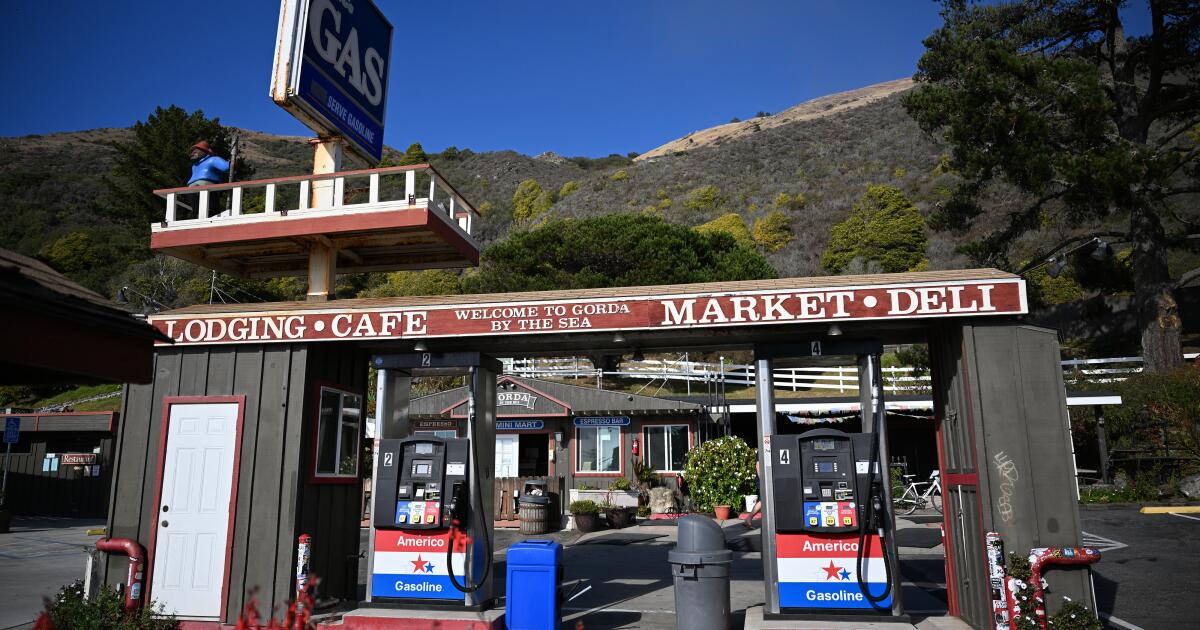
Gas is $10 a gallon at a Big Sur station. The owner explains why his prices can’t go higher

Melvin Edwards, sculptor who welded the African diaspora in ‘Lynch Fragments,’ dies at 88

How to have the best Sunday in L.A., according to Drew Michael Scott (a.k.a. Lone Fox)

Trump asks Congress for $152 million to start rebuilding Alcatraz prison

Autistic people are more likely to experience suicidal crisis. 988 is changing to serve them better

Florida High School Football Rankings: Top 25 teams – Oct. 21

How old is Bo Nix? What to know about Oregon quarterback ahead of 2024 NFL Draft

Cleary's 21 help Le Moyne down Central Connecticut State 69-64 in OT

99th annual Pony Swim held in Virginia

Indiana Members Credit Union announced as new anchor tenant at Bottleworks District
Fact check: How can a country actually withdraw from NATO?

65, single, seeking a roommate: More seniors are being priced out of living alone

Video: Search and Rescue Underway After Iran Downs U.S. Fighter Jet

Nebraska Senate candidate restructures campaign after complaint over payments to family: report

Two dozen Democrat-led states sue Trump over mail-in ballot limits
-

 South-Carolina6 days ago
South Carolina vs TCU predictions for Elite Eight game in March Madness
-

 Culture1 week ago
What Happens When We Die? This Wallace Stevens Poem Has Thoughts.
-

 Miami, FL1 week ago
Jannik Sinner’s Girlfriend Laila Hasanovic Stuns in Ab-Revealing Post Amid Miami Open
-

 Education1 week ago
Video: Transgender Athletes Barred From Women’s Olympic Events
-

 Minneapolis, MN1 week ago
Boy who shielded classmate during school shooting receives Medal of Honor
-

 Vermont6 days ago
Skier dies after fall at Sugarbush Resort
-

 Politics6 days ago
Trump’s Ballroom Design Has Barely Been Scrutinized
-

 Atlanta, GA6 days ago
Fetishist ‘No Kings’ protester in mask drags ‘Trump’ and ‘JD Vance’ behind her wheelchair