Missouri
Missouri's death row had nearly 100 inmates in the 1990s. Now, it has eight


ST. LOUIS — Missouri ‘s status as one of the most active death penalty states is about to change for one simple reason: The state is running out of inmates to execute.
The lethal injection of Christopher Collings on Dec. 3 left just eight men on death row — a figurative term since condemned Missouri inmates are housed with other prisoners. By contrast, nearly 100 people were living with a death sentence three decades ago.
Three of the eight Missouri inmates will almost certainly live out their lives in prison after being declared mentally incompetent for execution. Court appeals continue for the other five, and no new executions are scheduled.
Missouri isn’t alone. Across the nation, the number of people awaiting the ultimate punishment has declined sharply since the turn of the century.
“We are in a very, very different place than we were 25 years ago ,and that’s for very good reasons,” said Robin Maher, executive director of the Death Penalty Information Center, a nonprofit that doesn’t take a position on the death penalty but is critical of problems in its application.
The Legal Defense Fund’s Death Row USA report showed 2,180 people with pending death sentences this year, down from 3,682 in 2000. Missouri’s peak year was 1997, when 96 people were on death row.
After reaching a height of 98 U.S. executions in 1999, the annual number hasn’t topped 30 since 2014. So far this year, 23 executions have been carried out — six in Alabama, five in Texas, four in Missouri, three in Oklahoma, two in South Carolina and one each in Georgia, Utah and Florida. Two more are scheduled: Wednesday in Indiana and Thursday in Oklahoma.
Use of the death penalty has declined in part because many states have turned away from it. Twenty-three states and the District of Columbia have abolished the punishment, and five others have moratoriums.
Even in active death penalty states, prosecutors in murder cases are far more inclined to seek life in prison without parole.
In the 1990s, the nation was typically seeing over 300 new death sentences each year. By contrast, 21 people were sentenced to death nationwide in 2023.
A major factor is the cost. At trial, additional experts are often brought in, cases tend to run longer, and a separate hearing is required in the penalty phase, Maher said.
Costs don’t end with the prosecution. Court appeals often drag on for decades, running up huge legal bills incurred by public entities — prosecutors, attorneys general, public defenders. Sixteen of this year’s 23 executions involved inmates incarcerated 20 years or more.
“Millions and millions of dollars are being used — those are taxpayer dollars — for a system that by and large the American public has concluded is not keeping them safer,” Maher said.
Court rulings have resulted in fewer death sentences, too, including Supreme Court decisions barring execution of the mentally disabled and those who were minors at the time of their crimes, Maher said.
Views of capital punishment also have changed. A Gallup poll last year found 50% of Americans believed capital punishment was applied unfairly, compared to 47% who believed it was fairly implemented. This was the highest such number since Gallup first began asking about the fairness of the death penalty’s application in 2000.
Still, there are indications of new support for the death penalty in some places.
Two executions in South Carolina were the first in that state since 2011. Utah carried out its first execution in 14 years. Idaho tried to execute Thomas Eugene Creech in February — the state’s first since 2012 — but corrections department workers couldn’t find a viable vein to deliver the lethal drug. The execution in Indiana this week would be the first in 15 years.
Meanwhile, incoming President Donald Trump, who restarted federal executions, with 13 carried out in his first term, has suggested he’ll use the death penalty again.
“If President Trump and other elected officials are paying attention to what public support is telling them, they will be more reluctant to use the death penalty going forward,” Maher said.
Some of the most aggressive prosecutors pursuing the death penalty are in California, even though Democratic Gov. Gavin Newsom placed a moratorium on its use.
San Bernardino County District Attorney Jason Anderson’s office has successfully prosecuted four death penalty cases since he took office six years ago, including one last week: Jerome Rogers was sentenced to death for robbing and killing two elderly women.
Anderson said some crimes are so heinous that the death penalty “is appropriate to pursue.”
“When you sit in a courtroom and you see the anguish of the victim’s surviving family members, they certainly aren’t concerned about their tax dollars going to pursue what we think is a different level of evil in a death penalty case,” Anderson said.
He noted that the four death penalty cases he prosecuted involved the killings of a combined 12 victims.
“How do you put a price tag on 12 dead people?” Anderson asked.



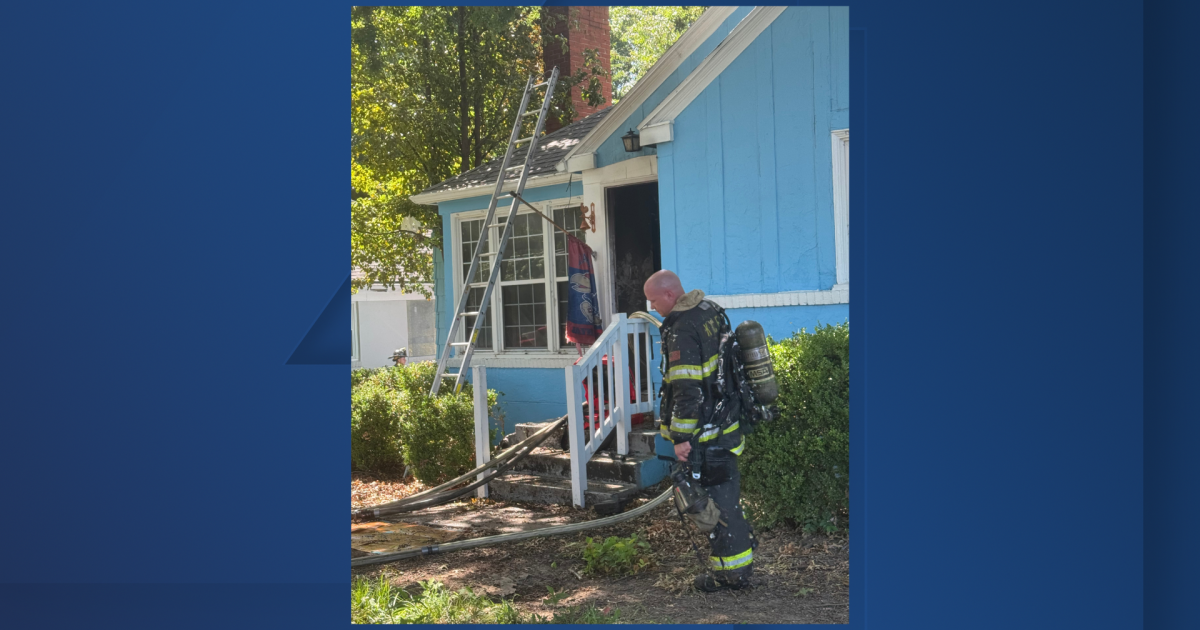
KANSAS CITY, Mo. — Fire crews battled a house fire Saturday morning in Kansas City, Missouri, that sent an occupant and a firefighter to the hospital.
The Kansas City, Missouri, Fire Department responded to a house fire around 10:10 a.m. Saturday in the 100 block of West 85th Street.
KCFD said one occupant was trapped inside the residence. Upon arrival, crews began battling the fire and entered the house to rescue the occupant.
Firefighters located an elderly woman and got her out of the house. She was taken by ambulance to a local hospital in serious condition.
A KCFD firefighter was taken to the hospital for a minor injury.
A dog inside the residence was able to evacuate safely.
The fire department reported the fire was brought under control around 10:25 a.m. City Planning and Dangerous Buildings were requested at the scene.
KCFD is investigating the cause of the fire.
—
The Missouri Lottery offers several draw games for those aiming to win big.
Here’s a look at July 17, 2026, results for each game:
Winning Mega Millions numbers from July 17 drawing
22-34-45-48-55, Mega Ball: 14
Check Mega Millions payouts and previous drawings here.
Winning Pick 3 numbers from July 17 drawing
Midday: 3-2-3
Midday Wild: 7
Evening: 6-5-7
Evening Wild: 3
Check Pick 3 payouts and previous drawings here.
Winning Pick 4 numbers from July 17 drawing
Midday: 2-5-9-9
Midday Wild: 8
Evening: 2-2-1-1
Evening Wild: 3
Check Pick 4 payouts and previous drawings here.
Winning Cash Pop numbers from July 17 drawing
Early Bird: 08
Morning: 06
Matinee: 06
Prime Time: 07
Night Owl: 10
Check Cash Pop payouts and previous drawings here.
Winning Show Me Cash numbers from July 17 drawing
01-06-11-19-21
Check Show Me Cash payouts and previous drawings here.
Feeling lucky? Explore the latest lottery news & results
Are you a winner? Here’s how to claim your lottery prize
All Missouri Lottery retailers can redeem prizes up to $600. For prizes over $600, winners have the option to submit their claim by mail or in person at one of Missouri Lottery’s regional offices, by appointment only.
To claim by mail, complete a Missouri Lottery winner claim form, sign your winning ticket, and include a copy of your government-issued photo ID along with a completed IRS Form W-9. Ensure your name, address, telephone number and signature are on the back of your ticket. Claims should be mailed to:
Ticket Redemption
Missouri Lottery
P.O. Box 7777
Jefferson City, MO 65102-7777
For in-person claims, visit the Missouri Lottery Headquarters in Jefferson City or one of the regional offices in Kansas City, Springfield or St. Louis. Be sure to call ahead to verify hours and check if an appointment is required.
For additional instructions or to download the claim form, visit the Missouri Lottery prize claim page.
When are the Missouri Lottery drawings held?
- Powerball: 9:59 p.m. Monday, Wednesday and Saturday.
- Mega Millions: 10 p.m. Tuesday and Friday.
- Pick 3: 12:45 p.m. (Midday) and 8:59 p.m. (Evening) daily.
- Pick 4: 12:45 p.m. (Midday) and 8:59 p.m. (Evening) daily.
- Cash4Life: 8 p.m. daily.
- Cash Pop: 8 a.m. (Early Bird), 11 a.m. (Late Morning), 3 p.m. (Matinee), 7 p.m. (Prime Time) and 11 p.m. (Night Owl) daily.
- Show Me Cash: 8:59 p.m. daily.
- Lotto: 8:59 p.m. Wednesday and Saturday.
- Powerball Double Play: 9:59 p.m. Monday, Wednesday and Saturday.
This results page was generated automatically using information from TinBu and a template written and reviewed by a Missouri editor. You can send feedback using this form.

A coalition of hemp businesses filed a federal lawsuit Thursday in an attempt to halt a statewide ban on intoxicating hemp products from going into effect in November.
The lawsuit, filed in the U.S. District Court for the Western District, claims the ban state lawmakers passed this spring contains “unconstitutionally vague” definitions for hemp and marijuana.
Craig Katz, government relations and compliance manager for one of the plaintiffs, St. Louis-based MNG 2005, Inc., said the problem begins with lawmakers’ lack of understanding about the cannabis industry.
“A lot of this stuff is kind of in the weeds,” Katz said. “It’s very difficult to understand. And when people are trying to legislate it, if they don’t understand it, you come up with something like HB2641, which doesn’t make a whole heck of a lot of sense.”
The coalition includes MNG, the parent company of 55 CBD Kratom stores nationwide, the Missouri Hemp Trade Association, and a Wisconsin-based hemp business, Lifted Liquids Inc.
The bill in question was among the first Missouri Gov. Mike Kehoe signed this year and will take all intoxicating hemp products off the shelves starting Nov. 12 — including THC seltzers currently sold in bars and grocery stores.
The legislation largely aligns state law with the upcoming federal ban that Congress approved last year.
Under Missouri’s bill, if Congress reverses course and decides to allow the sale of these products, the state would only permit them in licensed marijuana dispensaries. And if Congress delays the ban for a couple of years, Missouri law would still ban all products, except for intoxicating beverages.
It also tasks Missouri Attorney General Catherine Hanaway with enforcement.
Kehoe, Hanaway, and Sarah Wilson, director of the Missouri Department of Health and Senior Services, which oversees the state’s marijuana program, are the named defendants.
Hanaway’s spokeswoman said the office had not been served with the lawsuit. Kehoe’s office and DHSS declined to comment since it’s pending litigation.
Gov. Mike Kehoe signs a bill placing restrictions on intoxicating hemp products in his office on April 23 (Annelise Hanshaw/Missouri Independent).
Similar bills have been debated since 2023, but have failed to pass. Without regulations, intoxicating hemp products with as much as 1,000 mg of THC are currently sold in smoke shops — outside of Missouri’s licensed marijuana dispensaries.
The bill’s sponsor, Rep. Dave Hinman, a Republican from O’Fallon, said the legislation largely gives state law enforcement and prosecutors the authority to enforce the federal hemp ban after Nov. 12.
“ I believe this is the last-ditch effort for the hemp industry,” Hinman said. “HB2641 passed the Missouri House, Senate, and was signed by the governor. It was vetted throughout the entire process. I don’t believe this Hail Mary will get the results the Hemp Trade Association wants, and Missouri will mirror the federal government.”
The lawsuit argues that the bill defines the same products as both “hemp” and “marijuana” in different provisions, which leaves businesses, law enforcement and prosecutors confused about what is legal.
“Because unlicensed marijuana activity is a crime in Missouri, that confusion carries criminal consequences,” states the coalition’s press release announcing the lawsuit.
While the bill “promises” not to interfere with interstate hemp commerce, the coalition notes that it also restricts who may transport hemp products through the state, the press release states.
And it contains effective date provisions “so convoluted that businesses cannot determine which products are covered or when,” it said.
The coalition believes the “confusing” definitions will also take non-intoxicating CBD products off Missouri shelves.
“This isn’t consumer protection,” said Jay Patel, the association’s president. “It’s the elimination of an entire legal industry coupled with a government-mandated monopoly.”
-

 Kentucky3 minutes ago
La Familia takes down The Ville to win Game 1 of TBT
-

 Louisiana9 minutes ago
OSPD pays tribute to former officer, Deputy U.S. Marshal killed while serving warrant in Louisiana
-

 Maine15 minutes ago
Platner replacement should support single-sex private spaces and sports at school | Opinion
-

 Maryland21 minutes ago
BGE reports 28,874 customers without power across Maryland
-

 Michigan27 minutes ago
Taylor Farms recall: Check your fridge for iceberg lettuce products sold in Michigan amid cyclosporiasis outbreak
-

 Massachusetts33 minutes ago
Woman killed in Taunton car crash
-

 Minnesota39 minutes ago
New air quality alert issued through Monday for Minnesota
-

 Mississippi45 minutes ago
David Turner, a three-time Mississippi State football assistant, announces retirement

