Missouri
Missouri priest: Money stolen to avoid diocesan oversight


A Missouri priest claims that when he stole $300,000 from parish coffers, it was to hide the money from his diocese, in bank accounts belonging to himself and his sister.
With Fr. Ignazio Medina set to be sentenced Wednesday in federal court, his attorneys told a judge last week that the priest took money from his parish accounts in order to keep it from diocesan oversight and assessment, and that he should not face prison time.
Prosecutors have questioned the priest’s credibility — noting that he was found guilty in a canonical penal process of sexually soliciting a penitent in the confessional — and urged that Medina, 73, should be sentenced to 18 months in prison.
And an expert on parish finances has raised questions about Medina’s newly claimed reason for stealing from St. Stanislaus Parish of Wardsville, Missouri, where he was pastor from 2013 until 2021.
—
In a plea agreement signed in July, Medina admitted to a federal judge that he had taken $300,000 from a parish bank account.
The account in question had been for years untracked — unreported to the Diocese of Jefferson City, or included on parish balance sheets.
While the account was discovered by diocesan authorities in 2018, and put into parish financial records, Medina took money from the account in June 2021, shortly before he was transferred from St. Stanislaus to a different Jefferson City parish.
In that month, the priest wrote two checks from the account — one to his sister, for $100,000, and another to himself, for $200,000.
The checks were discovered by parish leaders soon after, and the Jefferson City diocese contacted federal law enforcement officials.
Medina initially told investigators that the money did not belong to the parish — that it was given to him personally by parishioners. He also claimed that his sister had given him $100,000, and that he was writing a check to refund the money.
But that story soon fell apart.
Medina’s sister told investigators that she had never given him the money, and that when her brother wrote her a big check from a parish account, he said it was meant to help care for their mother. Parish donors told investigators that they had not given Medina money personally, and that donations they had made to St. Stanislaus Parish were meant for the parish, and not for the priest personally.
While Medina’s July plea agreement meant he did not go to trial, he did present a new story to a federal judge last week, as his attorneys argued for a sentence of house arrest.
In a sentencing memo, Medina’s lawyer argued that the priest “made a bad decision relating to parish finances,” but that he had not done so to enrich himself. Instead, lawyers said that Medina’s theft “stemmed from his desire to keep St. Stanislaus Parish donations to fund St. Stanislaus Parish specific projects.”
“He did it because he was concerned that the money in the St. Stanislaus Parish account would be used according to the directives of the diocese rather than according to the desires and needs of the parish,” his sentencing memo wrote. “He should have voiced his concerns to the diocese and used its internal processes to try to achieve the same aims.”
The defense memo did not address Medina’s initial claims that the money was given to him — in part by his sister — and not to the parish. Nor did it address $20,000 in cash withdrawals from parish accounts during Medina’s tenure at St/ Stanislaus parish.
But the Diocese of Jefferson City told The Pillar Monday that Medina’s claim was a “troubling statement” and “inconsistent with the reasons previously cited for the misuse of funds.”
For its part, Medina’s memo focused on the priest’s apparent contrition.
“He knows that he should not have taken the money in question and does not seek to justify those actions, but does want to explain that he was not funding a drug habit, financing a broad criminal enterprise, or paying off gambling debt with this money. His desire was to benefit his most recent parish,” Medina’s attorney said.
But in their own Dec. 4 memo, prosecutors in the case called Medina’s “particularly egregious,” and lamented the priest’s “greed in the face of … trust.”
Arguing for 18 months incarceration, prosecutors noted that Medina “stole from people whom he had known and pastored for years – people who dug into their own pockets and provided their own hard-earned money to support the needs and religious mission of their place of worship.”
“As a priest, he had an unparalleled amount of trust placed in him, both financially and morally,” prosecutors noted. “But this trust served to shield his wrongdoing from detection.”
“Even when his side account at Legends Bank first came to light [in 2018], the parish and diocese apparently continued to assume his honesty, concluding that they did not believe any ‘intentional wrongdoing’ had occurred. Other irregularities, such as missing cash bonuses at the parish school, similarly went unresolved because no one suspected the parish priest was the thief in their midst.”
Prosecutors added that “while the defendant does not have any prior criminal history, his current offense, as well as his recent church adjudication for soliciting sex during the sacrament of reconciliation, demonstrate that laws – whether criminal, ecclesiastical, or moral – do not adequately constrain his conduct. He is therefore a recidivism risk, despite his lack of prior criminal history, and this warrants a sentence of incarceration.”
“While the known loss in this case is correctly calculated at $320,000, it is impossible to know the true extent of his conduct, because the trust placed in him was so great.”
A spokesman for the Diocese of Jefferson City told The Pillar on Monday that Medina was found guilty in April 2023 in a canonical penal proceeding which concluded that he had abused his ecclesiastical office by taking parish money.
In January 2024, the diocese announced that the priest had also been found guilty of soliciting sex in the confessional, a “reserved delict” in the Church, whose adjudication is overseen by the Dicastery for the Doctrine of the Faith.
Medina is prohibited from hearing confessions, from holding ecclesiastical office, and from publicly celebrating Mass without the permission of Jefferson City’s Bishop Shawn McKnight.
McKnight, 56, could soon find himself facing a new raft of complex parish financial issues, as the bishop is reportedly in consideration for an appointment to lead one of several U.S. archdioceses, among them either the Archdiocese of Omaha, or the Archdiocese of Washington, which is facing a multi-million dollar operational deficit.
—
Robert Warren — a retired IRS investigator and professor of accounting at Radford University, has conducted extensive research on priests who steal — told The Pillar that he believes Medina’s most recent claim, that “he maintained a secret parish bank account, and then drained that bank account through disbursements to both himself and his sister, because he was actually trying to save the money for the parish” — “fails the test of logic.”
Warren especially argued that if Medina had intended money sent to himself and his sister to be used for parish expenses, he would have informed his sister of that fact, while her interview with police would appear to indicate otherwise. Further, Warren said, “the record does not reflect that Father Medina made any provisions that upon his death, or the death of his sister, that the funds would be repatriated to the parish.”
Warren noted that Medina is not the first priest to steal from an off-the-books parish bank account claimed to exist to avoid diocesan detection.
In 2012, Bridgeport priest Fr. Michael Moynihan was sent to prison, after he stole hundreds of thousands from an unaudited bank account at St. Michael the Archangel Parish in Greenwich, Connecticut. The account was reportedly opened by Moynihan’s predecessor at the parish, who reportedly opened it to maintain funds that were not audited or taxed by his diocese.
In 2015, a Michigan priest, Fr. Ed Belczak, was sent to prison for stealing $573,000 from his parish, including $420,000 which had been deposited into an undisclosed and unaudited parish bank account, seemingly to avoid archdiocesan detection.
“Based on my research, I think it used to be a common practice for pastors to maintain secret, or off-the-books bank accounts in the name of the parish for which the pastor used as a discretionary fund,” Warren told The Pillar.
Acknowledging that such practices may still exist in some places — and that Medina’s off-the-books account was in operation until relatively recently, Warren said that in his view, “these types of accounts are unethical, immoral, and I’m sure in most cases, illegal. Parishioners, auditors, and the chancery should have access to complete, reliable, accurate, relevant, and timely financial information. To do otherwise is a disservice to all those just mentioned.”
Medina’s attorney has not responded to The Pillar’s request for comment.


KANSAS CITY, Mo. (KCTV) – The Missouri State Highway Patrol is investigating a shooting involving a Kansas City Police officer.
MSHP said the shooting occurred near 27th St. and Jackson Avenue.
Authorities said an officer on a motorcycle was stopped at a stop sign at the intersection of Spruce and 27th.
It’s unclear why, but police said the suspect had a rifle and started shooting at the officer. The officer returned shots and the suspect ran into the woods, where officers arrested him.
MSHP said the weapon had yet to be located, as of 4:20 p.m.
Authorities said neither the officer nor the suspect were injured and the suspect was taken into custody.
This is a breaking news story. KCTV5 will update as more information becomes available.
Copyright 2026 KCTV. All rights reserved.
The Missouri Lottery offers several draw games for those aiming to win big.
Here’s a look at June 24, 2026, results for each game:
Winning Powerball numbers from June 24 drawing
13-14-16-21-38, Powerball: 14, Power Play: 2
Check Powerball payouts and previous drawings here.
Winning Pick 3 numbers from June 24 drawing
Midday: 3-0-3
Midday Wild: 2
Evening: 8-4-8
Evening Wild: 0
Check Pick 3 payouts and previous drawings here.
Winning Pick 4 numbers from June 24 drawing
Midday: 7-5-8-5
Midday Wild: 9
Evening: 7-4-7-6
Evening Wild: 9
Check Pick 4 payouts and previous drawings here.
Winning Cash Pop numbers from June 24 drawing
Early Bird: 06
Morning: 13
Matinee: 03
Prime Time: 14
Night Owl: 02
Check Cash Pop payouts and previous drawings here.
Winning Show Me Cash numbers from June 24 drawing
16-17-19-26-35
Check Show Me Cash payouts and previous drawings here.
Winning Powerball Double Play numbers from June 24 drawing
03-11-20-31-65, Powerball: 05
Check Powerball Double Play payouts and previous drawings here.
Feeling lucky? Explore the latest lottery news & results
Are you a winner? Here’s how to claim your lottery prize
All Missouri Lottery retailers can redeem prizes up to $600. For prizes over $600, winners have the option to submit their claim by mail or in person at one of Missouri Lottery’s regional offices, by appointment only.
To claim by mail, complete a Missouri Lottery winner claim form, sign your winning ticket, and include a copy of your government-issued photo ID along with a completed IRS Form W-9. Ensure your name, address, telephone number and signature are on the back of your ticket. Claims should be mailed to:
Ticket Redemption
Missouri Lottery
P.O. Box 7777
Jefferson City, MO 65102-7777
For in-person claims, visit the Missouri Lottery Headquarters in Jefferson City or one of the regional offices in Kansas City, Springfield or St. Louis. Be sure to call ahead to verify hours and check if an appointment is required.
For additional instructions or to download the claim form, visit the Missouri Lottery prize claim page.
When are the Missouri Lottery drawings held?
- Powerball: 9:59 p.m. Monday, Wednesday and Saturday.
- Mega Millions: 10 p.m. Tuesday and Friday.
- Pick 3: 12:45 p.m. (Midday) and 8:59 p.m. (Evening) daily.
- Pick 4: 12:45 p.m. (Midday) and 8:59 p.m. (Evening) daily.
- Cash4Life: 8 p.m. daily.
- Cash Pop: 8 a.m. (Early Bird), 11 a.m. (Late Morning), 3 p.m. (Matinee), 7 p.m. (Prime Time) and 11 p.m. (Night Owl) daily.
- Show Me Cash: 8:59 p.m. daily.
- Lotto: 8:59 p.m. Wednesday and Saturday.
- Powerball Double Play: 9:59 p.m. Monday, Wednesday and Saturday.
This results page was generated automatically using information from TinBu and a template written and reviewed by a Missouri editor. You can send feedback using this form.

JACKSON COUNTY, Mo. (KFVS) – Four years after the U.S. Supreme Court overturned Roe v. Wade and Missouri became the first state to ban abortion, Planned Parenthood is once again offering abortions.
Medication abortions are returning, too, after a Jackson County Circuit Court ruling. However, the state’s legal battle continues with court cases and a new ballot measure.
The past four years
Four years ago, Missouri politicians used a 2019 trigger law to ban abortion within 20 minutes of the Supreme Court’s decision in Dobbs v. Jackson Women’s Health Organization, which overturned the limited federal abortion protections of Roe v. Wade and Planned Parenthood v. Casey.
Abortion was put on the ballot in 2024 by an initiative petition that collected more than 380,000 signatures. Missouri became the first state to end an abortion ban by a vote of the people in 2024 and established the Right to Reproductive Freedom in the state constitution.
Another vote this year
This year will mark the second time Missourians vote on abortion. In November, Missourians will once again vote on abortion on the new Amendment Three. A “yes” vote is to ban abortions.
The new ballot measure has limited exceptions for rape, incest and medical emergencies, only if performed before the 12-week gestational period. It’s set to be on the statewide ballot for the November 2026 midterm election.
Bonnie Lee with 40 Days for Life said she hopes Missourians vote in favor of new restrictions in November.
“Missouri is waking up, and we will make a difference in November,” Lee said.
Missourians will see this question on their ballot:
“Shall the Missouri Constitution be amended to:
Repeal the 2024 voter-approved Amendment providing reproductive healthcare rights, including abortion through fetal viability;
Allow abortions for rape and incest (under twelve-weeks’ gestation), emergencies, and fetal anomalies;
Allow legislation regulating abortion;
Ensure parental consent for minors’ abortions;
Prohibit gender transition procedures for minors?”
A “yes” vote would essentially repeal the Amendment Three passed in November 2024. But this language may not be final. If lawyers appeal again, it can go to the Missouri Supreme Court.”
“I think voters are now seeing they didn’t know what they were voting on [in 2024]. There was a lot of misinformation, a lot of hidden information, a lot of legalese,” Lee said.
Maggie Olivia with Abortion Action Missouri said she wants the opposite outcome at the ballot box.
“I feel all the more invigorated having seen the consequences of abortion bans to do whatever it takes to stop this new abortion ban,” Olivia said.
Olivia called the new Amendment Three an overreach by Missouri politicians.
“There are some politicians in Jefferson City who don’t like the decision we just made in 2024, so they think they can muddy the waters, change the rules,” Olivia said.
Ongoing lawsuit
This month, a Jackson County Circuit Court judge issued a permanent injunction striking down several state abortion restrictions.
Planned Parenthood said the decision also clears the way for medication abortion to be available in Missouri for the first time since 2018 and allows Planned Parenthood to resume providing it.
“For too long, politicians forced patients to leave the state for an evidence-based and trusted form of abortion care. Now that care is coming home,” said Emily Wales, president and CEO of Comprehensive Health of Planned Parenthood Great Plains.
Attorney General Catherine Hanaway criticized the ruling and said she plans to appeal to the Missouri Supreme Court.
“This radical decision gives abortion providers a free pass to police themselves,” Hanaway said in a statement. “My office will expeditiously appeal this dangerous decision to the Missouri Supreme Court.”
Copyright 2026 KFVS. All rights reserved.
-
 Politics5 minutes ago
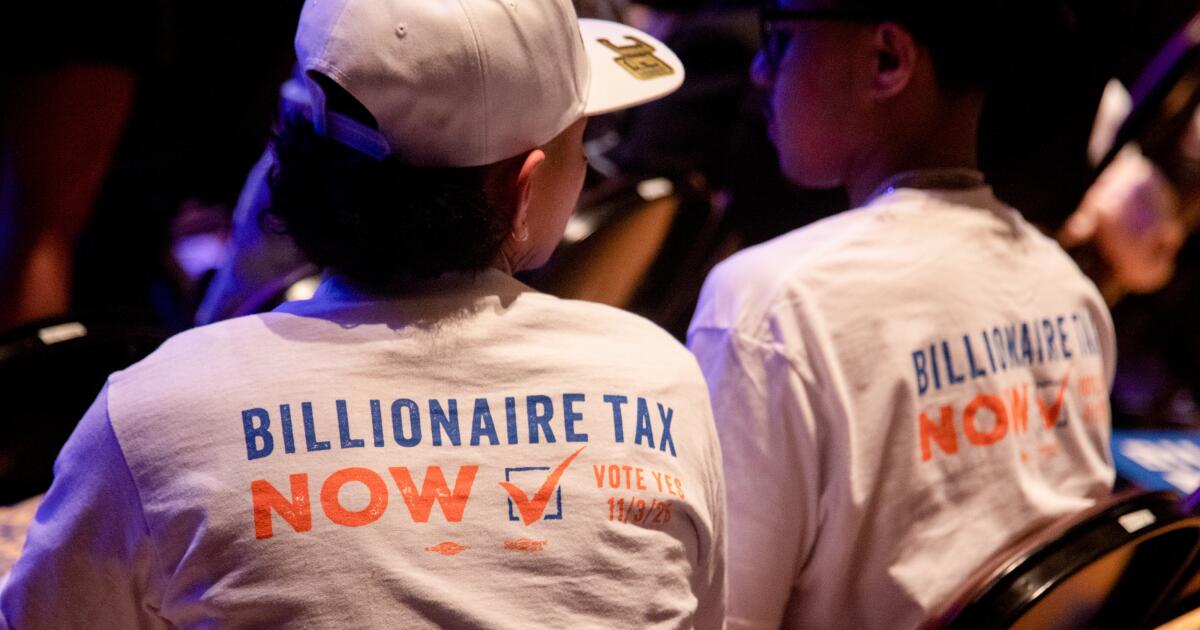
Controversial billionaire tax proposal will appear on November ballot
-
 Sports13 minutes ago
Shohei Ohtani is the first Dodger to be named 2026 All-Star
-

 World23 minutes ago
Who will control Africa’s AI infrastructure and at what cost
-
 News50 minutes ago
The Supreme Court says the U.S. can turn away asylum seekers at the border
-

 Los Angeles, Ca2 hours ago
Jury says it is deadlocked in trial of man accused in Palisades Fire
-

 Detroit, MI2 hours ago
Scene active as police shoot, kill man on Detroit’s west side
-

 San Francisco, CA3 hours ago
Civil grand jury report warns of wildfire risk at SF’s Glen Canyon Park
-

 Dallas, TX3 hours ago
Ivory Coast advances at World Cup, how to buy Ivory Coast tickets

