Missouri
Missouri political parties grudgingly organize contests to select presidential delegates


Missouri Republicans and Democrats typically don’t agree on much, but they’re united in irritation over the legislature’s decision to ditch the state-run presidential primaries.
State lawmakers eliminated the primary in 2022 and instead placed political parties in charge of the process for divvying up presidential delegates. Before 2022, local election officials, such as county clerks and election authorities, were in charge of running presidential primaries.
During Friday’s episode of The Politically Speaking Hour on St. Louis on the Air, Missouri Democratic Party Executive Director Matthew Patterson and GOP political activist Chris Grahn-Howard talked about how the state’s political parties are trying to make the best of the situation.
Patterson said the Democratic process will resemble a primary, with mail-in voting and in-person voting throughout the state on March 23. The entire contest is expected to cost $150,000 to $200,000, with the Democratic National Committee picking up some of the cost.
“We felt like that was the best way to get as many people involved as possible,” Patterson said.
The Missouri GOP caucus will resemble Iowa’s, in which people will go to select locations in the state’s counties and vote in groups on whom they want to support for president. Grahn-Howard said voters should expect to be present in the caucus for about three hours. He said the Democrats’ process would have been too costly for Republicans.
“And so then we were left with a caucus,” Grahn-Howard said. “We’ve done caucuses before in 2012 and 1996. And so we just built a process that we felt was cleaner and more efficient than those years.”
Frustration over lack of legislative action
One of the proponents of getting rid of the primary was Secretary of State Jay Ashcroft, who told St. Louis Public Radio last month that he had concerns about the cost and purpose of the contest because there was nothing tying the delegates to the primary vote.
“If we’re going to have an election, the election needs to be the one that actually determines those delegates,” Ashcroft said. “And we need to make sure that every election we hold in Missouri, the people of Missouri’s votes count.”
Ashcroft said he tried to revive the primary with the stipulation that the result would determine how delegates are selected. He said he was especially concerned about a caucus being able to allow for military personnel to participate. Grahn-Howard said the legislature’s decision in 2022 “disenfranchised” Missouri residents who serve overseas.
Grahn-Howard also said Missouri Republicans have tied the result of the primary to how delegates are allocated since 2016.
He said the legislature shouldn’t have the ability to micromanage political party rules, especially since they’re private entities.
“And they can create the rules to determine how their delegates are allocated,” Grahn-Howard said.
Even though President Joe Biden and former President Donald Trump will likely be the nominees, Ashcroft said the delegate selection processes are still important to the top race of the 2024 election cycle.
“We are better off with more everyday people like you and me participating, instead of just assuming that the people we’ve elected know what they’re doing,” Ashcroft said.
Both Grahn-Howard and Patterson said they hope that lawmakers switch back to a state-run primary for the 2028 presidential election, which probably will feature open races for both parties.
“I think just from the outcry from Democrats and Republicans and unaffiliated voters, that legislators will do the right thing and restore the primary,” Patterson said.
Listen to the full St. Louis on the Air conversation on Apple Podcast, Spotify, Google Podcast, Stitcher, or by clicking the play button below.
“St. Louis on the Air” brings you the stories of St. Louis and the people who live, work and create in our region. The show is produced by Miya Norfleet, Emily Woodbury, Danny Wicentowski, Elaine Cha and Alex Heuer. The audio engineer is Aaron Doerr. Send questions and comments about this story to talk@stlpr.org.
Copyright 2024 St. Louis Public Radio. To see more, visit St. Louis Public Radio.



By Brian Consiglio
April 7, 2026
Contact: Brian Consiglio, consigliob@missouri.edu
Photos by Abbie Lankitus
The University of Missouri is scaling up the use of virtual fencing, a cutting-edge agricultural technology that’s gaining attention among livestock producers and state officials.
Thanks to a $3.7 million grant from the National Fish and Wildlife Foundation (NFWF), Mizzou’s Center for Regenerative Agriculture will help hundreds of livestock producers in Missouri and Nebraska save time and labor with GPS-enabled collars for their cattle.
Virtual fencing collars guide cattle to fresh grazing fields with a variety of cues. Once their cattle are collared with the new technology, producers simply draw their virtual boundaries on a mobile app or computer and activate their interior “fences” with the press of a button. That reduces the time producers need to spend tearing down and rebuilding physical fences to move cattle to different pastures.

“Not only are we giving producers time back in their day by eliminating the time- and labor-intensive process of constantly moving interior fences, but we are also helping them be good stewards of the land by improving the sustainability and profitability of beef production,” Rob Myers, the center’s director, said. “I heard from one producer who is getting nearly double the value from each acre of land after switching to virtual fencing because his cattle are now eating all the cover crops in one field before moving on to the next field. He loves redrawing the boundaries on his phone.”
Beefing up impact
Myers and his team initially tested the technology in partnership with five Missouri producers. The latest grant will allow the center to expand the project by collaring the cattle of 200 livestock producers in Missouri and Nebraska who collectively manage around 150,000 acres. The award is part of $32.8 million in initial grants announced by NFWF as part of the new Grassland Resilience and Conservation Initiative, supported by funding from McDonald’s USA, the USDA Natural Resources Conservation Service (NRCS), and several key McDonald’s USA beef and beverage suppliers.
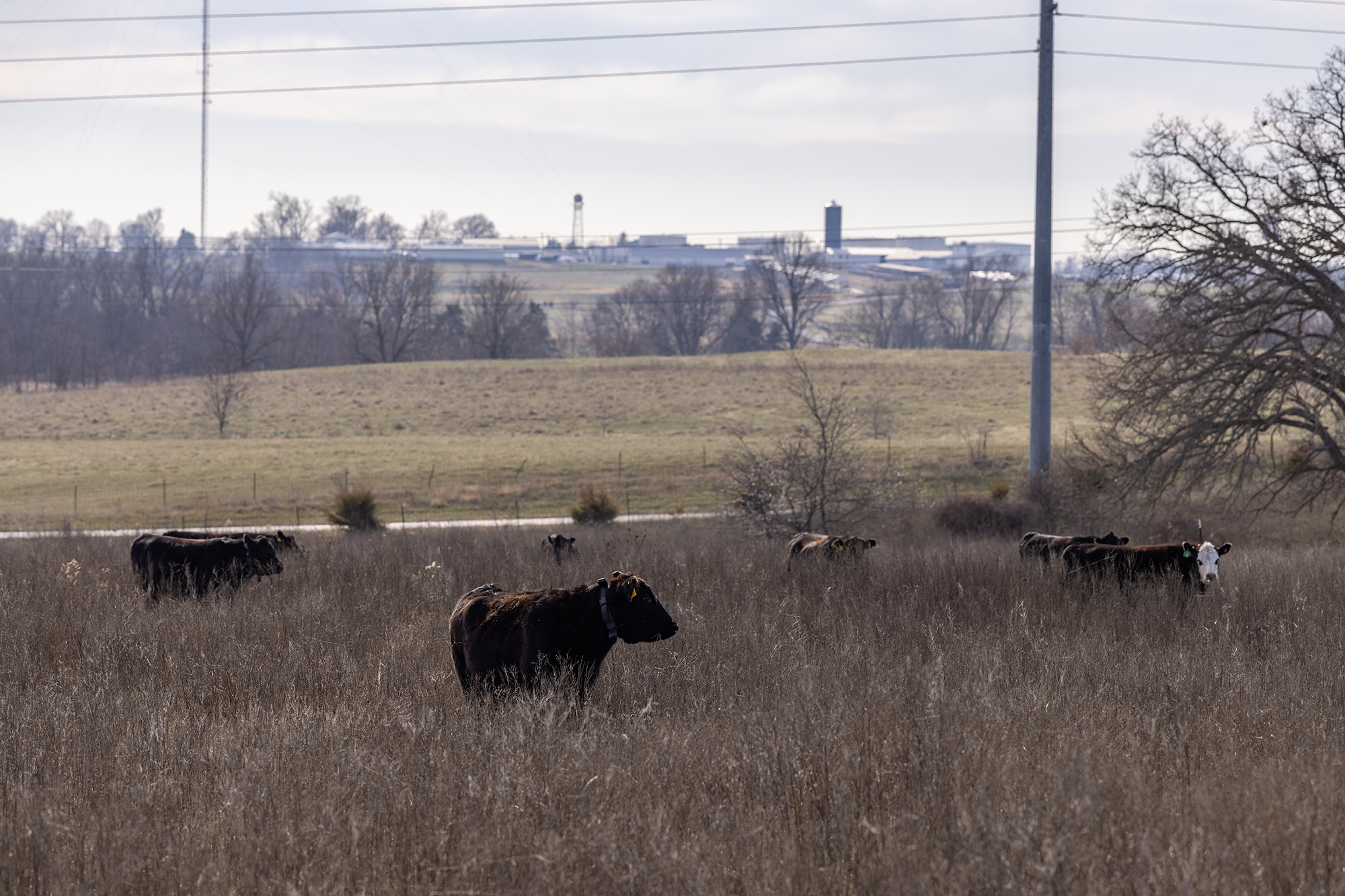
The grant provides incentive payments directly to producers who adopt the virtual fencing technology, which can also be used to protect streams, rivers and other sensitive landscapes. Additionally, Myers and his team will help producers improve their watering systems and plant native forages, boosting sustainability and profitability.
“The grass in most Missouri pastures is tall fescue, which is not native to the U.S.,” Myers, an extension professor in the College of Agriculture, Food and Natural Resources, said. “So, by having native plants also be part of livestock grazing, that extends the grazing season, and it’s great for soil health and wildlife.”
Stewards of the land
The center’s goals — to build more integrated approaches to regenerative farming and develop more resilient food systems — are deeply personal to Myers.
He grew up on a farm in Illinois, seeing firsthand the downsides of soil erosion and the benefits cover crops — plants that enrich soil and hold it in place — had on the farm’s corn and soybeans.
“As a boy, I remember seeing the positive impact cover crops had on soil health, which sparked my interest in regenerative agriculture,” Myers said. “That’s something I’ve been passionate about ever since.”
Myers added that the virtual fencing project is an example of Mizzou’s efforts to improve rural communities by prioritizing engagement.
“At Mizzou, we’re not only doing research; we’re helping society directly benefit from the research through our extension, education and community outreach efforts, and that is what a flagship university is all about,” Myers said. “One of the major challenges in agriculture today, particularly in the Midwest, is how to keep the soil as productive and resilient as possible. I’m very motivated to help producers adopt best practices in regenerative agriculture so they and the next generation of producers will be successful in the long run. And we think virtual fencing can play a big role in that.”

Spring baseball in Missouri is officially off and running, and through the first two-plus weeks of the 2026 season, the state’s landscape is already taking shape. Defending state champions are proving they belong. Undefeated small-school programs are making noise. Blue-chip programs that entered the year with high expectations are adjusting to the reality of a competitive schedule.
These rankings incorporate every available analytical lens: official MSHSAA win-loss records and run differential data,. The result is the most complete statewide picture available at this stage of the 2026 season, across all six classifications.
One number tells this story early: run differential. The teams at the top of this list are not just winning — they are winning by margins that signal a gap between other teams. This is Missouri baseball in April. There is a lot left to be decided.
1. Rock Bridge (10-1)
Follow
The Bruins lead all of Missouri with 10 wins, and they have done it the right way — against competition. Rock Bridge is putting up 7.73 runs per game while holding opponents to 4.36, producing a margin of victory of 3.36 across 11 games. That consistency is the product of a program that went 30-7 last year and returned the infrastructure intact.
2. Blue Springs South (7-2)
The defending Class 6 state champion, and they are still the standard. One loss came against Kansas No. 4 Olathe East in a narrow pitcher’s duel — a quality out-of-state defeat that only strengthens their résumé. The Jaguars are scoring 9.78 runs per game, the highest offensive rate of any team in this top 25. Blue Springs South is a legitimate No. 1 argument; the two losses keep them here for now.
3. Jackson (9-1)
Jackson is averaging 8.8 runs per game while surrendering just 2.1 — a run differential of 6.7 that ranks among the best in the state across any classification. Their pitching staff is tremendous. The one loss is the analytical anchor holding them from the top; the numbers otherwise say No. 1.
4. Willard Tigers (10-2)
The Tigers continue their dominant run in southwest Missouri. Ten wins through 12 games, with 104 runs scored against just 36 allowed — a margin of 5.67 per game. Willard’s pitching has been as advertised, and Matthew Angel remains one of the most complete position players in the state. The Wildcats’ only notable blemish was a 6-4 loss to Logan-Rogersville — a team that sits inside this top 10 itself. That loss tells you how competitive the top of the state is right now.
5. Fort Zumwalt West (8-3)
Fort Zumwalt West made a statement after defeating Francis Howell to claim the Troy Buchanan Tournament Championship, and the wins over Seckman, Timberland, and Westminster Christian add real value to the résumé. The Jaguars are 8-3 with 62 runs scored and 45 allowed — a modest 1.55 margin that reflects the level of competition they have played. A Class 6 postseason threat with proven results against quality opponents.
6. Eureka (8-2)
One of the fastest-rising programs in the state. Eureka has climbed four spots in the MaxPreps algorithm and sits 8-2 through 10 games with an 8.6 strength of schedule — the highest of any program in this tier. Ace Jaxson Joggerst (Indiana commit) is one of the elite arms in Missouri, and Craig Ringe anchors the offense. The Wildcats are built to peak in May, and they are already showing the profile of a deep playoff run.
7. Francis Howell (7-4)
The Vikings have had a bumpy early season by their own lofty standards, dropping to 7-4 after losses to Edwardsville (IL) and a Fort Zumwalt West squad that took the Troy Buchanan Tournament Championship in the process. But context matters here: Francis Howell has played one of the most demanding schedules in Class 6, and a 7-4 record against that slate is not a collapse. The Vikings need a signature win to stabilize their ranking, but they have the roster to deliver one.
8. Nixa (10-3)
No team in Missouri has played more games than Nixa, and with 10 wins, they have made the most of it. The Eagles are averaging 8.46 runs per game. Their schedule is the toughest of any team in the top five. Three losses against that competition is not a problem; it is a credential. RHP Jackson Gamble and multi-sport standout Adam McKnight are the engines of a well-constructed roster.
9. Lafayette (8-2)
This program demands recognition. Lafayette (Wildwood) is putting up 7.7 runs per game against an OPPG of just 3.7 — a margin of 4.0 through 10 games. Senior Chase Roeder has been a standout in the batters box with 12 hits and 11 RBIs. This is one of the best Class 6 team right now.
10. Vianney (8-2)
Vianney has a record of 8-2 with 54 runs scored and just 19 allowed, good for an OPPG of 1.9 that is the lowest of any top-25 team in this piece. A margin of victory of 3.5 reflects a pitching staff and defense that simply do not give games away. Senior Logan DeClue remains the offensive catalyst. The Griffins remain a legitimate Class 5 state title contender.
11. Logan-Rogersville (8-1)
Logan-Rogersville has officially claimed the No. 1 small-school spot, with their résumé highlighted by an impressive 6-4 victory over Class 5’s Willard, with their only blemish being a loss to a rising Licking squad. The Wildcats are scoring 8.11 runs per game against 2.67 allowed — a 5.44 margin — and carry the highest strength of schedule index of any small-school program tracked. An 8-1 record with that kind of résumé is as good as it gets at this stage.
12. Liberty North (7-2)
The Eagles are 7-2 with 81 runs scored and 42 allowed — a 4.33 margin of victory — against a Greater Kansas City Suburban Conference schedule that does not offer any soft spots. Their experience from last season is showing. Every win on the ledger has been earned. A big stretch of conference play is ahead, and this is the kind of team that gets better as the schedule gets harder.
13. Marquette (8-1)
The biggest mover in Missouri this season. Marquette is 8-1 out of Chesterfield with 78 runs scored against just 41 allowed — a margin of 4.11 per game. For a program that was a preseason question mark, this start demands full attention. One of the most impressive early stories in the state.
14. Fort Zumwalt East (6-1)
Fort Zumwalt East has a 6.57 margin of victory (8.57 RPG, 2.0 OPPG). Six wins against one loss, and they are holding opponents to 14 total runs across seven games. Performance agaisnt a schedule that will only get tougher is a key factor to watch.
15. Harrisonville (5-0)
The only undefeated team across all of Class 4, and the numbers are stunning. Harrisonville is outscoring opponents by 7.2 runs per game — the highest margin of victory of any team in Class 4. They are scoring 10.6 runs per game while allowing just 3.4. The Wildcats are the biggest sleeper in these rankings and a program worth watching all the way to the state tournament.
16. SLUH (7-2)
St. Louis University High is 7-2 with 63 runs scored and just 24 allowed — an OPPG of 2.67 that ranks among the best in Class 6. A 4.33 margin of victory reflects a pitching staff that consistently dominates, and the Billikens’ offensive core led by Jack Friedman and Cole Chambers gives them a balanced threat on both sides of the ball. A top-10 caliber team when their full schedule comes together.
17. Moberly (10-1)
A potential top Class 4 team. Moberly is 10-1 with 61 runs scored and just 27 allowed. The Spartans have been stellar this spring, securing key wins over Boonville and Southern Boone. Their SOS remains the one concern but the volume of wins and coaches’ validation cannot be ignored.
18. Chillicothe (8-1)
A program that looks like a Class 4 state title contender. Chillicothe is scoring 10.56 runs per game while allowing 3.11 producing a 7.44 margin of victory. This has been a dominant start, outscoring opponents by a massive margin. The Hornets are built to win big and doing exactly that. A top-15 candidate with more schedule tests ahead.
19. Liberty (8-2)
Liberty may be the most quietly impressive Class 6 team in Missouri right now. An 8-2 record with 67 runs scored against 46 allowed — a 2.1 margin of victory — does not leap off the page statistically, but their schedule does. The Eagles have played a demanding Kansas City-area slate and collected wins over Kearney, Lee’s Summit West, Lee’s Summit, and Grain Valley. A big game against Staley is on the horizon. Liberty is for real.
20. Rockwood Summit (7-3)
Rockwood Summit has been one of the steadier Class 5 programs in the St. Louis corridor this spring, sitting at 7-3 with 89 runs scored and 47 allowed — a 4.2 margin of victory across 10 games. The Falcons are putting up 8.9 runs per game, among the higher offensive outputs in Class 5. Three losses against top teams keep them toward the bottom of this list for now, but this is a team with the offensive firepower to make noise when the district bracket is set in May.
21. Oakville (7-3)
The Tigers are scoring 7.2 runs per game with a 3.3 margin of victory — steady, consistent production from a roster that does not beat itself. Every win Oakville has collected came against programs with postseason aspirations of their own. This is a well-coached team that plays within its identity and has the depth to sustain a run deep into May. Do not sleep on the Tigers.
22. Platte County (8-4)
Platte County has been one of the busier programs in Class 5 this spring, playing 12 games and collecting eight wins against a schedule that includes legitimate Kansas City-area competition. The Pirates are scoring 6.92 runs per game with an 8-4 record that reflects a team still finding its ceiling. This team has the DNA of a district contender and has been battle-tested in ways that teams with softer early schedules have not.
23. Lindbergh (3-6-1)
Lindbergh earns a spot here on program trajectory and the strength of the Suburban South Conference schedule they navigate every season. The Flyers are a St. Louis-area Class 6 program that consistently develops talent and competes deep into May, and early indications in 2026 suggest another competitive run is taking shape. Lindbergh’s path to a district title runs through some of the better programs in the area, and how they handle that gauntlet over the next three weeks will determine whether they rise significantly in the next edition of these rankings.
24. Rockhurst (7-4)
Rockhurst belongs in this conversation. Head coach Will Gorden brings experience to a program that returned multiple varsity players who got meaningful reps at a young age last season, and returning pitchers give Rockhurst the rotation depth to sustain a long postseason run.
25. Seckman (7-5)
The Jaguars appeared on the résumé of Fort Zumwalt West which speaks to the level of competition Seckman has been willing to schedule early. Playing tough opponents and absorbing early losses is a strategy that pays dividends by May. Seckman has the roster pieces to be a postseason factor in a loaded Class 6 field, and this ranking is as much a projection as it is a reflection of what they have done so far.

Missouri baseball earned its first series win of Southeastern Conference play on Sunday by taking a 5-4 win over No. 24 Kentucky in Game 3 of the series.
It’s the first time since 2014 that the Tigers won a series against Kentucky in Lexington. The win puts Missouri at three conference wins on the season, marking the total it earned through all of 2025.
The win was built off a massive, four-run inning from the Tigers in the fifth to take the lead it would hold onto for the remainder of the game. The first run came off of a sac-fly from Kam Durnin. The final run was scored with the bases loaded when freshman Juliomar Campos drew a walk.
Freshman pitcher Sam Rosand made his first career start for the Tigers, allowing two runs and five hits in four innings. Meanwhile, Juan Villarreal and Eli Skidmore closed out the game to help the Tigers hold on to their lead.
The win came off the heels of a 9-2 loss on Saturday. The Tigers earned a 5-4 win in Game 1.
Missouri will return to play early in the week for an in-state matchup, hosting Missouri State at 6 p.m. Tuesday.
Sign up for our free and follow us on Twitter/X, Facebook, YouTube, Blue Sky and Instagram for the latest news.

With Minneapolis medical center’s survival threatened, staff and leaders call for state action

IMPD asks for help to find missing 26-year-old man

Below freezing temperatures to return Wednesday morning, ahead of 80-degree weather this weekend

Is the World Cup in DC? Here’s where you can watch games

1973 Indians Home Opener Holds Special Memory for NE Ohio Couple – Cleveland Today

Florida High School Football Rankings: Top 25 teams – Oct. 21

How old is Bo Nix? What to know about Oregon quarterback ahead of 2024 NFL Draft

Cleary's 21 help Le Moyne down Central Connecticut State 69-64 in OT

99th annual Pony Swim held in Virginia

Indiana Members Credit Union announced as new anchor tenant at Bottleworks District

Ilhan Omar calls Trump an ‘unhinged lunatic,’ urges booting him out of office
Between Budapest and Brussels: Péter Magyar’s political tightrope
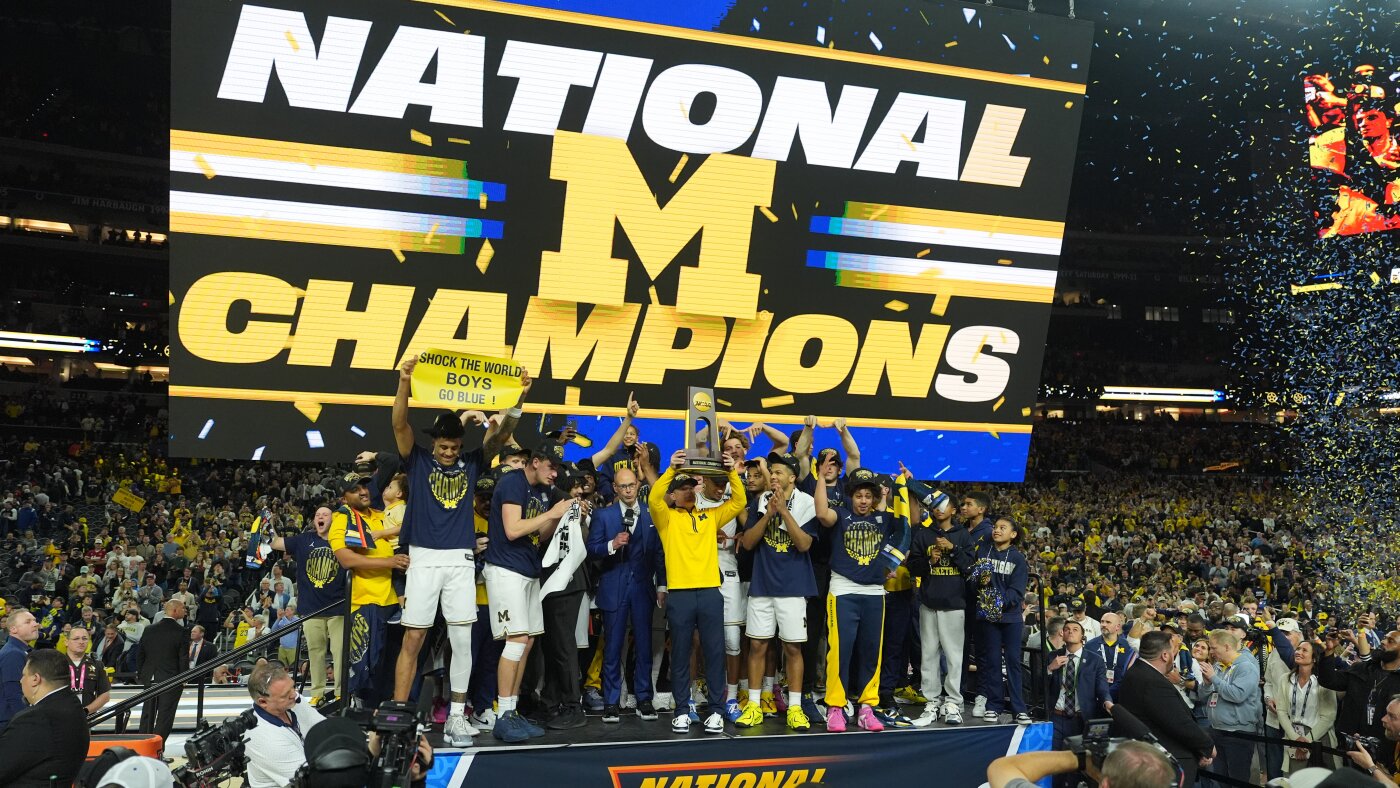
Michigan muscles its way to program’s 2nd NCAA basketball title, beating UConn

Map: Minor Earthquake Strikes Near San Diego

Trump claims he’d win as the president of Venezuela — just needs to ‘quickly’ learn Spanish
-

 Atlanta, GA3 days ago
1 teenage girl killed, another injured in shooting at Piedmont Park, police say
-

 South-Carolina1 week ago
South Carolina vs TCU predictions for Elite Eight game in March Madness
-

 Movie Reviews5 days ago
Vaazha 2 first half review: Hashir anchors a lively, chaos-filled teen tale
-

 Vermont1 week ago
Skier dies after fall at Sugarbush Resort
-

 Politics1 week ago
Trump’s Ballroom Design Has Barely Been Scrutinized
-

 Politics1 week ago
JD Vance says he was ‘obsessed’ with UFOs, believes aliens are actually ‘demons’
-

 Politics1 week ago
Jeffries declines to break with indicted Democrat after ethics panel’s guilty verdict
-
 Entertainment5 days ago
Inside Ye’s first comeback show at SoFi Stadium