Minneapolis, MN
Some U.S. Olympians are speaking out after Minneapolis killings


The fatal shootings of Renee Good and Alex Pretti by federal authorities in Minneapolis last month have drawn condemnation from politicians, influencers and celebrities — and increasingly from athletes who will soon be representing the U.S. at the Olympics.
Emotions have been running high in Minnesota, where the Trump administration’s immigration crackdown has permeated nearly every aspect of daily life amid weeks of protest and confrontations with federal authorities, and they were on display last Sunday during a Professional Women’s Hockey League game in St. Paul as fans chanted “ICE out now.”
At a postgame press conference, Minnesota Frost stars Kelly Pannek and Taylor Heise, both members of the U.S. Olympic squad, said it was important to acknowledge what was happening in their own community.
“It’s obviously really heavy,” said Pannek, who appeared to be overcome with emotion. “I think people have been asking a lot of us what it’s like to represent our state and our country. I think what I’m most proud to represent is the thousands — tens of thousands — of people who show up on some of the coldest days of the year to stand and fight for what they believe in.”
Heise added that the team has done a good job of making everyone feel welcome and safe during its games, “even though you can’t feel safe, I feel like, in this time and place here in Minnesota.”
Cross-country skier Jessie Diggins also acknowledged the situation last week after her final competition before the 2026 Winter Olympics. Diggins, who won gold in 2018, wrote in an Instagram post that she hoped she was able to bring some joy to people watching and honor all those back home protecting their neighbors.
“Honestly, this week was mentally and emotionally stressful for me for many different reasons, all of which were outside of sport,” Diggins wrote on Jan. 25, the day after Pretti’s killing. “Primarily, it’s been devastating following the news of what has been happening in Minnesota right now and it’s really hard feeling like I can do nothing about it.”
Diggins, Pannek and Heise are three of the 24 athletes from Minnesota who will represent the U.S. at the Milan Cortina Games. But they are not the only Olympians who have spoken out.
Figure skater Alysa Liu, who is from California, has been sharing posts to her Instagram Stories this week about the deaths of Pretti and Good. She also shared a post on Thursday urging people to call their representatives in Congress to oppose the current funding bill for the Department of Homeland Security, the agency that oversees immigration enforcement.
It’s unclear whether more Olympians will speak out on the world stage in the coming weeks, especially following news that the U.S. will send Immigration and Customs Enforcement agents to Italy to assist with security.
In a video that’s been viewed more than 500,000 times on TikTok and another 60,000 on Instagram, Coach Jackie J, a popular content creator who focuses on sports, urged athletes to use their platform at the Olympics to “speak up” against a government “going after its own people,” describing it as not only an opportunity but a “responsibility.”
“Let everyone know that you’re not representing this government, you’re not representing what it’s doing, you’re representing the people,” she said.
The International Olympic Committee noted that all athletes have the ability to express their views but that there are restrictions in place to maintain the neutrality of the Games overall.
Athletes can’t make political statements during competition or official events, such as a medal ceremony or the opening or closing ceremonies. They are also not allowed to speak out inside the Olympic village. The IOC said these rules have been in place since the Tokyo Games and were made in consultation with the IOC Athletes’ Commission.
The Olympics have been a venue for political expression for more than a century, with the first modern podium protest taking place in 1906 by Irish track athlete Peter O’Connor. After winning the silver medal in the long jump, O’Connor scaled the flagpole to replace a British flag with an Irish nationalist banner in protest of having to compete as a British athlete before Ireland gained its independence.
The 1906 Intercalated Games were considered Olympic Games by the International Olympic Committee at the time, but the IOC no longer recognizes the event or its medals.
One of the most well-known protests to Americans happened at the 1968 Summer Olympics, when Tommie Smith and John Carlos raised their fists and bowed their heads in a Black Power salute to protest racial discrimination. Smith and Carlos, U.S. track stars, had just won first and third place in the 200-meter race.
Amy Bass, a professor of sports studies at Manhattanville University in Purchase, New York, said that at first the big news was that Smith had broken a world record, but the protest made headlines only after the U.S. Olympic Committee removed their Olympic credentials following pressure from the International Olympic Committee.
“Doing that sort of created a bigger spectacle than had already happened,” Bass said. “And so they kept their medals and they were sent home.”
Their protest was part of a larger movement by a collective of Black athletes, the Olympic Project for Human Rights, who had threatened to boycott the Olympic Games if a set of civil rights demands were not met, according to Bass. But the group failed to find consensus, which led Smith and Carlos to the now famous moment in Mexico City.
Athletes don’t leave their lived experiences or belief systems behind the moment they step into a competition, Bass said, and the platforms they’ve worked hard to build are theirs to use as they see fit.
“The Olympics are inherently political, because one enters the Olympics under a flag which represents some form of nation state,” Bass said. “So there’s nothing apolitical about the Olympic Games, and there never has been. There’s nothing apolitical about sport, and there never has been.”
The 1968 protest led to Rule 50 of the Olympic Charter banning demonstrations at the podium and during specific events.
There are big and small ways athletes can signal their own views.
Bass noted that just before the 2018 Winter Olympics, skier Lindsey Vonn told CNN that she would not visit the White House if she won a gold medal, in a statement against President Donald Trump. At the Tokyo Games a few years later, the U.S. women’s national soccer team took a knee before they took the field, a protest against racial injustice.
It’s up to individual athletes to decide what role they want to play in a larger collective action, something that is a lot to consider, Bass added.
“The ancient Greeks created the Olympics for this reason — to put down swords and see what peace felt like, so that if we ever achieve it, we’ll know when it arrives,” Bass said. “But the world doesn’t stop being the world just because they’re skiers on the hill.”


MINNEAPOLIS (FOX 9) – A 16-year-old boy was pulled from the water at Minnehaha Falls after going missing while swimming with family.
Fire crews respond to missing swimmer at Minnehaha Falls
What we know:
Minneapolis Fire Department crews arrived at Minnehaha Falls around 5:20 p.m. after reports that a teenager had gone underwater and did not resurface. Firefighters put on swift-water rescue gear, set up rope safety lines and entered the water at the spot where the boy was last seen.
Crews quickly found the teen submerged in the water and brought him to shore. Firefighters started lifesaving efforts, including CPR, before the boy was taken to a local hospital. According to the Minneapolis Fire Department, he was in critical condition.
Minneapolis Park Police say the area the teen was in is not authorized for swimming but had attracted swimmers due to hot weather.
What we don’t know:
There are no updates on the teen’s current condition or further details about how the incident happened.
The Source: Information from the Minneapolis Fire Department and the Minneapolis Park police.
Minneapolis, MN
People facing drug addiction in Minneapolis voice difficulties amid planned crackdown

On Friday afternoon, a Minneapolis police car drove slowly down Blaisdell Avenue towards Lake Street.
In response, a group of several dozen people moved further down the street, congregating at the KFC at the intersection. Minutes later, they returned to a spot that three of them admitted to be a spot to hang out, purchase and use fentanyl.
“The majority of us are addicted to fentanyl. The majority of us don’t want to be,” a man who wanted to go by Alon said. “It’s just really difficult getting off without having someone to hold our hand and guide us in the right direction.”
Alon said that he fell into a pattern of fentanyl use after becoming homeless. It was a similar story for Jeremiah and Mohamed, who told WCCO that they didn’t know where they were going to sleep on Friday night. But Blaisdell Avenue and Lake Street had become a reliable place to spend the day.
“It’s a place to go. A lot of times people don’t have a place to go,” Mohamed said.
Both men said that drugs are abused on the block, but claimed that no one else in the neighborhood was getting hurt.
“[There’s] not a lot of crime going on as far as like harming other people. We’re harming ourselves doing these drugs,” Jeremiah said.
The city would likely designate the area as an open-air drug market. Just this week, Mayor Jacob Frey was joined by local law enforcement and Native American organizations to announce a crackdown on drug users and sellers in these kinds of public spaces.
“You can get services that we will offer and you can get better. We’ll make sure that those services are readily accessible,” Frey said. “But if you don’t accept those services, you can’t continue to hurt our neighborhoods and make our streets less safe.”
The announcement comes as concerns continue to grow over public fentanyl use, discarded needles and criminal activity in areas like Cedar Avenue and Highway 55. City officials emphasized that enforcement will be paired with efforts to connect people to resources. Those with the city say they will continue helping individuals find housing and addiction treatment while expanding access to Brixadi, a medication that helps reduce opioid cravings and withdrawal symptoms.
Naomi Wilson, a community organizer who has criticized Frey’s approach towards drug markets and homeless encampments in the past, said that “criminalization” will only create more harm, and that the city should explore designating safe, public areas for drug use while creating more stable housing options.
“All we are asking from the mayor is to partner with advocates to partner with City Council on an interim step that’s not criminalization,” Wilson said. “I think the issue is that with all the fencing around the city, people don’t have anywhere to be. They don’t have anywhere where they can be safe at nighttime.”
On social media, Councilmember Jason Chavez likened Mayor Frey’s announcement to the city starting a “War on Drugs.”
“Our community has told us what it actually needs. A safe location, safe outdoor spaces, tiny home villages, real pathways off the street, and housing first, a compassionate approach, not another arrest that leaves someone with a record, further from housing, further from a job, and further from the stability they need to get well,” Chavez posted online.
He ignored a request for comment from WCCO.
On Blaisdell Avenue, Jeremiah was blunt. He said he knew city services were available, noting that many simply weren’t interested.
“Whether people are a drug addict or just lazy, they don’t tend to go for it. But they’re [services] definitely available,” Jeremiah said.
During Thursday’s announcement, Frey argued that the goal is not criminalization.
“After years of outreach, we cannot stand by while drug use continues to harm our neighbors,” Frey said.
Minneapolis, MN
Minneapolis police officer was fired in February for liking pro-lynching comment, department document shows

The Minneapolis Police Department fired an officer in February for liking a comment on social media supporting the lynching of a Black man, according to Internal Affairs documents.
The comment in question was made in March 2024 in a Facebook group called Minneapolis Police Officers and Civilian Employees, Current and Retired, which has no official affiliation with the department, police said.
In response to a news article about a suspect accused of killing a police officer, someone commented, “Get a [r]ope and find a tree,” and Klimmek liked the comment from his personal account, the MPD investigation found. The suspect appeared to be Black.
Klimmek admitted to liking the comment in an investigative interview, but said he did not know the phrase carried any racial connotations. He said he liked it because, “I was probably supportive of that post, uh, the death penalty for someone who murdered a police officer,” MPD documents show.
WCCO has reached out to the Police Officers Federation of Minneapolis for comment.
“Officer Klimmek’s claim of not knowing that the phrase, ‘Get a rope and find a tree’ is affiliated with an unquestionably violent history of racism and slavery, and his claimed lack of knowledge demonstrates how out of touch he is with history,” then-Chief Brian O’Hara wrote in his findings. “The public cannot trust his judgment, and I cannot trust his judgment.”
In his investigative interview, Klimmek “did not express any remorse for his actions,” the department said, and he “just does not understand or appreciate his role in upholding the public trust or the betrayal of that trust inherent in the comment that he liked.”
O’Hara said Klimmek’s conduct “has had a serious negative impact on the professionalism of the MPD and has demonstrated a serious lack of integrity, ethics and character related to his fitness to hold his position.”
He added later in the document that “officers do not have the power of ‘judge, jury, and executioner.’ Even if Officer Klimmek believes in the death penalty, which he is certainly entitled to, officers must respect due process and conduct themselves accordingly so as to not call into question their fitness to serve.”
The department terminated Klimmek on Feb. 20 for violating its social media conduct policies. He received one-on-one social media policy training in 2015, the investigation noted.
Minneapolis Police Department records show three previous disciplinary measures for Klimmek, all suspensions. In 2020, he stood by while a security officer punched a handcuffed suspect in the stomach. In 2021, he ran a red light and caused a crash. And in 2024, he failed to properly search a suspect and allowed him to bring a loaded handgun into the Hennepin County Jail.
The department’s online dashboard shows at least 20 complaints against Klimmek since 2012, four of which are still open.
O’Hara noted in his decision that Klimmek’s actions came after the murder of George Floyd and investigations by both the Minnesota Department of Human Rights and U.S. Department of Justice that found a pattern of racial discrimination by the department.
O’Hara himself resigned in May after an internal investigation found he interfered with a probe into his own actions.
-
 News23 minutes ago
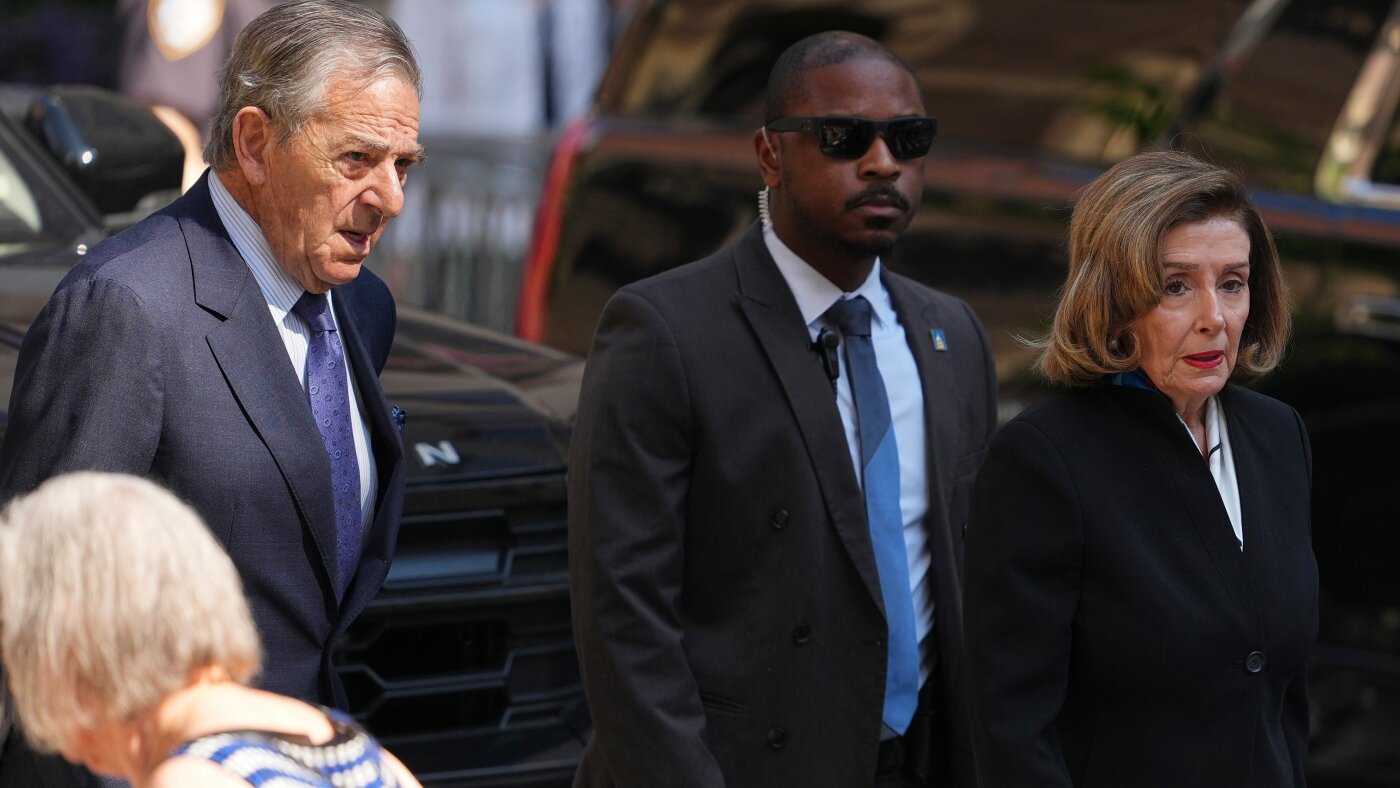
Paul Pelosi in hit-and-run in California, car left with major damage, authorities say
-

 Los Angeles, Ca2 hours ago
Firefighters battle Fourth of July blazes around Los Angeles
-

 Detroit, MI2 hours ago
Storm chances linger into the start of the week across Metro Detroit
-

 San Francisco, CA2 hours ago
Relay for America runs flag from San Francisco to D.C. in message of unity
-

 Dallas, TX2 hours ago
Cowboys newcomer already looks like a waste of money in Dallas
-

 Miami, FL2 hours ago
Police search for suspect after man is shot while on a boat near hotel in Fort Lauderdale on 4th of July
-

 Boston, MA2 hours ago
Sonny Gray shines again, and the Red Sox make it two straight wins at the Angels to start grinding road trip – The Boston Globe
-

 Denver, CO3 hours ago
Aldi expanding into Colorado, applies for permits at two Denver locations

