News
Video appears to show U.S. cruise missile striking Iranian school compound


Screenshots of a cruise missile hitting a compound where an Iranian girl’s school was struck killing around 175.
Screenshots by Geoff Brumfiel for NPR/ Mehr News on X
hide caption
toggle caption
Screenshots by Geoff Brumfiel for NPR/ Mehr News on X
A new video released by Iranian state media shows what appears to be a U.S. cruise missile striking a compound where around 175 Iranian students and staff were killed at a girl’s school a little over a week ago.
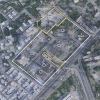
The seven-second video was posted by Mehr News, an Iranian state news agency. It shows the missile slamming into a building inside a walled compound – likely a health clinic that was also inside the perimeter of what was at one point an Iranian Revolutionary Guard naval base.
The strike appears to have taken place shortly after the girl’s school was hit. In the new video, smoke is already visibly rising from the part of the compound where the school was located. State media reports put the death toll from the bombing at somewhere between 165 and 180, many of them students.
Although the quality of the video makes precisely identifying the munition difficult, the missile appears consistent with a Tomahawk cruise missile, according to Jeffrey Lewis, a professor of global security at Middlebury College. The U.S. is the only country known to have Tomahawk missiles, and U.S. officials say the military was operating in the south of the country at the time of the strike.
“The first shooters at sea were Tomahawks unleashed by the United States Navy,” Gen. Dan Caine, the chairman of the Joint Chiefs of Staff said in a press conference on the Monday after the strike.
Speaking aboard Air Force One on Saturday, President Trump accused Iran of being responsible for the school bombing.
“Based on what I’ve seen, I think it was done by Iran,” Trump said. “Because they’re very, inaccurate as you know, with their munitions. They have no accuracy whatsoever. It was done by Iran.”
Lewis, however, said that the missile in the video did not appear to be consistent with known, Iranian-made cruise missile designs.
NPR was able to verify the location of where the video was shot to a housing development under construction across the street from the compound. Numerous details, including the sign at the clinic entrance, matched known details about the compound where the school was located. The video was first geolocated by the online research group Bellingcat.
The short video appeared to be authentic. While AI-generated videos have been posted online during the latest conflict with Iran, they typically do not contain details of a specific location, unless it is already well known, like a major landmark. Many also contain errors in physics or other inaccuracies when showing a missile or rocket attack.
The Pentagon did not immediately respond to NPR’s request for a comment about the video.
NPR was the first to report on satellite imagery from the company Planet that suggested multiple buildings, including the clinic, were hit in what appeared to be a precision strike that resulted in the deaths at the school. In total, seven buildings were hit in the strike on the complex, which at one point had been an Iranian Revolutionary Guard (IRGC) naval base.
The base, located in the southeastern city of Minab, appeared to be a relatively minor facility. NPR was able to find one video shot at the base during a 2010 military exercise that showed members of the Iranian Revolutionary Guard flying an Ababil-3 drone from an airfield directly across from the compound.
But historic satellite imagery showed little activity at the airfield in the years following that demonstration. NBC News has reported that local officials say the base was abandoned for over a decade, but NPR has not been able to independently verify those claims.

The school was separated from the compound by a wall between 2013 and 2016, according to satellite imagery. Satellite imagery also shows the airstrip was removed in 2024. Online posts from a local construction firm and verified by NPR show the land where the runway once stood was being turned into a housing development. The clinic was walled off between 2023 and 2024, and opened in 2025, according to a local press report from Fars News Agency-Hormozgan, reviewed by NPR.
The opening indicated that the site still had ties to the Iranian Revolutionary Guard. According to the reports, the clinic was opened by IRGC chief Hossein Salami, who was killed in an Israeli strike later that year. A photo appeared to show Salami cutting a ribbon at the clinic.
Lewis said that it’s possible the school and clinic were struck as a result of outdated targeting information.
Speaking beside Trump on Saturday, Defense Secretary Pete Hegseth said the U.S. was continuing to look into what happened at the school. “We’re certainly investigating,” he said. “But the only side that targets civilians is Iran.”
NPR’s RAD team contributed to this report.
Contact Geoff Brumfiel on Signal at gbrumfiel.13


UTAH COUNTY, Utah (ABC4) — Utah County has declared a state of emergency.
According to an announcement from the Utah County Commissioner Skyler Beltran, the county is in a dire position due to the extensive wildfires in the area and high fire risk.
The announcement states that declaring the State of Emergency will allow the county to access additional resources, and notes there is no imminent threat to Utah County residents.
“We have utilized a tremendous amount of our resources (very early in the traditional fire season schedule) responding to the Iron Fire and continue to face ongoing recovery concerns,” the statement read. “This was even before the Maple Peak and Cherry fires, which have now merged and are moving toward the Iron Fire.”
The Iron Fire, which started last week, has burned over 40,000 acres. Around 22,830 of those acres were in Utah County. Reportedly, the county has limited resources available to help those who are evacuating from Juab County, including the 600 residents in the Town of Eureka.
Due to the influx in evacuees, the Utah County Commission says that more resources are necessary to help the evacuation shelters in Elberta, Utah. Additionally, due to the Iron Fire and other wildfires, Utah County is facing immense repair needs to avoid future flooding, loss of homes, and disruption to local economies and ecosystems.
There is “imminent threat” to public safety due to the damage.
The commission also asks the public to be vigilant when handling heavy equipment, using campfires or barbecues, and discharging fireworks, to avoid preventing fires.
Their statement added, “Our firefighters are exhausted, our resources are stretched thin and we are in a very vulnerable position.”
News
A day after Alito’s testy response to Sotomayor’s dissent, court says it was a ‘misunderstanding’

The justices of the U.S. Supreme Court, with Justice Sonia Sotomayor (seated left) and Justice Samuel Alito (seated second from right).
Alex Wong/Getty Images
hide caption
toggle caption
Alex Wong/Getty Images
As the Supreme Court heads into the announcement of its final and hugely important opinions next week, there are reverberations from this week’s announcements, and Justice Samuel Alito’s public rebuke of his colleague Justice Sonia Sotomayor.
On Thursday, Justice Alito summarized from the bench three very big opinions he authored for the court’s six justice conservative majority. Alito, unlike most of his colleagues, doesn’t spend much time on these summaries. And it is rare that a justice has three big opinions to announce, but it is almost the end of the term, and there are a lot of big cases still outstanding.
The first case he announced came and went. Alito then moved on to a second case, this one tests whether migrants may apply for asylum in the U.S. by going to one of several ports of entry along the U.S.-Mexican border, and presenting themselves for admission. This entails presenting documents that persuade an asylum officer that applicants’ fear of persecution in their home country is credible enough to allow them to enter the U.S. while their asylum application is processed. Alito’s opinion ruled in favor of the Trump administration’s policy of refusing all such applicants by blocking them at the border. It was a policy also followed at one time by the Obama administration until it was blocked by the lower courts.
After Alito finished his summary of the opinion, he paused, at which point Justice Sotomayor read a summary of her contrary views in dissent. When she finished, however, Justice Alito did not move on to the announcement of his third opinion. Instead, he did something that nobody in the press corps ever remembers happening before. Looking much as if he had just bitten into a lemon, Alito said, “There is much that I would have added to my bench statement had I known there would be a dissent read.” And he then went on to a short extemporaneous rebuttal.
What caused the hissy fit? Did Sotomayor really fail to tell him she would have an oral dissent? That really would have been a breach of the court’s practices. A justice typically notifies the chief justice and the author of the majority opinion in writing if there is to be an oral dissent.
In response Friday to an inquiry from NPR came this terse statement from the court’s public information office.
“Justice Alito was notified in advance by Justice Sotomayor’s chambers that she would be reading a dissent from the bench. It was a misunderstanding on Justice Alito’s part.”
News
“It’s blood money”: Family of exonerated man in Texas yogurt shop murders speaks out after settlement

The widow and the daughter of Maurice Pierce, one of the four men wrongfully accused in the 1991 Texas yogurt shop murders, have confirmed they signed a multimillion-dollar settlement with the city of Austin.
Kimberli and Marisa Pierce spoke with correspondent Erin Moriarty in a new episode of the podcast “48 Hours: Case by Case.” Moriarty has reported on the yogurt shop murders for over 30 years.
Maurice Pierce’s widow Kimberli made clear that their priority has never been financial compensation. “It’s blood money for us. He died for this money,” Kimberli Pierce said. “It’s about the reform and the changes that need to happen, not only in Austin, but apparently across the country.”
They also went into great detail about what they believe happened when Maurice Pierce was shot and killed by police in 2010.
Maurice Pierce was one of four men, along with Michael Scott, Robert Springsteen and Forrest Welborn, who were wrongfully accused in the murders of four teenage girls in Austin on Dec. 6, 1991. Eliza Thomas, Amy Ayers, and sisters Jennifer and Sarah Harbison were tied up, shot and left inside the yogurt shop as it was set ablaze.
The four men were exonerated in February after investigators linked another man, Robert Eugene Brashers, to the killings. The city of Austin subsequently offered a $35 million settlement. Because Maurice Pierce died in 2010, his share of $10 million will go to Kimberli and Marisa Pierce.
Eight days after the killings, 16-year-old Maurice Pierce was arrested at a mall, carrying a .22, the same caliber handgun connected to the crime. Kimberli Pierce said police told Maurice Pierce that his gun was the murder weapon. He responded by mentioning his friend Forrest Welborn. Maurice Pierce was then wired up and sent to speak with Welborn, but investigators ultimately determined that Welborn and the others knew nothing about the murders, and no charges were filed at that time.
Marisa Pierce has said there was no evidence when her father was questioned, “only a detective and a narrative, a narrative so completely false. It feels evil.”
Nearly eight years later, in 1999, all four men were arrested after Scott and Springsteen confessed to the murders. They later recanted, saying they had been coerced. Springsteen and Scott were tried and convicted, but later those convictions were overturned on constitutional grounds. A subsequent DNA test excluded all four men. Maurice Pierce was never convicted but spent three years in jail before his release in 2003.
Kimberli Pierce said her husband came home a hardened man. She believes police continued to harass Maurice and their family after his release. In 2010, Maurice Pierce was stopped for a routine traffic stop, fled on foot, and was shot and killed by an Austin police officer who said Pierce had stabbed him with a knife.
Marisa and Kimberli Pierce told “48 Hours” that they intend to review the circumstances surrounding the night of Maurice Pierce’s death. Marisa Pierce revealed in new, emotional detail that she was on the phone with her father at the time. She believes he panicked and was only trying to get away, not to hurt anyone. She described her father’s last breaths: “And in those last moments, he had just said I’m sorry, I don’t think you’re gonna see me again, and I love you.”
“48 Hours” reached out to the Austin Police Department about the Pierces’ allegations of harassment and their questions about Maurice Pierce’s death in 2010. The police department said they had no additional comment.
For the Pierce family, the settlement is a starting point, not an end point. They have put forward seven proposed reforms they hope the city of Austin will approve, including appointing a child advocate whenever a minor is questioned, prohibiting deceptive interrogation tactics, educating juveniles about their rights and establishing accountability measures to address tunnel vision in police investigations.
In a statement shared with “48 Hours,” the Pierces wrote: “Real justice is not only about acknowledging harm after the fact but about creating safeguards that prevent future families from enduring the same pain.”
-

 Los Angeles, Ca59 minutes ago
About 20 detained after armed suspect call sparks LAPD response in Koreatown
-

 Detroit, MI1 hour ago
With Jack Flaherty returning, AJ Hinch ponders Tigers’ starting rotation
-
 San Francisco, CA1 hour ago
Serving up a slice of Palestine at Old Jerusalem in the Mission District
-

 Dallas, TX2 hours ago
All-day restaurant and patio coming to Dallas’ Knox and more top stories
-

 Miami, FL2 hours ago
Bugtopia takes center stage at Zoo Miami
-

 Boston, MA2 hours ago
What JJ Peterka Will Add to the Bruins’ Roster, ‘He’s Got an Elite Shot’ | Boston Bruins
-

 Denver, CO2 hours ago
This Boulder farm dinner serves up midsummer Slavic vibes with James Beard-worthy fare
-

 Videos2 hours ago
Destruction in Venezuela after deadly earthquakes | BBC News

