Milwaukee, WI
A gay Venezuelan stylist was sent to a Salvadoran prison after a disgraced Milwaukee cop’s report: What we know


Tattoos used by officials to identify and deport Venezuelan migrants
Advocates for Venezuelan migrants say immigration authorities are using tattoos to wrongfully tie them to the Tren de Aragua prison gang.
A disgraced former Milwaukee cop with credibility issues helped seal the fate of a gay Venezuelan makeup artist sent to an El Salvador prison, according to documents reviewed by USA TODAY.
A report approved by the police-officer-turned-prison-contractor claimed the Venezuelan man was a member of the notorious Tren de Aragua gang.
But concerns about the credibility of Charles Cross, Jr., 62, who signed the report, had already landed him on a list of Milwaukee County law enforcement officers accused of lying, bias, or breaking the law years earlier.
Reached by phone by a USAT reporter, Cross deferred all questions to his employer’s headquarters.
Meanwhile, President Donald Trump claims that he loves the idea of expanding the use of El Salvador’s prisons by sending American inmates there, but still needs to know more about it, according to a USA TODAY report.
“I love it,” Trump told reporters on Air Force One on Sunday. “If [El Salvadorian President Nayib Bukele] would take them, I’d be honored to give them. I don’t know what the law says on that, but I can’t imagine the law would say anything different … If they can house these horrible criminals for a lot less money than it costs us, I’m all for it.”
Here’s what to know about the case, as well as the latest on legal immigrants who have been detained by the U.S. Immigration and Customs Enforcement under Trump’s directive to ramp up deportations.
Who is former Milwaukee cop Charles Cross Jr.?
Cross, 62, was fired from his position as a Milwaukee Police Sergeant in October 2012 after driving his car into a family’s home while intoxicated. His blood alcohol level was more than double the legal driving limit, court records show.
The former officer appealed the decision and resigned in the process, according to the department. He was also being investigated for claiming overtime he allegedly hadn’t earned. USA TODAY has requested Cross’s disciplinary and employment records.
Additionally, in 2007, Cross received a misdemeanor conviction after kicking in the door of the apartment he shared with his girlfriend and threatening to kill himself with his service revolver, according to court records. Afterwards, he temporarily lost his job but later was reinstated after appealing to the Milwaukee Fire and Police Commission.
The incident landed him on the Milwaukee County Brady list, a compilation of law enforcement officers with credibility concerns.
Does Charles Cross Jr. now work for ICE?
Four months after resigning from the Milwaukee Police Department, Cross was hired at CoreCivic, a company that runs many of the immigration detention centers for U.S. Immigration and Customs Enforcement.
Today, he is one of the private prison contractors helping to identify Venezuelan migrants as members of the criminal outfit Tren de Aragua – a designation that’s landing them in a Salvadoran prison without due process.
According to a court filing, Cross typed his name over the title “INVESTIGATOR” on the form that implicated Andry José Hernandez, a gay makeup artist from Venezuela who has denied any connection to Tren de Aragua.
Can contract workers legally make detainment decisions?
The legality of having contract workers detain and deport people is questionable, according to Greg Chen, senior director of government relations at the American Immigration Lawyers Association.
In cases such as Hernandez’s, a key issue is whether there was other corroborating evidence and whether a law enforcement official under the Department of Homeland Security made the final call to send him to El Salvador, he said.
“It would be highly problematic if that determination was being made, in fact, by a private prison employee,” Chen said.
It’s unclear whether Hernandez was also evaluated by federal agents, or if Cross and another CoreCivic employee, Arturo Torres, were Hernandez’s sole screeners. It’s also unclear if other corroborating evidence was used to tie him to the criminal group.
Who is Andry José Hernandez?
Andry José Hernandez, 30, is from Capacho, Venezuela. He worked as a makeup artist for a state-run television station, where he was constantly discriminated against and threatened for his sexual orientation and political views, according to the affidavit.
Last year, he quit his job and fled Venezuela for the U.S. Hernandez claimed he was being persecuted as a gay man – one of the protected groups allowed to claim asylum under U.S. law.
Why was Andry José Hernandez detained?
Hernandez initially tried crossing into the U.S. illegally and was intercepted by U.S. Border Patrol agents, who returned him to Mexico, according to court filings. He then presented himself at the San Ysidro Port of Entry in San Diego in August after making an appointment through a government app called CBP One.
Hernandez passed an initial “credible fear” interview with a federal agent but, after Border Patrol officials questioned him about his tattoos, he was transferred to ICE custody and sent to the Otay Mesa Detention Center in San Diego.
There, Torres questioned Hernandez. Torres filled out questionnaires suggesting the asylum-seeker’s tattoos, including a crown on either wrist, next to the words “Dad” and “Mom,” linked him to Tren de Aragua. Hernandez repeatedly denied being part of the group, and Paulina Reyes, a lawyer for Hernandez, has said the crown tattoos represent his connection to his hometown’s annual “Three Kings” festival.
On one form, dated Dec. 10, 2024, a points-based rubric sheet titled “STG MEMBER VALIDATION / CONFIRMATION,” Hernandez was given a “5” for his tattoos. None of the other categories, including “intelligence information received from other agencies” or “group photos” with other gang members, were checked. Still, he was named a “SUSPECT.”
The document is signed “Completed by” Torres and “Confirmed by” Cross.
The Justice Department says these accelerated deportations of alleged gang members who Trump says “invaded” the U.S. are allowed under the Alien Enemies Act. This 1798 law was previously only used during declared war times against other countries.
Where was Andry José Hernandez detained?
Hernandez was transferred to a federal detention center in Texas a few weeks after his review with Torres and Cross, around March 6, according to a court filing.
After this, he was sent to El Salvador’s Terrorism Confinement Center, known as CECOT.
His lawyers haven’t heard from him since his arrival at CECOT.
How does ICE investigate if migrants have gang affiliations?
Former ICE acting director John Sandweg said ICE agents routinely investigate whether detained migrants had gang affiliations or criminal histories.
Historically, the gang designation was something made by a federal official and reviewed by supervisors before the allegation went in front of an immigration judge, he said. Even then, suspicion of gang alliance was something used to target or fast-track a migrant’s deportation – not the sole reason for their removal, Sandweg said.
“The idea that government contractors might be making that decision would be very alarming,” Sandweg said.
“People are being rendered to a torture prison on the basis of these flimsy and inaccurate determinations,” said Heidi Altman, vice president of policy at the National Immigration Law Center, an advocacy group. “Using private prison contractors to make those determinations is just another level of recklessness.”
Internal DHS and FBI documents previously obtained by USA TODAY revealed that federal authorities for years have questioned the effectiveness of using tattoos to identify members of Tren de Aragua, also known as TdA.
“Gang Unit collections determined that the Chicago Bulls attire, clocks, and rose tattoos are typically related to the Venezuelan culture and not a definite (indicator) of being a member or associate of the (TdA),” reads a 2023 “Situational Awareness” bulletin on the criminal gang written by the U.S. Custom and Border Protection’s El Paso Sector Intelligence Unit.
Who else has ICE detained recently?
Here are just some of the individuals ICE has detained in recent weeks, according to USA TODAY reports. None of them have a criminal record.
What to do if you or someone you know is detained by ICE:
Here is what to do if you are arrested or detained by ICE, according to the American Civil Liberties Union:
- Do not give any explanations or make any decisions without a lawyer present.
- If you have been arrested by police, you have the right to make a local phone call. The police cannot listen to your call if it is to a lawyer.
- If you have been detained by ICE, you have the right to contact your consulate, or have authorities inform the consulate of your detention.
- Give your immigration number (“A” number) to your family to help them locate you. Keep a copy of your immigration documents with someone you trust.
You can find additional information regarding your rights from the National Immigration Law Center here.



Milwaukee, WI
‘You can see God’s hand in it’: How Milwaukee women are building a double Dutch community through sisterhood and fitness

On Milwaukee’s North Side, women 40 and up are coming together to jump double Dutch. Members say that beyond the ropes they are building a sisterhood, strengthening their health and becoming confident in aging.
40+ Double Dutch Club is a nonprofit founded in Chicago by Pamela Robinson in 2016 that uses double Dutch and other fitness activities to encourage wellness, sisterhood, mental health and more for women over 40.
“It amazes me how God can use something as simple as a plastic clothesline to connect women all over the world,” said Robinson, who is also the group’s CEO and board president.
Robinson, 55, launched the organization after discussing the idea with her friend Catrina Dyer-Taylor. At the time she was battling depression.
“My husband and I were about to get divorced, my oldest kids were grown and I just had my youngest one in the house,” Robinson said. “I needed to find a happy place.”
She promoted the meetup on social media, and many of her friends and community members came out to support her.
“I remember telling (Dyer-Taylor) that if no one came then we’d tie the ropes to a fence and jump together,” Robinson said. “However, we never had to do that because our friends came out.”
Since being founded, the organization has expanded into hundreds of subclubs nationwide, including Milwaukee’s.
“I knew that God wanted me to do something and it’s given me purpose and he has put me on a path where 40+ Double Dutch is a part of that,” said Angela Scott, captain and founder of Milwaukee’s double Dutch subclub.
Launching the Milwaukee subclub
Scott, 54, established the 40+ Double Dutch subclub in Milwaukee in 2024 after discovering the organization on Facebook. She took weekend trips to Chicago and sometimes Texas to participate with women of the club.
“The feeling I got from the ladies when I entered the gym was like I’ve known them all my life,” Scott said.
As a breast cancer survivor, Scott said she was glad to have found something that brought her comfort that wasn’t a traditional gym space.
“Double Dutching is a full body workout, and I don’t like the gym, but I knew I needed something to keep my body moving and to keep cancer out of my body,” Scott said.
Once officially joining 40+ Double Dutch, Scott talked to Robinson about bringing a subclub to Milwaukee.
“She said that they had been wanting one in Milwaukee, they just had no one that was interested and committed,” Scott said.

Milwaukee’s subclub now consists of 37 members. Among them is Scott’s mother, Shirley Tomlinson, 76, who is the first and oldest member.
“I feel like my family has grown here and that’s a very positive thing for a person my age,” Tomlinson said. “It helps keep me feeling young, and there’s a lot of support in it.”
Tomlinson said she joined the club after hearing about her daughter’s Chicago experience and watching the film “Beyond the Ropes: The 40+ Double Dutch Club Documentary.”
Though Tomlinson doesn’t jump double Dutch, she does other things for the subclub like record keeping, videography, planning birthday celebrations and more.
“I do everything I can because I’m my daughter’s ride or die,” she said.

Reliving childhood memories
Scott said double Dutch gives her a joyous nostalgia from growing up, especially as she learned how to double Dutch from her aunt who was like a big sister.
“If you were a girl that jump-roped, then you know it takes you back to that space,” Scott said.
When the Milwaukee subclub appears at local events like the Juneteenth parade, residents typically will jump in the ropes with smiles and recall memories as they walk down the streets.
“As you watch us grow, you can see God’s hand in it,” Tomlinson said.

The women of Milwaukee’s subclub meet from 6:30 to 8 p.m. every Wednesday at Abundant Faith Church of Integrity, 7830 W. Good Hope Road.
The meet typically begins with a stretch, then leads to open play that includes dances and songs to let them double Dutch, hula hoop or play a rhythmic game.
One fitness activity recreated by 40+ Double Dutch is African Hopscotch, which includes members jumping to a song called “Double Dutch Bus” by Frankie Smith and sometimes holding pompoms.
To end the session, members close with a double Dutch hymn followed by a circle of prayer.
“We hold hands and then we sing the song,” Scott said. “Regardless of what meet you go to each one will have the same format.”

Building a strong sisterhood
Scott said the relationships being built at the club remind her of the organization’s mission.
“Part of the mission is friendship, fitness, fun and fellowship,” she said. “All of those things resonate with me and in my spirit because it’s a sisterhood that’s based on God’s direction.”

When away from the ropes, members try to support each other in different ways.
“There are several of the ladies in our club that have businesses, and we’ll do anything to support them,” Scott said.
For Tomlinson, who experienced a few health crises this year, it brought relief knowing that there was a sisterhood standing behind her.
“They reached out to me and let me know they were praying for me,” she said. “It’s like having a big family of daughters.”

Achieving long-term goals
Within the next few years, Scott hopes to see the subclub grow in membership and the women begin to intentionally take more time for themselves.
“I truly believe that a healthy and strong woman makes a healthy and strong world because we are the mothers of this world,” she said. “If the woman is not healthy mentally, physically or spiritually, then the world is not healthy.”

Another goal of hers is to visit with incarcerated women.
“For whatever reason that they’re there, I just want to take them out of that space for just 30 to 40 minutes,” she said.
Tomlinson said it amazes her to see her daughter lead, receive support from the community and promote health to other women.
“It’s been wonderful watching her grow and watching how dedicated she is because that’s a big responsibility,” she said.


How to join 40+ Double Dutch Club
If you are a woman over 40 and interested in joining, click here to find a subclub near you and find details about weekly meetups.
Membership is $120 and includes a digital ID card, access to all nationwide subclubs, subclub support and more.
Scott said the summer has been the busiest time for the organization and wants to remind women that you don’t have to jump to be a part of it.
“People are starting to realize we’re in the city and we like it that way because the more women that know then the more that can be impacted by what we have to offer,” she said.

Jonathan Aguilar is a visual journalist at Milwaukee Neighborhood News Service who is supported through a partnership between CatchLight Local and Report for America.
This <a target=”_blank” href=”https://wisconsinwatch.org/2026/07/milwaukee-women-double-dutch-jump-rope-club-community-sisterhood-fitness/”>article</a> first appeared on <a target=”_blank” href=”https://wisconsinwatch.org”>Wisconsin Watch</a> and is republished here under a <a target=”_blank” href=”https://creativecommons.org/licenses/by-nd/4.0/”>Creative Commons Attribution-NoDerivatives 4.0 International License</a>.<img src=”https://i0.wp.com/wisconsinwatch.org/wp-content/uploads/2021/02/cropped-WCIJ_IconOnly_FullColor_RGB-1.png?fit=150%2C150&quality=100&ssl=1″ style=”width:1em;height:1em;margin-left:10px;”>
<img id=”republication-tracker-tool-source” src=”https://wisconsinwatch.org/?republication-pixel=true&post=1318844&ga4=G-D2S69Y9TDB” style=”width:1px;height:1px;”><script> PARSELY = { autotrack: false, onload: function() { PARSELY.beacon.trackPageView({ url: “https://wisconsinwatch.org/2026/07/milwaukee-women-double-dutch-jump-rope-club-community-sisterhood-fitness/”, urlref: window.location.href }); } } </script> <script id=”parsely-cfg” src=”//cdn.parsely.com/keys/wisconsinwatch.org/p.js”></script>

MILWAUKEE — It’s well known that Milwaukee is famous for beer, brats, the Bucks, and the Brewers. But let’s put some respect on the comedy scene here.
The Laughing Tap features weekly stand-up performances with nationally touring acts. They opened up their new venue at 761 N. Jefferson St. in Milwaukee back in March.
Since then, they’ve had dozens of acts perform. Now, they are putting on a new type of comedy show, The Milwaukee Comedy Challenge.
According to the website, the challenge is: “A friendly battle of wits with over $2000 in Cash Prizes, more than 2.5 hours of Paid Gigs awarded, and the chance to challenge yourself to be the best comic you can be. This isn’t about competing with your fellow comics, it’s about challenging yourself to write great material, get bigger laughs, and become a better comic.”
The first round has finished. The challenge continues on July 22 with the start of the second round. The remaining 20 comics will perform a four-minute set. Only 10 will make it to the next round. There will be four more rounds afterwards. In the finals, comics will have to perform 20-minute sets with completely new jokes. The winner will be receive a paid headliner gig at The Laughing Tap, a spot in the 2026 Milwaukee Comedy Festival, and $1,000.
If you think you’re pretty funny, you can get on stage for The Laughing Tap’s weekly stand-up open mic on Wednesdays at 6 p.m. Every aspiring comic gets about three to four minutes.
Milwaukee comedy club The Laughing Tap hosting comedy challenge
Let’s talk:
Hey there! At TMJ4 News, we’re all about listening to our audience and tackling the stuff that really matters to you. Got a story idea, tip, or just want to chat about this piece? Hit us up using the form below. For more ways to get in touch, head over to tmj4.com/tips.
It’s about time to watch on your time. Stream local news and weather 24/7 by searching for “TMJ4” on your device.
Available for download on Roku, Apple TV, Amazon Fire TV, and more.
Report a typo or error // Submit a news tip

Wisconsin Bike Fed interns bring repairs to neighborhoods
Wisconsin Bike Fed students bring mobile bike repair services directly to Milwaukee neighborhoods at no cost.
On a typical summer day, Tanysia Kelley pedals a cargo bike loaded with tools and supplies to parks and libraries across Milwaukee.
Kelley, a junior at Milwaukee High School of the Arts, is one of three high schoolers working this summer for the Wisconsin Bike Federation to repair bikes for free in underserved neighborhoods. On a scorching July afternoon, Kelley and her fellow mechanics set up shop in the shade at Emigh Playfield, on Milwaukee’s south side, where a steady queue of riders waited for the team to fix their flat tires, loose chains and worn-out brake pads.
For Kelley, the best part of the job is giving back to the community and watching them ride away with a bike she worked on herself.
“I love seeing all the kids come over and getting their bikes fixed,” she said as she adjusted the seat of a bike with a wrench. “Yesterday, we fixed this little boy’s bike with his brakes, and he just started zooming all over the park.”
Toni Casagrande, the program’s manager and lead mechanic, said the goal of the program is to expand access to repair services in communities that lack bike shops while giving teens hands-on mechanical skills. The nonprofit Wisconsin Bike Federation pays the students $15 per hour, trains them to perform minor repairs and provides each with a cargo bike for transportation.
Casagrande said the team expects to repair about 300 to 400 bikes by the end of the summer. The program particularly focuses on Clarke Square, Layton Boulevard West, Harambee, Lindsay Heights and other low-income neighborhoods where residents may face transportation barriers. Over 40% of residents in the City of Milwaukee do not drive, according to a county service assessment released last year.
A majority of riders who used the Wisconsin Bike Federation’s mobile repair service last year were people of color, according to the program’s annual report.
The mobile bike repair program launched in 2014. Jake Newborn, assistant director of the Wisconsin Bike Federation, said the organization had long brought bikes and education programs into Milwaukee Public Schools, but staff noticed some families stopped using their bikes when they lacked access to a nearby bike shop or couldn’t afford repairs.
After moving from North Division High School, the program’s main base is now at Bradley Tech High School, where students learn to identify issues through a a 30-point bike inspection. The most common repairs include replacing brake pads, tubes, tires and chains, using both new and recycled parts from donated bikes.
“Many of these are pretty significant repairs,” Casagrande said. “People are often surprised by what we can do with the setup we have, given that it all just fits in a cargo bicycle.”
Kelley said she had no prior mechanic experience – or even a bike – before starting the job. Now she finds herself biking everywhere and is confident in her skills. After returning one rider’s repaired bike, Kelley received a $20 tip. She said some participants also offer donations to the Wisconsin Bike Federation after receiving repairs.
“Most of them are very grateful,” Kelley said. “We’re really trying to help people.”
Casagrande said many students end up pursuing jobs in mechanics once the program is complete. After the summer, Kelley said, she wants to learn how to fix cars or pursue opportunities with other local bike organizations.
For now, she’s happy spending her summer helping neighbors get back on their bikes.
“I really like doing work to feel accomplished in the end,” Kelley said. “I’ll work on things for a really long time just to feel confident, so this is the perfect job for me.”
Mobile bike repair locations
- 10 a.m. to 2 p.m. July 20-23 at Green Bay Ave Playfield, 3872 N. Eighth St.
- 3:30 to 5:30 p.m. July 20 at Villard Square Library, 5190 N. 35th St.
- 3:30 to 5:30 p.m. July 23 at Atkinson Library, 1960 W. Atkinson Ave.
- 10 a.m. to 2 p.m. July 27-31 at Whittier Playfield, 4382 S. Third St.
- 3:30 to 5:30 p.m. July 27 at Mitchell Street Library, 906 W. Historic Mitchell St.
- 10 a.m. to noon Aug. 1 at Good Hope Library, 7715 W. Good Hope Road
- 10 a.m. to 2 p.m. Aug. 3-7 at Merrill Park, 461 N. 35th St., and Lyons Park, 3301 S. 55th St.
- 10 a.m. to 2 p.m. Aug. 10-14 at Holt Playfield, 1716 W. Holt Ave.
Kayla Huynh covers K-12 education, teachers and solutions for the Journal Sentinel. Contact: khuynh@gannett.com. Follow her on X: @_kaylahuynh.
Kayla Huynh‘s reporting is supported by Herb Kohl Philanthropies and reader contributions to the Journal Sentinel Community-Funded Journalism Project. Journal Sentinel editors maintain full editorial control over all content. To support this work, visit jsonline.com/support. Checks can be addressed to Local Media Foundation (memo: “JS Community Journalism”) and mailed to P.O. Box 85015, Chicago, IL 60689.
The JS Community-Funded Journalism Project is administered by Local Media Foundation, tax ID #36-4427750, a Section 501(c)(3) charitable trust affiliated with Local Media Association.
-

 Los Angeles, Ca16 minutes ago
LADWP begins long-term repairs after West Hollywood water main rupture
-

 Detroit, MI40 minutes ago
Livestream: Mayor Sheffield, Detroit health chief to address wildfire smoke threat
-
 San Francisco, CA52 minutes ago
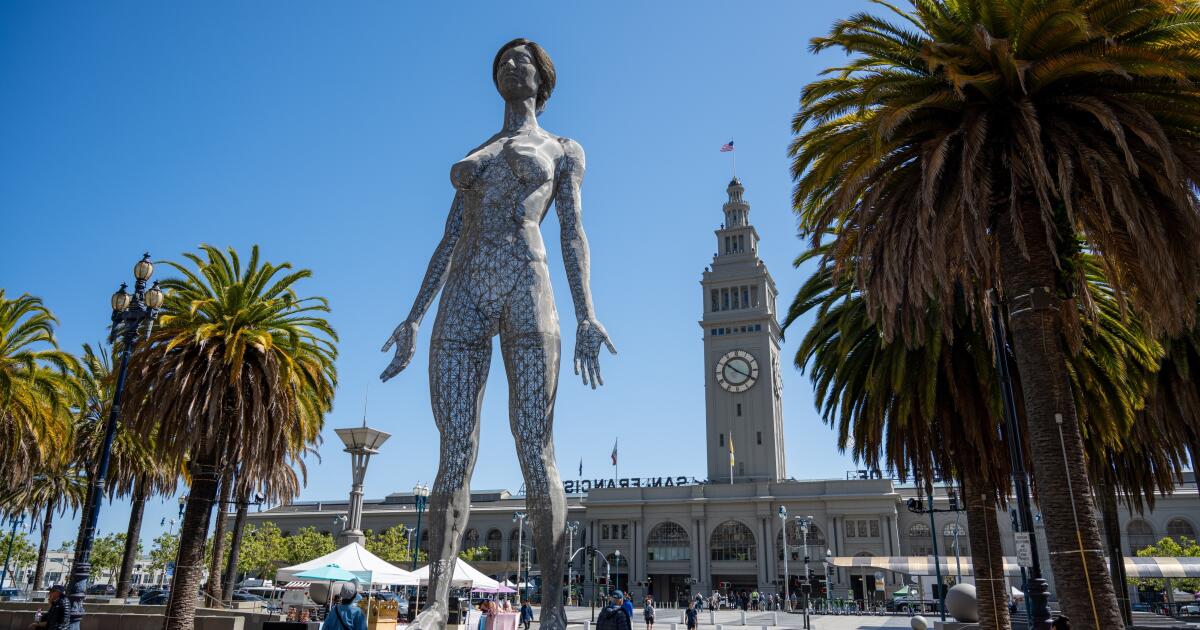
A sculpture of a giant naked woman goes on sale in San Francisco. Bring a crane
-

 Dallas, TX58 minutes ago
No ‘straight answer’: Why Pioneer Cemetery is the latest battleground at City Hall
-

 Miami, FL1 hour ago
TSA hosts news conference ahead of World Cup third place match at Miami Stadium
-

 Boston, MA1 hour ago
ICE Boston arrests Barbados national during targeted operations in Attleboro
-

 Denver, CO1 hour ago
Denver Broncos training camp is 2 weeks away
-

 San Diego, CA1 hour ago
Daily Business Report: July 17, 2026, San Diego Metro Magazine

