Kansas
Kansas lawmakers campaigned on property tax relief. What did they deliver?


Will property tax relief come to Kansans in 2025?
What do Kansas Republican and Democratic leaders say about tax relief in 2025?
As they left Topeka for the year, Kansas lawmakers expressed disappointment that they didn’t do more to accomplish a top campaign promise: property tax relief.
Republicans especially and at least some Democrats made property tax relief a focal point of their 2024 election campaigns, and the GOP credited the message with helping secure victories and expand their supermajorities. Despite the campaign promises, lawmakers delivered little relief in 2025.
“We came here with a mandate to do something about property tax,” said Sen. Mike Thompson, R-Shawnee, on the last day of session. “Not that we haven’t, here in the Senate. We’ve done our job. I really think we’ve done a very good job in trying to push that. I’m just disappointed that we end up at the end of this session with no real relief for those homeowners who are facing selling their home or paying their property tax.”
Thompson suggested that members of the House “didn’t hear the message.”
“We’re going to have to go home, we’re going to have to explain to people what we didn’t get done and why,” Thompson said. “It’s going to be a hard sell. But I’m hopeful that in 2026 we can push the ball forward.”
Republicans were unified on message, but not on plans
While Republican leadership entered the 2025 session with a unified message of property tax relief, it quickly became apparent that House and Senate leadership were not unified on how to accomplish it.
“Well, we really haven’t worked on it yet,” House Speaker Dan Hawkins, R-Wichita, said in January when asked by The Capital-Journal whether Republicans were united on how to cut property taxes. “I can guarantee you we will have property tax relief this year, and we will have some type of a response to the increase in property values.”
“We’re unified on the end goal,” added Senate President Ty Masterson, R-Andover, as leadership spoke with reporters following the governor’s State of the State address.
He added, “We’re still working through the details of what that looks like.”
What were the biggest ideas for property tax relief in 2025?
The most significant idea — and the most controversial — was a Republican proposal to amend the Kansas Constitution to cap the growth in appraisals.
Senate Republicans have been pushing the idea for at least a few years, which supporters argue would address the rising property valuations that result in property tax increases. In 2025, the Senate’s Republican supermajority passed a 3% cap and a 4% cap.
But it faced stiff opposition from House Republicans, including from Hawkins, who said it has “a lot of problems” and “unintended consequences.” House Republicans rejected the cap and instead proposed an averaging system, which Senate Republicans rejected.
The idea that appeared from the start to be the most likely to have bipartisan support was reducing the state mill levy. The two main proposals to accomplish that were a House GOP plan to reduce the levy used to fund schools by 1.5 mills and a Senate GOP plan to eliminate 1.5 mills used to fund state buildings.
The Senate version was passed with bipartisan support and signed into law by Democratic Gov. Laura Kelly.
Another idea proposed later in the session was a House Republican plan to send state money to local governments as an incentive to not raise taxes, similar to a program that House Republicans pushed to eliminate last year. The new plan also incorporated a protest petition to block local tax increases and an elimination of the current revenue neutral process.
Despite negotiations during veto session, Senate Republicans were not intrigued enough by the idea to put it to a vote before leaving town.
Meanwhile, Democrats had no proposals for significant property tax relief at the start of session. Later, Senate Democrats proposed a committee to study the issue.
How much will mill levy cut save homeowners?
Lawmakers did deliver some property tax relief with Senate Bill 35, starting in 2026. That new law, which had bipartisan support and was signed by Kelly, eliminates 1.5 mills of the 21.5 total state portion of the property tax levy.
Statewide, that equates to a $81 million tax cut in fiscal year 2027. But for individual homeowners, the relief is limited.
For owners of a $100,000 home, eliminating 1.5 mills equates to an annual savings of about $17. For a $250,000 home, the savings are about $43. For a $400,000 home, the savings are $69.
What politicians say about property tax relief
“We took action in Topeka this year to eliminate the state portion of the property tax,” Hawkins said in an after-session Facebook post. “You’ll continue paying property taxes for county and city governments, schools, libraries, etc., but you’ll no longer see ‘State of Kansas’ on your bill!
“I encourage everyone to reach out to their local officials and hold them accountable for their portion of your property taxes!”
But Scott Schwab, the Republican secretary of state who is running for governor in 2026, was critical of legislative leadership.
“A year ago, following a special session to address taxation, legislative leaders vowed to focus on providing Kansans with real property tax relief,” Schwab said in a statement via his campaign. “There were campaign slogans and roadshows around the state to build support for cuts. Voters did their part, letting candidates and legislators know in no uncertain terms that property taxes were too high, valuations were rising faster than paychecks, and Kansans who had worked all their lives to have a home to call their own were being forced out.”
The resulting tax relief was “paltry,” Schwab said.
“This year, our main focus was supposed to be on reducing and/or reforming property taxes,” Rep. Brett Fairchild, R-St. John, said in an April 4 post on Facebook. “However, we were unable to pass a major property tax bill.”
The cut of 1.5 mills, he said, “isn’t a significant tax cut and isn’t a huge deal.”
“Most people in our state won’t notice the tax cut, since most local governments will likely increase property taxes by more than this state property tax cut,” Fairchild said. “However, it’s better than doing nothing at all, and I’m glad we were at least able to pass one bill through the legislature to reduce property taxes.”
Sen. Ethan Corson, D-Fairway, said that lawmakers did not pass “any meaningful property tax relief,” and he’s been hearing from constituents about it.
“The Legislature, they campaigned on that they were going to reduce our property taxes,” Corson said. “They said it at the beginning of session that they were going to reduce our property taxes. And we still don’t yet have any significant property tax relief that we can bring to our constituents.
“I continue to disagree with the continued focus on the income tax piece of our tax equation when what we both promised to our constituents — and what our constituents have shared with us that they would like to see — is robust, meaningful property tax relief.”
Sen. Caryn Tyson, R-Parker and chair of the Senate tax committee, described the cut of 1.5 mills as “actual property tax relief.”
“They’re going to say it’s minimal, but you know what? It’s a step in the right direction,” Tyson said.
She was also critical of Democrats for not having significant ideas of their own.
“What was their idea this year? Oh, let’s propose a committee that studies property taxes,” Tyson said.
Sen. Virgil Peck, R-Havana and vice chair of the Senate tax committee, said he was proud of the Legislature’s work on tax cuts, especially a plan to gradually move to a flat income tax as well as the elimination of the 1.5 mills.
“I would like to see us do more — a lot more — as it relates to property taxes,” Peck said. “We’re limited at the state level. Most property taxes are assessed at the local (level). … I think we could do better when it comes to property tax reductions.”
Sen. Renee Erickson, R-Wichita, shared a similar sentiment.
“I’m very disappointed we did not do more for our constituents back home on property tax, and I hope that we seriously are able to do something next session,” she said.
Tyson said tax policy changes often take years to make it through the legislative process.
“We are not going to stop fighting for our constituents and to fix a broken property tax (system) while we continue to stop growing the beast that we keep feeding, and that is government,” Tyson said. “Income taxes, sales taxes, property taxes — Kansas has some of the highest in the nation, and we need to do what we can to reduce that.”



KSHB 41 reporter Isabella Ledonne reports on stories in Overland Park, Johnson County and topics about government accountability. Share your story idea with Isabella.
—
Saturday marks the final FIFA World Cup 26 match in Kansas City with Argentina set to meet Switzerland on the pitch at Kansas City Stadium.
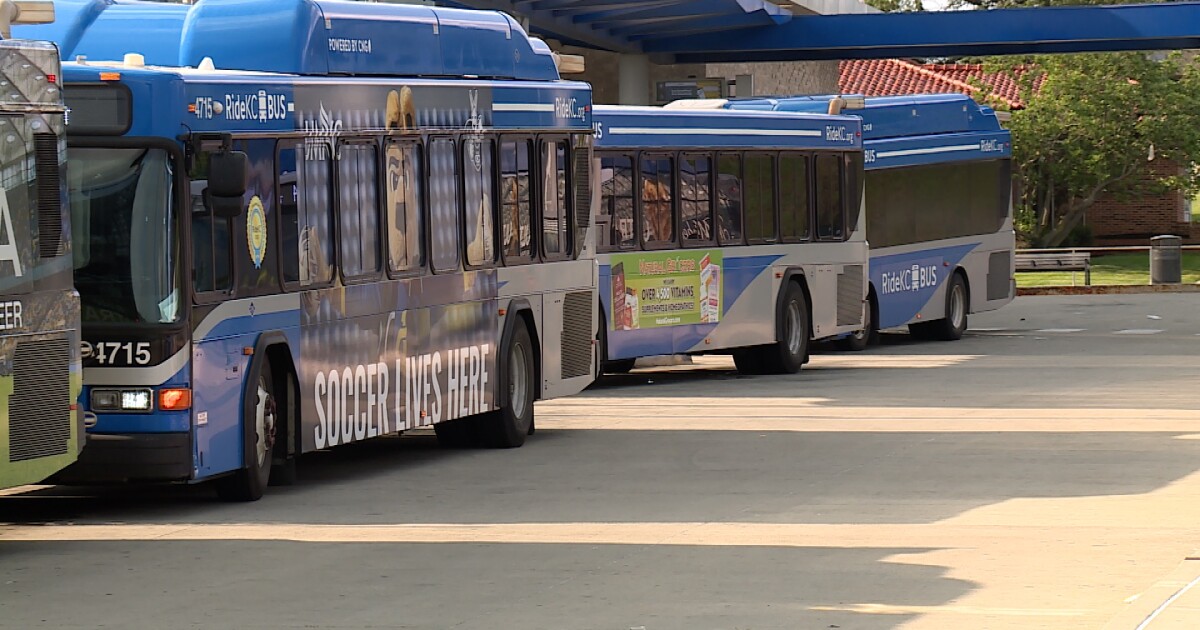
Kansas City to reduce bus transit frequency, extended hours after World Cup
Public transportation received a big boost during the World Cup.
Johnson County launched JOCO United, and according to leaders, the airport drop and ride service that was implemented for the tournament will stick around.
“It has been very smooth every time,” Johnson County resident Mariah Wickham said. “I’ve been up and down so many times.”
Kansas City, Missouri, also bumped up its transit options, but not all of the those will be sticking around once the final whistle blows.
Tens of thousands of people have been using the airport link, streetcar and the buses to get around Kansas City. The city poured millions of dollars into building up its public transit infrastructure. The KCATA added more frequency to bus transit lines and the streetcar, pushing more fans to use public transportation during the tournament.
Brian Luton
“With the World Cup here, I was able to exercise using the streetcar more frequently and that was really fun,” Trish Luancing said. “It wold be nice to not have to drive everywhere and not have to worry about parking.”
But thousands have been relying on public transit for years, regardless of what event was in town.
“It’s been busier since the World Cup,” Jeffrice Jackson, a bus rider, said. “It’s been smooth sailing.”
The KCATA added streetcar ‘bus bridge’ links, extended bus service hours and increased frequency on East-West routes to link riders to the streetcar. It’s benefited both travelers and commuters.
Brian Luton
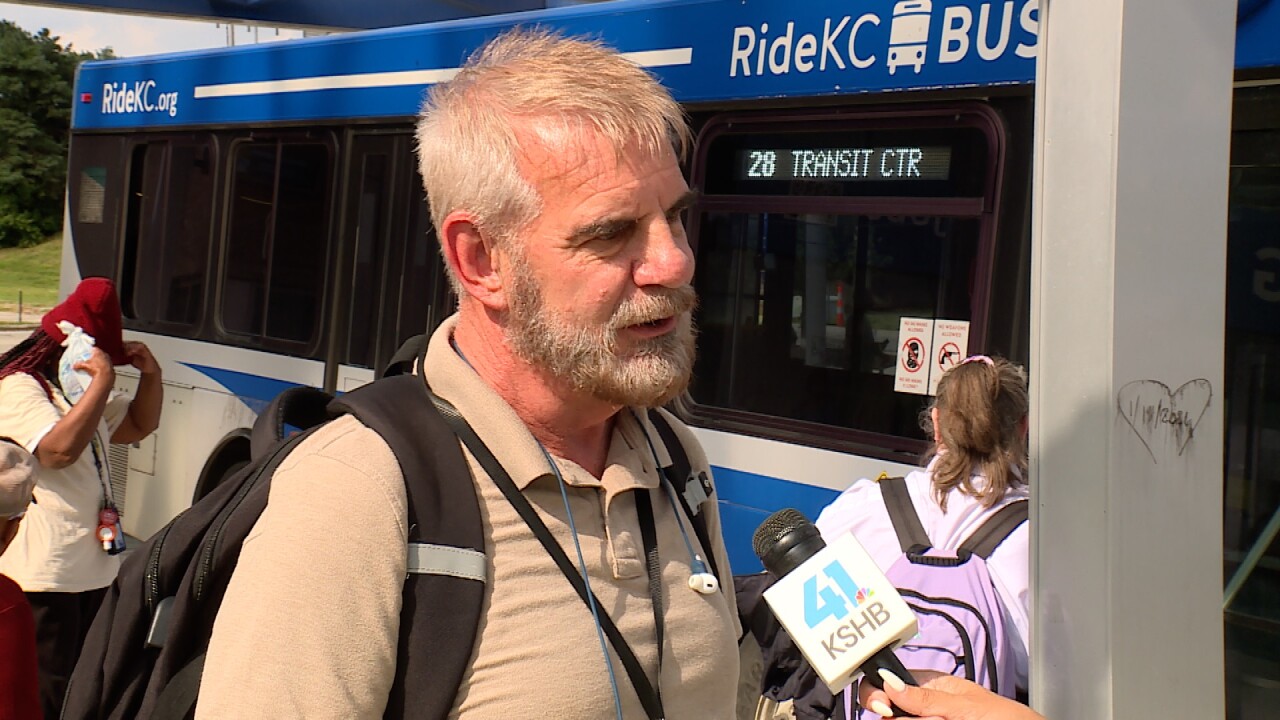
“[Service] has been more consistent with the World Cup than it was previously,” Jerry Breault, a rider said. “We were missing buses or routes because there weren’t enough drivers to drive that route.”
But the add-on’s stop on Sunday, July 12. If the transit authority can’t find more money, more than a dozen routes will be cut, potentially impacting more than 8,000 riders.
“It’s a little frustrating,” Breault said. “A lot of us rely on it just to get back and forth to work, to take care of our daily needs. It looks like we may be having to find alternatives and we’re not very happy about that.”
The KCATA will potentially suspend these weekday and weekend routes by September:
Weekday Route Eliminations:
- 9 – 9th Street, 365 average weekday ridership
- 21 – Cleveland Antioch, 512 average weekday ridership
- 23 – 23rd Street, 266 average weekday ridership
- 25 – Troost Local, 1,460 average weekday ridership
- 27 – 27th Street, 422 average weekday ridership
- 57 – Wornall, 411 average weekday ridership
- 71 – Prospect Local, 464 average weekday ridership
Weekend Route Eliminations:
- 9 – 9th Street, 349 average weekend ridership
- 21 – Cleveland Antioch, 312 average weekend ridership
- 23 – 23rd Street, 312 average weekend ridership
- 25 – Troost Local, 1,431 average weekend ridership
- 27 – 27th Street, 455 average weekend ridership
- 57 – Wornall, 595 average weekend ridership
- 71 – Prospect Local, 982 average weekend ridership
Bus fares came back earlier this summer to offset some of the operation costs, but many have reported issues with the free fare cards and eligibility.
“There’s always funding challenges with the KCATA,” Kansas City, Missouri, Mayor Quinton Lucas said. “How are the fare re-institutions working right now?”
Brian Luton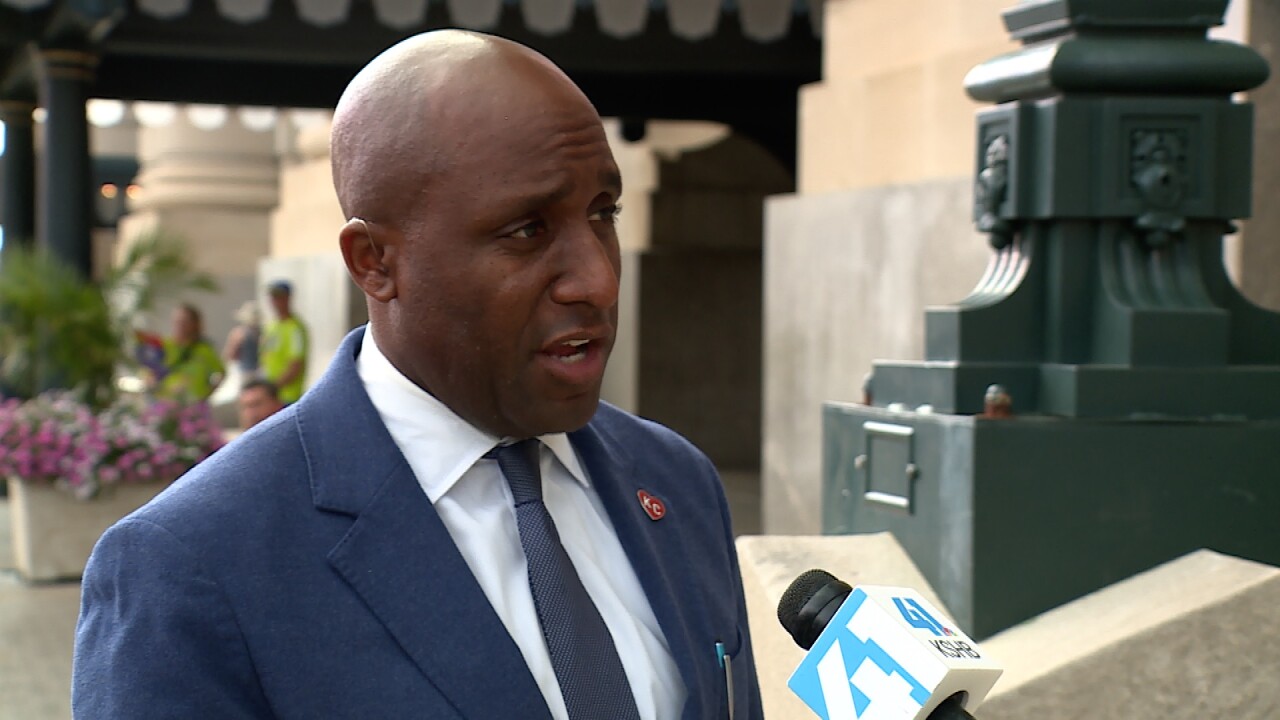
Mayor Lucas told KSHB 41 News Reporter Isabella Ledonne the transit improvements implemented for the World Cup “should continue,” and there are plans to talk with the KCATA commissioners to “make it work”.
“KCATA cannot just be Kansas City supported alone forever,” Mayor Lucas said. “Our approach and our preference is that the region got to see how much they would like [expanded service] during the World Cup. It was always intentional that if they liked it, maybe they would invest and maybe they would want this thing to go further.”
That’s good news to the thousands of daily riders.
Brian Luton
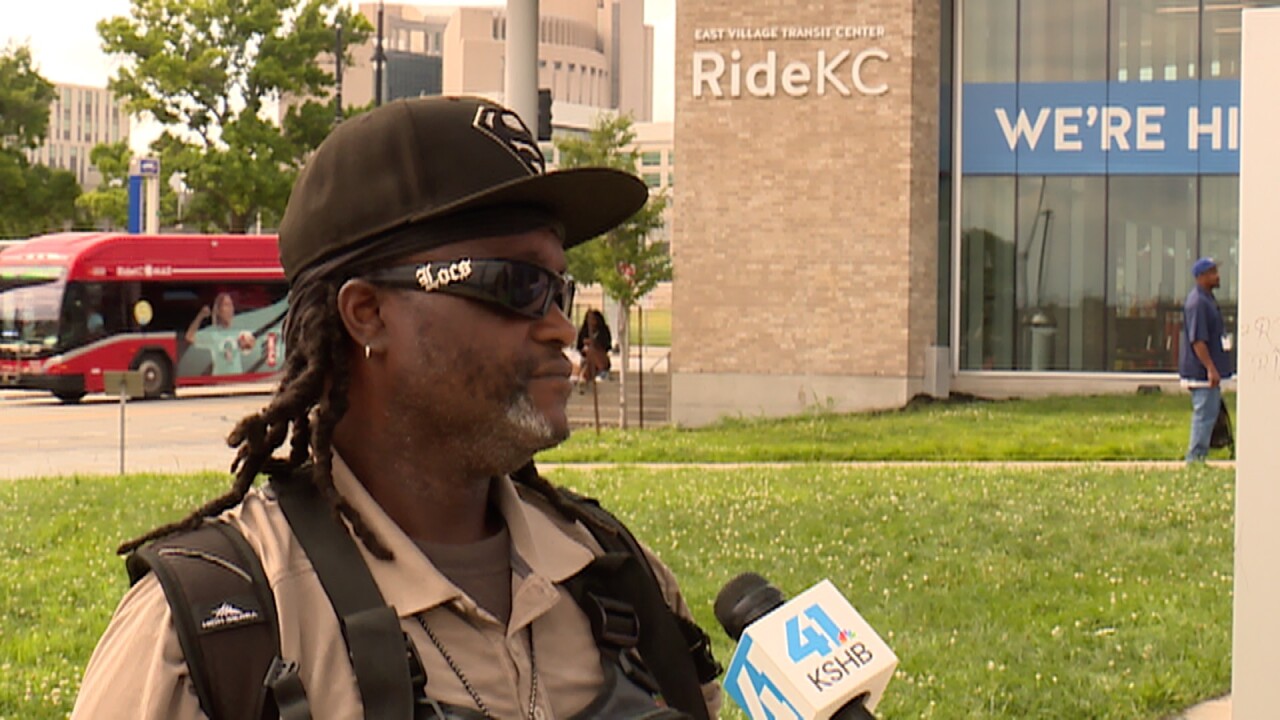
“I think it’s good because it helps people get around if they need to get around,” Jackson said.
The KCATA did not make themselves available for an interview.
—

One of the top prospects in the 2027 boys’ high school basketball recruiting class recently trimmed his list of suitors, and the Kansas Jayhawks find themselves firmly in the mix.
KU is one of eight schools to make the cut for 2027 five-star small forward Demarcus Henry, according to On3 National Basketball Reporter Joe Tipton. His list of eight includes some of the best programs in the country: Kansas, Ohio State, Kentucky, North Carolina, BYU, Arkansas, UConn, and Louisville.
The 6-foot-7 Charlotte, North Carolina, native is one of the best players in the 2027 class. He’s currently ranked as the No. 5 player overall and the No. 1 player at his position, according to the most recent On3.com 2027 player rankings.
As a junior this past year at Compass Prep High School in Chandler, Arizona, Henry averaged 15.5 points, 8.2 rebounds, and 2.2 steals per game as he helped lead his team to a 25-3 record.
He followed that up with an impressive performance at the NBPA Top 100 camp this summer, leading all attendees in scoring (20.0 points per game) and rebounding (9.3 rebounds per game). He was also a member of the 2026 USA Men’s U18 National Team that earned a silver medal at the FIBA U18 AmeriCup earlier this summer in León, Mexico.
When speaking about his game, Henry mentions his versatility and how he’s developed over the past year.
“I’m just very versatile,” Henry told Rivals in a previous interview. “I can play one through four and just help my teammates and hit shots and play defense. I watch a lot of KD (Kevin Durant) and Paul George. How they score it, and how they could shoot off the dribble, shoot off the catch. I’ve gotten tougher and just more aggressive when I transferred AZ Compass and just being able to get downhill, I feel like that’s really developed for me.”
When asked about what he’s looking for in a potential home at the college level, Henry says he wants to be challenged and grow his game for the NBA.
“What I’m looking for in school is someone that just pushes me to be better,” Henry said. “Help me grow into the person I know I can be and someone who will help me reach my potential. I want to play for a coach that will hold me accountable and help me make me uncomfortable and keep growing and keep getting better and just help me reach the NBA, which is my ultimate goal.”
Early Contenders
Right now the early favorite to land Henry may be the basketball program with the least amount of notoriety of the final eight schools – and that is Ohio State.
Henry has a lot of familial ties to the university as his older brother Chris Henry Jr. is a five-star incoming freshman wide receiver for the Buckeyes football team this year, and his older sister Seini Henry is a talented women’s basketball player at Ohio State.
He’s already taken an unofficial visit to the school and has also taken an unofficial visit to BYU. Thus far, they are the only schools to have received a visit.
Follow

The Royals have been linked to shortstop Jacob Lombard out of Gulliver Prep (Fla.) — if he makes it that far — left-hander Gio Rojas out of Stoneman Douglas (Fla.) HS, outfielder Eric Booth Jr. out of Oak Grove (Fla.) HS, UC Santa Barbara right-hander Jackson Flora and Georgia Tech outfielder Drew Burress, among others. Maybe they shake up the board and go with Huntington Beach (Calif.) HS left-hander/outfielder Jacob Grindlinger, who is just 17 years old after reclassifying for this year’s Draft and has legitimate upside as a two-way player. Grindlinger is No. 16 on MLB Pipeline’s Top 250 Draft prospects list and is rising on boards as Draft day nears.
Prep players usually mean a lot of upside but with more risk, while college players bring a higher floor and more experience — often with a chance to move quickly. Over the full Draft, the Royals are going to value both.
“There’s a good mix of high school and college,” Bridges said. “To tell you the truth, our range is pretty broad. There’s a clear-cut four players, five players in this Draft, and then believe it or not, where we’re picking, you can go a number of different directions. So we have a pretty good balance of what we’re looking at, both high school and college.”
-

 World6 minutes ago
Does more World Cup history beckon for Norway? England stand in their way
-
 News33 minutes ago
Waymo called the cops on teen riders, raising privacy concerns
-

 Los Angeles, Ca2 hours ago
O.C. police prep for beach, theme park ‘takeovers’ promoted on social media
-

 Detroit, MI2 hours ago
Detroit city leaders to DHS: Stop ICE pursuits which endanger the community
-

 San Francisco, CA2 hours ago
SF Supervisor Jackie Fielder hosts listening session after medical leave
-

 Dallas, TX3 hours ago
The Stewpot artists find healing, purpose and income through art in Dallas
-

 Miami, FL3 hours ago
Can Jason Marshall push for a starting spot – The Splash Zone 7/10/26
-

 Boston, MA3 hours ago
Police investigating shooting in Downtown Crossing – Boston News, Weather, Sports | WHDH 7News

