Kansas
Fervent debates still resound in Lecompton, Kansas, where slavery began to die • Kansas Reflector


It’s an ambitious legacy for a community of fewer than 600 citizens. But Lecompton, 13 miles northwest of Lawrence, has leaned into the challenge. After all, for six contentious years it was the capital of the Kansas Territory, before the state was admitted to the Union in 1861.
Consider Constitution Hall, built by the pro-slavery Sheriff of Douglas County, Samuel Jones, in 1856. The following year, according to Lecompton historian Tim Rues, the second of four constitutions proposed for the state of Kansas was signed there. It protected the enslavement of human beings in Kansas and excluded free Black persons from entering. Free Staters, anticipating an election rigged by Missouri settlers, boycotted the vote.
The Lecompton Constitution was then debated in the U.S House of Representatives in February 1858. If not for a late-night brawl that tabled the proceedings, eventually splitting the Democratic party over the issue of voter fraud, Kansas might have entered the Union as a slave state.
For this hugely consequential turn of events, Constitution Hall is now a Kansas and National Historic Landmark; a good place to introduce or update your knowledge of the border war. Plan your visit around a presentation called “Bleeding Kansas.”
The Lecompton Reenactors are a group of historical interpreters who “bring to life a turbulent time in Kansas history,” says Steve Germes, who portrays Kansas’ first governor, Charles Robinson.
One weekday this spring, I witnessed this mock debate over the issues of popular sovereignty and slavery to a captive audience of two dozen high school students. Other interpreters represented James Lane, U.S.senator and leader of the Kansas Brigade during the Civil War, abolitionist John Brown, a fictional slave catcher named Felix, Sheriff Samuel Jones, and two important Kansas women, Sara Robinson and Clarina Nichols. They provided a moral counterpoint to the flawed men on both sides of the debate.
Historically, no such debate ever took place. Women were forbidden to speak in the public sphere. Lane and Robinson, both free staters, were political enemies, rarely seen together. And Sheriff Jones was usually preoccupied with keeping the state’s more radical abolitionists in check.
The speeches were well-researched. The interpreters were passionate about their messages, regardless of side.
Recreator Paul Bahnmaier, speaking as Sheriff Jones, highlighted the legitimacy of the Lecompton government, while skirting the issue of legalizing chattel slavery, as he challenged abolitionists’ rights to be in Kansas in the first place.
“What did you come here for?” he asked. “Why did you not go instead to Minnesota or Nebraska where you would be welcomed? But no, you want to get all of the territory, but damn you, you shall not have it as it belongs to the South.”
Lecompton native Bahnmaier coined the town’s brand, Where slavery began to die. Republican Abraham Lincoln, he points out, was only elected in 1860 because of that Democratic party split. Eventually, the anti-slavery Topeka Constitution was ratified by the Senate — 40 days after South Carolina seceded.
“Without this splitting, Lincoln would never have been elected president and who knows how much longer slavery would have existed?” he said.
There is yet more history to learn in Lecompton. In anticipation of the Congressional passage of the pro-slavery Lecompton Constitution, a territorial capitol building was begun with a $50,000 federal appropriation. Yes, Kansas was that close to becoming a slave state!
Today, the building houses the Territorial Capital Museum. Displays about politics of the 1850s and ’60s show the role that Lecompton played in elections from Massachusetts to California. The small Democratic headquarters cabin nearby adds to the story of how the Lecompton Constitution enabled Lincoln to be elected with just 39% of the popular vote.
The town offers a thorough introduction to the constitutional crisis in the border war story. Kansas was not predestined to enter the Union as a Free State. It took any number of articulate and committed abolitionists to accomplish this.
On the other hand, rad what the Rev. Samuel Adair, a relative of John Brown, observed about some of the self-proclaimed abolitionists who settled the territory. “Their free-soil is free soil for white, but not for black. They hated slavery but they hated the Negro worse.”
If this legacy catches anyone by surprise, stay tuned.
Frank Barthell is a former video producer at the University of Kansas. Through its opinion section, Kansas Reflector works to amplify the voices of people who are affected by public policies or excluded from public debate. Find information, including how to submit your own commentary, here.



WICHITA, Kan. (KSNW) — Two Kansas parents were charged Thursday in connection with the shooting deaths of their two children.
The Ellsworth County Attorney’s Office charged Aaron French and Makayla French of Brookville with four counts each of aggravated child endangerment.
On March 28, law enforcement responded to a home near Kansas Highway 141 and Avenue N near Kanopolis Lake.
A 5-year-old girl and an 8-year-old boy had been shot, according to the Kansas Bureau of Investigation. The 5-year-old was pronounced dead at the scene. The 8-year-old was taken to a Wichita hospital, where he died almost a week later.
The KBI said a young child in the home picked up a loaded, unsecured shotgun and shot the siblings.
Aaron French, 37, and Makayla French, 28, have been ordered to appear in court on July 28.
For more Kansas news, click here. Keep up with the latest breaking news by downloading our mobile app and signing up for our news email alerts. Sign up for our Storm Track 3 Weather app by clicking here. To watch our shows live on our website, click here.
KSHB 41 reporter Isabella Ledonne reports on stories in Overland Park, Johnson County and topics about government accountability. Share your story idea with Isabella.
—
Saturday marks the final FIFA World Cup 26 match in Kansas City with Argentina set to meet Switzerland on the pitch at Kansas City Stadium.
Kansas City to reduce bus transit frequency, extended hours after World Cup
Public transportation received a big boost during the World Cup.
Johnson County launched JOCO United, and according to leaders, the airport drop and ride service that was implemented for the tournament will stick around.
“It has been very smooth every time,” Johnson County resident Mariah Wickham said. “I’ve been up and down so many times.”
Kansas City, Missouri, also bumped up its transit options, but not all of the those will be sticking around once the final whistle blows.
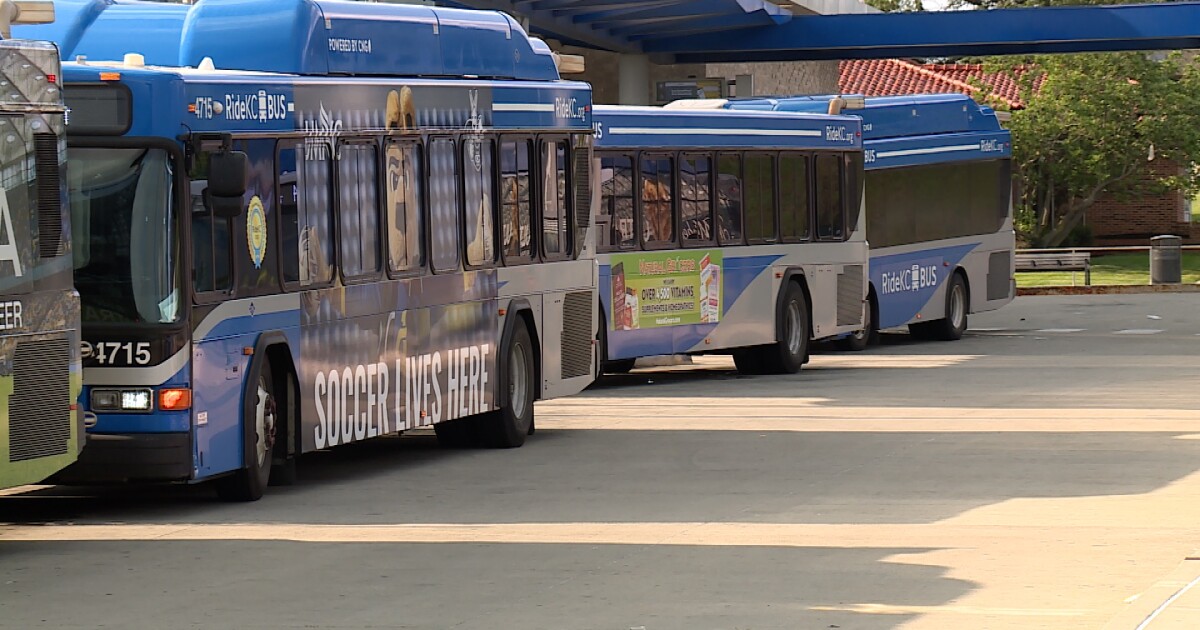
Tens of thousands of people have been using the airport link, streetcar and the buses to get around Kansas City. The city poured millions of dollars into building up its public transit infrastructure. The KCATA added more frequency to bus transit lines and the streetcar, pushing more fans to use public transportation during the tournament.
Brian Luton
“With the World Cup here, I was able to exercise using the streetcar more frequently and that was really fun,” Trish Luancing said. “It wold be nice to not have to drive everywhere and not have to worry about parking.”
But thousands have been relying on public transit for years, regardless of what event was in town.
“It’s been busier since the World Cup,” Jeffrice Jackson, a bus rider, said. “It’s been smooth sailing.”
The KCATA added streetcar ‘bus bridge’ links, extended bus service hours and increased frequency on East-West routes to link riders to the streetcar. It’s benefited both travelers and commuters.
Brian Luton
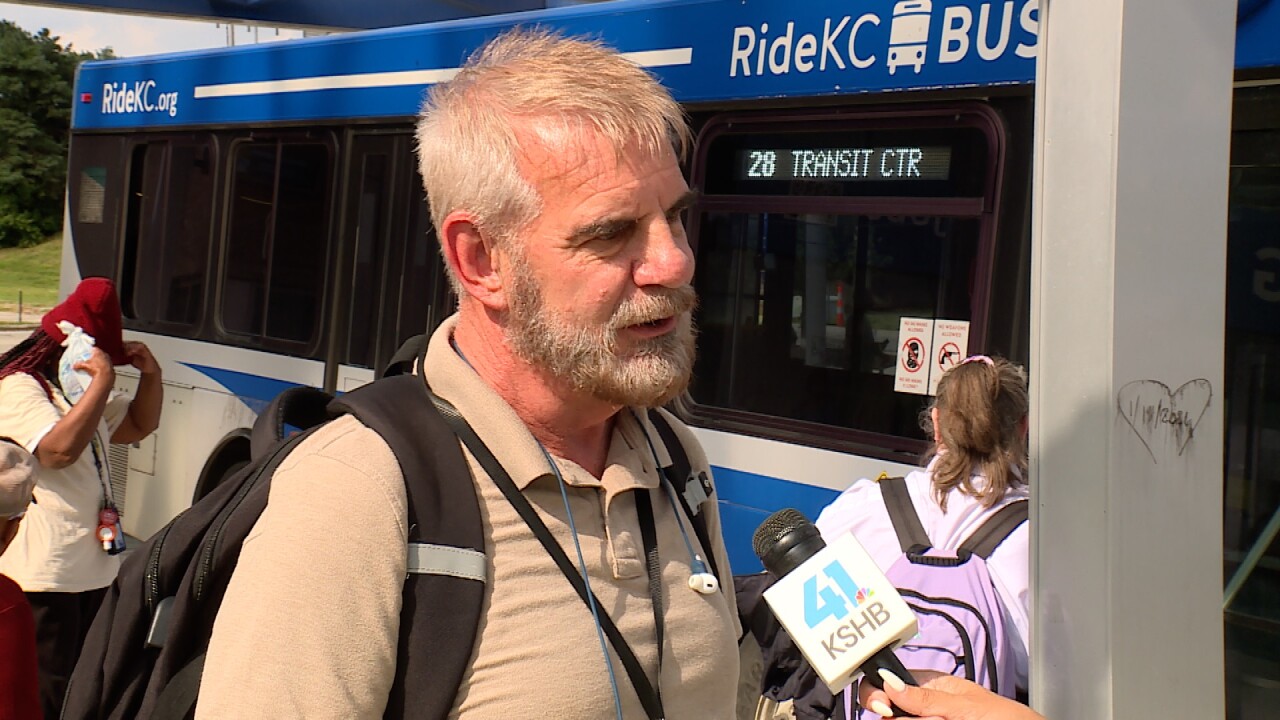
“[Service] has been more consistent with the World Cup than it was previously,” Jerry Breault, a rider said. “We were missing buses or routes because there weren’t enough drivers to drive that route.”
But the add-on’s stop on Sunday, July 12. If the transit authority can’t find more money, more than a dozen routes will be cut, potentially impacting more than 8,000 riders.
“It’s a little frustrating,” Breault said. “A lot of us rely on it just to get back and forth to work, to take care of our daily needs. It looks like we may be having to find alternatives and we’re not very happy about that.”
The KCATA will potentially suspend these weekday and weekend routes by September:
Weekday Route Eliminations:
- 9 – 9th Street, 365 average weekday ridership
- 21 – Cleveland Antioch, 512 average weekday ridership
- 23 – 23rd Street, 266 average weekday ridership
- 25 – Troost Local, 1,460 average weekday ridership
- 27 – 27th Street, 422 average weekday ridership
- 57 – Wornall, 411 average weekday ridership
- 71 – Prospect Local, 464 average weekday ridership
Weekend Route Eliminations:
- 9 – 9th Street, 349 average weekend ridership
- 21 – Cleveland Antioch, 312 average weekend ridership
- 23 – 23rd Street, 312 average weekend ridership
- 25 – Troost Local, 1,431 average weekend ridership
- 27 – 27th Street, 455 average weekend ridership
- 57 – Wornall, 595 average weekend ridership
- 71 – Prospect Local, 982 average weekend ridership
Bus fares came back earlier this summer to offset some of the operation costs, but many have reported issues with the free fare cards and eligibility.
“There’s always funding challenges with the KCATA,” Kansas City, Missouri, Mayor Quinton Lucas said. “How are the fare re-institutions working right now?”
Brian Luton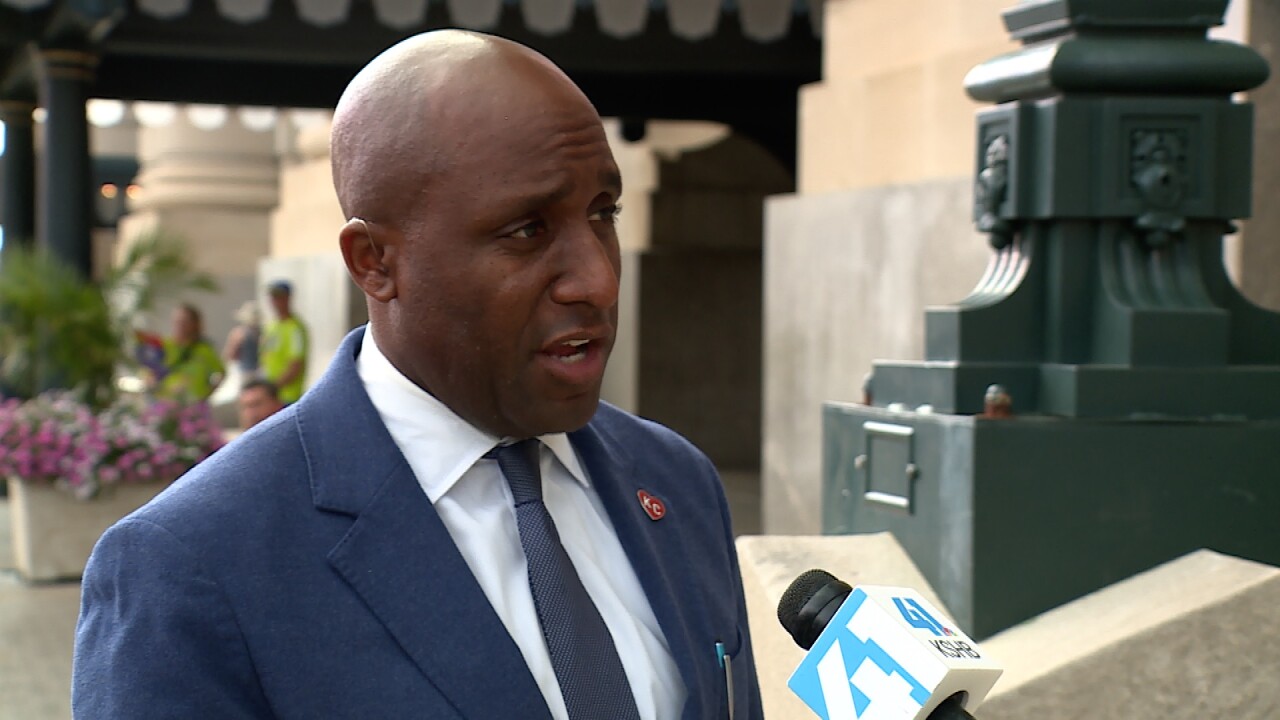
Mayor Lucas told KSHB 41 News Reporter Isabella Ledonne the transit improvements implemented for the World Cup “should continue,” and there are plans to talk with the KCATA commissioners to “make it work”.
“KCATA cannot just be Kansas City supported alone forever,” Mayor Lucas said. “Our approach and our preference is that the region got to see how much they would like [expanded service] during the World Cup. It was always intentional that if they liked it, maybe they would invest and maybe they would want this thing to go further.”
That’s good news to the thousands of daily riders.
Brian Luton
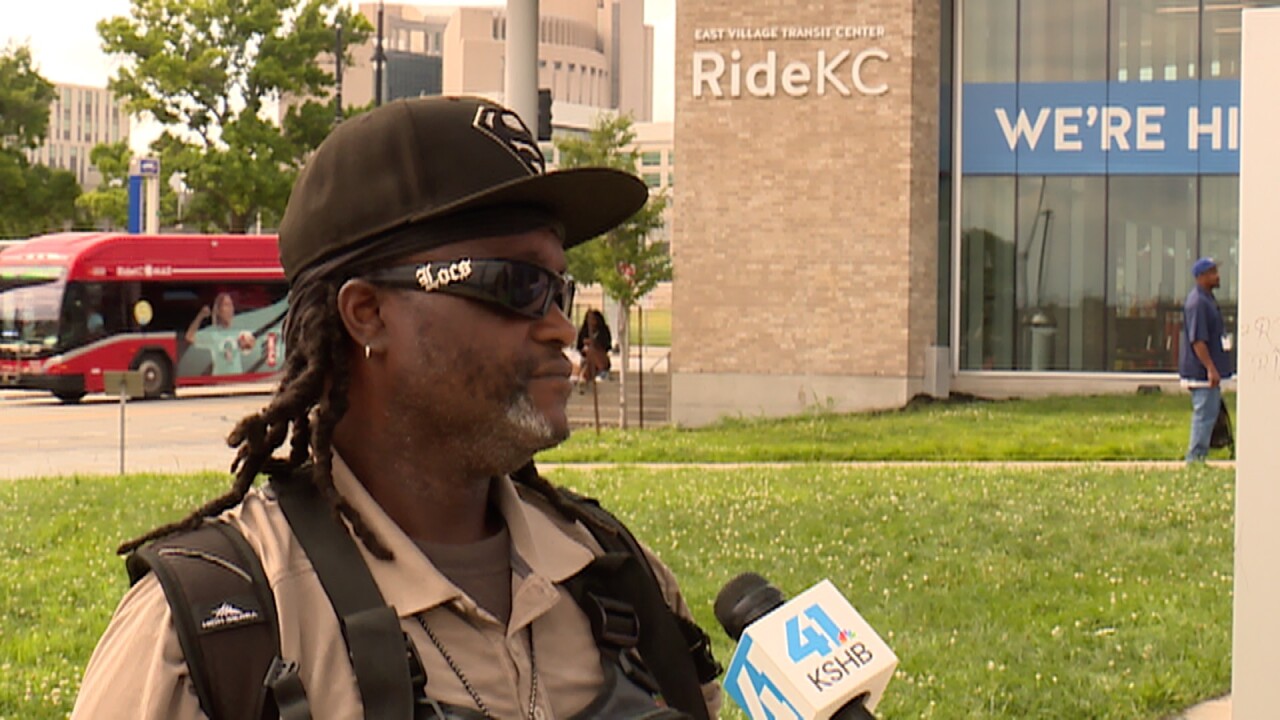
“I think it’s good because it helps people get around if they need to get around,” Jackson said.
The KCATA did not make themselves available for an interview.
—


One of the top prospects in the 2027 boys’ high school basketball recruiting class recently trimmed his list of suitors, and the Kansas Jayhawks find themselves firmly in the mix.
KU is one of eight schools to make the cut for 2027 five-star small forward Demarcus Henry, according to On3 National Basketball Reporter Joe Tipton. His list of eight includes some of the best programs in the country: Kansas, Ohio State, Kentucky, North Carolina, BYU, Arkansas, UConn, and Louisville.
The 6-foot-7 Charlotte, North Carolina, native is one of the best players in the 2027 class. He’s currently ranked as the No. 5 player overall and the No. 1 player at his position, according to the most recent On3.com 2027 player rankings.
As a junior this past year at Compass Prep High School in Chandler, Arizona, Henry averaged 15.5 points, 8.2 rebounds, and 2.2 steals per game as he helped lead his team to a 25-3 record.
He followed that up with an impressive performance at the NBPA Top 100 camp this summer, leading all attendees in scoring (20.0 points per game) and rebounding (9.3 rebounds per game). He was also a member of the 2026 USA Men’s U18 National Team that earned a silver medal at the FIBA U18 AmeriCup earlier this summer in León, Mexico.
When speaking about his game, Henry mentions his versatility and how he’s developed over the past year.
“I’m just very versatile,” Henry told Rivals in a previous interview. “I can play one through four and just help my teammates and hit shots and play defense. I watch a lot of KD (Kevin Durant) and Paul George. How they score it, and how they could shoot off the dribble, shoot off the catch. I’ve gotten tougher and just more aggressive when I transferred AZ Compass and just being able to get downhill, I feel like that’s really developed for me.”
When asked about what he’s looking for in a potential home at the college level, Henry says he wants to be challenged and grow his game for the NBA.
“What I’m looking for in school is someone that just pushes me to be better,” Henry said. “Help me grow into the person I know I can be and someone who will help me reach my potential. I want to play for a coach that will hold me accountable and help me make me uncomfortable and keep growing and keep getting better and just help me reach the NBA, which is my ultimate goal.”
Early Contenders
Right now the early favorite to land Henry may be the basketball program with the least amount of notoriety of the final eight schools – and that is Ohio State.
Henry has a lot of familial ties to the university as his older brother Chris Henry Jr. is a five-star incoming freshman wide receiver for the Buckeyes football team this year, and his older sister Seini Henry is a talented women’s basketball player at Ohio State.
He’s already taken an unofficial visit to the school and has also taken an unofficial visit to BYU. Thus far, they are the only schools to have received a visit.
Follow
-

 Technology7 minutes ago
No, Flock isn’t threatening people for debating surveillance
-

 World9 minutes ago
Israel signals readiness for another Iran strike as Trump declares ceasefire over
-

 Politics15 minutes ago
Kelley Paul: America’s Founders were the ‘first civil rights heroes’
-

 Health22 minutes ago
Your resting heart rate could reveal more about your health than you think, doctors say
-

 Sports25 minutes ago
Shohei Ohtani ruled out of MLB All-Star Game as Dodgers plan to manage nagging injury
-

 Technology37 minutes ago
Fake VA shoe offer targets veterans
-
 Business40 minutes ago
Los Angeles hotels saved by last-minute surge in World Cup bookings
-
 Entertainment45 minutes ago
Emily Ratajkowski’s viral essay on sex life as a single mom scores her a seven-figure book deal

