Iowa
Caitlin Clark, Iowa women’s basketball set record TV ratings in run to Big Ten championship


As Caitlin Clark and the Iowa women’s basketball team won the 2024 Big Ten Tournament, they did so in front of a crowd that went well beyond the Target Center in Minneapolis.
The Hawkeyes’ 94-89 overtime victory against Nebraska in the Big Ten championship game on Sunday averaged more than 3 million viewers and peaked at 4.45 million viewers in overtime. The average viewership made it the most-watched women’s college basketball game on CBS in 25 years, trailing just behind a matchup between UConn and Tennessee on Jan. 10, 1999, that averaged 3.88 million viewers.
REQUIRED READING: Why Iowa star Caitlin Clark is one of the most likable figures in sports
To put that figure into a different context, the 3.021 million average viewers of Iowa’s win ranked just barely behind the 3.076 million who watched Saturday’s regular-season finale behind storied rivals Duke and North Carolina in men’s basketball, a game that aired on ESPN in prime time.
The win against the Cornhuskers, a game in which Clark scored a game-high 34 points to lead her team to a come-from-behind victory, was the second-most-watched women’s college basketball game on any network this season, behind only — you guessed it — Iowa’s 93-83 victory against Ohio State on March 3. In that matchup, Clark became the all-time leading scorer in Division I history, passing Pete Maravich.
It wasn’t just the Hawkeyes’ championship game performance that drew in a record audience, either.
Iowa’s 95-68 win against Michigan in the Big Ten semifinals last Saturday and its 95-62 victory against Penn State in the quarterfinals last Friday each brought in over 1 million viewers, with 1.075 million watching the former and 1.04 tuning in for the latter. It’s the first time in Big Ten Network history that a women’s sporting event has brought in more than one million viewers.
Those two contests became the second- and third-most-watched basketball games in Big Ten Network history, behind only the 1.2 million who watched a Big Ten men’s basketball tournament game between Michigan State and Wisconsin in 2022. They shattered the previous Big Ten Network record rating for a women’s athletic event, which was set earlier this year when 675,000 watched Iowa’s 111-93 victory against Penn State on Feb. 8.



There have been a lot of things that T.J. Otzelberger has excelled at as the head coach of the Iowa State Cyclones, but if there is one thing that truly sticks out as a strength, it is his ability to identify players who fit his scheme perfectly.
Whether it is in the transfer portal or recruiting high school athletes, the Cyclones’ depth chart has been restocked successfully year after year. This offseason, Otzelberger faces arguably his toughest test yet.
Five seniors are departing, one player has entered the transfer portal and Milan Momcilovic declared for the 2026 NBA Draft with the ability to come back to school if he chooses. With so many potential voids to fill, where should Iowa State prioritze their attention?
Here are their three biggest needs heading into the transfer portal opening.
Capable Lead Ball Handler
Replacing a player of Tamin Lipsey’s caliber is virtually impossible. He is one of the best players in Cyclones history and will assuredly have his No. 3 uniform raised to the rafters at some point in the future.
The long-term outlook of the backcourt is excellent, with Killyan Toure and Jamarion Batemon being joined by incoming Class of 2026 guards Christian Wiggins and Yusef Gray Jr. However, there is a major need for some experience and depth.
Cade Kelderman is heading into the portal, which will be a blow to the depth. Ideally, Otzelberger will find someone capable of not only running the offense but helping set the tone defensively as well.
There is a lot to like about Jaquan Johnson to help fill that void. Despite being undersized at 5-foot-9, he is the reigning Missouri Valley Conference Defensive Player of the Year and was an All-MVC First Team selection.
Do-It-All Nate Heise Replacement
Over the last two seasons, Nate Heise has done everything to help Iowa State win basketball games. Regardless of what his role has been, whether he comes off the bench or starts, he has excelled.
Finding glue guys like that who are willing to do the dirty work to help a team win is easier said than done. But, there is one player who sticks out as an ideal target: Trevian Carson, formerly of the North Dakota State Bison.
He dominated in the Summit League, stuffing the stat sheet efficiently. It wasn’t just him beating up on lower-level competition, as he performed well against the UC Irvine Anteaters, Drake Bulldogs and Michigan State Spartans.
His skill set is similar to Heise’s in so many ways, as an excellent rebounding guard who can do a little bit of everything while providing versatility on the defensive side. However, he offers even more offensive upside with better efficiency numbers.
Power Forward Depth
If there is one area of the roster that looks shored up right now, it is the frontcourt. Blake Buchanan and Dominykas Pleta are both expected to be back. Jackson Kiss and Dorian Rinaldo-Komlan are part of the Class of 2026 with bright futures.
However, the Cyclones are thin at power forward. Pleta could play some minutes there as he did previously before joining Iowa State. Kiss has received some comparisons to Joshua Jefferson, but there is no way Otzelberger thrusts a freshman into that size of a role.
There aren’t many players in the country who make an all-around impact at as high a level as Jefferson did; finding a one-for-one replacement will be virtually impossible. But if they were to lean toward a specific skill set, finding someone who can put the ball in the basket would be ideal.
An offensive-minded forward would become even more important to find if Momcilovic doesn’t return for his senior year.


Iowa State basketball coach TJ Otzelberger addresses coaching rumors
Iowa State basketball coach TJ Otzelberger addresses coaching rumors surrounding him, the UNC vacancy and other jobs.
Iowa State men’s basketball has filled the first assistant coaching vacancy on its staff.
The Cyclones announced on Monday, April 6, that head coach T.J. Otzelberger has named Tim Buckley as a new assistant coach. He will begin his duties with Iowa State immediately.
Buckley most recently served as an assistant for two seasons at Cincinnati, but he comes to Ames with more than three decades of coaching experience. He was also previously part of Otzelberger’s staff for both years of his tenure at UNLV from 2019-21.
“A renowned coach in player development, I’m excited to have Tim join our staff at Iowa State,” Otzelberger said in a statement. “Tim brings a wealth of knowledge, both as a head coach and assistant coach. He has recruited and developed some of the top talents in the NBA. I’m thrilled that our student-athletes will get the opportunity to work with Tim.”
The 62-year-old Buckley has garnered a reputation for his player development and recruiting. Before arriving in Ames, he got Division I head coaching experience at Ball State (2000-06), and he’s also been an esteemed assistant coach at Wisconsin (1993-94), Ball State (1994-99), Marquette (1999-00, 2007-08), Iowa (2006-07), Indiana (2008-17), UNLV (2019-22), South Carolina (2022-24) and Cincinnati (2024-26).
Before joining Otzelberger’s staff at UNLV, he was also a scout for the Minnesota Timberwolves from 2017-19.
Buckley has worked with 12 NBA Draft picks, nine of whom were drafted in the first round. Of those nine first-round picks, six of them were lottery picks. Some of the top talent Buckley has recruited and developed include Dwyane Wade, Victor Oladipo, Cody Zeller and Noah Vonleh. He also helped coach All-American Yogi Ferrell at Indiana.
“I’m thankful for the opportunity to be reunited with T.J. Otzelberger,” Buckley said in a statement. “What he has done over the last five years is amazing. Iowa State is a nationally recognized program and I’m excited to be a part of it.”
Buckley played at Waubonsee Community College from 1982-84, before finishing his playing career at Division II Bemidji State from 1984-86. After that, he went right into coaching at his alma mater for two seasons, before moving over to Division III Rockford, where he spent one year as an assistant. He was promoted to Rockford’s head coach, a job he held from 1989-93, before breaking through to the Division I ranks.
Iowa State finished this past season at 29-8. The Cyclones reached the Sweet 16 for the third time in five years under Otzelberger. The Cyclones still have one assistant coaching vacancy to fill, after J.R. Blount (San Diego) and Kyle Green (Northern Iowa) departed for head coaching opportunities.
Eugene Rapay covers Iowa State athletics for the Des Moines Register. Contact Eugene at erapay@gannett.com. Follow him on Twitter at @erapay5.

WATERLOO (KCRG) – The Amber Alert for 12-year-old Deyton Annabelle Cranston has been canceled.
The Iowa Department of Public Safety said Cranston was located and the Waterloo Police Department is investigating.
PREVIOUS STORY:
Iowa (KCRG) – An amber alert has been issued for a missing 12-year-old out of Waterloo.
12-year-old Deyton Annabelle Cranston was last seen wearing a white tank top and a blue skirt and wearing clear glasses.
She’s described as 5′4′, 135 and has blonde hair and brown eyes.
Officials say to look out for a red Toyota Camry with all tinted windows, a black spoiler, and no license plate on the front.
Anyone with information should contact authorites.
Copyright 2026 KCRG. All rights reserved.

Pa. data centers: How lawmakers are responding, from electricity and water use to tax breaks

Hate self-checkout at the grocery store? A RI bill to limit it is back.

Former South Dakota AutoZone workers say they were bilked out of overtime pay

Tennessee Basketball Loses A Freshman Guard To The Transfer Portal | Rocky Top Insider

Gov. DeSantis to join Texas governor for Texas Stock Exchange event in Miami

Florida High School Football Rankings: Top 25 teams – Oct. 21

How old is Bo Nix? What to know about Oregon quarterback ahead of 2024 NFL Draft

Cleary's 21 help Le Moyne down Central Connecticut State 69-64 in OT

99th annual Pony Swim held in Virginia

Indiana Members Credit Union announced as new anchor tenant at Bottleworks District

Ilhan Omar calls Trump an ‘unhinged lunatic,’ urges booting him out of office
Between Budapest and Brussels: Péter Magyar’s political tightrope
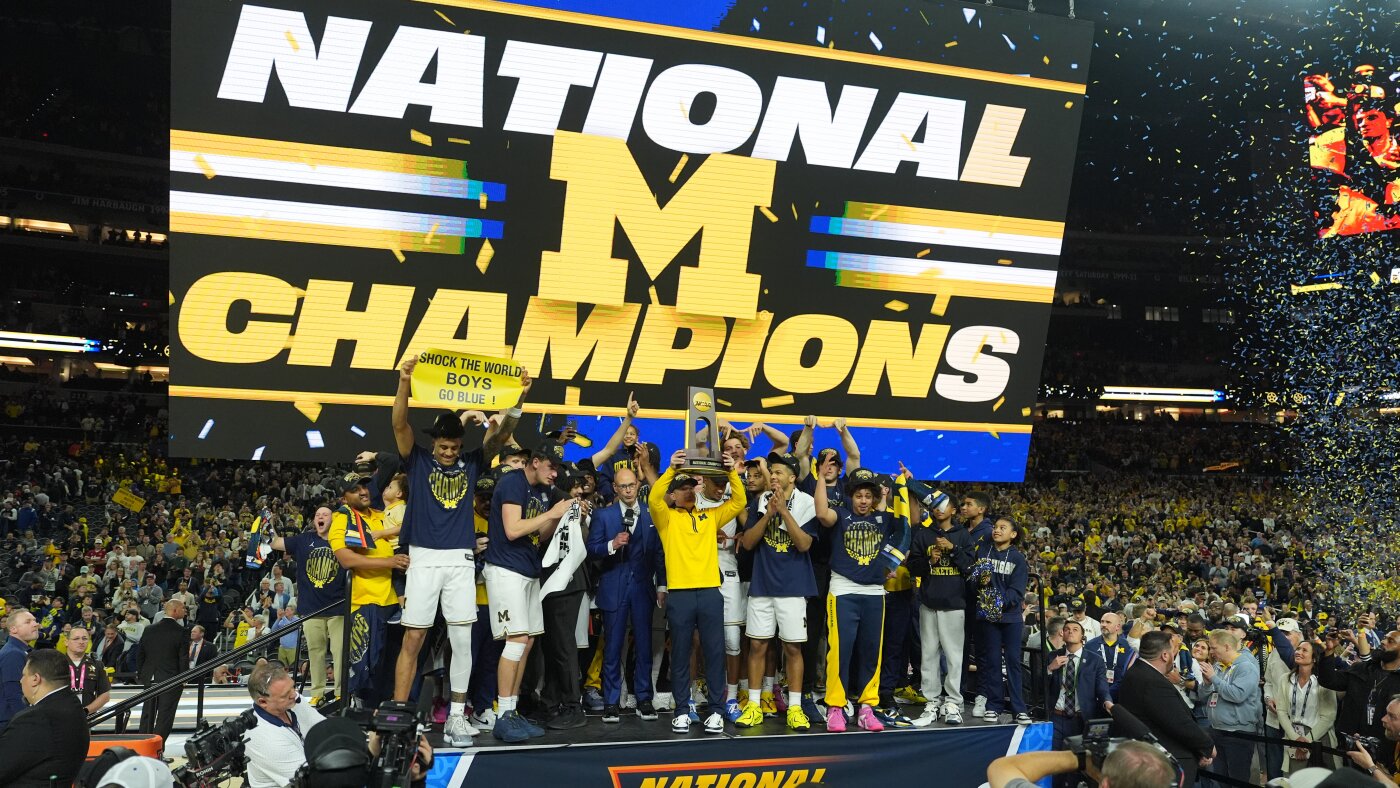
Michigan muscles its way to program’s 2nd NCAA basketball title, beating UConn

Map: Minor Earthquake Strikes Near San Diego

Trump claims he’d win as the president of Venezuela — just needs to ‘quickly’ learn Spanish
-

 Atlanta, GA2 days ago
1 teenage girl killed, another injured in shooting at Piedmont Park, police say
-

 South-Carolina1 week ago
South Carolina vs TCU predictions for Elite Eight game in March Madness
-

 Movie Reviews5 days ago
Vaazha 2 first half review: Hashir anchors a lively, chaos-filled teen tale
-

 Vermont1 week ago
Skier dies after fall at Sugarbush Resort
-

 Politics1 week ago
Trump’s Ballroom Design Has Barely Been Scrutinized
-

 Politics1 week ago
JD Vance says he was ‘obsessed’ with UFOs, believes aliens are actually ‘demons’
-
 Entertainment5 days ago
Inside Ye’s first comeback show at SoFi Stadium
-

 Politics1 week ago
Jeffries declines to break with indicted Democrat after ethics panel’s guilty verdict