Indianapolis, IN
Walmart altercation led to Castleton Square Mall shooting, court records reveal


3 things to know if you share information with Crime Stoppers
Crime Stoppers of Central Indiana allows Indianapolis residents to share anonymous tips with law enforcement.
Indianapolis police announced on Wednesday that they had re-arrested the 18-year-old man who was allegedly involved with the Dec. 23 shooting at Castleton Square Mall.
Police re-arrested the 18-year-old Tuesday after discovering that an altercation in a Walmart chip aisle a few months prior led to the shooting inside of the mall, according to court documents.
Police preliminarily charged the man with intimidation. Indianapolis Metropolitan Police Department also said officers arrested a 17-year-old for his alleged role in the shooting and preliminarily charged them with dangerous possession of a firearm.
IndyStar is not naming the two people because they have not been formally charged with the alleged crimes.
The interview that led to the teen’s arrest
Chaos broke out at Castleton Square after gunfire could be heard inside the mall’s hall late Dec. 23, prompting people to run outside.
After evacuating and closing the mall early, police learned that a person may have been hurt in the shooting.
Security footage captured an 18-year-old man chasing someone with his right hand on a handgun tucked in his pocket. He left the mall’s camera view, and when he returned in the footage a short time later, police said he was seen with a noticeable limp and looked down at his left leg.
At the time, it was unclear what had specifically led up to the shooting, but a new preliminary arrest affidavit has answered several of those questions.
On Jan. 1, police interviewed the man seen on mall security footage running away from the teens before the shooting on Dec. 23, according to court documents.
The man explained that while he was shopping with a friend and his sibling, he noticed the teens staring at him, which made him feel “uncomfortable.”
While the man was walking toward a clothing store, the teens attempted to get his attention and confronted him outside of the store, according to court documents.
The man told police that he recognized the 18-year-old from a confrontation that happened at a Walmart in Avon earlier in the year, after the two had bumped hands in the chip aisle.
The 18-year-old told the man that he had “been waiting to catch up with you,” according to a record of the interview.
The man believed that the 18-year-old was one of his dead brother’s former “enemies” and assumed that’s why he was threatening the man. The man’s brother was an artist but after his death, the man had adopted his brother’s artist moniker and began publishing music using it, he told police.
When police asked the 18-year-old what led to the shooting, he explained that the man was threatening to fight him because of an altercation at Walmart. When asked if he had filed a police report about the matter, he told police that he had not, according to court documents.
Before the situation escalated, the man told police he asked the 18-year-old, “Y’all tryin to do this here in the mall? They got cameras everywhere.”
That’s when the 18-year-old allegedly threatened the man with his gun, prompting the man to run away.
Security camera footage captured the teens chasing after the man. The 18-year-old could be seen with a handgun with an extended magazine protruding from his pocket before the teens and the man ran out of the camera’s view, according to court documents.
At some point during the chase, the man ran into something and fell to the ground. When he turned around he saw the 18-year-old pointing a gun at him. Believing that he was about to be shot, the man pulled out his 9mm handgun and fired at the 18-year-old three times, according to court documents.
The man escaped into a store, ultimately exiting the mall through a storage room.
The 18-year-old could then be seen on security footage leaving with a noticeable limp to his left leg, according to court documents.
Police later interviewed the 18-year-old about the shooting while he was receiving care for the gunshot wound at an area hospital.
The 18-year-old’s re-arrest
The 18-year-old was initially arrested and charged by police immediately after the shooting, but the teen was released from police custody on Dec. 27, 2024, after the Marion County Prosecutor’s Office decided not to file criminal charges against him.
At the time, the prosecutor’s office noted that it did not file charges against the teen, instead opting to allow police to finish their investigation and determine what led to the shooting.
After interviewing the man, police investigated the matter further and determined that the 17-year-old was an acquaintance of the 18-year-old based on photos they found of the teens together on social media.
On Jan. 7, police obtained a search warrant of the 18-year-old’s home, and inside his room found pieces of clothing and accessories that the two had been wearing on the day of the shooting. Police then arrested the two teens.
Contact IndyStar reporter Noe Padilla at npadilla@indystar.com or follow him on X @1NoePadilla.



How to unlock Indiana’s public court records with MyCase
Here’s how Indiana’s MyCase platform makes accessing criminal and civil court documents easy and free.
A city detective was arrested after being accused of driving away from the scene of an investigation while intoxicated, according to a news release from the Indianapolis Metropolitan Police Department.
Detective Caitlin Harris, an eight-year veteran of the Child Abuse Unit, faces preliminary charges of operating a motor vehicle while intoxicated and operating a motor vehicle while intoxicated endangering a person, both misdemeanors.
Harris was acting as the on-call detective on March 22, 2026. Colleagues who summoned her to help with an investigation into a child’s injuries that evening noticed she smelled like alcohol and contacted a supervisor, the news release stated.
A sergeant immediately responded, the department said, but by then Harris had finished her investigation and left the scene.
The sergeant asked Harris to pull her vehicle over, but she instead drove home, where she was met by a lieutenant who also believed she’d been drinking, the department said.
Harris was taken to a hospital for a blood draw. Detectives from IMPD’s Internal Affairs, Special Investigations and OVWI units were all present, the department said, and Harris was “determined to be under the influence of alcohol.”
IndyStar was unable to reach Harris and court records were not available at time of publication.
Chief Tanya Terry placed Harris on paid administrative leave and stripped her of police powers later that day.
The investigation that Harris initially responded to has been reassigned to another detective, according to the department.
Once an internal affairs investigation is complete, IMPD will decide whether to review Harris’ recent cases.
Harris was one of two detectives subject to a Citizens’ Police Complaint Board case last summer after a woman said the investigators assumed her children were unresponsive due to an opiate overdose rather than a heat-related illness. The children had been left alone in a car for several hours while their mother worked at a temp agency, but charges were never filed. IMPD’s Internal Affairs office did not find the officers at fault for their handling of the case.
Harris is the third IMPD officer charged with a crime so far in March. Officer Anthony Mauk faces allegations of hunting deer without a license in Steuben County, and Officer Taylor Jones was arrested on an allegation of battery after an altercation at an Indianapolis gym.
Ryan Murphy is the communities reporter for IndyStar. She can be reached at rhmurphy@indystar.com.
Indianapolis, IN
When the Spotlight Hits the Game, Black Artists Take Center Stage – Indianapolis Recorder

When the lights come up on a championship court, most eyes are fixed on the game. The buzzer. The movement. The moment.
But behind every major sporting event — behind the spectacle that draws thousands into arenas and millions to their screens, there is another story unfolding. One that doesn’t always get the same visibility, but carries just as much cultural weight. It is the story of the artists.
In cities like Indianapolis, where sports are woven into the community’s identity, art often works quietly in the background — shaping how those moments are experienced, remembered, and understood. Murals, performances, visual storytelling, and cultural programming all help define what a moment means, not just what it looks like.
And for Black artists, that work carries an additional responsibility. Because too often, the cultural contributions of Black communities are present in the experience but absent from the narrative.
Black artists don’t just capture moments. We contextualize them. We connect them to history, to struggle, to joy, to resilience. We tell the fuller story, one that reflects the communities that have long shaped the culture surrounding the game itself. And the impact of that work is not just cultural — it is economic.
The arts and cultural sector contributes more than $1 trillion to the U.S. economy and supports millions of jobs. Cities that invest in their creative ecosystems are not simply supporting the arts; they are strengthening a major driver of growth, talent attraction, and community vitality. Research also shows that diverse creative environments lead to stronger innovation and more meaningful engagement, reinforcing what many communities already experience firsthand.
When Black artists are included, the work does not just become more representative; it becomes more relevant, more connected, and more complete.
Indianapolis has a deep and often underrecognized legacy of Black artistic expression. From visual arts to performance, from community-centered storytelling to intergenerational creative practice, Black artists in this city have consistently created work that reflects both who we are and where we are going. But visibility has not always kept pace with contribution.
Across the country, studies have shown that artists of color remain significantly underrepresented in major cultural institutions and platforms. That gap is not a reflection of talent—it is a reflection of access, investment, and whose stories have historically been prioritized.
Major events bring energy, investment, and attention to a city. They also create a rare opportunity: a chance to be intentional about whose stories are elevated alongside the main stage.
When Black artists are included — not as an afterthought, but as a central part of the cultural experience — the impact is different. The city feels more complete. The story becomes more honest. The moment becomes more connected to the people who live here every day. This is not just about representation. It is about accuracy.
Because culture is not created in isolation. It is built through community. And when we fail to include the voices of those who have helped shape that culture, we present an incomplete picture — not just to visitors, but to ourselves.
At the Asante Art Institute of Indianapolis, our work is grounded in that belief. We exist to create space for artists to explore identity, history, and creativity in ways that build confidence, deepen understanding, and strengthen community connection. Through arts-centered programming, we are not only developing artists; we are cultivating storytellers, leaders, and individuals who see themselves as active participants in shaping the world around them.
That work matters in moments like these.
Because when the spotlight turns to Indianapolis during championship season, the question is not just what the world will see, but what story we choose to tell.
Will it be surface-level, focused only on the game? Or will it reflect the depth, diversity, and creativity of the communities that make this city what it is? That answer depends on who we invite into the frame.
This championship weekend, that broader story will take shape through A Touch of Glory, a production that brings together art, history, and sport to honor legacy and connection across generations. It is a reminder that the game is only part of the story, and that the cultural narratives surrounding it deserve just as much attention.
When we make space for those narratives — when we invest in artists, elevate their voices, and recognize their role in shaping how moments are experienced — we don’t just enhance events. We strengthen the cultural fabric of our city. And long after the final buzzer sounds, that is the story that lasts.
Deborah Asante is the Founder and Artistic Director of the Asante Art Institute of Indianapolis, dedicated to advancing cultural storytelling, fostering creative expression, and empowering communities through the arts.

INDIANAPOLIS (WISH) — Staring Monday, Immigration and Customs Enforcement (ICE) will assist TSA airports across the country. A budget battle in congress is keeping TSA from getting paid, creating staffing issues.
Many travelers that spoke with News 8 say they weren’t expecting to see ICE during their Spring travel. Some say they are hopeful it could ease the long wait times. Others say it raises new concerns while traveling.
“TSA definitely needs some help right now, but what kind of security are [ICE] going to provide?” Hugo Lopez, who was traveling through the Indianapolis International Airport said. “Is it the same type of security they are doing in Minneapolis? You know, where even U.S. citizens are going to be concerned about now having the right paperwork.”
ICE is expected to support TSA teams at select airports, but they have not announced which airports ICE officers will be assigned to, other than the Hartsfield-Jackson Atlanta International Airport.
“They might be sent here to do something positive,” traveler Ade Yemi said. “They may end up doing something negative to a lot of people. I am just not one for it.”
Despite potential shorter wait times, many travelers told News 8, it’s not worth it.
“I mean regardless of the line, people have been able to navigate and get to their destination,” Yemi said. “I would like to keep it business as usual.”
“Personally, I would wait in the line because right now the problem is more economical than political,” Lopez said. “When I came out of El Paso, I thanked the TSA agent. I said ‘I appreciate what you guys are doing. You aren’t getting paid, but you are still here on the front lines.’”
Lopez says he would feel more comfortable with ICE around, under one circumstance, “If ICE personelle were to come here, probably without guns,” Lopez said. “People would feel safer around them. There is no need for them and there is already so many police forces here. We don’t need another federal entity with guns blazing.”
Federal officials have indicated that this task for ICE is not intended to conduct immigration enforcement activities. ICE is only meant to help with crowd control.

Why the potential return of the Sonics to Seattle has never felt closer

Historic Tall Ship Faces Eviction in San Diego

Milwaukee man identified as victim in shooting that injured four others

US Soccer trains in Atlanta ahead of friendlies at Mercedes-Benz Stadium

Woman dies in Minneapolis hit-and-run crash, driver still at large

Florida High School Football Rankings: Top 25 teams – Oct. 21

How old is Bo Nix? What to know about Oregon quarterback ahead of 2024 NFL Draft

Cleary's 21 help Le Moyne down Central Connecticut State 69-64 in OT

99th annual Pony Swim held in Virginia

Indiana Members Credit Union announced as new anchor tenant at Bottleworks District

See TSA Wait Times at Major U.S. Airports

Senate hopeful with deep Dem ties slapped with scathing complaint targeting alleged family payout ‘scheme’

How the Iran war is about to hit your wallet

Suspect in slaying of Loyola University student was in the country illegally, officials say

Video: Plane Collides With Vehicle at LaGuardia Airport
-

 Detroit, MI5 days ago
Drummer Brian Pastoria, longtime Detroit music advocate, dies at 68
-

 Oklahoma1 week ago
Family rallies around Oklahoma father after head-on crash
-

 Georgia1 week ago
How ICE plans for a detention warehouse pushed a Georgia town to fight back | CNN Politics
-
 Science1 week ago
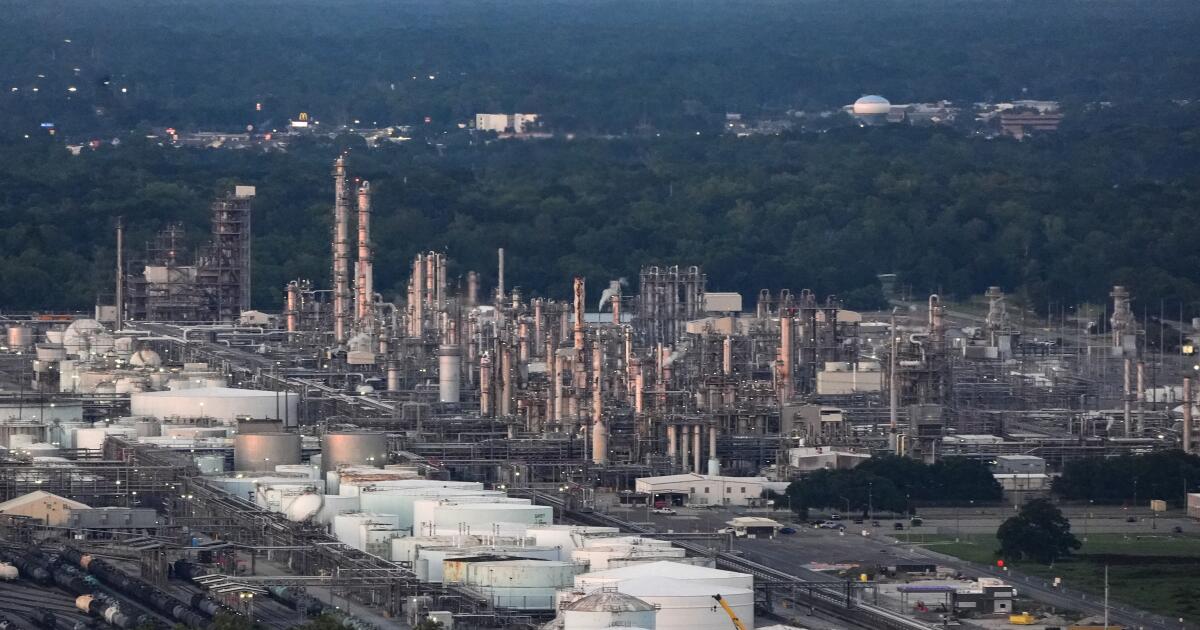
Federal EPA moves to roll back recent limits on ethylene oxide, a carcinogen
-

 Alaska1 week ago
Police looking for man considered ‘armed and dangerous’
-

 Movie Reviews5 days ago
‘Youth’ Twitter review: Ken Karunaas impresses audiences; Suraj Venjaramoodu adds charm; music wins praise | – The Times of India
-
 Science1 week ago
Long COVID leaves thousands of L.A. county residents sick, broke and ignored
-

 Education1 week ago
Video: Turning Point USA Clubs Expand to High Schools Across America