Indiana
Indiana judge rejects abortion providers’ challenge to near-total ban


An Indiana judge on Wednesday has ruled against abortion providers seeking to challenge the state’s near-total abortion ban.
The ruling, handed down by Monroe County Circuit Court Judge Kelsey Blake Hanlon, denies efforts by the providers, including Planned Parenthood, who sought a permanent injunction to expand medical exceptions within the ban and remove restrictions limiting abortion procedures to hospitals.
Following the U.S. Supreme Court’s 2022 decision to overturn Roe v. Wade, Indiana outlawed abortions except when the mother’s life or health is in jeopardy, or in instances of rape, incest and deadly fetal anomalies under limited circumstances. The law, enacted in August 2022, makes Indiana one of the most restrictive states in the U.S. regarding access to the women’s health care procedure.
In her decision on Wednesday, Hanlon, who conducted a three-day bench trial in late May, denied the providers’ request for the permanent injunction against both elements of the state law, known as S.B. 1, stating that while the court considered evidence on the impact of the law, it could not substitute the legislature’s decision-making. Hanlon, a Republican appointed to oversee the case, emphasized that the Indiana General Assembly holds the authority to shape policy on the matter.
“Significant and compelling evidence regarding the policy implications of S.B. 1 and its effect on medical professionals in particular was presented. However, the Court cannot substitute its own policy preferences for that of the Indiana General Assembly,” Hanlon wrote.
The case comes after the state’s Supreme Court upheld the ban in June 2023, but maintained that the Indiana Constitution still safeguards a woman’s right to terminate a pregnancy if her life or health is at risk.
But abortion providers argue that the language in the law is so vague that many doctors are hesitant to perform abortions, even in cases that technically qualify under the exemptions.
While Hanlon, in her 50-page order, acknowledged the difficulties posed by the law’s language—particularly for doctors operating under the threat of criminal liability—and recognized that the “politically charged environment” creates challenges, she ultimately sided with the state’s argument. She said that providers did not identify a situation where the health and life exemption or the hospital requirement prevented a woman from obtaining an abortion.
Newsweek has reached out to Planned Parenthood Federation of America via email for comment on Wednesday.
Win McNamee/Getty Images
The ruling also upheld the requirement that all abortions be performed in hospitals, rejecting the providers’ plea to allow outpatient clinics to offer the procedure, stating that hospitals are better equipped to manage cases involving serious health risks, fetal anomalies and cases of rape or incest.
“The evidence demonstrates that many women receiving abortion care when they are seriously ill or at risk of becoming seriously ill will likely be receiving in-hospital care irrespective of the hospital requirement,” Hanlon wrote.
In response to the ruling, Planned Parenthood Federation of America warned in a joint statement with the ACLU of Indiana and other plaintiffs that the court’s ruling means “lives will continue to be endangered by Indiana’s abortion ban,” adding that they “are still evaluating all options” on whether or not they will appeal the ruling.
“Already, Hoosiers with serious health complications have been forced to endure unjustifiable suffering due to miscarriages, ectopic pregnancies, and other pregnancy-related issues or leave the state to access appropriate care,” the statement said.
Indiana Attorney General Todd Rokita praised the decision, calling the state’s abortion law both “reasonable and constitutional.”
Abortion has been a key issue for the Republican and Democratic campaigns as former President Donald Trump and Vice President Kamala Harris vie for the presidency.
Since the Supreme Court overturned Roe, many Republican-controlled states have enacted abortion restrictions, with 21 states banning or restricting the medical practice at every stage of pregnancy.
This article includes reporting by the Associated Press.



INDIANAPOLIS (WISH) – The 2026 NCAA Division I Men’s Basketball Tournament’s Final Four is set.
Four teams have advanced to the Final Four and will compete for the national championship this upcoming weekend in Indianapolis.
The two national semifinal matchups will take place on Saturday. Tip times for the two games have been announced:
- 6:09 p.m. EDT – No. 3 seed Illinois vs. No. 2 seed UConn
- 8:49 p.m. EDT – No. 1 seed Michigan vs. No. 1 seed Arizona
The winners of Saturday’s games will then play in the National Championship Game on Monday, April 6.
Each game will take place inside Lucas Oil Stadium.

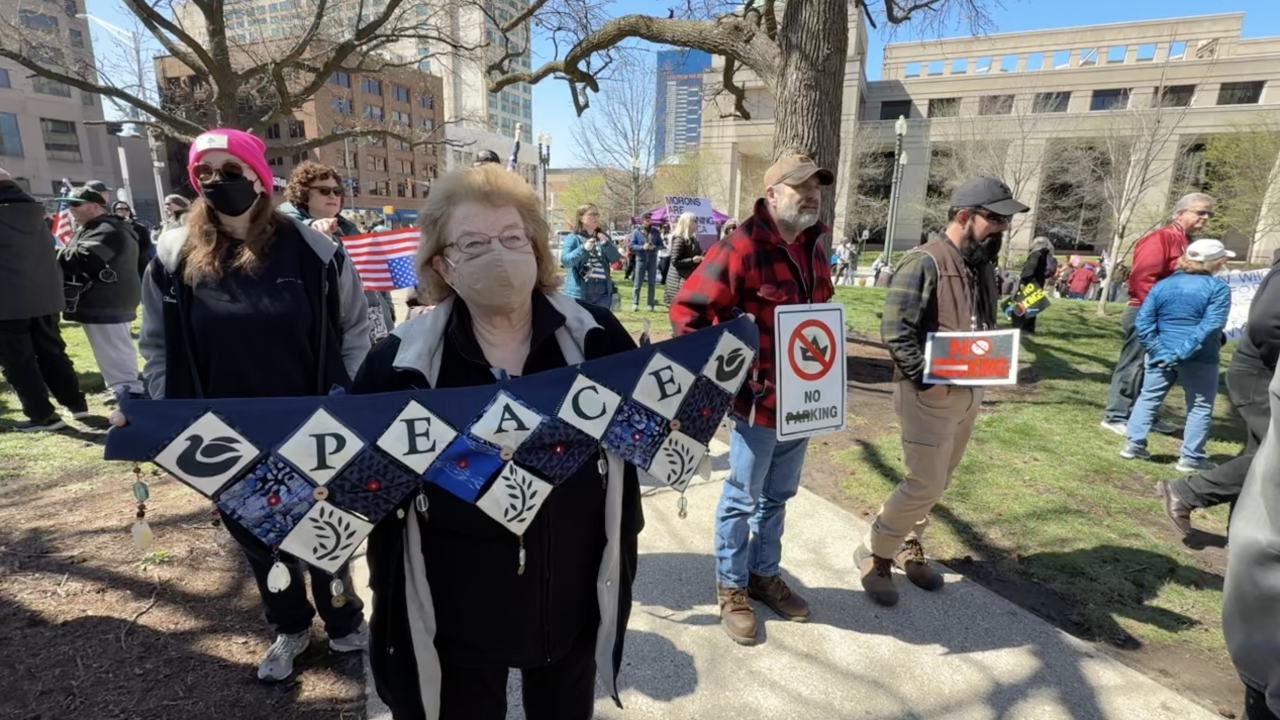
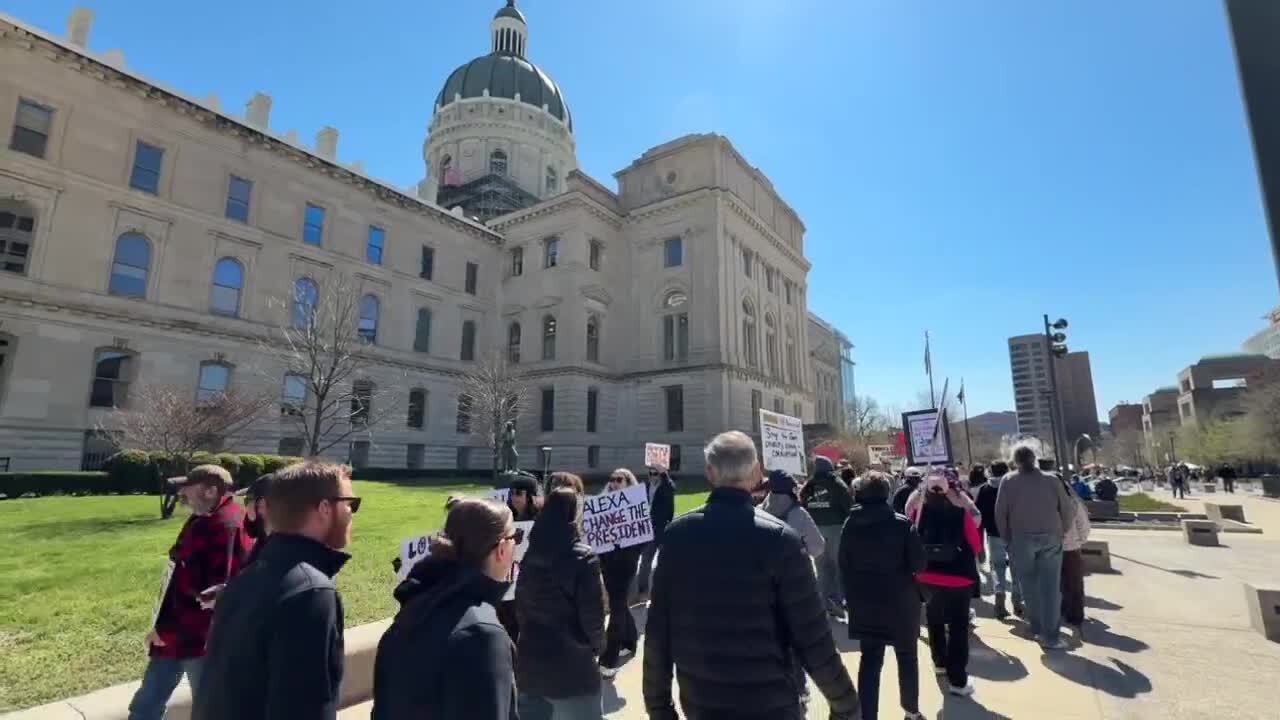
INDIANAPOLIS — Hundreds of Hoosiers gathered at the Indiana Statehouse Saturday morning as part of nationwide ‘No Kings’ events to voice their concerns about the current administration.
WATCH FULL STORY BELOW
Hundreds gather at Indiana State Capitol for ‘No Kings’ protest
“I’m out here today because what’s happening in our government is completely trash,” Donna Sipes told WRTV. “It’s wrong. We need to do something about it.”
“I’m tired of every single day when the TV comes on to see what stupid thing he’s done next,” Lindi Marti said.
WRTV
Attendees noted the growing popularity of the demonstrations.
“This is my fourth one to come to. I didn’t come to all of them when it was really cold, but I’m glad to see that they are getting a lot more people out here every time,” Marti added. “It seems like there’s more and more coming.”
Demonstrators highlighted specific foreign policy concerns, including the administration’s handling of the war in Iran.
“We’re bombing the heck out of them. We’re killing civilians,” Marti’s husband said. “We’re getting ready to send our Marines.”
WRTV
Others focused on the administration’s handling of immigration.
“That’s what I’m concerned about,” Reverend Kenny Little told WRTV. “Little kids, they’re taking them away from their family. And I’m just one of those people, I think everyone got rights.”
Indiana medical students also attended the rally to speak out against changes to the healthcare system.
“We’re really worried about the attacks on the health care system in general, but with Medicaid… current estimates range from anywhere from 325,000 to 450,000 Hoosiers will lose coverage by 2032,” Wade Catt said with concern.
WRTV
With midterm elections approaching later this year, attendees emphasized the importance of now taking action at the ballot box.
“If we don’t vote, then things are gonna not, they’re gonna stay the same,” a protester said.
Meanwhile, Indiana Lieutenant Governor Micah Beckwith says he’s happy to see Hoosiers exercise their First Amendment right to protest.
However, he takes issue with the idea that President Trump is acting like a king. Beckwith says the fact that people have the freedom to protest is proof that the president is not acting like a tyrant.
He acknowledges that bridging the gap between the sides is probably an uphill battle, but believes communication is key.
“I think when you sit down with people face to face, you’re confronted with humanity. There’s another human sitting across that table from you and talking to you. And so, all I have to say, I think that’s probably the thing I would encourage all Hoosiers to do is say, ‘Hey, if you don’t agree with somebody or if you don’t like somebody, why don’t you try grabbing coffee with them? And give it 30 minutes, and just see what happens.’ I bet most of the time people will walk away with a much softer heart and spirit towards that person before they came in,” Beckwith said.
Beckwith is currently on a 92-county tour of the state. He says all sides are welcome to attend his events.
__

INDIANAPOLIS (WISH) — Police say one “young man” is dead after a shooting at the 1200 block of Rue Rabelais at about 7:19 p.m. according to the Indianapolis Metropolitan Police Department.
That is near the intersection of 56th Street and Binford Boulevard.
Police say the victim was taken to Riley Hospital where he later died. Investigators say they are still working to identify the victim.
There was no known information about a suspect. Police did say that they believe this is a targeted incident.
There was no other information immediately available.
This story has been updated with information from the Indianapolis Metropolitan Police Department.

Game times announced for Saturday’s Final Four in Indianapolis

NW Iowa family witnesses field catch fire firsthand Saturday

+)HERE’S WAY TO WATCH Portland Thorns FC vs Kansas City Current LIVE GAME Free Tv

Mark Pope can’t gamble on three-point shooters in the transfer portal

Venture Global CP2 construction site in Cameron cleared after no threat found

Florida High School Football Rankings: Top 25 teams – Oct. 21

How old is Bo Nix? What to know about Oregon quarterback ahead of 2024 NFL Draft

Cleary's 21 help Le Moyne down Central Connecticut State 69-64 in OT

99th annual Pony Swim held in Virginia

Indiana Members Credit Union announced as new anchor tenant at Bottleworks District

Scathing report claims nation’s oldest labor union ‘betrayed’ MAGA members through ‘shocking’ spending

Republican US lawmaker demands Congress vote on any Iran troop deployment

So you went to a No Kings protest. Now what?

JD Vance says he was ‘obsessed’ with UFOs, believes aliens are actually ‘demons’
The EU's recipe for trade deals : easy on beef, tough on wine
-

 Sports1 week ago
IOC addresses execution of 19-year-old Iranian wrestler Saleh Mohammadi
-

 New Mexico1 week ago
Clovis shooting leaves one dead, four injured
-

 Miami, FL3 days ago
Jannik Sinner’s Girlfriend Laila Hasanovic Stuns in Ab-Revealing Post Amid Miami Open
-

 Tennessee6 days ago
Tennessee Police Investigating Alleged Assault Involving ‘Reacher’ Star Alan Ritchson
-

 Minneapolis, MN3 days ago
Boy who shielded classmate during school shooting receives Medal of Honor
-

 Politics1 week ago
Schumer gambit fails as DHS shutdown hits 36 days and airport lines grow
-

 Technology1 week ago
YouTube job scam text: How to spot it fast
-

 Science1 week ago
Record Heat Meets a Major Snow Drought Across the West