Connect with us

Midwest

Indiana carries out first execution in 15 years after inmate chooses Ben & Jerry's ice cream as last meal

Published

on

Indiana carries out first execution in 15 years after inmate chooses Ben & Jerry's ice cream as last meal

An Indiana man convicted in the 1997 killing of four people including his brother and his sister’s fiancé was put to death on Wednesday in the state’s first execution in 15 years.

Joseph Corcoran, 49, was pronounced dead at 12:44 a.m. CST at the Indiana State Prison in Michigan City, Indiana, according to the Indiana Department of Correction, making it the 24th execution in the U.S. this year. He was scheduled to be executed with the powerful sedative pentobarbital, although officials did not mention that drug in their statement.

Prison officials said his last meal was Ben & Jerry’s ice cream.

Corcoran was convicted in the July 1997 shootings of his brother, 30-year-old James Corcoran; his sister’s fiancé, 32-year-old Robert Scott Turner, and two other men, 30-year-old Timothy G. Bricker and 30-year-old Douglas A. Stillwell.

INDIANA TO CARRY OUT FIRST STATE EXECUTION IN 15 YEARS

Advertisement

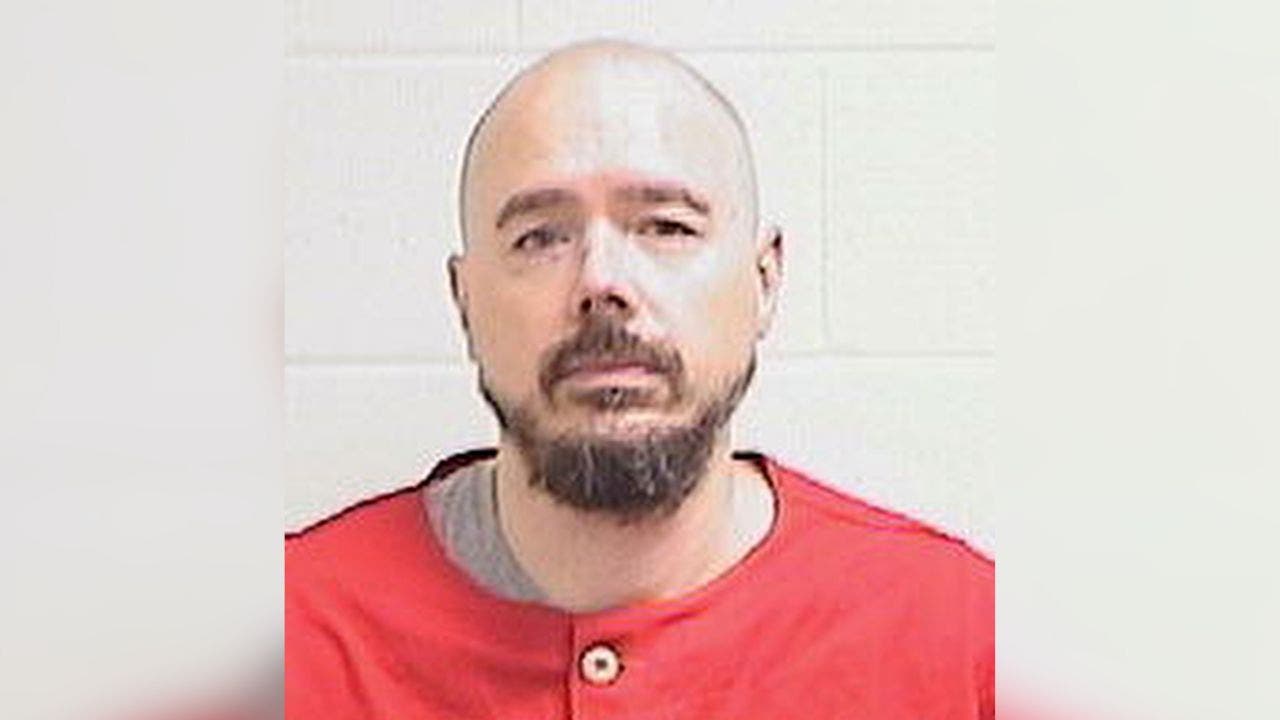
Joseph Corcoran, 49, was pronounced dead at 12:44 a.m. CST at the Indiana State Prison in Michigan City, Indiana. (Indiana Department of Corrections via AP)

Prior to the shooting, Corcoran was under stress because his sister’s upcoming marriage would require moving out of the home in Fort Wayne, Indiana, that he shared with his brother and sister, according to court records.

During his time in jail for those killings, Corcoran reportedly bragged about shooting and killing his parents in 1992 in northern Indiana’s Steuben County, for which he was charged but later acquitted.

The execution on Wednesday comes after Gov. Eric Holcomb, a Republican, announced plans in June to resume state executions following a 15-year hiatus caused by difficulty obtaining lethal injection drugs.

The state provided limited details about the execution process, and no members of the press were allowed as witnesses under state law. But Corcoran chose a reporter for the Indiana Capital Chronicle as one of his witnesses.

Advertisement

Indiana and Wyoming are the only two states in the country that do not allow members of the media to witness state executions, according to the Death Penalty Information Center.

Corcoran’s attorneys had challenged his death penalty sentence for years, claiming he was severely mentally ill, which affected his ability to understand and make decisions. Earlier this month, the state Supreme Court rejected a request from his attorneys to stop his execution.

He had exhausted his federal appeals in 2016, but his attorneys asked the U.S. District Court of Northern Indiana last week to halt his execution and hold a hearing to decide if it would be unconstitutional since Corcoran has a serious mental illness. The court refused to intervene on Friday, followed by another denied request on Tuesday from the U.S. Court of Appeals for the 7th Circuit.

Corcoran’s attorneys then made a final plea and urged the U.S. Supreme Court to issue an emergency order blocking his execution, but it also denied their request for a stay late Tuesday.

Defense attorney Larry Komp said he was disappointed with the high court’s ruling, saying that the issue surrounding Corcoran’s mental health was not properly examined.

Advertisement

INDIANA SEEKS TO CARRY OUT FIRST EXECUTION IN 15 YEARS AFTER OBTAINING LETHAL INJECTION DRUG

Joseph Corcoran is led to the City-County Lockup on Aug. 26, 1999, in Fort Wayne, Indiana, after being sentenced to death in the slayings of four people in July 1997. (Matt Sullivan/The Journal-Gazette via AP)

“There has never been a hearing to determine whether he is competent to be executed,” Komp said in a statement to The Associated Press. “It is an absolute failure for the rule of law to have an execution when the law and proper processes were not followed.”

Corcoran’s only remaining option to extend his life after the legal challenges became Holcomb, who could have commuted Corcoran’s death sentence but elected not to.

Holcomb’s office released a statement Wednesday after Corcoran was put to death.

Advertisement

“Joseph Corcoran’s case has been reviewed repeatedly over the last 25 years – including 7 times by the Indiana Supreme Court and 3 times by the U.S. Supreme Court, the most recent of which was tonight,” Holcomb said. “His sentence has never been overturned and was carried out as ordered by the court.”

Indiana’s last state execution was carried out in 2009 when Matthew Wrinkles was put to death for killing his wife, her brother and sister-in-law in 1994. Since that time, 13 executions have been carried out in the state, but those were initiated and performed by federal officials in 2020 and 2021 at a federal prison.

State officials have said they could not resume executions because the combination of drugs used in lethal injections were unavailable.

There has been a shortage of the drugs across the country for years because pharmaceutical companies have refused to sell them for executions, which forced states, including Indiana, to use compounding pharmacies, which make drugs specifically for clients. Some of these pharmacies use more accessible drugs such as the sedatives pentobarbital or midazolam, both which critics argue can cause intense pain.

At midnight, a group of anti-death penalty activists began singing “Amazing Grace.”

Advertisement

Religious groups, disability rights advocates and others have opposed Corcoran’s execution. About a dozen people, including some who were holding candles, held a vigil late Tuesday to pray outside the prison.

The sun sets behind Indiana State Prison on Tuesday, Dec. 17, 2024, in Michigan City, Indiana. (AP)

“We can build a society without giving governmental authorities the right to execute their own citizens,” Bishop Robert McClory of the Diocese of Gary, who led the prayers, said.

Other death penalty opponents also held protests outside the prison Tuesday night, with some holding signs that read “Execution Is Not The Solution” and “Remember The Victims But Not With More Killing.”

Advertisement

“There is no need and no benefit from this execution. It’s all show,” Death Penalty Action director Abraham Borowitz, whose organization protests every execution in the U.S., said.

Corcoran’s wife, Tahina Corcoran, told reporters outside the prison her husband was “very mentally ill” and she did not think he fully understood what was happening to him.

“He is in shock. He doesn’t understand,” she said.

The Associated Press contributed to this report.

Read the full article from Here

Advertisement
Continue Reading
Click to comment

Leave a Reply

Your email address will not be published. Required fields are marked *

This site uses Akismet to reduce spam. Learn how your comment data is processed.

Detroit, MI

Scene active as police shoot, kill man on Detroit’s west side

Published

on

Scene active as police shoot, kill man on Detroit’s west side


The investigation remains ongoing

An investigation is underway after police shot and killed a man on Detroit’s west side. (Noelle Friel, Sara Schulz, Copyright 2026 by WDIV ClickOnDetroit – All rights reserved.)

DETROIT – An investigation is underway after police shot and killed a man on Detroit’s west side.

The incident occurred on Thursday (June 25) in the 18900 block of Rosemont Avenue and 7 Mile Road, prompting a response from police and emergency crews, who set up a staging area.

Local 4 is heading to the scene and will provide updates as they become available, but the victim’s condition has not been released as of 7:55 p.m.

Advertisement

The Detroit Police Department’s Media Relations team was responding to the scene, and officials said additional information would be provided, including a media briefing with sound available.

Authorities have not released details about what led up to the shooting or the circumstances involving the officer or officers involved.

This is a breaking news story, and updates will be posted as they become available.


Source link

Continue Reading

Milwaukee, WI

Milwaukee residents demand permanent fixes as city logs record pothole repairs

Published

on

Milwaukee residents demand permanent fixes as city logs record pothole repairs


MILWAUKEE — Milwaukee city workers have been working overtime and on weekends to patch potholes in what is shaping up to be a record year for that type of work. But for many residents, the patching is not enough.

The city’s Department of Public Works has received more than 18,000 requests for pothole service so far in 2026. Workers have already filled more than 10,000 potholes this year — right around what the city has averaged annually over the past five years.

Following a winter marked by repeated freeze-thaw cycles and a spring that brought additional weather-related challenges, city officials held a news conference Thursday with an update on the situation.

Advertisement

Raneissa Baker, a driver on Milwaukee’s north side, said her car is currently in the shop with suspension damage she says will cost her $1,100 — the result of the sheer number of potholes she has hit this year, not any single one.

“Streets are horrible, and every time that you hit a pothole, all you hear, doo doo doo doo doo,” Baker said.

Watch: Milwaukee residents demand permanent fixes as city logs record pothole repairs

Advertisement

Milwaukee reports high number of pothole requests

Baker said avoiding the craters is not an option and potentially dangerous depending on traffic.

“It’s impossible to try to avoid it,” Baker said.

At the news conference, TMJ4 asked DPW Commissioner Jerrel Kruschke what his message was for drivers like Baker who have had their cars damaged and spent thousands of dollars on repairs.

Advertisement

“The first thing I tell the public is please pay attention. If you focus on driving ahead of time, a lot of times you can avoid potholes on the roadway. We know they exist. We know it’s frustrating,” Kruschke said. “If you do have some sort of damage to your vehicle, there is a claim system that you can go onto the city website and file a claim.”

Mike Beiermeister

Mike & Raneissa Baker watch the press conference.

Baker pushed back on that response.

“He said to pay attention and try to avoid it. How are we going to be able to avoid it if you’re driving and there’s a car right here, and there’s a pothole right here? How am I going to try to avoid that?” Baker said.

Patrick Housfeld, who lives on South 12th Street, said the problem on his block is nothing new.

Advertisement

“This wasn’t new this year; this has happened for 21 years straight,” Housfeld said.

Patrick Housfeld

Mike Beiermeister

Patrick Housfeld looks down S. 12th St.

Housfeld has stopped using 12th Street altogether and believes more craters will soon reemerge after the latest round of patching. He called the work on his block performative.

“Make the problem go away. I don’t care what the numbers were or are,” Housfeld said.

Both Baker and Housfeld want more permanent solutions than pothole patching.

Advertisement

Road reconstruction, however, is expensive — running into the millions of dollars depending on the work required.

“You fill it up with Oreo crumbs today, it’s a bigger sinkhole by tomorrow, it’s not making sense, just repair the roads,” Baker said.

DPW estimates it still has about 5,000 potholes left to patch. The city says it will be all hands on deck until that work is complete.

The department says residents can report potholes or repair concerns through Milwaukee’s Service Request page or by calling the city’s Unified Call Center.

Report here: https://city.milwaukee.gov/ReportPotholes

Advertisement

Call here: 414-286-CITY (2489)

This story was reported on-air by a journalist and has been converted to this platform with the assistance of AI. Our editorial team verifies all reporting on all platforms for fairness and accuracy.


Let’s talk:

Hey there! At TMJ4 News, we’re all about listening to our audience and tackling the stuff that really matters to you. Got a story idea, tip, or just want to chat about this piece? Hit us up using the form below. For more ways to get in touch, head over to tmj4.com/tips.


It’s about time to watch on your time. Stream local news and weather 24/7 by searching for “TMJ4” on your device.

Advertisement

Available for download on Roku, Apple TV, Amazon Fire TV, and more.


Report a typo or error // Submit a news tip


Source link

Continue Reading

Minneapolis, MN

Minneapolis City Council approves 5-month pause on data center development

Published

on

Minneapolis City Council approves 5-month pause on data center development


Minneapolis City Council members approved a five-month pause on new data center development Thursday.

The moratorium does not apply to smaller data centers located downtown that are less than 350,000 square feet.

The Minneapolis City Council voted to temporarily halt new data center projects while city staff study regulations and examine concerns about environmental impacts, energy use and public safety.

The vote comes as opposition to data center projects has surfaced in communities across Minnesota.

Advertisement

In Elk River, Minnesota, this week, the city’s planning commission recommended against a proposal that would pave the way for a data center, despite the fact advocates said the project could generate an estimated $800,000 in additional revenue.

In Inver Grove Heights, Minnesota, a packed city council meeting erupted in boos after officials delayed a final vote on a proposed data center. The vote is now scheduled for Friday.

The issue has drawn strong opinions in Minneapolis.

At a Minneapolis committee meeting last week, a vocal majority spoke out in favor of the pause. Labor groups highlighted the construction jobs data centers can provide, while residents raised concerns about neighborhood impacts and whether the facilities would benefit local communities.

Councilmember Soren Stevenson said residents throughout Minneapolis have been clear in their opposition to additional data center development.

Advertisement

“My constituents and people from across this city are so, so clear that they don’t want data centers at all,” Stevenson said.

Supporters of the moratorium said the temporary pause will give city officials time to study the industry and develop regulations before additional projects move forward.

Council Member Aurin Chowdhury argued that data centers have had disproportionate impacts.

“That industry has shown over and over again negative impacts, especially in communities of color and communities that have been impacted by environmental injustice,” Chowdhury said.

Opponents of the pause warned the move could discourage future investment in Minneapolis and send the wrong message to businesses considering projects in the city.

Advertisement

Councilmember Linea Palmisano said the moratorium could undermine efforts to attract economic development at a time when residents are facing higher property taxes.

“We send a message to the business community that they aren’t important or supported by this council,” Palmisano said. “We send the message that we don’t want their investment.”

The measure now heads to Mayor Jacob Frey, who plans to spend the next several days reviewing the ordinance before deciding whether to sign it, a spokesperson said.


Source link

Continue Reading
Advertisement

Trending