Illinois
Western Illinois election results for April 1, 2025


Voters on Tuesday decided elections for city government, school board, and other local positions. There were also referenda on ballots around the region.
The unofficial outcomes of contested elections are listed below, starting with municipal governments listed in alphabetical order. Those are followed by school boards and then referenda.
Results from Hancock County were not available Tuesday night.
Abingdon Mayor
Jason Johnson 412
Stewart Powell 346
Abingdon City Council – Ward 3
Two-year unexpired term
Doug Thomas 113
Michael DeJaynes 75
Raymond Hutson 38
Abingdon City Council – Ward 4
Heather Thompson 67
Tim Presley 26
Alexis Village President
Moses Anderson 55
Rick Benson 39
Alexis Village Trustee
Vote for three
Paula Olson 66
Pat Brenner 50
Tony Cornell 49
Hope Fontenoy 45
Astoria Library District Trustee
Vote for three
Shaina Thiner 18
Kathryn Bridges 13
Addie Kimbro 9
Anna Pilger 5
Basco Village President
James Damron
Michelle Noble
Browning Village President
Cody Smith 31
Burl Boyd 22
Canton Mayor
Kent McDowell 1,480
Ben Hendricks 763
Canton City Council – Ward 1
David Pickel 321
Angelia Lingenfelter 263
Colchester Mayor
Mark Clark (Rep) 173
Eric Haines (Dem) 93
Colchester City Council – Ward 2
Martha Clark (Rep) 88
Mary Garlick (Dem) 37
Cuba City Council – Ward 2
Rodney Lynch 38
Brian Anderson 14
Cuba City Council – Ward 3
Douglas Falk 77
Karena Cozad 28
Ferris Village Trustee
Vote for three
Terence Vass
David Mott
Steven Brown
Tim Martin
Galesburg Mayor
Peter Schwartzman 2,831
John Pritchard 2,455
Galesburg City Council – Ward 2
Wendel Hunigan 308
Wayne Dennis 201
Galesburg City Council – Ward 4
Dwight White 165
Corine Andersen 106
Galesburg City Council – Ward 6
Greg Saul 504
Tianna Cervantez 342
Demarkius Medley, Sr 88
Galesburg Township Supervisor
Kimberly Thierry 2,983
Jennifer Fredrick 2,146
Lewistown Mayor
Cynthia Goddard 242
Roger Clark 153
Lomax Village President
Brian Grisham 74
Phillip Butler 52
Macomb City Council – At-Large
Jennifer Hemingway 577
Tammie Leigh Brown-Edwards 522
Monmouth Mayor
Rod Davies 874
Sean Cavanaugh 727
Nauvoo City Council – Ward 1
Rita Souther
Barbara Schafer
Oquawka Village Trustee
Vote for three
Brenda Tee 149
Nancy Bundy 128
James Miller 84
Tammy Bundy 84
Plymouth Village Trustee
Vote for three
Andrea Cox
Shelly Conover
Cody Smith
Kyle Thompson
Pontoosuc Village President
Floyd Maynard
Bryan Long
Pontoosuc Village Trustee
Vote for four
James Olson
Carol Ried
Thomas Burch
Alice Vantiger
Brent Akers
Paige Akers
Raritan Village Trustee
Vote for three
Rhonda Blender 29
Nicholas White 17
Timothy Douglas Boyd 16
Toni Hendrickson 12
Krystal Reighard 11
St. Augustine Village President
David Schisler 22
Ricky Aldridge 11
Vermont Village Clerk
Cary Little 82
Sarah Hamm 12
Warsaw Mayor
Jeff Brookhart
Richard Hauk
Glenn McLaughlin
Wataga Village Trustee
Vote for three
Kevin Stone 88
Thomas Lytle 80
Caleb Bean 64
Rochelle Olson 62
School Districts
Abingdon-Avon School District 276
Vote for four
Sarah Batson 988
Chancey Weidenhamer 963
David Lee Serven 879
Richard Quinn 859
Michael Kyle Thurman 820
Zachary Grace 587
Astoria School District 1
Vote for four
Austin Cameron 158
Derek Prather 144
Jill Easley 129
Peter Egleton 119
Patrick Skiles 64
Carina Kapraun 32
Canton School District 66
Vote for two
Brian Spiva 1,141
Caitlin Mason 1,057
Jane Lewis 928
Christopher Piper 831
Amber Schappaugh 830
Carl Sandburg Community College District 518
Vote for two
Jeffrey Wittsitt 42%
Angel Peterson 40%
DeVone Eurales 19%
Carthage Elementary School District 317
Vote for four
Gary Jackson
Linda Brooks Housewright
Stephanie Kristine Fitch
Christine White
Jacob Murphy
Fulton County School District 3
Vote for four
Valerie Wilson 399
Sue McCance 375
Lindsey Heitz Lindsey 374
Debora Deakin 302
James Richardson 296
Galesburg School District 205 – Galesburg Township
Vote for two
Luan Statham 2,998
Rod Scherpe 1,986
Robert “Bo” Irons 1,698
Jaclyn Smith-Esters 1,477
Pamella Bess-Tabb 1,328
Galesburg School District 205 – Remaining Congressional Townships
Vote for two
Maurice Lyon 2,519
Jamie Harter 2,426
Terra Boettcher 2,109
Benjamin Yeutson 1,717
Knoxville School District 202 – Knox Township
Vote for two
Charles Hillery 344
Darcy Young 202
Phillip Parks, Jr. 190
LaHarpe Elementary School District 347
Vote for four
Joshua Gebhardt
Chad Burt
Josh Walker
William Collins
Joni Dowell
Lewistown School District 97
Vote for four
Dale Schaeffer 576
Elaine Stone 541
Scott Schaeffer 536
Joshua Jay Miller 459
Brett Belless 378
Macomb School District 185
Vote for four
Kishor Kapale 1,089
Justice Keene 1,003
John “Larry” Adams 938
Nate McGraw 925
Lorette Oden 903
Monmouth-Roseville School District 238
Vote for four
Amy Rogers 1,417
Kira Schumm 1,116
Phillip Brooks 1,097
Amy Gaule 1,075
Yulissa Sparks 640
United School District 304
Vote for four
Henry Shimmin 734
Joshua Oaks 716
Jill Marie Jenks 575
Holly Tharp 514
Danny Toops 454
Katrina Kessler 378
Chris Menge 197
VIT School District 2
Vote for three
Joshua Miller 200
Larry Payne 185
Darryl Holmes 151
Zachary Parker 94
Referenda
Abingdon-Avon School District 276 Referendum
Shall the board issue $6 million in bonds to build and equip an addition to the middle school building and repair existing facilities?
Yes 362
No 989
Hancock County Schools Referendum
Shall the county impose a one-percent sales tax to pay for school facilities, school resource officers, and mental health professionals?
Yes
No
LaHarpe School District 347 Referendum
Shall the board issue $3.9 million in school building bonds to build and equip an addition to the LaHarpe Elementary/Junior High School building?
Yes
No
Roseville Village Referendum
Shall the village allow residents to keep female poultry?
Yes 149
No 77
Schuyler County Road Tax Referendum
Shall a special tax be levied for repairing all county roads?
Yes 539
No 512
Warren County School Facility Tax Referendum
Should the county’s school district be allowed to use revenues from the school facility tax to also pay for school resource officers and mental health professionals?
Yes 2,333
No 887


A major overhaul to the Illinois justice system could be officially underway.
House Bill 3363 lays the foundation for a brand new agency, the state public defender office.
The goal is to bring more consistent legal representation for Illinois residents who can’t afford an attorney.
Joining us now to discuss the rolled-out timeline is the bill’s sponsor, State representative Dave Vella, who actually started his legal career as a public defender, before heading to Springfield.
Illinois
Illinois Democrats face backlash after blaming Trump in Chicago cross-burning case | Fox News Video

‘Outnumbered’ reacts to Illinois Gov. JB Pritzker and Chicago Mayor Brandon Johnson blaming President Donald Trump for a cross-burning incident in Grant Park.
Illinois Democratic leaders Governor JB Pritzker and Chicago Mayor Brandon Johnson are slammed for weaponizing a Chicago cross burning incident by blaming former President Trump. Despite the suspect, Murlin Lue, admitting his motive was to protest Trump, not racism, Pritzker and Johnson doubled down. Critics, including Illinois GOP State Rep. Chris Miller, accuse them of playing politics and fostering division rather than seeking truth.

ROCKFORD, Ill. (WIFR) – November ballots will feature a repeat of top billing in the race for governor. Illinoisans can once again choose between Governor JB Pritzker or Darren Bailey to lead the Land of Lincoln.
But beside their spots, new names will appear for voters.
The Democratic and Republican candidates for governor picked new running mates for their rematch. With Lieutenant Governor Julianna Stratton running for U.S. Senate, Pritzker picked Christian Mitchell to join his ticket. On the Republican side, Aaron Del Mar joins Bailey, who previously ran with Stephanie Trussell in 2022.
Mitchell and Del Mar spoke Thursday with WIFR on what inspires them to run, their campaign priorities and ideas to improve the Rockford region.
Backgrounds
Starting with the Democratic ticket, Mitchell joins the race as a former state representative from Chicago as well as a deputy governor with the Pritzker administration.
“Before anything else, I’m Debbie’s son, and I’m James’s grandson,” Mitchell introduced. “They’re the ones who really instilled in me the value of hard work and made sure that I was going to have a very bright future.”
Mitchell sees the role of lieutenant governor as a partner to the state’s executive.
“I’m really lucky to be running with somebody who I respect, and who I think is the best governor in the nation… Governor JB Pritzker,” he said.. “My first thing is going to be supporting his agenda, which right now is all about lowering costs and raising wages.”
On the Republican side, Del Mar hails from suburban Chicago and considers his first priority to be raising his family.
“I wanted nothing to do with politics, did not want to be involved — wanted just to raise my kids and work my job,“ said Del Mar. He described his start in public service as something he ”kind of got pulled into.”
The Republican worked his way from a city council member in Palatine, at 29-years-old, to co-chair of the Illinois GOP. Although he says he “wanted nothing to do with being on” Bailey’s campaign, Del Mar sees strength in unity — offering a Chicago area perspective alongside Bailey’s southern Illinois roots.
“How about everybody in the state of Illinois, regardless of where you come from, has a seat at the table. If you’re from a southeast farming community, or you’re from the city of Chicago, where I grew up, everybody has a stake in the game.”
Priorities
Mitchell points to economic development as his focus for the gubernatorial campaign.
“I see vacancies on State Street in Chicago. I see vacancies on Main Street in Belleville and Alton and in Carbondale,” he recounted. “I want to make sure that we’ve got the kind of amenities and economic development, that kind of affordability, that allow us to make sure that folks want to stay in the towns that they’re born in if they want to.”
The Democratic candidate also eyes long-term planning for the state, including an “Illinois 2050 Plan.”
“How do we have the kind of educational undergirding that means that no matter where you’re from, you have a chance to have one of those jobs, whether it’s in new agriculture technology and new farming techniques or biotech, quantum.”
When asked how to achieve these priorities, Mitchell turned to investing in public education, retaining residents with better wages and improving health care.
“Making sure that we are able to protect our health care system, so that folks aren’t going broke when they get sick, that’s another big way that we can make an impact.”
Del Mar outlined a cost-of-living focus as central to his campaign.
“You wanna succeed, you do the basics really well, and the basics are affordability,” he contended.
The Republican repeatedly highlighted the state’s property taxes — reportedly the highest in the nation — as an issue to tackle. He suggested redirecting Illinois’s budget as one measure to ease the burden on homeowners.
“Number one is fully funding the state’s portion of local taxes, because that will offer people property tax relief.” Del Mar clarified this wouldn’t mean redirecting funds for public education.
“We’re looking at how we fund schools, how we make sure to empower teachers to have the best educational outcomes that we can have here in Illinois, regardless of what your zip code is, regardless of what your parents do for a living or how much money they make,” added Del Mar.
Reflecting on Rockford
Each candidate provided their vision for boosting the Rockford region.
For Mitchell, improvements continue with infrastructure funding, building on the state’s roughly $500 million investment in the area.
“The things that we have already worked on, through the capital plan that I helped lead as deputy governor, that the governor signed and is implementing, are already having benefits that the people of Rockford can see.”
The Democrat also pointed to the Chicago Rockford International Airport as an opportunity.
“Investing in that regional airport where we’ve already helped with a matching grant to get additional funds, that helps build out the economy,” said Mitchell. “There’s so much that’s happening there that it is really good for the economy and bringing more people back to Rockford.”
Del Mar shared his local priority as supporting unionization in the area.
“Union families deserve to be able to have a livable wage, and that’s something that’s important to Darren and I,” said Del Mar. He mentioned pensions were another item that a Republican executive wouldn’t touch for the public and private sector unions.
“I know that area up there has strong union backbone,” described Del Mar. “We want to make sure they know that they’re not going to have a bigger supporter in the governor’s mansion than Darren and I.”
Election Day
When asked for thoughts on their opponent, Mitchell criticized the Bailey campaign as a “repacking” of his 2022 run.
“The only record that they have to run on is extremism,” he exclaimed.
The Republican candidate also reflected on records, pointing to Pritzker’s years in office.
“Why are we underfunding education? Why are property taxes at all-time high? Why are businesses leaving?” asked Del Mar.
Voters can decide on who will lead Illinois November 3. Early voting starts September 24, with applications for voting by mail opening August 5.
Extended Interviews
Copyright 2026 WIFR. All rights reserved.
-

 Technology8 minutes ago
It’s the last day of Prime Day — here are over 140 great deals to choose from
-

 World14 minutes ago
Rubio announces framework deal between Israel and Lebanon as experts warn Iran will fight to sabotage it
-

 Politics21 minutes ago
Lawyer who beat Hawaii gun law calls state’s reliance on Black Code ‘disgraceful’
-

 Sports29 minutes ago
2026 World Cup Group Scenarios: What Remaining Teams Need To Advance To Round of 32
-

 Technology36 minutes ago
Ohio robot cop retires after zero arrests
-
 Business39 minutes ago
Commentary: Puncturing the myth of Alan Greenspan, whose policies gave us the Great Recession
-
 Entertainment44 minutes ago
On 10th anniversary, Boleros de Noche’s legacy is celebrated by L.A. City Hall
-
 Lifestyle50 minutes ago
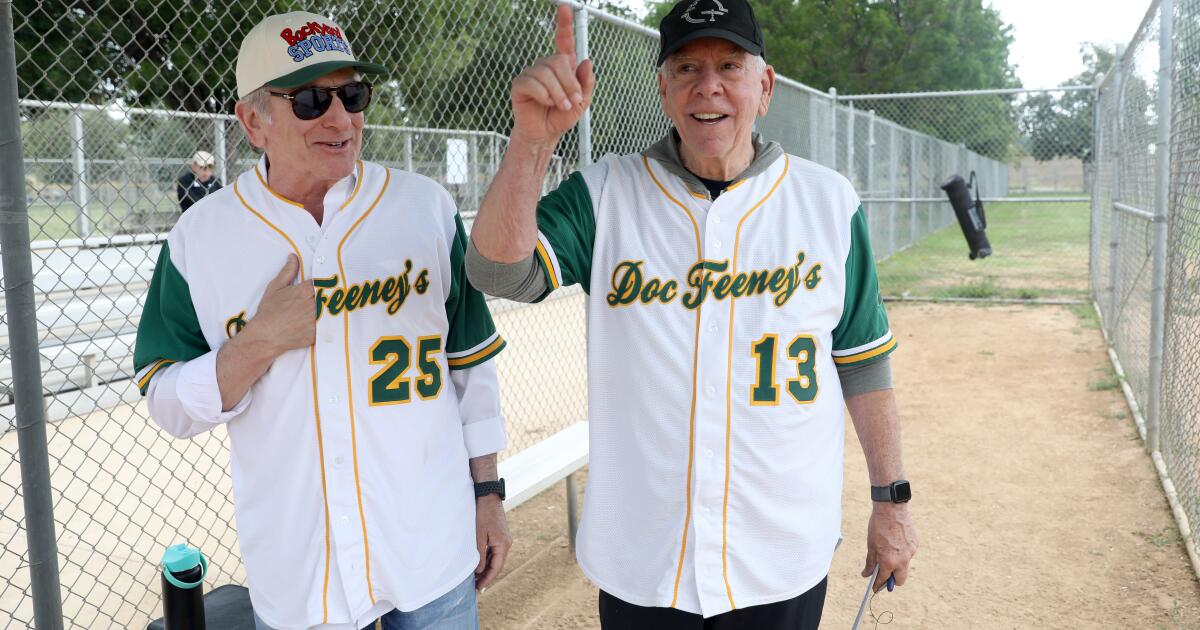
They started playing L.A. Municipal softball 50 years ago. They’re still at it

