Illinois
Illinois trucking company with 480 drivers abruptly ceases operations

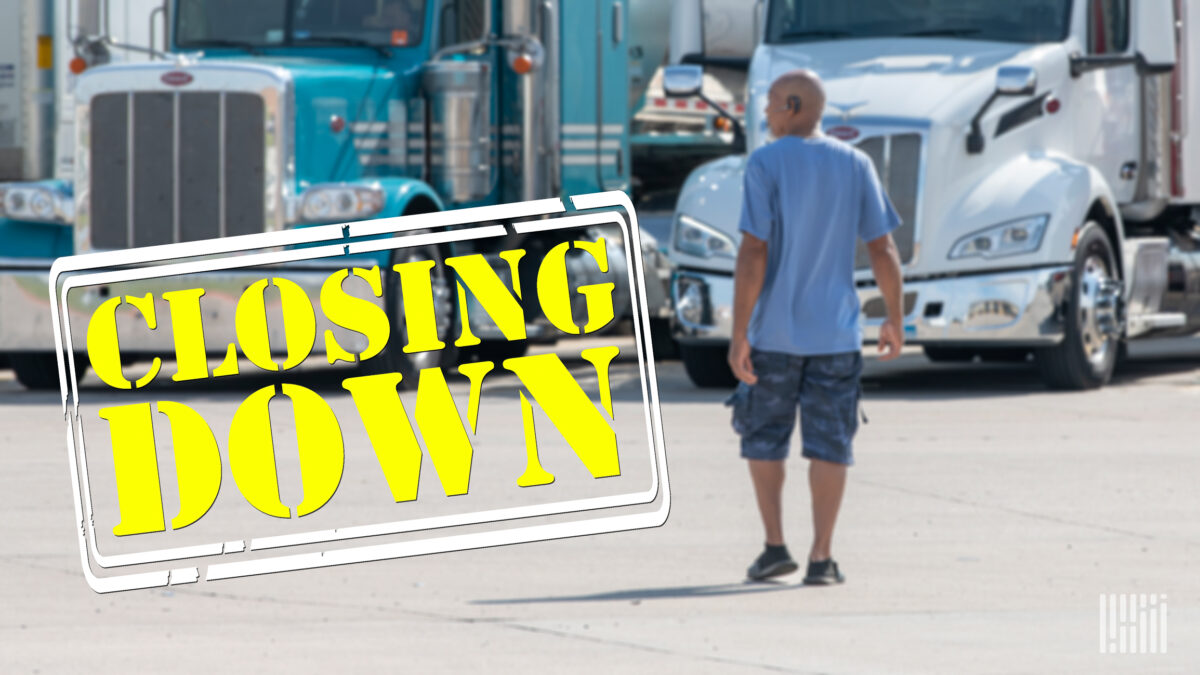
An Illinois-based trucking and logistics company, which contracted with the U.S. Postal Service to haul mail and had over 650 employees, including more than 480 drivers, abruptly ceased operations Thursday, according to sources familiar with the closure.
Former truck drivers for Midwest Transport Inc. (MTI), headquartered in Robinson, Illinois, told FreightWaves that they received telephone calls from their regional managers late Thursday notifying them the company was winding down operations.
As of publication on Friday, MTI has not issued a formal statement about what led to the closure. However, FreightWaves confirmed with some former senior managers and truck drivers who worked for the mail contractor that the company was ending operations. They did not want to be named in the article for fear of retaliation.
MTI, founded in 1980, operated key terminals in Greenup, Illinois; Harmony, Pennsylvania; Memphis, Tennessee; and two terminals in Tampa and Jacksonville, Florida, according to its website.
MTI had over 480 drivers and 428 power units, according to the Federal Motor Carrier Safety Administration’s SAFER website.
FMCSA data shows the company’s trucks had been inspected 244 times, and 65 had been placed out of service for a 27% out-of-service rate over the preceding 24-month period. That is significantly higher than the industry’s national average of around 22%.
MTI’s drivers had been inspected 564 times, and 16 were placed out of service over a two-year period, resulting in a nearly 3% out-of-service rate. That is less than half the industry’s national average of 7%, according to FMCSA.
The trucking company had 21 injuries and 42 tow-aways over the past 24 months.
According to the SAFER database, MTI was cited for acute/critical violations in two categories: controlled substances/alcohol and driver fitness.
A check on SAFER shows that MTI’s common, contract and broker authorities remain active. MTI had two compliance reviews on July 7 and July 25, according to FMCSA data.
As of publication Friday, MTI had not filed a notice of its impending closure in Illinois, Tennessee, Pennsylvania or Florida.
One longtime former MTI driver said he was surprised by the news the company was ceasing operations but said that drivers had started receiving notices over the past few months to ensure their log books were certified after each run and to watch their speed and improve their on-time performance.
“I don’t know what happened because we had a lot of postal contracts all over the U.S.,” a former MTI driver told FreightWaves. “I [don’t know if] the USPS is just finding out like us [that] the mail will be sitting on the docks on Monday.”
A media spokesperson with the Postal Service did not immediately return FreightWaves’ request for comment.
This is a developing story.
Do you have a news tip or story to share? Send Clarissa Hawes an email or message @cage_writer on X, formerly Twitter. Your name will not be used without your permission.
The post Illinois trucking company with 480 drivers abruptly ceases operations appeared first on FreightWaves.



Illinois
Truck engulfed in flames on I-294 near Oak Brook, shutting down multiple lanes, police say: VIDEO

OAK BROOK, Ill. (WLS) — A truck was engulfed in flames Thursday evening on I-294 in the west suburbs, shutting down multiple lanes, Illinois State Police said.
ABC7 Chicago is now streaming 24/7. Click here to watch
The fire broke out on southbound I-294 near Oak Brook.

Only the left lane of southbound I-294 was open as of 9 p.m., ISP said.
No injuries have been reported.
This is a developing story.
Copyright © 2026 WLS-TV. All Rights Reserved.

New legislation in Illinois means new rules for electric bikes, scooters, and similar devices. Supporters of the legislation said the goal is to prevent injuries and fatalities, but some e-bike riders question the additional cost that would be involved.
Benjamin Rodriguez, who recently bought an electric bike, said he knows the responsibility that comes with enjoying a ride.
“For a lot of the bikers that are going very fast on these e-bikes, e-scooters, especially along the lakefront, make it dangerous for other regular cyclists, because most of the time they’re just zipping along. They’re not paying attention,” he said.
The Illinois Secretary of State’s Office said injuries and fatalities involving these types of devices increased 300% nationwide between 2019 and 2022. With that in mind, Illinois Secretary of State Alexi Giannoulias said the passage of Senate Bill 3484 is a priority for public safety.
“Some of these devices have become faster, more powerful, and more dangerous than we could have ever have imagined, especially even just a couple of years ago,” he said.
Right now, there’s no statewide regulation in Illinois on high-speed electric bikes.
Senate Bill 3484, which was passed by state lawmakers at the end of their spring session, would require the owners of those devices statewide to only ride on the street, not on sidewalks, not in bike lanes, and not on bike paths.
Riders also would be required to have a valid driver’s license, title, registration, and insurance for their bikes.
“That may be a little too over the top, because you’re already paying several thousand dollars for these vehicles, but at the same time there needs to be some type of regulation to say where they could ride, how fast they could go, because they should be obeying the speed limits as well,” Rodriguez said.
When it comes to electric skateboards, electric unicycles, and high-speed electric scooters, the legislation would require operators to be at least 16 years old, and go no faster than 28 mph on a sidewalk. Those devices would be allowed on bike lanes, bike paths, and roads with speed limits of up to 35 mph. They could only be used on roads with a speed limit of more than 35 mph if there is a bike lane.
Dr. Michelle Macy, a pediatric emergency physician at Lurie Children’s Hospital, said she’s seen minor injuries, but also severe ones.
“Head injuries that are severe enough that someone’s lost consciousness and needs to have a breathing tube and spend days and weeks in the intensive care unit,” she said.
The legislation now goes to Gov. JB Pritzker. If he signs the bill into law, or allows it to go into effect without his signature, it would take effect on Jan. 1, 2027.

COOK COUNTY, Ill. – A Berwyn man is facing a felony DUI charge after state police said he struck and killed an Illinois Tollway worker and injured two others during overnight road work on the Tri-State Tollway in Des Plaines.
What we know:
According to Illinois State Police, 37-year-old Paul R. Ong was arrested following a deadly crash that occurred around 4:26 a.m. May 30 on southbound Interstate 294 north of Devon Avenue near milepost 41.5.
ISP said three Illinois Tollway workers were conducting pothole repairs when an SUV driven by Ong struck one of the workers.
State troopers responded to the scene and provided medical aid before the injured worker was transported to a hospital, where he died about a half hour later.
The Cook County Medical Examiner’s Office identified the worker as 52-year-old Calvin L. Holley of Chicago.
The two other tollway workers were also taken to a hospital with injuries that were not considered life-threatening.
ISP took Ong into custody at the scene. He has been charged with one count of aggravated driving under the influence involving death, a Class 2 felony.
What’s next:
As of Wednesday, Ong remained in custody awaiting his first court appearance.
The Source: The information in this story came from Illinois State Police.
-

 Tennessee3 minutes ago
Texas discovery of ‘devastating’ flesh-eating fly that lays eggs in animal eyes prompts new regulations in Tennessee
-

 Texas10 minutes ago
Texas town becomes a cattle drive after 18-wheeler hits runaway herd
-

 Utah13 minutes ago
Utah tracking New World Screwworm after first U.S. reported since 1968
-

 Vermont18 minutes ago
Londonderry proposes bylaw updates – The Vermont Journal & The Shopper
-

 Virginia25 minutes ago
Virginia man gets life in prison for double murder scheme in affair with Brazilian au pair
-

 Washington28 minutes ago
WA cannabis market faces pressure from federal changes and oversupply
-

 Wisconsin33 minutes ago
Wauwatosa West star, prized 2027 recruit Jalen Brown commits to Wisconsin
-

 West Virginia40 minutes ago
City of Huntington prepares to host WVSSAC State Baseball Tournament – WV MetroNews

