Midwest
Former St Louis prosecutor Kim Gardner spent hundreds of work hours on nursing degree, scathing audit finds

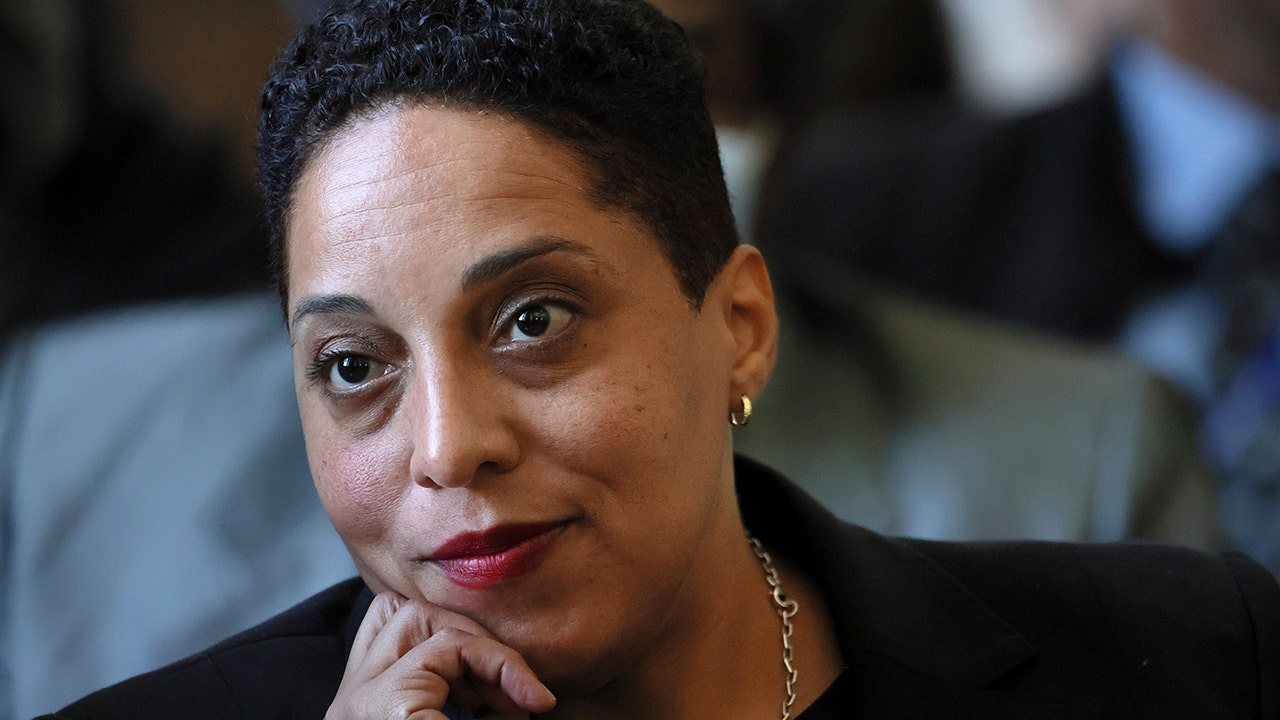
Former St. Louis Circuit Attorney Kimberly Gardner failed “to make her job as circuit attorney her top priority,” according to a report.
Republican Missouri State Auditor Scott Fitzpatrick released a 71-page report on Tuesday, as well as a press release, that supported a previous statement of Gardner being the captain of a “rudderless ship of chaos” as she pursued a nurse practitioner certification during the hours she should have been doing her job.
The former Democratic prosecutor spent 34.5 working days, or about seven weeks, in the office during business hours working on her studies at Saint Louis University, the state auditor’s office said in the statement.
“In my view, the driving force was Kim Gardner’s failure to make her job as circuit attorney her top priority,” Fitzpatrick told the St. Louis Post-Dispatch.
JUDGE SHREDS SOROS-BACKED PROSECUTOR, MOVES TO HOLD HER IN CRIMINAL CONTEMPT: ‘RUDDERLESS SHIP OF CHAOS‘
Kim Gardner took nursing classes during business hours as St. Louis Circuit Attorney, an audit says. (Adobe Stock )
His review also found widespread staff turnover, misuse of public funds and a significant drop in cases filed, referred and closed before Gardner resigned under fire in 2023.
Other issues cited in the audit include more than $58,000 in public funds spent on flowers, a disc jockey, car detailing, an office picnic, a chili cookout and Gardner’s personal legal expenses.
FORMER SOROS-BACKED ST. LOUIS PROSECUTOR ADMITS TO MISUSING PUBLIC FUNDS
In a Jan. 13, 2020, file photo, then-St. Louis Circuit Attorney Kim Gardner speaks in St. Louis. (AP Photo/Jim Salter)
Gardner told auditors that she was pursuing a family nurse practitioner post-master’s certificate “to improve the office and bring mental health awareness” to the office.
She was part of a movement of progressive prosecutors who sought diversion to mental health treatment or drug abuse treatment for low-level crimes, pledged to hold police more accountable and sought to free incarcerated people who were wrongfully convicted.
Former St. Louis Circuit Attorney Kim Gardner, right, and Ronald Sullivan, a Harvard law professor, arrive at the Civil Courts building on May 14, 2018. (Christian Gooden/St. Louis Post-Dispatch/Tribune News Service via Getty Images)
Republican leaders often criticized Gardner for a low homicide conviction rate, among other concerns. She frequently butted heads with police and conservatives.
“Our audit report paints a clear picture of an office that was far better off before Kim Gardner took over and has quickly rebounded after her departure. Despite her efforts to stand in the way of the audit process, we were able to obtain the information necessary to give taxpayers the full story on the damage she did to the office,” Fitzpatrick said in a statement.
The Associated Press contributed to this report.
Read the full article from Here



Why artists are dropping out of the Great American State Fair
Musicians cancel appearances at the Great American State Fair after questions over Freedom 250 and claims the July Fourth event is nonpartisan.
As several states pull out of the Great American State Fair in Washington, D.C., questions are coming up closer to home — Is Ohio still participating?
Massachusetts and North Carolina won’t participate in the fair, according to USA TODAY. Reports also indicate that Connecticut, Illinois, Maine and Oregon are also expected to skip the event, with some states citing a combination of financial and political concerns as reasons for opting out.
Here’s what we know about Ohio’s role in the event so far.
Is Ohio skipping the 2026 Great American State Fair?
Ohio has confirmed its participation with a booth titled “Ohio: The Heart of it All,” which showcases state parks and childhood development. The governor’s office began the planning process for the booth in February, shortly after the Great American State Fair was announced, said Lisa Peterson director of communications in the governor’s office.
The Great American State Fair, organized by Freedom 250, is a 16-day exposition that will be displayed on the National Mall from June 25 to July 10.
Additionally, Ohio will host a stop from the “Freedom Truck,” a traveling exhibit tied to Freedom 250. The exhibit will appear at the Ohio State Fair in Columbus. Organizers describe the Freedom Truck as a mobile museum that visits existing fairs and community events, not a version of the Great American State Fair itself.
When does the ‘Freedom Truck’ stop in Ohio?
The Freedom Truck is scheduled to be at the Ohio State Fair from July 27 through Aug. 10, 2026 at the Ohio Expo Center in Columbus.
The exhibit includes interactive and historical exhibits about the founding of the United States, according to organizers.
The mobile museum will be open from 10 a.m. to 9 p.m. Monday through Friday, and from 9 a.m. to 9 p.m. on weekends, with the final day closing at 6 p.m.
What is the Great American State Fair?
The Great American State Fair is a 16-day event planned for June 25 through July 10 on the National Mall in Washington, D.C. Organized by Freedom 250, the fair is part of a broader effort to mark the nation’s 250th anniversary with state exhibits, food, entertainment and cultural programming, according to USA TODAY.
President Donald Trump announced he will headline the Freedom 250‑organized Great American State Fair and hold an “America Is Back” rally, the publication reports.
America250 vs. Freedom 250: What’s the difference?
The Great American State Fair is part of Freedom 250, a Trump-backed initiative to celebrate the country’s 250th anniversary.
That effort is different from America250, the official, congressionally-authorized program coordinating nationwide commemorations. Meanwhile, America 250‑Ohio, the Ohio Commission for the U.S. Semiquincentennial, is the official state-level partner to the national America250 effort.
South Dakota
Rounds, Office of the Inspector General requesting first-hand accounts of poor mail service in South Dakota

google-site-verification: google9919194f75dd62c5.html

Wisconsin coach Kelly Sheffield shares his biggest spring takeaway
Wisconsin coach Kelly Sheffield shared his biggest takeaway from the spring following the Badgers’ four-set win over Northern Illinois.
MADISON – Kelly Sheffield has coached All-Americans, national players of the year, national champions and future Olympians in his 13 years as Wisconsin volleyball coach.
So Sheffield’s unique praise of Decelise Champion – a star pin-hitter from Puerto Rico who committed to the Badgers last fall – carries a lot of weight.
“Her highest-end potential is certainly as high as about anybody we’ve ever brought in,” Sheffield said. “She’s got a lot of work to get to where she’s capable of, and that’s on us as coaches and on her to help reach those dreams and goals. But when you’re watching people around her age, she’s different.”
That work is beginning earlier than initially expected after Wisconsin announced that Champion will reclassify from the 2027 recruiting class and join the Badgers as a freshman for the 2026 season.
Champion – currently 16 years old and turning 17 in September – will arrive with a resume that includes experience on Puerto Rico’s senior national team and the elite Italian club Volleyro Casal de Pazzi. That’s all while being strong enough academically to earn a GED degree and the necessary NCAA waiver for a few missing core classes.
“What made it really a lot better is that all of her grades at the different schools she’s been at have been fantastic,” Sheffield said. “She’s an excellent student. Was crushing it at a really, really good academic school in Italy in her third language.”
The timing of the June 12 announcement accounted for the second-last open roster spot for the 2026 season, but Champion and UW’s efforts to make the reclassification possible go back much earlier than that.
“We’ve known she’s wanted to do this since February,” Sheffield said. “We told our team in February that was the plan. And then we didn’t let anybody know publicly until she was done with her season. She just didn’t want to be a distraction for her team.”
Badgers have even more competition at pins
Wisconsin already had plenty of competition at the pin-hitting positions before Champion’s move to the 2026 class.
Grace Egan had a major role on the 2025 Final Four team, and Eva Travis had an impressive spring after transferring from UC-Santa Barbara. Others include Grace Lopez, Madison Quest and the highly-touted freshman duo of Halle Thompson and Audrey Flanagan.
Even with the upcoming addition of one more pin-hitter – and one with such a high potential – UW did not lose any players in the spring transfer portal cycle. Even the idea of someone leaving seemed outlandish to Sheffield.
“If they’re just going to get up and leave because somebody came, I would say that that person is probably chicken s—,” Sheffield said.
Sheffield’s praise of Champion’s proposal obviously does not come with a guarantee of playing time either at the crowded pin-hitting positions.
“I would say, yeah, she does have a chance of being out on the court for us this year,” Sheffield said. “But we’ve also got some other really talented people that play the pins.”
The outside and right-side hitters already on UW’s spring roster will have at least one key advantage over Champion in her freshman season – time.
Egan, Lopez and Quest are returning players (although Egan and Lopez spent their spring recovering from injuries). Travis, Thompson and Flanagan all enrolled in time to spend the spring with the Badgers and impressed in UW’s spring matches.
Champion’s arrival, on the other hand, will follow her participation in an Olympic-qualifying event for Puerto Rico. Sheffield expects that to be Sept. 2, which is the day before fall classes begin and already after UW’s first four matches of the season.
“She’ll be drinking out of a fire hose early on, no doubt about it,” Sheffield said. “Even though she’s been playing with her senior national team this summer, it will be a lot of things coming at her in her secondary language at 16, so there’ll need to be some patience along the way.”
His advice to Champion when she was on campus earlier in June was to “be where your feet are.”
“When she’s with her national team – even though we will have started our preseason, playing matches – don’t worry about us here,” Sheffield said. “Be where your feet are. Be the best you can be for your team there. … Then when you get here, you’re not thinking about your national team.”
Champion’s NCAA eligibility clock starts earlier
Champion’s reclassification comes with the drawback of beginning her NCAA eligibility one year earlier in her volleyball career.
Had she stayed in the 2027 recruiting class, she theoretically would have begun her college career shortly before her 18th birthday and exhausted her eligibility at age 22. Instead, she will begin her college career shortly before her 17th birthday and likely exhaust her eligibility at age 21.
Those scenarios take into account the NCAA Division I Cabinet’s unanimous approval on June 23 of a new eligibility model that will give players five seasons of eligibility in five years. (That replaces the current system with four seasons, redshirts and other waivers.) The NCAA noted that its decision is not final, however, until the meeting concludes on June 24.
“We’re certainly excited to have her this year, but if you kind of think over the course of five years, it’s probably worse for us that she comes a year early,” Sheffield said. “You expect her to be better at 20 and 21 than what she is at 16 or 17. … It really wasn’t something that we were pushing for, but she was ready.”
Of course, volleyball at age 16 or 17 looks different for someone like Champion who has been competing against much older players as a senior national team member and studying halfway across the world from her hometown of Dorado, Puerto Rico.
“When you talk to her, she doesn’t come across as somebody who’s 16,” Sheffield said. “She’s very mature, very easy to talk to, very driven. She’s independent. … She’s had a lot more life experience than most people her age, and that certainly comes across when you’re around her.”
-

 Ohio1 minute ago
Is Ohio at the Great American State Fair? Latest as some states opt out
-

 Oklahoma4 minutes ago
Woman hospitalized after house fire in northeast Oklahoma City
-
Oregon9 minutes ago
Puffins return to the Oregon Coast: where and when to see them
-

 Pennsylvania16 minutes ago
Pennsylvania coroners refuse to release autopsy reports – and that hinders research on deaths in custody
-

 Rhode Island19 minutes ago
‘Condom Hut’ Movie Adds Another Big Name
-
 South-Carolina24 minutes ago
Star Fox Review: Can’t quite teach an old Fox new tricks
-

 South Dakota31 minutes ago
Rounds, Office of the Inspector General requesting first-hand accounts of poor mail service in South Dakota
-

 Tennessee34 minutes ago
ESPN updates NBA mock draft for Ja’Kobi Gillespie, Felix Okpara in second round


