


WATCH LIVE: FOX6 Storm Center coverage
Tracking weather in Kenosha County
More thunderstorm warnings
Severe thunderstorm warning
Severe storms possible Wednesday

NEWYou can now listen to Fox News articles!
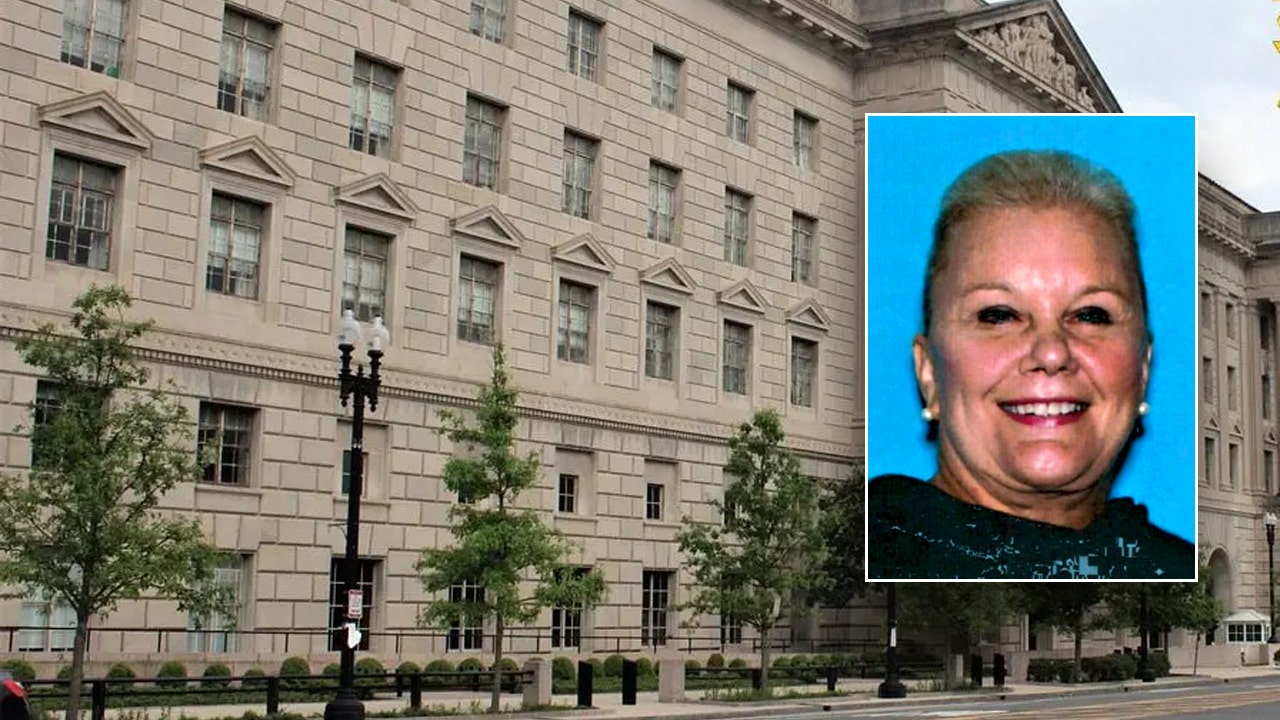
The FBI is looking for a Michigan-born woman who allegedly orchestrated a multimillion-dollar fraud scheme in Southern California.
Investigators say that Mary Carole McDonnell, 73, is wanted on charges of bank fraud and aggravated identity theft in connection with the alleged scheme carried out in Los Angeles and Orange counties between July 2017 and May 2018, the FBI said.
“Beginning in approximately July 2017 and continuing to May of 2018, McDonnell is alleged to have knowingly, and with intent to defraud, devised and participated in a scheme to obtain money, funds, assets, and property owned by Banc of California,” the FBI said.
Fugitive Mary Carole McDonnell is accused of orchestrating a wide-ranging financial fraud scheme in Southern California. (FBI)
SHE HELPED NORTH KOREA INFILTRATE AMERICAN TECH COMPANIES
Federal investigators say McDonnell posed as an heir to the McDonnell Aircraft family and falsely claimed she would eventually gain access to an $80 million secret trust.
She was able to obtain approximately $14.7 million from Banc of California, although she knew she was not authorized and did not repay it.
She used similar methods to defraud other financial institutions of more than $15 million, according to the FBI.
SEN ADAM SCHIFF UNDER FEDERAL CRIMINAL INVESTIGATION FOR ALLEGED MORTGAGE FRAUD VIOLATIONS
She previously served as the CEO of Bellum Entertainment LLC, a Burbank-based production company, and has documented ties to Los Angeles, Montgomery, Alabama, and Dubai, United Arab Emirates.
A federal arrest warrant for McDonnell was issued on Dec. 12, 2018, in the U.S. District Court for the Central District of California.
A report by Deadline cites that Bellum Entertainment came under investigation by the California Labor Commission in 2017 for the alleged nonpayment of wages to dozens of former employees.
Dubai, Burj Khalifa, United Arab Emirates.
The outlet also reported that McDonnell told employees the company couldn’t meet payroll because of “significant bank fraud.”
CLICK HERE TO DOWNLOAD THE FOX NEWS APP
Investigators say they believe that McDonnell is currently in Dubai and describe her as a White female, 5 feet, 7 inches tall, weighing 145 pounds, with blonde hair, blue eyes and a scar on her right knee.
Anyone with information on McDonnell’s whereabouts is urged to contact their local FBI office or the nearest American embassy or consulate.
Read the full article from Here


Carl’s Chop House, 3020 Grand River in Detroit, 1923-2008
It was one of the most prominent restaurants in Detroit throughout the 20th century. Carl’s Chop House served Detroit for decades, from the Great Depression through the new Millennium.
Founder Carl Rosenfield first opened as the Grand River Chophouse in the early 1920s and he moved the business across the street and renamed it Carl’s in the 1930s. The often-repeated story goes that he won the full ownership of a bar from his partner in a poker game and turned it into Carl’s Chop House.
Prior to his restaurant success, Rosenfield was a well-known tire merchant. At one point, Rosenfield also owned a lighthouse near Port Sanilac.
As a restaurateur, Rosenfield persevered through many trials, including the Great Depression and a beef shortage during World War II, which left the steakhouse to serve chicken, lobster, sturgeon and “a lot of fish I never heard of,” he was quoted as saying.
A sirloin steak dinner was $1 when Carl’s Chop House opened.
By the 1960s, business was booming, and the restaurant was serving thousands of customers daily and had plans to expand the 850-seat dining room to 1,200. By then, steak dinners were up to $6.
They bounced up to $10 in the 1970s when longtime Detroit News restaurant reporter and critic Molly Abraham included Carl’s in a column, pointing out that even though the restaurant was a bit out of fashion — it had been open for more than 50 years by then — she describes the place as having “an infectiously festive, informal atmosphere.”
Along with the steaks, convivial atmosphere and firm handshakes, Carl’s Chop House was known for always being open, even on Sundays. The only day of the year it was closed was Christmas Day, Dec. 25, which was also Rosenfield’s birthday.
Rosenfield, who would support local farmers by purchasing cattle and other livestock from the Michigan State Fair, was still working at the restaurant in the 1980s when he was in his 90s. He died in 1991 at age 95.
The new owners of Carl’s Chop House ushered it into the next century for another generation to enjoy.
It wasn’t the same without its namesake proprietor, who was known for an absolutely crushing handshake, however. In 2008, owner Frank Passalacqua filed an application with the state for a topless permit, hoping to turn the property, which was now a neighbor of MotorCity Casino, from a steakhouse to a strip club.
Passalacqua, who was more successful at Mario’s Italian restaurant in the Cass Corridor, said he was losing $1 million a year on Carl’s. The gentleman’s club idea never materialized. Carl’s closed in 2008 and the building was demolished in 2010.
mbaetens@detroitnews.com


More than six months after federal agents descended on Minnesota, the toll of the immigration crackdown on the Twin Cities continues to mount.
The latest revelations about the far-reaching and deeply felt impacts of the campaign known as Operation Metro Surge come in a Human Rights Watch report published Thursday.
Based on more than 130 interviews, video analysis, and government arrest data, the report documents a dizzying array of abuses over the multi-month siege of Minneapolis and St. Paul — from lethal violence to free speech violations, unlawful detentions, and more.
While many of the abuses are well-known — including the killings of Minnesota residents Renee Good and Alex Pretti by federal agents — others occurred in the shadows of the infamous campaign.
Among the most troubling accounts are those provided by healthcare and mental health professionals.
According to the report, the National Alliance on Mental Illness in Minnesota saw a 120 percent increase in calls and a “significant increase” in the number of people struggling with suicidal thoughts or actions during Metro Surge. One medical provider knew of at least three teenagers who attempted to take their own life after their parents were detained in the crackdown, with one of the adolescents doing so on a “frequent” basis.
“One goal of the report is to bring light back to the full scope of the harm, and not only the harm that we saw in terms of violence in the streets, in terms of abusive detentions,” Reagan Williams, the author of the new report, told The Intercept, “but also the effects that that had for aspects of daily life for everybody here — the impact it had on people’s ability to leave their homes, to go to doctor, to go to school, to go to work.”
Human Rights Watch found the combination of violence and racial profiling that defined the crackdown caused many Minnesotans to forgo medical care.
The day after Good was killed, nearly a third of one healthcare provider’s patients — mostly Somali or Spanish-speaking immigrants — did not show up for pre-scheduled appointments. Another provider said the number of in-person visits at their office dropped by as much as 50 percent.
When Williams arrived in the Twin Cities, her focus was the kind of violent interactions documented in viral videos proliferating from Minnesota. She soon learned those weren’t the only issues community members were desperate to discuss.
“People that we talked with expressed emotions of exhaustion, fear, frustration, immense stress,” she said. “They expressed particular concerns for children, medical providers in particular, the impact of missing school, of knowing violence is happening in their communities — for immigrant children and children of color, the fear of having a parent taken, of themselves being taken.”
“Children are particularly vulnerable to long-term impacts of this kind of acute violence and stress,” Williams added. “Those are impacts that will continue on.”
Described by Trump administration officials as the largest immigration enforcement operation in history, the crackdown in the Twin Cities began in December and stretched into February. Thousands of officials from Immigration and Customs Enforcement and the U.S. Border Patrol conducted roving arrest operations throughout the area.
More than 4,000 immigrants were arrested during Metro Surge. At roughly 100 arrests per day, it was the highest per capita arrest rate in the country; 64 percent of immigrants arrested in the campaign had no criminal record.
“In Minnesota, US citizens and immigrants alike were racially profiled in the ordinary course of their day — approached by federal agents while driving, while at work, or while shoveling snow,” the report said. “Minnesota residents of Somali and Latin American descent were notably targeted, despite the fact that the overwhelming majority of these communities are US citizens or have green cards.”
A hotline run by the National Lawyers Guild recorded 524 cases of the U.S. citizens detained during the surge, though the figure is believed to be a significant undercount. A survey by the U.S. Immigration Policy Center at the University of California, San Diego earlier this year found that nearly a third of Minneapolis residents experienced an interaction with federal agents; of those interactions, nearly half occurred “at or near a school, healthcare facility, childcare facility, courthouse, or place of worship.”
The new report follows a fresh tally from Minneapolis officials, announced last week, estimating that Metro Surge cost the city nearly $700 million. A nonprofit serving tenants in Minnesota described the economic fallout as a “crisis,” the Human Rights Watch report said, with an 85 percent increase in people seeking rent payment assistance.
“If I told you every time ICE was near a school, you’d stop reading my messages.”
In one Minnesota school district, attendance dropped by nearly a third during the government operation. At least 14 incidents of immigration enforcement reported at or near campuses, including the arrest of a preschool teacher, a special education staff member, and a parent at a school bus stop.
“If I told you every time ICE was near a school,” the district’s superintendent told Human Rights Watch, “you’d stop reading my messages.”
Considering the sweeping impacts of the crackdown, Human Rights Watch is calling for an overhaul of the Department of Homeland Security, which oversees ICE and Border Patrol; congressional investigations into the actions of officials involved in the operation; legislation to prohibit immigration arrests at sensitive locations such as schools and hospitals; and a host of other reforms.
To date, the report said, “The many abuses committed by federal agencies during Operation Metro Surge have so far been met with near-total impunity.”


Police, DEA agents flood L.A.’s MacArthur Park for narcotics enforcement operation


This Detroit steakhouse used to serve thousands a night in its heyday


Artwork quilt unveiled at San Francisco dirt alley that was mistakenly bought at auction


Dallas Police Seize Glock Switch in Deep Ellum


Miami-Dade brush fire started by lightning strike, officials say


Brensley: Craig Ferguson is Boston Strong


10 Big Winners, 4 Losers From Broncos’ Minicamp


Seattle Storm lose 94-89 to Portland as Malonga scores career-high 28

