Lifestyle
Greetings from Maputo, Mozambique’s capital, shaped by a modernist architecture


I took a ride on a tuk-tuk motorcycle taxi around Maputo, Mozambique, with my buddy and fellow All Things Considered producer, Vincent Acovino. We were in the country reporting on changes to U.S. funding for AIDS in Africa.
Vinny noticed it first: There was something magical about a number of the concrete apartment blocks and government offices here. With half a day off and a little googling, we gave ourselves an impromptu tour of the architecture of Amâncio “Pancho” Guedes. The late Portuguese-born architect designed some pretty cool buildings here in the 1950s and ’60s. They include the Prédio Abreu, Santos e Rocha pictured above, and other structures with evocative names like The Smiling Lion apartment block and the Lemon Squeezer church. Step into a small interior stairwell of The Dragon House, and you see a mural in sparkling black and white stone of a spiky dragon with a toothy grin. It transforms what would otherwise be a dim stairwell.
Guedes designed more than 500 buildings in the city, from churches to bakeries. I don’t have the language to capture it: the use of heavy materials, combined with the playful use of shapes and murals. “Eclectic Modernist,” I later learned, is how his work is described. One critic wrote that his work brilliantly mixes the “sculptural and figurative with practical requirements and traditional local identity.”
Maputo will change and I have to imagine not all of his work will survive. But stumbling into a town with a visual landscape that still shows Guedes’ thumbprint was a delight. For an afternoon, riding through the city streets in the open-air tuk-tuk, looking for what might have been his handiwork was a good time. Like an Easter egg hunt in concrete.
For more Far-Flung Postcards, click here.

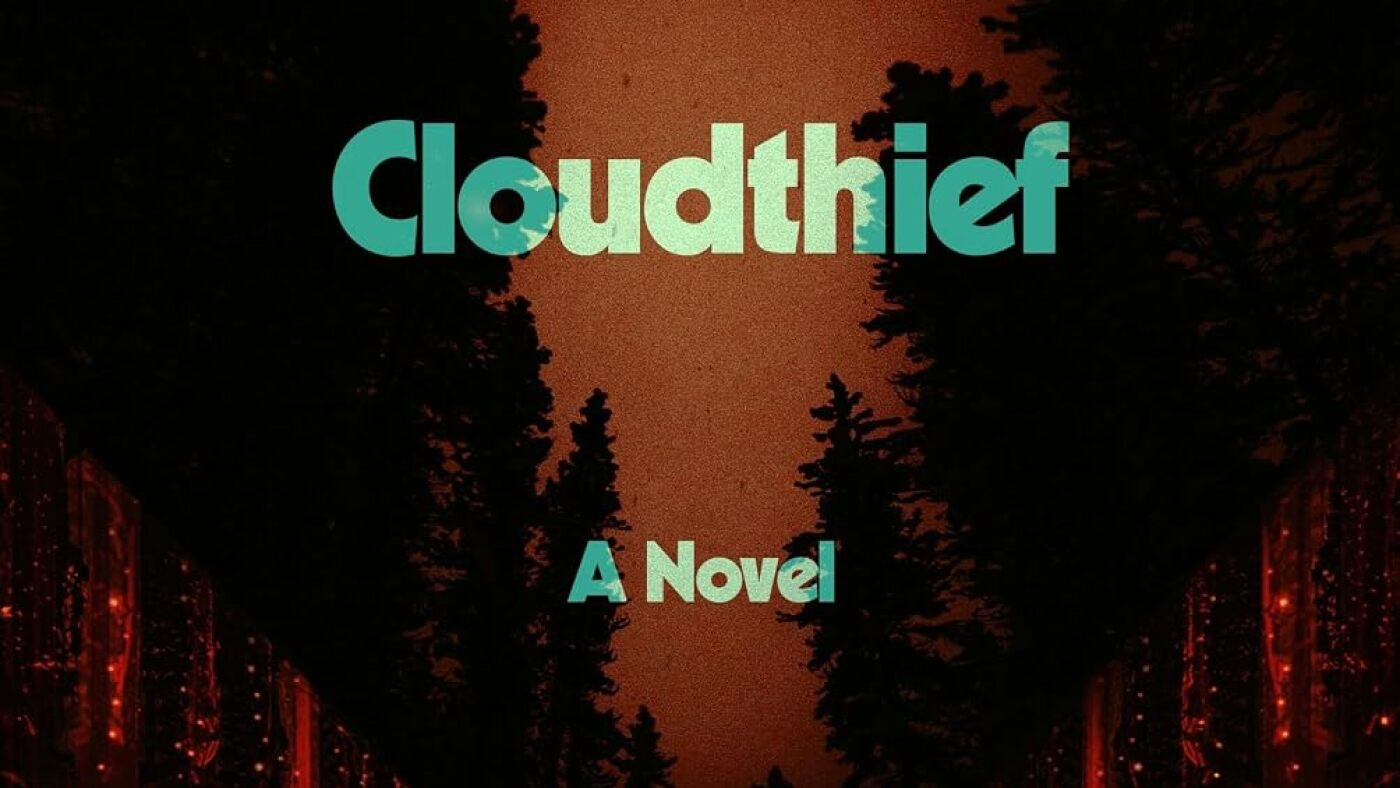
George Orwell famously wrote that it takes a constant struggle to see what’s in front of one’s nose. That may be truer than ever. These days we barely register things that 20 years ago would’ve seemed downright bizarre — like people staring down at their phones in busy crosswalks. The unnatural comes to seem natural.
Until it doesn’t. This has happened with the proliferation of data centers all over America. After years of ignoring their mushrooming growth — there are over 4,000 in the U.S. — the public now sees them clearly and doesn’t like what they represent, be it soaring energy bills or the advent of job-killing AI. People now oppose having data centers in their communities. In real life — and in movies like Eddington — politicians are now pulled between their constituents’ desires and the devouring needs of Big Tech.
The hatred of data centers ignites the action in Cloudthief, a boisterous new novel that’s equal parts heist thriller and cry in the digital wilderness. It was written by novelist Nathaniel Rich, who may be best known for ecological non-fiction such as his 2019 book Losing Earth. Setting his story back in 2014 — when tech billionaires were still considered visionaries, not bullying moguls — Cloudthief centers on a brainy young man who, like the guy in the Leonard Cohen song, is just some Joseph looking for a manger.
Our narrator “Tim” — a pseudonym he says — is a freelance writer who’s gone broke doing magazine articles about climate change. He’s lonely and lost until he stumbles upon Virginia (also not her real name), who could be the American cousin of dragon-tattooed Lisbeth Salander.

Tech-savvy and paranoid and scarily elusive, Virginia lives off the grid in a Manhattan mini-storage unit and has plans for a blow against Big Tech. Evidently, Tim has never seen a noir movie because he doesn’t merely fall for this 21st-century fantasy of a femme fatale, he dreamily goes along with her plans to rob a data center in Pryor, Okla., and make off with the sellable information their servers contain.
Once they drive off to Pryor — Rich describes their road trip wonderfully — Cloudthief kicks into high gear, serving up the juicy stuff that we all love in a heist story. We see the baroque planning. We watch them case their target, a silver-smoke spewing behemoth that has the majestic size of two futuristic airport terminals but is actually as tacky as a boondocks mini-mall.
And we learn how things work. While data centers contain the records of major corporations and government departments — each building contains tens of thousands of servers fat with documents — they’re protected by a smattering of minimum wage guards.
“Nobody knows about them,” Tim says of these gigantic repositories. “But they are the foundation of life on earth. … If every data center went dark tomorrow, we would be plunged into the Middle Ages.”
As Virginia and the lovestruck Tim prepare for the robbery, Cloudthief is a blast. They philosophize, have sex, don silly disguises, bristle with suspicion and constantly argue, often quite wittily — she’s aghast at his amateur mistakes that could get them caught. They often seem like teenagers playing at committing a crime. But commit it they do.
Of course, if you’ve ever read or watched a heist tale, you know that things never go as planned, and that the setup is more fun than the aftermath. And so it is here. But rather than spoil things, I’ll merely note that Rich’s ending earnestly tells us what we already know.
No matter. Filled with sharp descriptions and terrific dialogue, Cloudthief stuck with me. I’ve read no other novel that captures so neatly what it means to be a data-center nation — the blighting of the physical landscape, the voracious use of fossil-fuel energy, the way that these huge, bland buildings, owned by private companies like Google and Amazon, now house, and thereby control, nearly all aspects of all our lives.
Leading a life of garrulous desperation and powerless analysis — he’s the very soul of defeated idealism — Tim can kid himself into believing that robbing the Pyror data center might be a meaningful gesture. In fact, he’s just chasing a woman — and trying to escape his own thwarted life. But his blindness helps us see our world.
Early in the novel, Tim ruminates on “the Cloud,” a term whose vague innocence seduces us into not thinking about its power. “The goal of any technology,” he says, “is to make itself both essential and invisible, like air.” In Cloudthief, Rich does the opposite. He helps us see the actual, earthbound workings of the magical-sounding cloud, and he gets us thinking about the perils of our needing it so badly.

Nephi Craig’s mother is White Mountain Apache and his father is Diné Navajo. He grew up on both reservations.
Ari Carter Craig/Penguin Random House
hide caption
toggle caption
Ari Carter Craig/Penguin Random House
Nephi Craig, the founder of the Native American Culinary Association, credits eating, cooking and teaching about Indigenous food with saving his life.
Craig became addicted to alcohol and drugs at an early age. After his first DUI, the judge gave him the option of three months’ probation if he agreed to get a job or go to college. That’s when he enrolled in cooking classes at Scottsdale Community College.
Craig says he initially felt like an “oddball” in the classes because he was unfamiliar with terms like “bistro” and “vichyssoise.” But he also credits the classes with igniting his interest in cooking — and teaching him more about Native foods, including the tomato.

“[When] I came across this info that [the tomato] was native to the Americas, it just brought this really big smile to my face,” Craig says. “As a Native American in Arizona, you don’t really see yourself represented in really anything, let alone cookbooks and culinary school curriculum. So that was a neat point of validation for me that grew into many other interests.”
Craig eventually landed a job at one of Phoenix’s top fine dining restaurants, a goal he’d been working towards for years. But after a period of sobriety, a relapse ultimately cost him the job. He wound up in jail, where he worked in the kitchen and learned to design meals with whatever food was on hand.
“I was bunched in with the other Native Americans. And in jail, we call ourselves ‘chiefs,’” he says. “Banding together to feed, I think it was 7,800 inmates a day, was really eye-opening. It showed me that I was not above or below any style of cooking.”
Over the years, Craig completed nine rehabs and ran away from five others. Now sober, he works as the nutritional recovery program coordinator at the White Mountain Apache tribe-owned Rainbow Treatment Center in Whiteriver, Ariz., which serves people recovering from substance abuse. In 2021, he opened Café Gozhóó, a restaurant on the reservation that’s a place for the community to eat and talk. His new memoir is Our Knives Will Save Us: Dispatches from a White Mountain Apache Chef.
Interview highlights

On the ubiquity of Native American food
For major American holidays like Thanksgiving, everyday staples like turkey, corn, squash and cranberries — those are all important Indigenous foods. And when people ask me what recipes or what ways do we prepare Native foods differently, or the question comes up, how come I haven’t heard of a Native American restaurant, or why are there no Native American cookbooks? I usually will say, “Well, you’ve been eating Native American foods and cuisine since as long as you can remember. It’s just that the stories are not told.”
All of American cuisine, every region in the United States is built on the landscapes or the ancestral terroir of Native American food and food traditions. So you can say Boston baked beans, barbecue in the American Southwest. … The hunting and fishing and agricultural bounty of the Northwest. All of these landscapes inform our diets as everyday Americans. So when we think about how we prepare different ingredients, I think it’s pretty straightforward and simple. We like to roast them, simmer them, turn them into pies just like everyone else sometimes. But Native foods have been there the whole time.
On why frybread isn’t Indigenous
It’s not an Indigenous food. It has this lasting legacy with us and when you study how foods were distributed once people were imprisoned, and foods that were distributed required a ration card, and you might get flour, some dried beef, maybe some rice and potatoes, maybe some coffee and sugar. Ration lists varied from place to place, but they were pretty much always going to contain flour and lard, and so frybread emerges, some say in the Southwest. And there’s big debates about where and who did it first, but if you look across all of Native America from Florida to New York to the Great Plains to the Midwest to the Pacific Northwest and the American Southwest, every tribe has frybread as a result of military food rations and that grows into these food traditions that are a part of our reality today. I teach it in a way that hopefully can promote responsibility and food choices, not to take it away, but to be aware.
On working at Mary Elaine’s, a high-end French restaurant in Phoenix
That place really built me up into a very strong, young chef. I was an entremetier on the meat station, which means I cook all the vegetables and do all the garnishes. And I became the saucier and the guy that cooks the meat on the meat station. And to be in Arizona, a very meat and potatoes state, it was the busiest station in that kitchen. And I realized how strong I was. And it was beautiful, best of everything. … So it really meant a lot to me. And when I lost that opportunity because of a relapse that crept in and took over, it was heartbreaking. I did not have the words to say it then, but it was a debilitating loss. That I took maybe five, 10, 15 years to process.
On selling his prized Japanese knives for alcohol
Addiction strips away everything slowly. It’s this terrible, terrible affliction that just causes you to devalue yourself and all of your belongings. … These knives were special because I had got them on a trip to Japan in 2007, where I prepared a seven-course tasting menu of Western Apache cooking and cuisine at the Imperial Hotel of Osaka. So I cherished these knives because they were like samurai swords. They were made by a knife maker whose ancestors made samurai swords and were samurai. And I brought them back to the States with me and I still have one of them with me, but I sold those other ones and it was terrible.
On experiencing sexual abuse as a kid
I included this part of my life not as the sole cause of addiction and dependency but a contributing factor. … I never told anyone about the sexual assault I encountered when I was 10 years old. I was just a little kid. My worldview was that it happened to me and it was my fault. My worldview is that no one’s going to believe me. So I just kept it in. And when I kept it, it festered and grew into this rage and anger and shame. And so when I talk about sexual abuse in my story, it’s not to point the finger at it, but I had to really take a long time to come to terms that I was a victim of that, and it doesn’t determine who I am.
On seeing a lot of alcohol addiction on Native reservations
As Indigenous people, we experience oppression differently. We experience being an American citizen differently. We experience capitalism, imperialism and colonialism differently. The systems that enable those three monsters were not designed and built by us. And as Native American peoples, we’ve inherited a legacy of historical trauma and colonial violence. So it’s not that we are different biologically, it’s that we have a different legacy in encounters with colonial violence in America. That’s what I feel is one of the root causes of this multi-dimensional monster that is addiction.
On why he has a Mormon name (Nephi)
All my life, I always encounter these really big, complicated web of American history and our lifelines as Native American people. So how my family encounters organized religion and the LDS Church is when they were small, my dad is out in the Navajo Nation, there were Mormon missionaries trying to convert people all over the Southwest and on the Navajo Nation, and the same thing in Whiteriver on the Apache rez. And so my parents were both placed on the placement program, which is where in the ’50s and ’60s and into the ’70s, young Native American kids were taken from their homes and placed in Mormon homes in Idaho, Utah, Nevada, Colorado, anywhere there was a high population of Mormon families. And my parents were essentially raised in the Mormon church in a Mormon community till they graduated high school. And that’s a big part of our life. And so when the three of us, me and my brothers come, into the picture, they decide to name me Nephi. … It’s a lot of complicated elements in how identity forms and for me that’s one dimension of how it contributes to substance use but also freeing myself from it, too.
Anna Bauman and Joel Wolfram produced and edited this interview for broadcast. Bridget Bentz, Molly Seavy-Nesper and Meghan Sullivan adapted it for the web.

A gold-colored item embossed with the word “President” sits on the Resolute desk in the Oval Office of the White House on Nov. 10, 2025.
Jacquelyn Martin/AP
hide caption
toggle caption
Jacquelyn Martin/AP
The New York Times journalist Jonathan Swan has spent the past 11 years covering President Trump through three political campaigns, his first, and now second, term in office and the ongoing war with Iran. Swan says aside from the COVID-19 pandemic, he can’t remember a time where Trump looked “as stuck as he looks right now.”
“It’s pretty clear he realizes that this war [with Iran] has not gone well, has not played out the way that Netanyahu pitched him or that Trump himself thought [it] would play out,” Swan says. “Trump is someone who is naturally given to hubris, but I think we saw a very extreme version of that with this war.”
Swan and his co-author Maggie Haberman spoke with more than 1,000 sources for their new book, Regime Change: Inside the Imperial Presidency of Donald Trump. The book paints a picture of an unrestrained president remaking the American government and its international relations in profound ways.

Swan notes that the president, who sat for an interview for the book, has been particularly fixated on becoming a “great man of history” during his second term. During one interview, Trump showed Swan and Haberman a document that compared him to notorious historical figures like Mao, Stalin, Hitler, Attila the Hun and Genghis Khan.
“[The list had] nothing to do with morality, all just about pure power projection. And Trump was relishing being in their company,” Swan says. “Maggie and I talked about it afterwards, and it really occurred to us that when you look at it through that lens, his second term makes a lot more sense.”
Swan says the president’s fixation on power is reflected in his decisions to go to war in Iran and implement regime change in Venezuela. But he also sees it manifested in Trump’s White House decor, which leans on what Swan calls the president’s “inner Louis XIV” style.
“He’s gilded almost every corner of the Oval Office,” Sway says. “The history of the Oval Office in the White House has been of modesty when it comes to design and decoration, reflecting the fact that America is a republic, not a monarchy. Trump has no use for that history.”
In a post on Truth Social, Trump referred to Regime Change as “mostly made up, Fake News, largely fiction, as have been most of the things [Haberman] has written about me for so many years.”
Interview highlights

On how Trump’s second term differs from his first
This term is unrecognizable from term one. And I still think a lot of people view [this] administration and government through the lens of the first term. It just couldn’t be more different. One of the ways in which it’s different is the team around him.
I remember in term one covering Trump, and you would have so many conversations with senior officials, including senior national security officials, and the overwhelming impression that you would receive from talking to these people was, A, they thought they were working for someone who was dangerous. And they saw their own roles as protecting the country and the world from the person that they were ostensibly working for. Those types of people don’t exist anymore in this administration. …
At a senior level, it’s really a group of people who believe in him, are loyal to him, in some cases went through the campaign with him. Many of them were radicalized on the campaign through the investigations and the efforts to prosecute Donald Trump. Many of them received some subpoenas themselves and viewed the stakes of the 2024 election as not so much about policy, but about staying out of prison.
So that’s the mindset of Trump and his inner circle. And it’s created a situation where there’s very little friction between a Donald Trump idea that might’ve just leapt straight from his internal monologue out of his mouth, with no filter, to an effort to make it actual American policy and execution.
On Trump’s meeting style
Meetings have no beginning, middle or end. There’s almost no delineation. And what often ends up happening is it’s essentially one meeting that just rolls throughout the afternoon with different people joining and leaving. And Trump [is] engaged or not engaged, people who have no business being in the meeting sometimes joining, whether it’s a pro wrestler, or a crypto investor, or foreign somebody from a golf monarchy, or a CEO. …
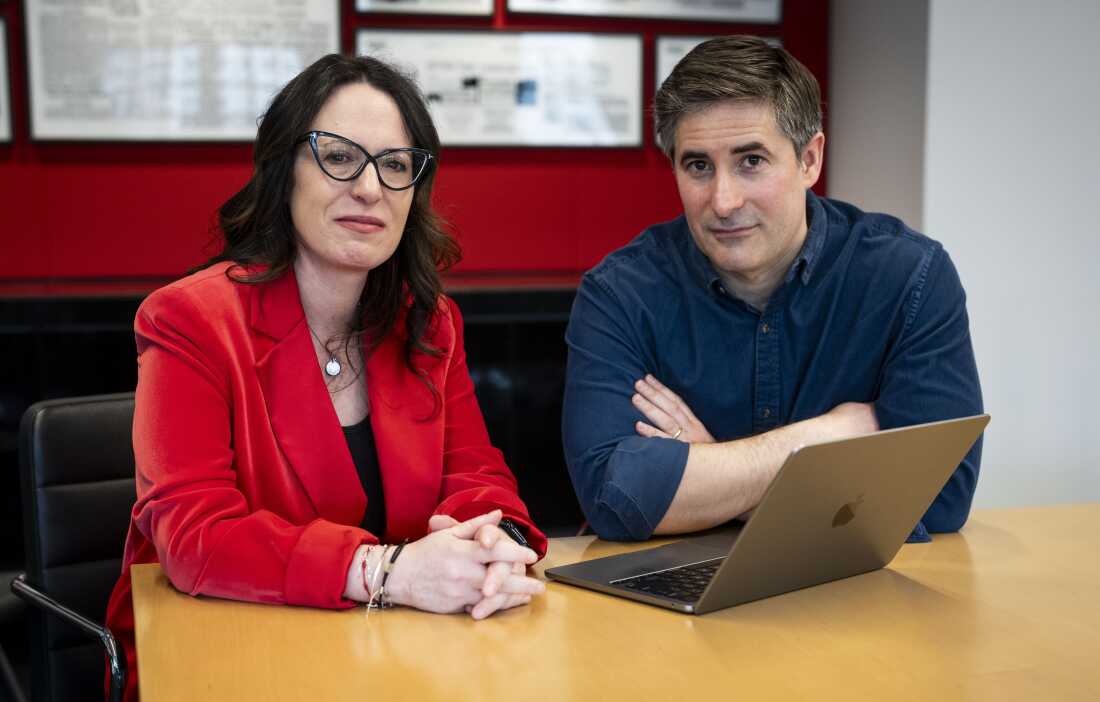
The New York Times journalists Maggie Haberman and Jonathan Swan are the authors of Regime Change: Inside the Imperial Presidency of Donald Trump.
Doug Mills/The New York Times
hide caption
toggle caption
Doug Mills/The New York Times
The conversations are non-linear. Trump will get fascinated about one thing that has nothing to do with the topic and that can derail a meeting. We have a scene in the book where he’s having a conversation, a very small meeting, which is highly classified about a defense program, and this guy comes in, just walks into the Oval, salt of the earth, kind of country looking guy, and he’s holding stone samples for the Rose Garden … and the two go off and sort of start conferring, looking out the window, talking about the paving and the stone and this and that, gets on the phone with another contractor. And before time’s up, the meeting’s ended, they haven’t actually resolved the issue they were going to resolve.
On the higher level of secrecy in Trump’s second term
When there are issues that Trump really cares about, or his team wants to keep secret, they can be incredibly secretive, to the point of great frustration across the government. And when it comes to the weightiest issues like the planning of going to war with Iran, we found that very, very senior people in the government were, A, completely cut out of the loop and, B, had no idea about what was being discussed in the Oval Office.
On Trump’s focus on decorating the White House

I traveled with President Trump to the Middle East, palace after palace. And it was really instructive to watch him with these Middle Eastern rulers in Saudi Arabia and Qatar and the United Emirates. He was just in a state of absolute pleasure, going from one palace to the next, admiring the marble, looking at most rarefied displays of state wealth on Earth. And that’s essentially what he’s trying to create at the White House. … He’s building this grand ballroom. He seemed to almost be competing with Melania as to who had had the better bedroom. They have separate bedrooms and he was taking objects that she had placed in the center hall of the residence and putting them in his bedroom.
YouTube
On the challenge of interviewing Trump
An interview with Trump requires an enormous amount of preparation if you want to hope to come out of it with any level of success. He’s a really difficult interview… He’s an overwhelming presence and you are confronted with a sort of tidal wave of words. Many of the words and the sentences are detached from reality or completely false. And you have to make judgments in real time about what you let go. You can’t fact-check everything. You just can’t. You can pick your moments.
I see my role in every interview as the representative of the people in that chair. You’re the one who’s lucky enough to be sitting in that chair interviewing the president of the United States. What would regular people want to know and want me to do in that situation? And I think that when you’re interviewing a president of the United States, you want to find the balance between letting them explain themselves and not cutting in every two seconds, but finding moments that are really important to puncture the bubble. Trump creates an unreality bubble. It’s the way he operates. … Tucker Carlson actually described it publicly as like being under a spell and I certainly wouldn’t ascribe a supernatural dimension to it, but I know what he’s getting at.
Thea Chaloner and Susan Nyakundi produced and edited this interview for broadcast. Bridget Bentz, Molly Seavy-Nesper and Meghan Sullivan adapted it for the web.
-

 Los Angeles, Ca1 hour ago
LADWP begins long-term repairs after West Hollywood water main rupture
-

 Detroit, MI2 hours ago
Livestream: Mayor Sheffield, Detroit health chief to address wildfire smoke threat
-
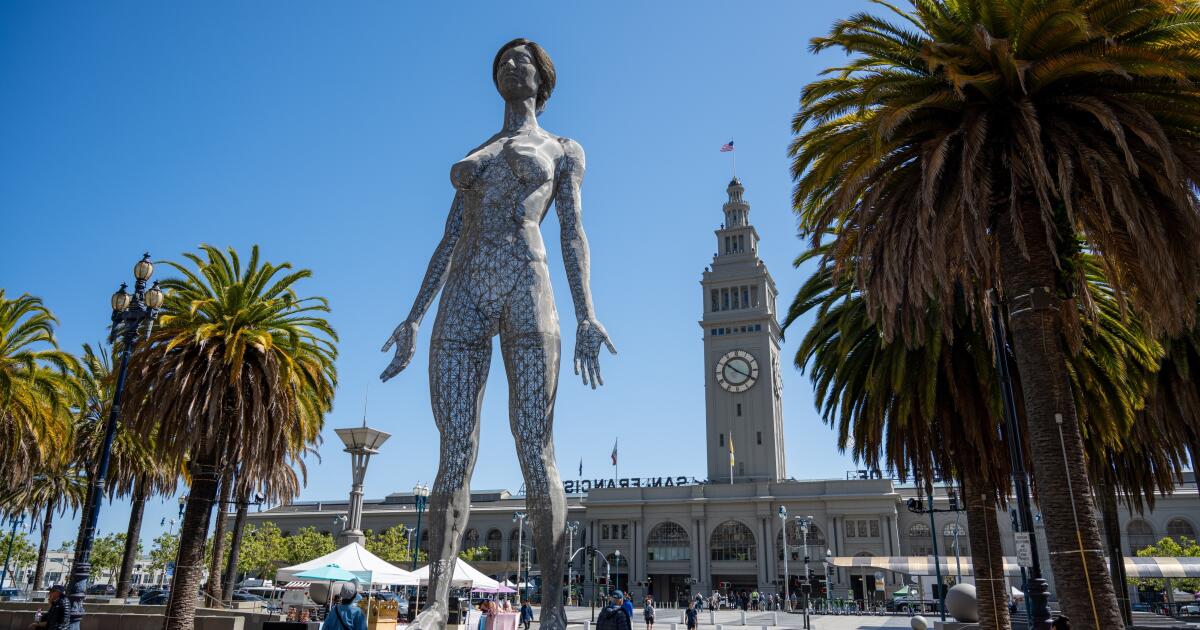 San Francisco, CA2 hours ago
A sculpture of a giant naked woman goes on sale in San Francisco. Bring a crane
-

 Dallas, TX2 hours ago
No ‘straight answer’: Why Pioneer Cemetery is the latest battleground at City Hall
-

 Miami, FL2 hours ago
TSA hosts news conference ahead of World Cup third place match at Miami Stadium
-

 Boston, MA2 hours ago
ICE Boston arrests Barbados national during targeted operations in Attleboro
-

 Denver, CO2 hours ago
Denver Broncos training camp is 2 weeks away
-

 San Diego, CA2 hours ago
Daily Business Report: July 17, 2026, San Diego Metro Magazine

