Midwest
‘DOGE’ senator seeks to ensure feds can continue pursuing COVID fraudsters, debtors, as IG sounds alarm

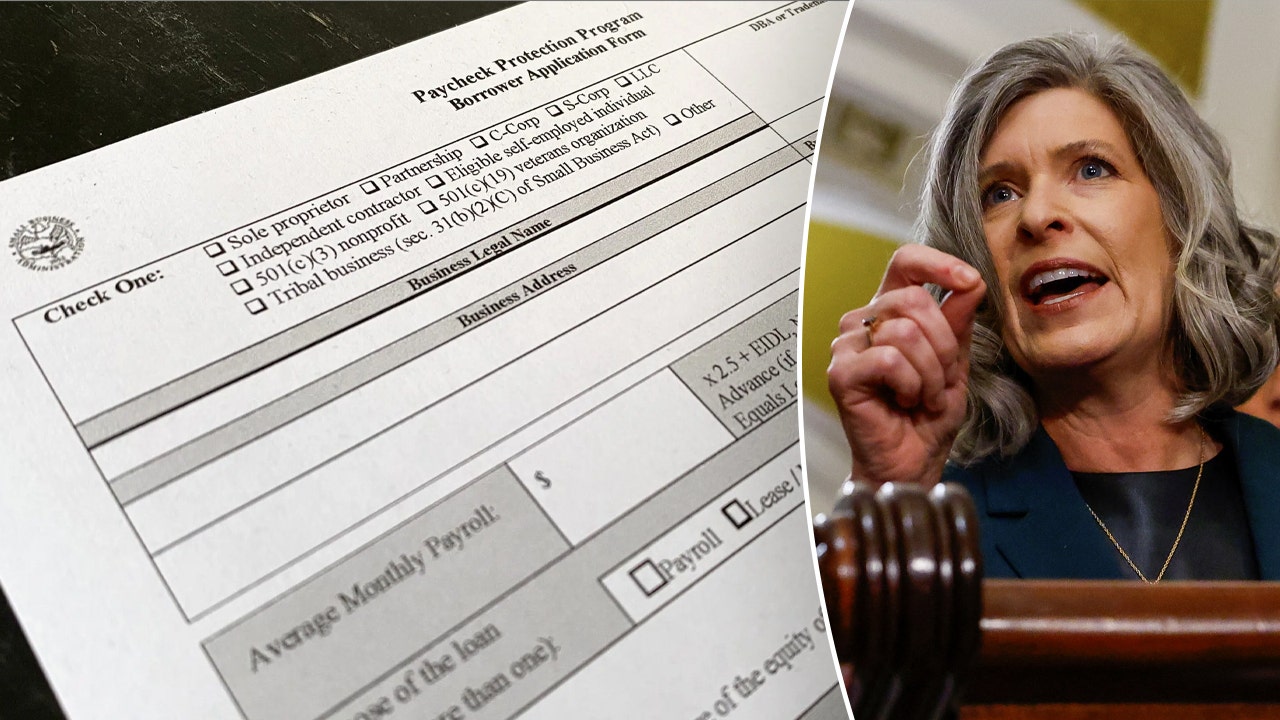
FIRST ON FOX: A top “DOGE” senator said a government watchdog alerted her to an “alarming” rate of defaults on COVID-era “PPP” loans, and now she wants to hold fraudsters accountable.
In a letter to Sen. Joni Ernst, R-Iowa, Inspector General for Pandemic Recovery (SIGPR) Brian Miller wrote that the loan programs funding reported losses of $1.27 billion as of November 2024, and had snowballed since debtors’ initial payments began coming due in July 2023.
“Without SIGPR to protect the taxpayer, there will be no one on watch which will allow this crisis to continue,” Miller wrote.
“Of equal concern is an alarming rate of defaults by borrowers who are failing to pay even the interest payments on the loans for the Main Street Lending Program (MSLP) and the Direct Loan Program.”
‘DOGE’-MEETS-CONGRESS: GOP LAWMAKER AARON BEAN LAUNCHES CAUCUS TO HELP MUSK ‘TAKE ON CRAZYTOWN’
A page from the PPP loan application for financial support due to the outbreak of COVID-19 in New York. May 7, 2020. (REUTERS/Lucas Jackson)
The inspector general added that their office has been “shedding staff” and going through legally mandated processes for an agency in the process of shutting down.
There are at least 130 potential defendants identified to be probed, and without proper resources, they may never be so.
Ernst warned that dishonest loan applicants could get away with $200 billion in fraud from COVID-19 relief if her bill does not pass.
Sen. Joni Ernst, R-Iowa, has drafted legislation that would provide additional resources to hold coronavirus pandemic fraudsters accountable. (Reuters/Bonnie Cash)
“Con artists took advantage of small businesses’ pain during COVID to defraud government programs designed to help hardworking Americans,” Ernst said Wednesday.
“While we are $36 trillion in debt, we especially cannot afford to leave more than $200 billion floating around, especially in the hands of fraudsters. My Republican colleagues and I are making sure that all resources are available in this fight to get taxpayers’ money back and hold these criminals accountable.”
BIDEN-HARRIS ADMINISTRATION FAILED TO RECOUP $200B IN FRAUDULENT COVID LOANS, HOUSE COMMITTEE SAYS
When the Small Business Administration initiated the Restaurant Revitalization Fund and Paycheck Protection Program (PPP) loans, they were on a “first come, first serve” basis.
Critics claimed at the time that many qualifying businesses and entities were therefore turned away, and reports proliferated that gang members and drug traffickers were instead able to access the resources.
One alleged fraudster used a photo of a Barbie doll as their identifier on an SBA loan application, while another raked in $8 million that could have gone to struggling restaurants – particularly in states with onerous shutdown policies.
TOP DOGE SENATOR DEMANDS ANSWERS ON PLAN TO EXHAUST CHIPS FUNDING BEFORE TRUMP ARRIVES
In response, Ernst has drafted the Complete COVID Collections Act, Fox News Digital has learned.
The bill would extend authorization of the SIGPR through 2030 and expand its jurisdiction to cover other SBA COVID-related programs. As of Wednesday, the SIGPR is only authorized into September.
The proposal also directs the Treasury to enforce collection of loans under $100,000 as stringently as high-dollar alleged scofflaws and late-debtors.
It also brings in the Justice Department, requiring the law enforcement agency to provide regular reports to Congress on activities related to pandemic-centric programs including prosecutions, fund recovery and referrals to the DOJ from other entities.
By Wednesday afternoon, Ernst’s bill gained co-sponsorship from four other Republicans: Sens. Marsha Blackburn of Tennessee, Todd Young of Indiana, James Lankford of Oklahoma, and John Curtis of Utah – who was just seated following the departure of Mitt Romney.
Read the full article from Here


Some communities saw their bills rise 75% or more.
The median property tax bill for Chicago homeowners rose by a record last year, and some parts of the city saw much steeper increases than others.
The citywide median rise was 16.7%, according to a report from the Cook County Treasurer’s office on bills for tax year 2024.
Many poor communities in Chicago saw the largest increases. In 15 areas on the South and West sides, property taxes shot up 30% because of rising home values. In West Garfield Park, North Lawndale, Englewood, West Pullman and West Englewood, property tax bills rose 75% or more.
Chicago homeowners have suffered in recent years. While property taxes did increase in some Cook County suburbs in 2024, city homeowners felt the bulk of the pain. That’s because assessed values on downtown commercial buildings fell 7.2%, reducing taxes on those properties.
Lower commercial assessments don’t reduce what the city expects to collect in property taxes — it just means homeowners pay a larger share.
Other reasons for Chicago homeowners’ high bills this year included a 6.3% increase in the levy, or what taxing bodies request. That rise was driven by a larger request from Chicago Public Schools and a higher amount earmarked for Tax Increment Financing districts. TIF districts collected 10.4% more year over year in 2024, totaling over $1.3 billion.
For 2024 the total Cook County levy was $19.2 billion, up about 4.8% from the previous year. The Chicago-area inflation rate was closer to 3.5%.
Cook County property taxes have outpaced inflation for a long time. Since 1995, they’ve gone up 181%, from $6.8 billion in 1995 to $19.2 billion in 2024, according to the county treasurer. Adjusted for inflation, that’s a 48% increase. If property taxes had risen on pace with inflation, the 2024 levy would have been $13 billion rather than $19.2 billion.
This rising burden can’t continue. Since 2019, more than 1,000 Cook County homeowners — including 125 senior citizens — have lost their homes and all their equity over a property tax debt smaller than the price of a 10-year-old Chevy Impala.
The U.S. Supreme Court has found the practice of taking more than the tax owed to be unconstitutional, but the Illinois General Assembly has yet to change the law to stop it. Cook County Treasurer Maria Pappas delayed the property tax lien sale scheduled for last August, but it’s now set for March.
Of the Illinois residents who moved out in 2024, 95% went to lower-tax states. Lawmakers must reduce the property tax burden. They should cap how long TIFs can last and limit how many times they can be extended. Returning that money to general use would bring much-needed transparency and real property tax relief for Illinois residents.
Also, legislators are allowed to work as property tax appeal lawyers, enabling them to profit from ever-growing tax hikes. Imprisoned former Illinois House Speaker Mike Madigan did that, as did former Chicago Ald. Ed Burke. This practice should not be prohibited.
The best way to reduce the property tax burden is to reform its largest driver: public-sector pensions. In Chicago, 80% of property taxes go toward its growing pension debt. Rather than seeking to control spending, Gov. J.B. Pritzker recently signed a “pension sweetener” for Chicago police and firefighters that will increase liabilities by $11.1 billion.
Reforming the state constitution would allow for moderate pension changes, increasing the fiscal health of those systems and reducing the property tax burden on Chicago homeowners.
Until changes are made, Cook County homeowners will continue to see their property tax bills climb.

Central Indiana has seen a very wet start to March, with several rounds of rain and storms moving through the region over the past few days. In fact, the city of Indianapolis has already received more rain in the first four days of the month than it typically gets during the entire month of March.
So far this month, Indianapolis has recorded 3.90 inches of rainfall, which already exceeds the normal March monthly average of 3.79 inches. Much of that rain came during a widespread soaking on Tuesday, when a strong system pushed steady showers and thunderstorms across the state.
Some of the highest totals over the past three days have been recorded across central Indiana. Rain gauges show 5.86 inches in Marion County, 5.02 inches in Morgan County, 4.97 inches in Hancock County, 4.95 inches in Shelby County, 4.57 inches in Johnson County, and 4.26 inches in Hendricks County. These totals represent a significant amount of rainfall in a short period of time and have left many areas with saturated ground and standing water in low spots.

Despite the widespread rainfall, the impact on drought conditions has been somewhat uneven across the state. According to the latest drought monitor, the areas that received the heaviest rain over the past few days are largely the same areas that were already in relatively good shape in terms of moisture levels. Meanwhile, parts of northern Indiana that have been dealing with more persistent dryness have seen much lighter totals.
Cities such as Kokomo, Lafayette, and Muncie have generally picked up less rain compared to areas farther south. Forecast models suggest that pattern may continue over the next several days.
Additional rainfall is expected through Thursday, with another round possible around midday Saturday. Current projections show the best chance for another inch or more of rain focusing once again across the southern half of the state, while northern Indiana may see lower totals.
That means while the recent rain has certainly helped improve soil moisture in many areas, it may not fully address the lingering dryness farther north. For now, the pattern remains active, and Hoosiers should expect more wet weather before the system finally begins to move out later this weekend.

Wrestling-Women
March 5, 2026
Iowa women’s wrestling star Kylie Welker on competing for official NCAA championship
March 5, 2026
Kylie Welker chats with NCAA Digital’s Sophie Starkey about the success of Iowa women’s wrestling and the possibility of winning the inaugural NCAA sanctioned championship.

Deen: Avalanche Solve Roster Needs. What’s Next? | Colorado Hockey Now

A Character-Rich Family Home in Connecticut That Bridges Past and Present

Delaware Officials Highlight DTRN360, Innovative Behavioral Health Care Coordination Platform – State of Delaware News

Florida college Republicans group chat reveals racist texts: ‘Avoid the coloreds like the plague’

Amid tariff and trade confusion, Georgia posted record exports in 2025

Florida High School Football Rankings: Top 25 teams – Oct. 21

Cleary's 21 help Le Moyne down Central Connecticut State 69-64 in OT

How old is Bo Nix? What to know about Oregon quarterback ahead of 2024 NFL Draft

99th annual Pony Swim held in Virginia

Indiana Members Credit Union announced as new anchor tenant at Bottleworks District

Map: 4.9-Magnitude Earthquake Shakes Louisiana

Paxton vows he’s ‘staying in this race’ even if Trump backs Cornyn in Texas GOP clash

Which Kurdish groups is the US rallying to fight Iran?

Man accused of plot to assassinate Trump testifies Iran pressured him, says Biden and Haley were other possible targets

DHS defends McLaughlin against allegations husband’s company profited millions from ad contracts: ‘Baseless’
-

 World1 week ago
Exclusive: DeepSeek withholds latest AI model from US chipmakers including Nvidia, sources say
-

 Massachusetts1 week ago
Mother and daughter injured in Taunton house explosion
-

 Wisconsin4 days ago
Setting sail on iceboats across a frozen lake in Wisconsin
-

 Maryland5 days ago
AM showers Sunday in Maryland
-

 Florida5 days ago
Florida man rescued after being stuck in shoulder-deep mud for days
-

 Massachusetts3 days ago
Massachusetts man awaits word from family in Iran after attacks
-

 Denver, CO1 week ago
10 acres charred, 5 injured in Thornton grass fire, evacuation orders lifted
-

 Oregon6 days ago
2026 OSAA Oregon Wrestling State Championship Results And Brackets – FloWrestling