Midwest
Des Moines school shooter gets 65 years in prison

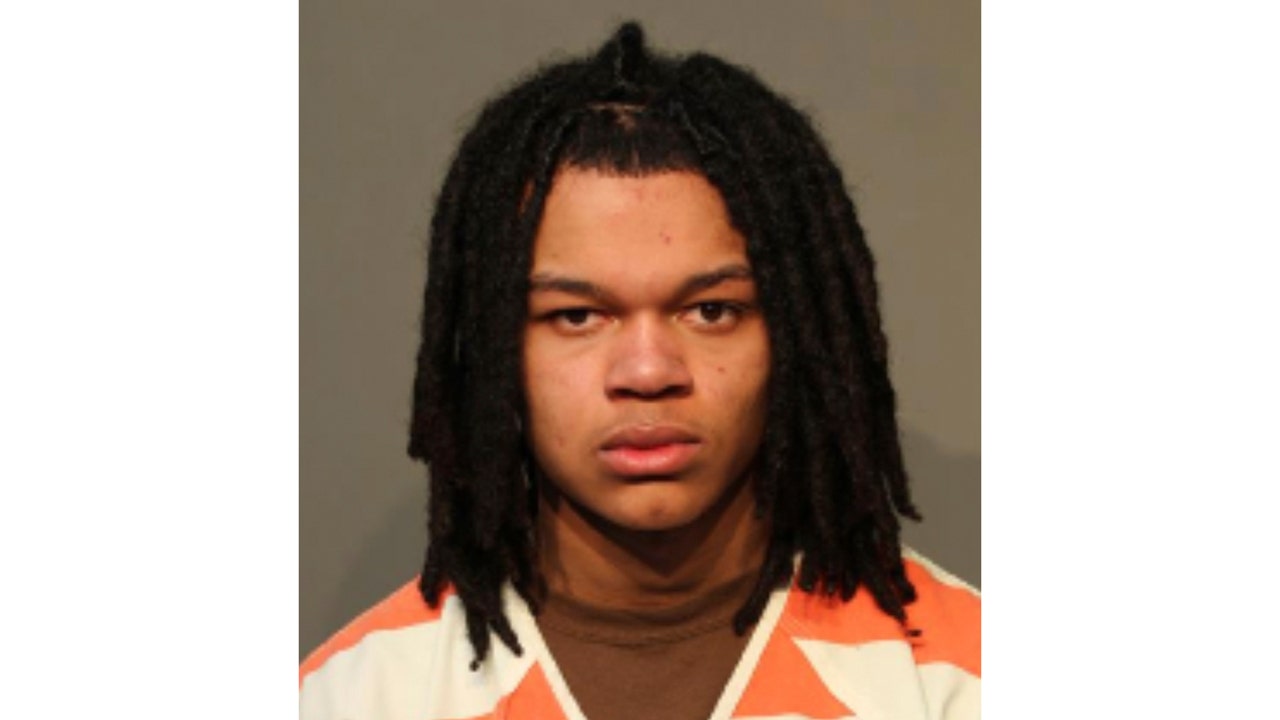
A judge sentenced an Iowa man to 65 years in prison Thursday for killing two students at a Des Moines alternative school and injuring the program’s founder.
Polk County District Judge Larry McLellan sentenced Preston Walls, 19, to consecutive terms for his September conviction on charges of second-degree murder, voluntary manslaughter and assault causing serious injury.
IOWA PARENTS URGE IMPROVED SAFETY MEASURES WITHIN DISTRICT AFTER FATAL SCHOOL SHOOTING
A jury convicted Walls after he acknowledged killing Rashad Carr, 16, and Gionni Dameron, 18, on Jan. 23, 2023, at the Starts Right Here alternative school on the edge of downtown Des Moines. Will Keeps, the school’s founder, also was shot but survived. He quickly reopened the program, which is operated through a contract with Des Moines public schools.
This booking photo provided by the Polk County, Iowa, Jail shows Preston Walls. (Polk County Jail via AP, File)
Walls said he feared for his life after earlier encounters with Carr and Dameron.
Walls must serve at least 40 years of his sentence before he is eligible for release. He also must pay $150,000 in restitution to the families of Carr and Dameron.
Jurors acquitted another man, Bravon Tukes, who had been charged with murder and other counts after he drove Walls away from the shooting. Walls testified in that trial, saying Tukes hadn’t planned the shooting and had no role in the killings.
Read the full article from Here


DETROIT (WXYZ) — A teenager was shot in Detroit on Monday evening, police said.
The shooting happened around 5:30 p.m. near Fenkell Avenue and Strathmoor Street.
It’s unclear at this time what led up to the shooting. Police say the 16-year-old is in stable condition.
Police are looking for a suspect but did not have additional information to provide.
Anyone with information can call the Detroit Police Department.

MILWAUKEE — With their most effective starter on the mound and the wind at their sails from a 19-run, 25-hit outburst at Coors Field, the Giants jumped out to an early lead.
And, poof, like most of San Francisco’s hopes this season, it was gone.
About as soon as Matt Chapman’s two-run homer cleared the wall and the outstretched glove of Jackson Chourio in the top of the second, Landen Roupp began to give the lead right back.
The Brewers pounced on Roupp for seven runs in the bottom half of the inning and only added on from there while running away with the first game of their series, 16-2.
It was such a drubbing that it ended with a position player called up before the game, Buddy Kennedy, lobbing pitches while Daniel Susac, a catcher with no prior experience besides two minor-league games at first base, played third.
Roupp struck out Jake Bauers to bring a merciful end to the second inning, nine batters after the Brewers left fielder started with a leadoff walk. Sal Frelick and Chourio both jumped on first-pitch fastballs for explosive extra-base hits, Chapman wasn’t able to field a bunt from speedy No. 9 hitter David Hamilton, and Roupp issued another walk to Christian Yelich.
The biggest hit of the inning came off the bat of Bryce Turang and gave newly called up Jonah Cox his first opportunity to show off his defense that has been called the best in the organization. Cox gave chase but instead went crashing into the wall in left-center field as the ball careened away and Turang cruised into third for a bases-clearing triple.
Turang jogged home on a sacrifice fly from the next batter for the Brewers’ seventh run.
The Brewers added another run off Roupp the next inning and eight more against the Giants’ bullpen (plus Kennedy). But for all intents and purposes, they were already buried.
What it means
Whatever good feelings the Giants brought with them on the plane after their rout to end their series against the Rockies were gone by end of the second inning.
It has been hard enough for the Giants to pull ahead; staying in front has been just as much of a challenge.
The Giants have held a lead in only 48 of their 60 games, the fewest in the majors, and are one of only five teams to relinquish the advantage more often than not, falling to 23-25.
The culprit of late had been the bullpen, but in this one, there was nobody to blame but Roupp, who struggled to find the strike zone and was hit hard when he did.
Roupp exhausted 96 pitches to complete four innings, only half for strikes, and recorded season-highs in bases on balls (four) and earned runs (eight).
The outing raised his ERA almost a full run, to 4.22 from a rotation-leading 3.30.
Who’s hot
Jung Hoo Lee recorded the most hits by a Giant in a single series since 2017 by going 11-for-15 over their three games in Colorado and picked up right where he left off.
Lee’s second-inning single extended his hitting streak to nine games and set the table for Chapman’s two-run shot that gave the Giants the briefest of 2-0 leads.
Bryce Eldridge, getting a rare start in the field, made a nice play to start a 3-6 double play, going to the ground to snag a hard hopper from Frelick, tagging first and getting back to his feet to make an accurate throw to Willy Adames at second base.
Eldridge also laced a double — his sixth in four games on the road trip — that left the bat at 107.7 mph, the Giants’ hardest-hit ball of the game.
Who’s not
After posting a 5.21 ERA in May that ranked as the fourth-worst in the majors, the Giants’ starting rotation didn’t start the month of June on any better note.
As a staff, San Francisco has surrendered at least six runs in six of its past seven games and all four to begin the road trip, albeit with the caveat that the first three were played at Coors Field.
Up next
Salt in the wound: As the Giants try to get back on track, they will be opposed by their former top prospect, Kyle Harrison, who has blossomed into an NL Cy Young contender since being dealt to the Red Sox for Rafael Devers and again this offseason to Milwaukee.
The Giants will have another homegrown arm, Trevor McDonald, on the mound.

A teacher at Prairie Seeds Academy in Brooklyn Park is canoeing 1,000 miles down the Mississippi River to help students reconnect with nature, while raising $20,000 for students affected by the federal immigration crackdown in the process. FOX 9’s Maury Glover has the story.
-
Business2 seconds ago
Company wants to revive Primm, the gambling spot turned ghost town. Owners say: Not so fast
-
 Entertainment5 minutes ago
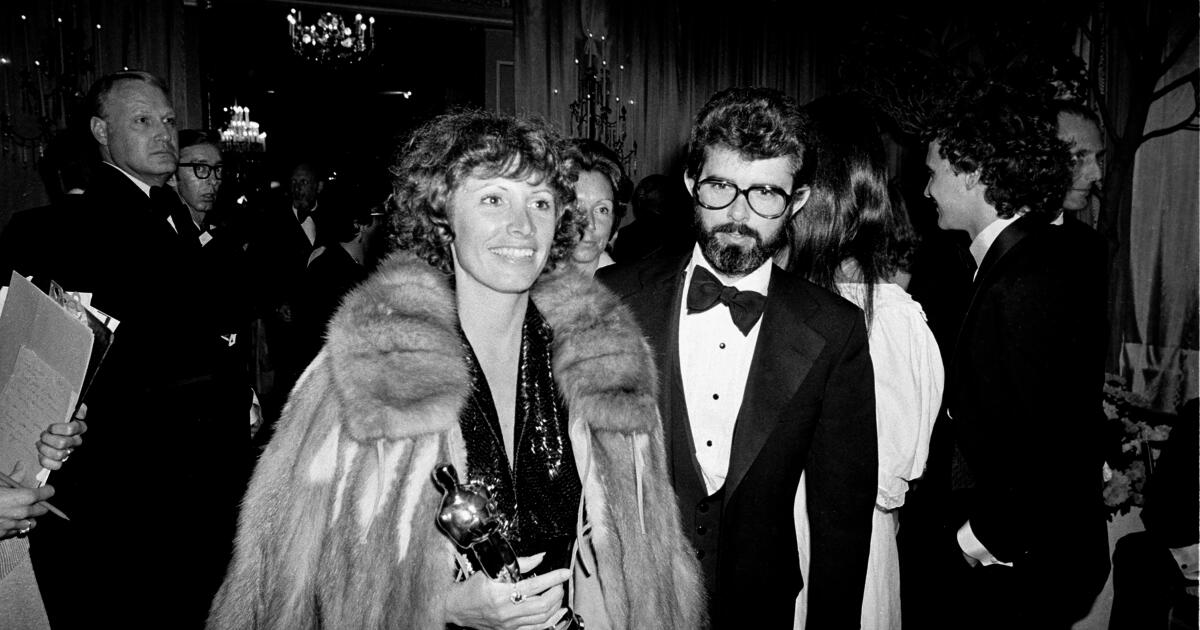
Marcia Lucas, Oscar-winning film editor of ‘Star Wars,’ dies at 80
-
 Lifestyle12 minutes ago
Want to feel more loved? You’re probably going about it the wrong way
-
 Politics15 minutes ago
NBC News will put ‘Kornacki Cam’ on the L.A. mayoral, California gubernatorial races
-
 Sports27 minutes ago
Augie Lopez powers USC baseball into super regionals for first time in 21 years
-

 World35 minutes ago
Celebration, shock and scepticism follow Colombia’s presidential election
-
 News1 hour ago
A New Jersey immigration detention center on edge. What comes next? : Consider This from NPR
-

 Los Angeles, Ca2 hours ago
Jurors to decide who's financially responsible for Iskander boys' deaths

