Midwest
Congressman Eric Burlison: In the Biden administration, 'the inmates are running the prison'

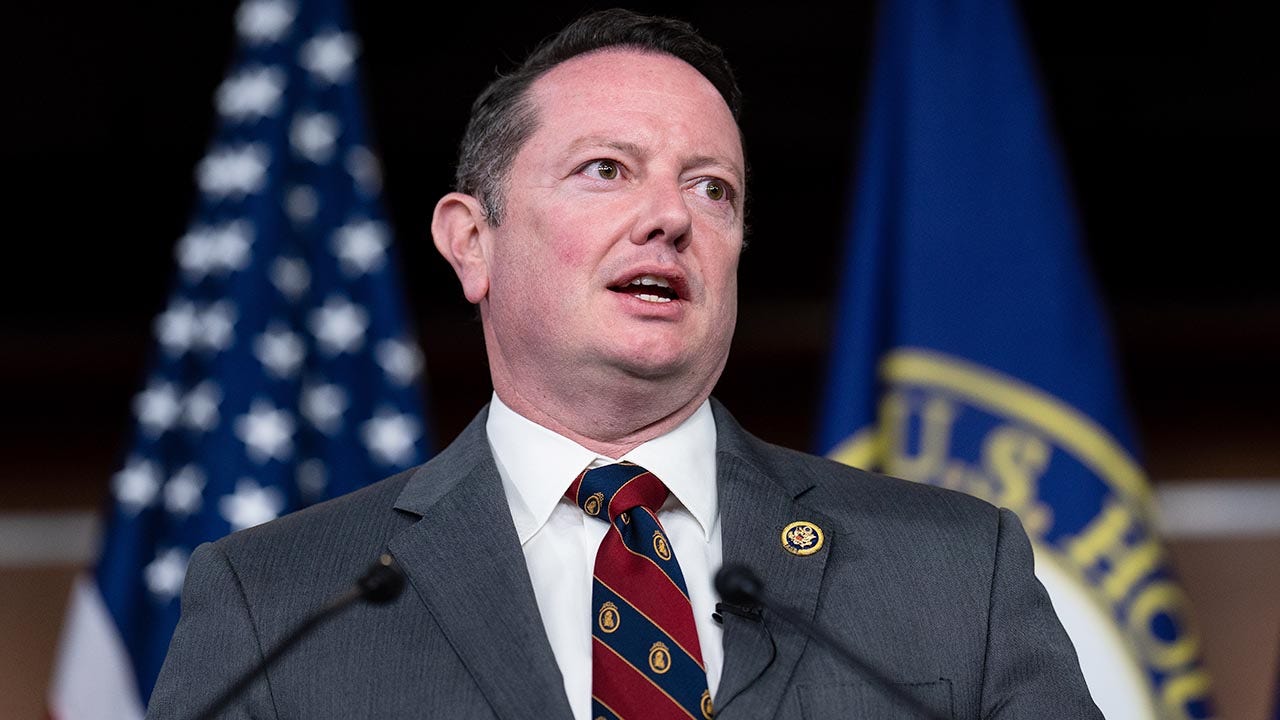
U.S. Rep. Eric Burlison, R-Mo., sat down with Fox News Digital at FreedomFest in Las Vegas to discuss the 2024 election, immigration, Second Amendment rights, and the government response to the COVID pandemic.
As former President Trump and the GOP brand have expanded throughout the American heartland in many areas that were once swing states, Burlison said he believes that the Democratic Party has abandoned his home state ideologically.
“When I was first elected in the Missouri House, I sat across the aisle from people that were friends of mine that were part of the Democratic Party who were pro-life…There were members who were part of the pro-Second Amendment caucus…and that’s not an option today and I think that people that that once held, that still hold those values that once found a place in the Democratic Party, there’s no place for them anymore…It’s not that Missouri has moved ideologically, I think it’s the Democratic Party has left them.”
LIVE UPDATES: REPUBLICAN NATIONAL CONVENTION
U.S. Rep. Eric Burlison, R-Mo., participates in the Republican Study Committee news conference to unveil their FY2025 budget proposal in March. (Bill Clark/CQ-Roll Call, Inc via Getty Images)
Burlison has been a tireless critic of the Biden administration’s immigration policies, and said the issue will pay dividends for the GOP in 2024.
“This is unprecedented levels of illegal immigration and I think that his [Biden’s] executive orders directly undermined the authority of Customs and Border Patrol, and now we have this crisis situation … over 10 million people that we know of have come across the southern border illegally, and then we have over 2 million people that are known got-aways,” he said. “When the Biden administration talks about job numbers, and he’s taking credit for this surge in jobs…the fact is that more than half of those jobs are occupied by someone who was not living in the United States before Joe Biden became president. And so, that is a disturbing factor.”
WHITE HOUSE GRILLED ON FLOW OF TAXPAYER DOLLARS TO GOVERNMENT DEI PROGRAMS
Energy production and independence are also issues that Burlison is championing in Congress, and he said will resonate with the American electorate come November.
“I think we need to return to an America that was energy independent, that was the America of abundance and that was what we were on track for that under the previous administration under President Trump. Look, in my lifetime I’ve heard so many people running for president claim that they were going to make America energy independent: we would be a net exporter of electricity, net exporter of fuels, and natural resources. That didn’t happen until President Donald Trump,” Burlison said. “The one nexus [for the economy] is energy independence and having abundant energy in the future. If America can go back to being a net exporter, and we reduce our costs for oil…natural gas, and other things, then I think we’re going to solve a lot of our problems.”
While Biden pledged to govern as a moderate after defeating democratic socialist Bernie Sanders in the 2020 primary, Burlison argues that Biden reneged on that promise.
President Joe Biden speaks during a campaign in Philadelphia. (Hannah Beier/Bloomberg via Getty Images)
“I would love to have a moderate Joe Biden as president, but that’s not who we have. I think that his office…the inmates are running the prison I think that the staff are running the show, and those staff are a lot more progressive than Joe Biden has ever been as an elected official, so it’s a disturbing trend, and I hope that we change course,” Burlison said.
GOP LAWMAKER HIGHLIGHTS LINGERING DIVIDES: ‘IT’S THE CONFERENCE AGAINST THE CONFERENCE’
One of the most important issues for Burlison is Second Amendment rights. He said he believes that Republicans have work to do to fine-tune their messaging on the issue.
“I think that we need to do a better job of communicating the value of people having the right to carry a firearm. The FBI numbers, even under the Obama administration, they did a report that showed that two and a half million times a year someone uses a firearm to save a life or stop a rape, stop a violent act, and those are amazing numbers and there’s anecdotes for every one of the two and a half million stories like that,” he said. “But what ends up being covered in the media are the horrific shootings that occur and while they are absolutely horrible, and we should do everything we can to try to stop those, we can’t ignore the fact that firearms overwhelmingly save lives.”
The U.S. Capitol in Washington, D.C. (llison Robbert/Bloomberg via Getty Images)
Burlison is a vehement critic of both parties on spending.
“It’s not only a financial crisis, but it is a security crisis. We are at a debt to GDP level that we have not seen since World War Two, and we didn’t just complete a war. In fact, we’re looking at wars that the United States may have to get into in the future, and we can’t afford it, so we have to fix this, and we don’t…we have a spending problem in D.C. and, the thing that I’m most disappointed in is my Republican colleagues who are not willing to make the necessary cuts,” he said. “They’re not willing to do what’s important and necessary for the future of America, and look, cutting is difficult, but it’s something that we’re going to have to do if we want to save this country.”
During the COVID pandemic, Burlison emerged as a champion of civil liberties, and an opponent of government overreach, and pledged that another attempt to enact policies, such as shutdowns and lockdowns, would not take place without a fight.
“This [the government reaction to COVID] was a horrific situation. We saw what a totalitarian regime might look like in America,” he said. “We got a taste of that and, I hope, I think that there’s a lot of patriots who are not going to let that happen again, and I think that there’s a lot of legislators that are trying to pass bills to make sure that…we don’t see those losses of liberty again.”
Read the full article from Here

NEWYou can now listen to Fox News articles!
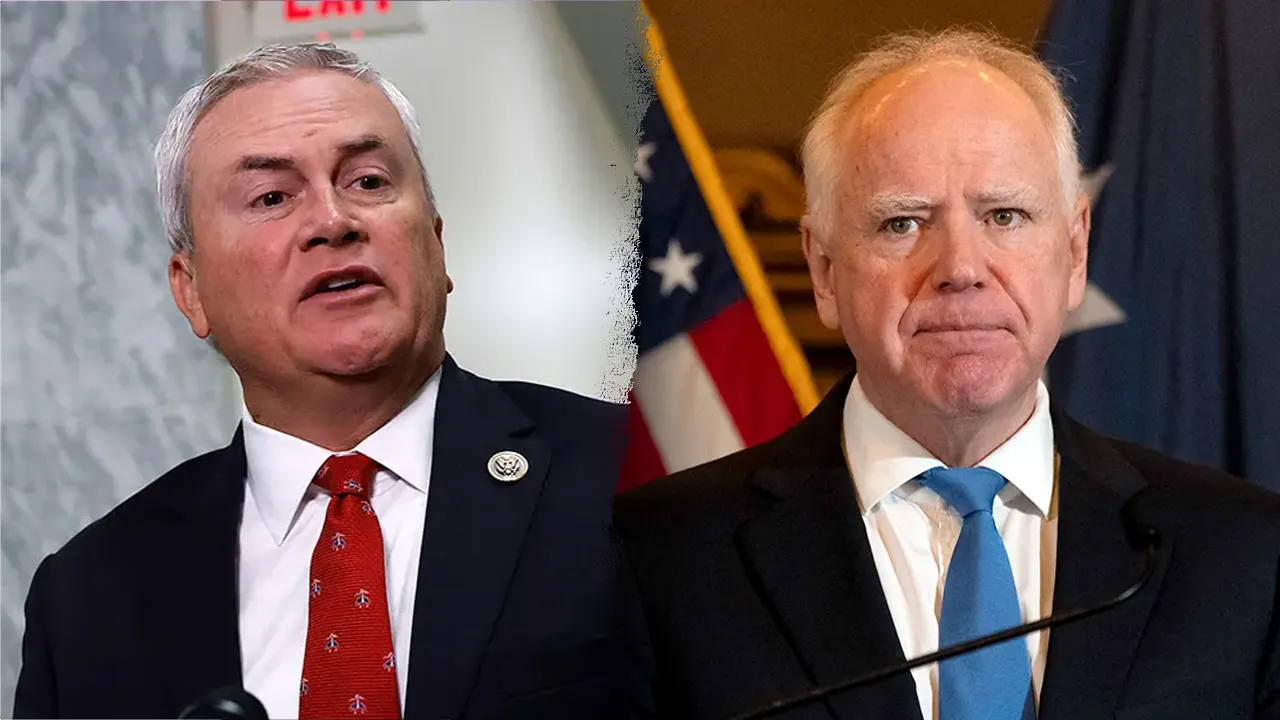
House Oversight Committee Republicans are readying to confront Minnesota Gov. Tim Walz and state Attorney General Keith Ellison at a high-stakes hearing on welfare fraud Wednesday morning.
“While Governor Walz hesitated, taxpayers lost billions. Attorney General Ellison has likewise claimed his office was aggressively holding fraudsters accountable, but when his statements were tested against the record, they fell apart,” Chairman James Comer, R-Ky., will say, according to prepared opening remarks obtained by Fox News Digital.
“We have spoken with over thirty whistleblowers, many of them current employees and Democrats, who say they were ignored, retaliated against, and even surveilled for raising concerns. Instead of protecting the whistleblowers, the Walz administration protected the system that enabled fraud.”
Hours before the hearing kicked off, the committee released a 53-page report that accused both Walz and Ellison of knowing about the fraud allegations far earlier than previously thought.
House Oversight Committee Chairman James Comer accused Minnesota Gov. Tim Walz of retaliating against whistleblowers who tried to bring attention to fraud in Minnesota. (Kevin Dietsch/Getty Images; Jerry Holt/The Minnesota Star Tribune via Getty Images)
“While the Committee continues to review documents and meet with whistleblowers, it is evident that Governor Walz and Attorney General Ellison knew about the fraud in federal programs administered by the State of Minnesota much earlier than they told the American people,” the report said.
“Transcribed interviews with current and former public officials from the State of Minnesota have confirmed that Governor Walz and Attorney General Ellison would have been aware of fraud in the [Child Care Assistance Program (CCAP)] and high-risk Medicaid programs administered by DHS as early as spring 2019 and fraud in [state food aid] programs administered by [the Minnesota Department of Education] as early as April 2020.”
Both Walz and Ellison previously pushed back on any accusations that they knowingly allowed fraud in Minnesota’s social programs and have accused Republicans of politicizing the situation.
TREASURY SECRETARY ANNOUNCES CASH REWARDS FOR MINNESOTA FRAUD WHISTLEBLOWERS
The high-profile hearing is the culmination of a monthslong probe by the House Oversight Committee targeting allegations of fraud in Minnesota.
The panel previously interviewed current and former officials within the state’s government, including those focused on food aid.
Minnesota Attorney General Keith Ellison testifies before the Senate Homeland Security and Governmental Affairs Committee on Feb. 12, 2026. (Graeme Sloan/Bloomberg via Getty Images)
Federal prosecutors in Minnesota have charged multiple people with stealing more than $240 million from the Federal Child Nutrition Program through the Minnesota-based nonprofit Feeding Our Future. However, the probe has since widened to multiple state-run programs being investigated for potential fraud. Childcare providers receiving state funding, mainly within the Somali community, are also under scrutiny.
WALZ SLAMS TRUMP ADMIN FOR TEMPORARILY HALTING MEDICAID FUNDING TO MINNESOTA: ‘CAMPAIGN OF RETRIBUTION’
And the committee’s report accused the state’s progressive leadership of ignoring evidence of fraud in a bid to appease the Somali community in Minneapolis.
“The Committee has found that Minnesota lacked adequate oversight efforts to verify that taxpayer dollars were being used appropriately and could have stopped the flow of money to fraudsters at any time but chose not to for fear of political retribution from the politically active Somali community,” the report said.
“Further legislative efforts at the federal level are necessary to prevent this massive waste, fraud, and abuse of federal dollars from ever happening again.”
In his opening statement, Comer will call the scandal “one of the most extensive breakdowns of oversight this Committee has ever examined.”
“Billions of taxpayer dollars were stolen from social services programs while warnings piled up, whistleblowers spoke out, and state officials chose delay and denial over action,” he will say.
“Federal prosecutors estimate that as much as $9 billion may have been stolen from just fourteen Medicaid programs administered by the State of Minnesota. As our investigation has shown, it happened because state leadership failed, repeatedly, to intervene. What we’ve uncovered in Minnesota is not a paperwork error or a few bad actors slipping through the cracks. It is a sustained failure of leadership.”
CLICK HERE TO DOWNLOAD THE FOX NEWS APP
Meanwhile, Democrats on the committee have accused Comer of trying to distract from the fallout of President Donald Trump’s immigration crackdown in Minneapolis — including the killing of two U.S. citizens by federal agents.
“I encourage folks to watch those videos and see what’s happened for themselves. And I’m hopeful that this committee investigates this incident and that we have full accountability,” Rep. Robert Garcia, D-Calif., said during a previous hearing on Minnesota fraud.
Related Article

Read the full article from Here

LAKELAND, FL – Opening Day is 21 days away.
The Detroit Tigers are deep into spring training in TigerTown. Pitchers and catchers reported Feb. 11, position players arrived Feb. 15, and the first game took place Feb. 21.
After three weeks of camp, including one and a half weeks of games, leaders have emerged in the battles for roster spots among pitchers and position players – but nothing is guaranteed.
Here’s a look at our second version of how the Tigers should fill their 26-man 2026 Opening Day roster, with exactly three weeks until the first game of the regular season.
[ MUST LISTEN: Make “Days of Roar” your go-to Detroit Tigers podcast, available anywhere you listen to podcasts (Apple, Spotify) ]
Right elbow arthroscopy in late January has limited Dingler in the early weeks of spring training, but he is expected to be fully healthy by Opening Day as the starting catcher.
The only question is how the Tigers will deploy their two catchers.
It could make sense for backup catcher Jake Rogers to catch left-handers Tarik Skubal and Framber Valdez, even though Dingler caught 25 of Skubal’s 31 starts last season. The reasoning is simple: The Tigers will need more offense from their catcher when their other three starters are pitching – and Dingler is the better hitter.
Celebrate 125 years of the Tigers with our book!
Torkelson is locked into the Opening Day roster after hitting .240 with 31 home runs in 155 games last season, ranking 14th among 25 first basemen with a .789 OPS.
He has experienced ups and downs in his four-year MLB career, including two demotions to Triple-A Toledo and two seasons with 31 home runs. The next step is becoming an All-Star-caliber player.
This spring, Torkelson is hitting .250 (3-for-12) with four strikeouts in five games. He also went 1-for-2 with one walk (and two hit by pitches) in two games against Team Dominican Republic in a two-game exhibition series.
The Tigers retained Torres when he received and accepted the one-year, $22.03 million qualifying offer. He will be relied upon as the everyday second baseman in the lineup and a reliable on-base presence near the top of the batting order.
In 2025, Torres hit .256 with 16 home runs, 85 walks and 101 strikeouts across 145 games.
This spring, Torres is hitting .286 (4-for-14) with one walk and three strikeouts in five games. He left the Tigers to represent Team Venezuela in the World Baseball Classic, which runs from March 5-17.
McGonigle hasn’t played above Double-A Erie, but his performance against Team Dominican Republic in the first game of the exhibition series showed why he belongs on the Opening Day roster.
The 21-year-old shortstop hit a first-pitch 98.1 mph fastball from right-hander Luis Severino for a leadoff home run in the first inning, pulling it 461 feet to right field with a 110.4 mph exit velocity – making noise in a new environment at the electric Estadio Quisqueya Juan Marichal in Santo Domingo. After the homer, he added a two-run single, five-pitch walk and leadoff single to finish his four plate appearances.
McGonigle has passed every on-field test in camp.
He also looks comfortable around big leaguers behind the scenes.
This spring, McGonigle is hitting .400 (6-for-15) with two walks and four strikeouts across seven games. He also went 3-for-5 with two walks and two strikeouts in two games against Team Dominican Republic.
The Tigers are prepared for Keith to serve as the primary third baseman.
In 2024-25, Keith hit .237 with a .660 OPS during the months of March/April and May, then improved to .269 with a .744 OPS during the months of June, July, August and September/October.
If Keith starts slowly again, utility player Zach McKinstry could handle third base until he heats up. McGonigle could also slide over to third while McKinstry handles shortstop.
This spring, Keith is hitting .154 (2-for-13) with two walks and seven strikeouts across six games. He also went 3-for-6 with one strikeout in two games against Team Dominican Republic.
If McGonigle secures an Opening Day spot, the Tigers will need to cut one of four outfielders: Vierling, Wenceel Pérez, Jahmai Jones or Parker Meadows.
Among them, Vierling has performed the best in spring training (with a track record of success when healthy), Pérez provides value off the bench as the only switch-hitter (with experience at all three outfield positions) and Jones is the top option against left-handed pitchers (without any minor-league options remaining).
That leaves Meadows on the outside looking in.
Last season, Meadows hit .215 in 58 games while posting minus-1 defensive runs saved over more than 450 innings in center field. This spring, he is hitting .059 (1-for-17) with one walk and five strikeouts in six games. He also went 0-for-3 with two strikeouts against Team Panama in an exhibition game.
The Tigers plan to use Greene at designated hitter more often after just 21 starts there last season. As a result, Carpenter has spent more time in left field this spring, in addition to his primary position in right field.
Even so, Carpenter should still receive most of the starts at designated hitter. Injuries have limited him from completing a full season during his four-year MLB career, and the designated hitter role helps keep his bat in the lineup while reducing wear and tear on his body.
This spring, Carpenter is hitting .235 (4-for-17) with six strikeouts in six games, making three starts in right field, two in left field and one at designated hitter. He also went 1-for-3 with one home run against Team Panama, starting in left field.
If McGonigle starts at shortstop, Meadows gets demoted to Triple-A Toledo and Báez takes over in center field, the Tigers would have McKinstry, Pérez and Jones as their three position players on the bench, not including Rogers as the backup catcher.
Who is next in line?
McKinstry and Rogers should be secure, but Pérez and Jones could find themselves on the hot seat if they struggle early in the season because neither has an established track record of success.
Pérez could be replaced by Trei Cruz, a switch-hitter who plays center field and shortstop, offering more defensive versatility than anyone else in the organization. Jones could be replaced by Hao-Yu Lee, a right-handed-hitting infielder who crushes left-handed pitchers, balancing the roster with above-average defense at second and third base.
Both Cruz and Lee joined the Tigers’ 40-man roster in mid-November, protecting them from the Rule 5 draft.
This spring, Cruz is hitting .308 (4-for-13) with three walks and one strikeout in seven games. He also went 0-for-3 with one strikeout against Team Panama, starting at shortstop.
The Big Five is locked in.
The Tigers bolstered their rotation by signing Valdez and Verlander in the 10 days leading up to spring training, helping offset the loss of right-hander Reese Olson to season-ending shoulder surgery. Right-hander Troy Melton could also miss significant time after being shut down from throwing with right elbow inflammation.
Moving from Olson to Verlander is a downgrade, but the Tigers still boast the best one-two punch in baseball with Skubal and Valdez at the top of the rotation. If another injury occurs, right-hander Drew Anderson is expected to shift from the bullpen into the rotation.
Five relievers are locked in with Jansen, Finnegan, Vest, Holton and Anderson, leaving three openings.
The Tigers already thinned the competition by optioning right-handers Keider Montero, Ty Madden and Dylan Smith to Triple-A Toledo, with Montero and Madden providing starting depth. The Tigers also lost right-handed reliever Beau Brieske to right ribcage tightness this spring, though the severity of the injury remains unknown.
Both Hurter and Hanifee have been key bullpen pieces in the past, making them top candidates for two of the three openings. But Hanifee has a notable flaw: He has thrived against right-handed hitters as a ground-ball specialist with his sinker-slider approach, but left-handers have hit .307 with an .857 OPS.
If the Tigers carry three left-handed relievers, Sommers could have the inside track on the final spot in the bullpen, especially with Bailey Horn still rehabbing from left elbow arthroscopy.
Contact Evan Petzold at epetzold@freepress.com or follow him @EvanPetzold.

Your quick guide to Milwaukee concerts in spring 2026
Here’s a look at some of the top acts coming to the Milwaukee area from March through May 2026.
Travel to Ireland, learn how to catch a fish, visit wildlife at the zoo, and see costumed characters this weekend in Milwaukee.
Anime Milwaukee
The 2026 “Magical Academy” themed animation convention comes to the Baird Center, 400 W. Wisconsin Ave., and Hilton Milwaukee City Center March 6-8. The weekend features Japanese industry guests and cultural experts, artists and official merchandise, gaming, music, dance, manga, cosplay, anime and Asian fashion. New this year is the Nocturna Anime Bar with a lounge and specialty drinks, including nonalcoholic beverages. Exhibit hall hours are 1 to 8 p.m. March 6, 10 a.m. to 7 p.m. March 7 and 10 a.m. to 4 p.m. March 8. Full weekend access is $100; single day access is $50-$75. animemilwaukee.org
Milwaukee Journal Sentinel Sports Show
The 85th year of the Sports Show is at State Fair Park’s Wisconsin Exposition Center, 8200 W. Greenfield Ave., West Allis, from noon to 7 p.m. March 6, 10 a.m. to 7 p.m. March 7 and 10 a.m. to 5 p.m. March 8. Along with outdoor exhibitors, see what’s swimming in the trout pond, watch the lumberjack show and the fastest retriever race, or catch the archery and air rifle tournaments. General admission tickets at the door are $15; youth tickets (ages 6-14) are $6. In honor of Women’s Day on March 8, all women receive $10 admission at the door. Check out the full schedule at jssportsshow.com.
Gardens & Gears: Steampunk Faire
Celebrate the industrial age at the Gardens & Gears art fair from 9 a.m. to 4 p.m. March 7 at the Mitchell Park Domes, 524 S. Layton Blvd. The immersive garden event features creators, costumes and live entertainment, with gears, goggles and handcrafted mechanical curiosities on display in the gardens. Domes admission required. mitchellparkdomes.com
Milwaukee County Zoo Family Free Day
Everyone receives free admission at the Milwaukee County Zoo, 10001 W. Blue Mound Road, from 9:30 a.m. to 4:30 p.m. March 7. See the red pandas in their outdoor habitat, lions, penguins and more. Parking and regular attraction fees still apply. milwaukeezoo.org
Irish Family Day
Travel to the Irish countryside during “Passport to Ireland” from 11 a.m. to 2 p.m. March 8 at the CelticMKE Center, 1532 N. Wauwatosa Ave., Wauwatosa. With Irish dance, arts, crafts and storytelling, each county will be featured with an activity that celebrates Irish culture, history and traditions. Buy one, get one free Irish Fest tickets will be available to purchase, with lunch, beverages and snacks served in the Celtic Café. Admission is $10 at the door. celticmke.com
What’s new in Milwaukee-area theaters this weekend
Marcus Theatres: See a marathon of the 2026 Best Picture nominees at select theater locations. Day one of the marathon is March 7 and features “Sentimental Value,” “F1: The Movie,” “The Secret Agent,” “Bugonia,” and “Sinners.” The marathon resumes March 14 with a new set of films. Visit marcustheatres.com.
Milwaukee Film: Women’s History Month programming features the action films of Michelle Yeoh. See her Oscar-winning performance in “Everything Everywhere All At Once” screening at 6 p.m. March 6 at the Oriental Theatre.
“Hoppers”: A robotic animal with a human mind helps real animals thwart a plot to destroy their habitat in this Disney and Pixar feature film. See it at AMC Mayfair Mall; Avalon Theater; Marcus Theatres’ BistroPlex Southridge, Hillside, Majestic, Menomonee Falls, Movie Tavern Brookfield Square, North Shore, Ridge, South Shore cinemas; Rosebud Cinema.
“The Bride!”: A lonely Frankenstein (Christian Bale) travels to 1930s Chicago to ask a scientist (Annette Bening) to create a companion. See it at AMC Mayfair Mall; Marcus Theatres’ BistroPlex Southridge, Hillside, Majestic, Menomonee Falls, Movie Tavern Brookfield Square, North Shore, Ridge, South Shore cinemas.
“Protector”: A veteran war hero (Milla Jovovich) must use the violent skills she thought she left behind to save her daughter. See it at Marcus Theatres’ BistroPlex Southridge, Hillside, Majestic, Menomonee Falls, Movie Tavern Brookfield Square, North Shore, Ridge, South Shore cinemas.

Explore small streams of Wyo. with WGFD XStream Angler challenge

Paramount ally RedBird says using Middle East money to help buy Warner Bros. could be a good idea

Fitness Class Volume Tied to Exercise Intensity Perception

Peaky Blinders: The Immortal Man review – Tommy Shelby returns for muddy, bloody big-screen showdown

Exclusive: Article Five not on the table despite Iran missile incident, NATO's Rutte says

Florida High School Football Rankings: Top 25 teams – Oct. 21

Cleary's 21 help Le Moyne down Central Connecticut State 69-64 in OT

How old is Bo Nix? What to know about Oregon quarterback ahead of 2024 NFL Draft

99th annual Pony Swim held in Virginia

Indiana Members Credit Union announced as new anchor tenant at Bottleworks District

Map: 4.9-Magnitude Earthquake Shakes Louisiana

Paxton vows he’s ‘staying in this race’ even if Trump backs Cornyn in Texas GOP clash

Which Kurdish groups is the US rallying to fight Iran?

Man accused of plot to assassinate Trump testifies Iran pressured him, says Biden and Haley were other possible targets

DHS defends McLaughlin against allegations husband’s company profited millions from ad contracts: ‘Baseless’
-

 World1 week ago
Exclusive: DeepSeek withholds latest AI model from US chipmakers including Nvidia, sources say
-

 Massachusetts1 week ago
Mother and daughter injured in Taunton house explosion
-

 Wisconsin4 days ago
Setting sail on iceboats across a frozen lake in Wisconsin
-

 Maryland4 days ago
AM showers Sunday in Maryland
-

 Florida4 days ago
Florida man rescued after being stuck in shoulder-deep mud for days
-

 Denver, CO1 week ago
10 acres charred, 5 injured in Thornton grass fire, evacuation orders lifted
-

 Massachusetts2 days ago
Massachusetts man awaits word from family in Iran after attacks
-

 Oregon6 days ago
2026 OSAA Oregon Wrestling State Championship Results And Brackets – FloWrestling