Cleveland, OH
With Trump's inauguration imminent, Ohio Jan. 6 participants prepare for pardons • Ohio Capital Journal


Donald Trump takes the presidential oath of office on Monday, and in Ohio scores of men and women who participated in the Jan. 6, 2021 riot at the U.S. Capitol are watching closely to see if he makes good on the pardons he promised on the campaign trail.
When he visited Ohio last March, Trump opened his rally speech with a video of Jan. 6 defendants singing The Star-Spangled Banner from behind bars. “You see the spirit from the hostages,” Trump told the crowd, “And that’s what they are is hostages.” He promised that he’d be working on that soon — on the “first day we get into office.”
A few months later during a CNN town hall, he clarified “I am inclined to pardon many of them. I can’t say for every single one because a couple of them, probably, they got out of control.”
Still, it seems many of Trump’s die-hard supporters assumed there was some kind of inclination toward pardoning all Jan. 6 participants. Vice President-elect J.D. Vance was met with pushback after indicating only non-violent defendants should get pardons.
“Look, if you protested peacefully on January the sixth, and you’ve had Merrick Garland’s Department of Justice treat you like a gang member, you should be pardoned,” Vance said on Fox News Sunday. “If you committed violence on that day, obviously you shouldn’t be pardoned.”
“There’s a little bit of a gray area there,” he added, “but we’re very much committed to seeing the equal administration of law. And there are a lot of people, we think, in the wake of January the sixth, who were prosecuted unfairly. We need to rectify that.”
Even with those caveats, Vance’s suggestion of a dividing line among cases earned scorn among far-right figures like Steve Bannon.
“Pardon them all,” he wrote on the social media site Gettr. “Every last one.”
Where the prosecutions stand
In an update published on the fourth anniversary of the riot, the U.S. Department of Justice tallied up 1,583 arrests and more than 1,000 guilty pleas. The majority of cases have been fully adjudicated, and 667 people have been sentenced to time behind bars with another 145 sentenced to home detention.
The range of their offenses is vast. The agency notes every defendant has been charged with trespass, but more than 600 were charged with “assaulting, resisting or impeding” law enforcement, 174 of whom used a “dangerous or deadly” weapon. In addition to using makeshift weapons like police riot shields or fencing, the rioters brought firearms, tasers, pepper spray and knives into the Capitol — one woman even brought a sword.
Federal prosecutors’ conviction rate in the Capitol siege cases has been very high, but there have been a few acquittals along the way. They were dealt a more significant setback by the U.S. Supreme Court’s decision in Fischer v. United States. That case determined federal officials couldn’t apply a statute related to obstructing an official proceeding as broadly as they had been.
As a result, justice officials went back through 259 cases, but in each one of them, the defendant faced additional charges outside the ones addressed by the Fischer case. Six individuals have seen their sentences reduced because of the case.
An Ohio perspective
Today I turn myself in to federal prison for the 19 month sentence I received for peacefully protesting inside the People’s House on January 6th, 2021.
I was 21 years old at the time, and I have been fighting these charges for the last 3 years.
It is my great honor to be held… pic.twitter.com/7Jx4Vjtnyw
— Alexander Sheppard 🇺🇸 (@NotAlexSheppard) November 2, 2023
According to federal prosecutors, Alexander Sheppard of Powell, Ohio participated in the riot at the U.S. Capitol, “joined others in overrunning multiple police lines,” “videotaped fleeing members of Congress and staff, and looked on as other rioters violently punched out the windows of the doors” outside the U.S. House chamber. In its sentencing recommendation the DOJ asked for 37 months in prison followed by 36 months of supervised release and $2,000 in restitution.
“The government’s recommendation in this case reflects its substantial concern that Sheppard’s actions on that day may not be his last,” prosecutors argued, citing ongoing defiant and threatening posts on social media.
In September 2023, he was sentenced to 19 months, and later posted “It is my great honor to be held hostage as a political prisoner in these United States of America.” In an accompanying photo he’s holding two thumbs up outside a prison, wearing a shirt that reads “Let’s go Brandon.”
He got a reprieve when the U.S. Supreme Court took up the Fischer case. Sheppard’s attorney argued he should be released early because he might serve more time than necessary if the Fischer case went his way. The judge agreed, and he was released last May.
In an interview this week, Sheppard remained defiant and argued Trump’s “got to pardon everyone.”
“Whether we were charged with violence or not, every single one of us was denied due process,” he insisted, “because they forced us to have the trial in Washington, DC, where they have this Soviet-style rigging of the jury pool and a 100% conviction rate on Jan. 6 defendants.”
Although quite rare, there have been a few acquittals in Jan. 6 cases. Notably, federal cases writ large almost never result in an acquittal if they make it to trial.
Sheppard is quick to note his charges were non-violent, and he argued that those charged with violence were acting in self-defense. He brought up police using non-lethal deterrents like pepper spray and rubber bullets indiscriminately, and the deaths of Ashli Babbitt and Rosanne Boyland (Babbitt was shot and killed trying to enter the Speaker’s Lobby; according to a coroner’s report while Boyland died of an amphetamine overdose).
“If somebody defends themselves and defends other protesters, then they’re violent,” Sheppard said. “I just don’t think it’s right.”
Please understand that ALL defendants were denied DUE PROCESS and should therefore be pardoned.
We did not even have a jury of our peers in Washington, D.C.
The only people who should be imprisoned are Capitol Police Officers who massacred protesters!
— Alexander Sheppard 🇺🇸 (@NotAlexSheppard) January 12, 2025
Pressed on police officers’ duty to defend the Capitol from the rioters in addition to their own right to defend themselves, Sheppard was dismissive. “They shot her with no warning,” he said of Babbitt, despite officers attempting to warn her group away from a barricaded door and another demonstrator recalling officials telling protestors to get back. Babbitt was shot attempting to crawl through a broken window and Capitol Police rendered first aid immediately.
Given his sympathies with those facing charges of violence, Sheppard was frustrated with Vance’s suggestion that violent offenders not get pardons. In a response to Vance on social media, he reiterated the argument that defendants were denied due process.
“The jury pool is going to be rigged against them,” he said in an interview. “So, yeah, I don’t like what J.D. Vance had to say. I respectfully hope that he changes his position. But at the end of the day, it’s not his decision to make — it’s going to be President Trump’s decision.”
As for what he expects to happen, Sheppard has noted with interest recent quotes from Trump that he could act within the first nine minutes of his new term, and described hearing from people still in prison who already have their bags packed.
“I think you will be surprised how many people he pardons right away,” Sheppard said. “I don’t think he’s going to do three a day. I think it’s going to be hundreds a day.”
Legal analysis and stakes: ‘It’s as bad as you think’
There’s no question that Trump’s pardon power is vast, and what constraints he does face likely wouldn’t stand in the way of pardoning Jan. 6 defendants. The Trump transition team did not respond to the Ohio Capital Journal’s request for comment.
As for Sheppard’s due process claims, retired Case Western Reserve University law professor Jonathan Entin offered a blunt assessment.
“Well, he’s wrong, is the short answer,” Entin said.
“Let me read you from The Sixth Amendment to the Constitution — part of the Bill of Rights,” he went on. “It says ‘in all criminal prosecutions, the accused shall enjoy the right to a speedy and public trial by an impartial jury — of the state and district wherein the crime shall have been committed.’”
Entin explained that there’s a powerful interest for the parties where a crime occurred to be in charge of prosecuting the case. “After all,” he explained, “the impact of the crime was right there.” It’s possible for a defendant to argue for a change of venue if there’s a concern that publicity might taint the jury pool, but Entin said those motions are rarely granted.
“And that’s particularly true in a really high-profile case, like the cases that arose out of Jan. 6,” he explained. “Because people everywhere know about what happened, right? And so, the idea that you could get a more impartial jury somewhere else just seems far-fetched.”
On appeal, Entin added, Sheppard could argue he was tried in the wrong venue. But even if that argument was successful, the result could just be a new trial.
Taking a step back and considering the stakes of Trump issuing widespread pardons, Ohio State University sociologist Laura Dugan paints a bleak picture.
“I mean, it’s as bad as you think,” she said. “It’s basically giving permission for people to overthrow the government if they think that the government is behaving in a way that is treasonous. And the only thing that requires them to think that is that Trump tells them.”
Dugan studies terrorism and helped launch the Global Terrorism Database. As part of Ohio State’s Mershon Center she has organized research workshops on the growth of extremism in the United States.
She tends to think Trump will pardon all those who took part in the Jan. 6 riots.
“I actually would be surprised if he doesn’t do it,” Dugan said. Even though Trump and Vance themselves have hinted at exceptions, Dugan contends setting some standard to distinguish among cases would upset Trump’s supporters.
“Despite what Vance is saying, if (Trump) does put a line where the pardons fall, he will get hit with some backlash for it — even the violent offenders,” she explained.
Regardless of how many pardons Trump eventually issues, Dugan argued that the consequence will be to vindicate the rioters’ actions and make similar events more likely in the future. Those who receive a pardon will achieve a kind of martyr-like status, and if Trump’s agenda faces obstacles, she warned, there’s are subset of his supporters who would have no qualms coming to Washington D.C. again.
The pardons will reinforce the narrative “that they were in the right,” Dugan said.
“He wants that, they want that, but it’s not good for the country.”
Follow Ohio Capital Journal Reporter Nick Evans on X or on Bluesky.
YOU MAKE OUR WORK POSSIBLE.



Watch live newscasts, stream breaking coverage, and catch up on the top stories shaping Cleveland, Akron, Canton, and surrounding communities.
Subscribe for:
• Cleveland breaking news + live updates
• Northeast Ohio weather forecasts and severe weather alerts
• Investigations and accountability reporting
• Community stories across the region
• Major events, sports, and local explainers
WKYC — Cleveland news and weather, live and on demand.
🔗 More: https://www.wkyc.com/
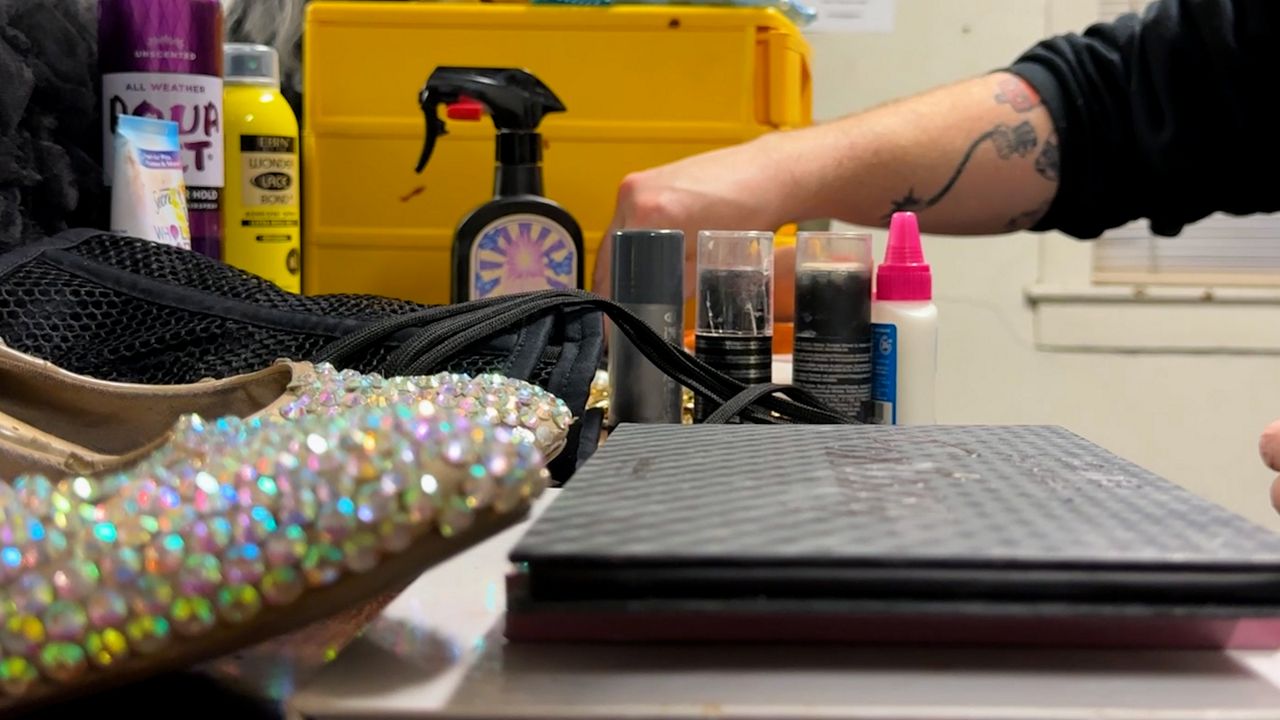
CLEVELAND — For Kyle Burnett, drag is more than just a hobby, discovering the art form after falling into a deep depression during the COVID-19 pandemic.
Burnett, who is nonbinary, has been living in Ohio for more than a decade and has performed as “Zoey Zegai” for five of those years.
“It was a tough time … I found drag not only as a way of entertainment, but embracing myself as a queer member of the LGBTQ+ community,” said Burnett, who uses he/they pronouns.
While Burnett has been met with substantial support, he said, he’s noticed a recent shift in societal attitudes toward the LGBTQ+ community over the last year.
“I had my purse and was wearing short shorts because Ohio gets hot in the summertime, and I had a beer bottle thrown at me from outside of someone’s car window,” Burnett said.
“Zoey Zegai,” which Burnett said, is influenced by old-school divas like Joan Crawford and newer divas like Jinkx Monsoons.
According to the American Civil Liberties Union (ACLU), 500 anti-LGBTQ bills have been proposed during the 2026 legislative session nationwide.
One of these bills is HB 249, or the “Indecent Exposure Modernization Act,” which would restrict drag performances to adult entertainment venues. The policy also changes the definition of public indecency to include “performers or entertainers who exhibit a gender identity that is different from the performer’s or entertainer’s biological sex using clothing, makeup, prosthetic or imitation genitals or breasts, or other physical markers.”
TransOhio Executive Director Dara Adkison said the bill uses broad language and could criminalize gender-diverse expression.
“It’s really making a statute that law enforcement professionals get to enforce their personal ideas about what is and isn’t appropriate gender representation, what is and isn’t performance. You know, is it singing karaoke? Is it being and drag queen? I know, is it a trans person walking down?” said Adkison, who uses they/them pronouns.
While many Ohioans are expressing concerns about the bill targeting transgender people and drag performers, nonprofit Equality Ohio said, the legislation’s impact expands to athletes and countless others.
The bill revises a previous code banning the exposure of “private parts” to now ban the exposure of “private areas,” said Dwayne Steward, Executive Director of Equality Ohio.
“Because the language they use is so vague, it really can apply to anyone, really. The language has been shifted from ‘obscenity’ … someone showing their genitals … to anyone showing their ‘genital area’, which could mean anyone who’s wearing a sports bra, a cheerleader who may be showing their midriff. “
Supporters of HB 249 said the bill is meant to protect children, while others have said this argument reinforces a harmful narrative surrounding drag performances.
“People, immediately when they see drag, they think that it is something that is sexual, something that is trying to indoctrinate children, to expose them to sexual content. And that’s not the case in any capacity,” Olivia Kowslowski.
Kowslowski is born and raised in northeast Ohio, now performing as “Monica Mod.”

Kowslowski, who started first started performing drag in Jan. 2022.
“I think that my perspective is important because it just shows that the bill is harmful to many people, including people that they were not expecting to be impacted by this,” she said. “… Most people don’t realize that when I’m in drag, I am, I’m a cisgender woman.”
While she’s become well known around her college campus’ drag scene, Kowslowski said, she and other performers are facing additional barriers.
“I have found that finding bookings is much more difficult because many venues are a lot more hesitant to host drag events at their spaces, or even support drag entertainers and their venues. Mainly from HB 249,” she said.
The Democratic Society of America’s Cleveland chapter recently announced it is launching a Gender Freedom Policy Petition that would go against “recent legislation calling to limit and ban drag performances,” calling it, “an injustice to not only the drag scene but also the broader Cleveland community.”
The petitions also includes provisions “that safeguard drag performers” and call for city-backed gender-affirming care services.
HB 249 now remains under review by the Ohio Senate and would require the governor’s signature before going into effect.
While the future remains uncertain, Burnett said, he and others in the drag community are hoping to build wider solidarity across all Ohio populations.
“We’re all just trying to live the same day-to-day life, get groceries, pay bills, drive to-and-from work. But there’s no room for hate,” Burnett said. “There’s no room for violence. We just want to feel like Ohio citizens.”

Getty
CLEVELAND, OH – NOVEMBER 01: Roberto Perez #55 of the Cleveland Indians reacts after Addison Russell #27 of the Chicago Cubs , hit a two-run RBI double during the first inning in Game Six of the 2016 World Series at Progressive Field on November 1, 2016 in Cleveland, Ohio. (Photo by Jason Miller/Getty Images)
On Thursday evening, the Cleveland Guardians will play their first game of the 2026 regular season when they visit the Mariners in Seattle.
Before Opening Day, a franchise legend announced that he is calling it quits on his baseball career.
Cleveland Guardians Legend Announces Retirement

GettyCLEVELAND, OHIO – APRIL 10: Roberto Perez #55 of the Cleveland Indians hits a two-run home run against the Detroit Tigers in the second inning during a game at Progressive Field on April 10, 2021 in Cleveland, Ohio. (Photo by Emilee Chinn/Getty Images)
Roberto Perez (who last played in 2023) announced his retirement from baseball (h/t MLB Trade Rumors).
Perez wrote (via Instagram): “After much thought and reflection, I have decided to officially retire from baseball. This game has been a major part of my life and has shaped me both on and off the field. Through baseball, I’ve learned discipline, resilience, teamwork, and the importance of commitment. I am deeply grateful for every coach, teammate, trainer, and supporter who helped me along the way and believed in me throughout my journey. While this decision was not an easy one, I feel confident that it is the right time to step away and begin the next chapter of my life. I leave the game with nothing but respect and appreciation for everything it has given me. Thank you to everyone who has been part of this experience and for the opportunities, lessons, and memories that will stay with me forever. Sincerely, Roberto Bebo Perez🙏🏻⚾️”
Perez’s MLB Career

GettyCHICAGO, IL – OCTOBER 29: Roberto Perez #55 of the Cleveland Indians walks across the field in the first inning against the Chicago Cubs in Game Four of the 2016 World Series at Wrigley Field on October 29, 2016 in Chicago, Illinois. (Photo by Jamie Squire/Getty Images)
Perez was picked in the 33rd round of the 2008 MLB Draft.
He spent the first eight seasons of his career with the Guardians.
In that span, the 37-year-old won two Gold Glove Awards (and helped the franchise reach the World Series).

GettyMINNEAPOLIS, MN – JULY 31: Roberto Perez #55 and Brad Hand #33 of the Cleveland Indians hug at the mound after defeating the Minnesota Twins 6-2 at Target Field on July 31, 2018 in Minneapolis, Minnesota. (Photo by Adam Bettcher/Getty Images)
Perez also spent the final two seasons of his ten-year career with the Pittsburgh Pirates and San Francisco Giants.
Over 516 career games, he batted .207 with 55 home runs, 193 RBI’s and 165 runs.

GettyNEW YORK, NY – MARCH 30: Roberto Perez #1 of the San Francisco Giants hits a single during the fifth inning against the New York Yankees on Opening Day at Yankee Stadium on March 30, 2023 in the Bronx borough of New York City. (Photo by Sarah Stier/Getty Images)
Current Guardians

GettyCLEVELAND, OHIO – SEPTEMBER 30: Manager Stephen Vogt #12 of the Cleveland Guardians speaks with the media following game one of the American League Wild Card Series against the Detroit Tigers at Progressive Field on September 30, 2025 in Cleveland, Ohio. (Photo by Nick Cammett/Getty Images)
The Guardians are coming off a season where they won the AL Central with an 88-74 record.
They lost to the Detroit Tigers in the Wild Card Round.
Ben Stinar Ben Stinar has been covering the NBA for over seven years.
He has written for OnSI, Forbes, Amico Hoops, The Big Lead and had a podcast with former All-Star Jameer Nelson. More about Ben Stinar
More Heavy on Guardians
Loading more stories

Idaho Senate introduces new bill to give local municipalities authority to control rat populations

Illinois vs Iowa prediction, analysis, Elite Eight expert picks for men’s March Madness

Police arrest suspect in Westfield homicide

Tennessee basketball vs Iowa State Sweet 16 tipoff time changed for later start

Kansas State Baseball 2026 at Utah

Florida High School Football Rankings: Top 25 teams – Oct. 21

How old is Bo Nix? What to know about Oregon quarterback ahead of 2024 NFL Draft

Cleary's 21 help Le Moyne down Central Connecticut State 69-64 in OT

99th annual Pony Swim held in Virginia

Indiana Members Credit Union announced as new anchor tenant at Bottleworks District

WATCH: Senate hearing goes silent after Angel Father confronts top Dem over daughter’s death

US diplomat Marco Rubio denounces settler violence, tolls in Hormuz strait

Iran-linked hackers have breached FBI Director Kash Patel’s personal emails | CNN Politics

Live: CPAC 2026 Day 2

Video: Will ICE Change Under Its New Leader?
-

 Detroit, MI1 week ago
Drummer Brian Pastoria, longtime Detroit music advocate, dies at 68
-

 Movie Reviews1 week ago
‘Youth’ Twitter review: Ken Karunaas impresses audiences; Suraj Venjaramoodu adds charm; music wins praise | – The Times of India
-

 Sports6 days ago
IOC addresses execution of 19-year-old Iranian wrestler Saleh Mohammadi
-

 New Mexico5 days ago
Clovis shooting leaves one dead, four injured
-
 Business1 week ago
Disney’s new CEO says his focus is on storytelling and creativity
-

 Technology5 days ago
YouTube job scam text: How to spot it fast
-

 Tennessee4 days ago
Tennessee Police Investigating Alleged Assault Involving ‘Reacher’ Star Alan Ritchson
-

 Texas1 week ago
How to buy Houston vs. Texas A&M 2026 March Madness tickets