Midwest
Chicago repeat offender accused of punching women arrested again after years of violent crimes: report


NEWYou can now listen to Fox News articles!
An Illinois man with a history of random attacks against women has been arrested again after nearly a decade of repeated run-ins with the law, according to a report.
William Livingston, 32, was arrested in Chicago on Nov. 12 by members of the Chicago Police Department and U.S. Marshals Great Lakes Regional Fugitive Task Force, according to WGN.
The arrest stems from an incident on June 12, in which police say Livingston allegedly struck two women, a 29-year-old and a 40-year-old, the outlet reported.
He reportedly faces two felony counts of aggravated battery in a public place.
EX-ESPN HOST CALLS ON NYC MAYOR TO TAKE ‘CLEARLY UNWELL AND VIOLENT MEN’ OFF STREETS AFTER CHARLOTTE STABBING
William Livingston appears in a prior booking photo after being arrested in Chicago, Illinois. (CPD)
However, the alleged assault is not Livingston’s first run-in with the law.
Livingston spent time behind bars after he allegedly punched Kathleen Miles, a mother of 11 children, while she was walking to a local train station with a co-worker on Aug. 19, according to WGN.
Surveillance video shows Livingston approaching Miles from behind before randomly punching her, knocking her out cold, the outlet reported.
BLUE CITY REPEAT OFFENDER ACCUSED OF METAL PIPE RAMPAGE JUST DAYS AFTER RELEASE
William Livingston is accused of striking two women in Chicago earlier this year, according to WGN. (iStock)
“All I can think of is it takes so much anger to hit someone with so much force,” Miles told WGN. “There’s no way to be prepared for this.”
Livingston was later taken into custody and charged with two felony counts of alleged aggravated battery in a public place, one felony count of aggravated battery causing great bodily harm and one misdemeanor, according to the outlet.
At the time of the alleged attack, Livingston’s rap sheet included seven prior arrests over the course of the last decade with charges stemming from similar assaults, WGN reported.
BLUE CITY PERP WITH 50+ ARRESTS ACCUSED OF PUSHING STRANGER ONTO TRAIN TRACKS IN FIFTH ATTACK THAT DAY: REPORT
William Livingston is accused of multiple assaults against women throughout Chicago, Illinois dating back to 2015, according to WGN. (iStock)
In 2022, Livingston allegedly attacked DePaul University student Cami Blechschmidt as she was waiting for a Lyft ride after visiting a nearby Starbucks coffee shop, WGN reported.
“I felt a hand in my pocket, turned my head like that and there was a man directly in front of me, and he punched me directly in the face,” Blechschmidt told the outlet.
Livingston was reportedly apprehended by police roughly 15 minutes after the alleged assault, with Blechschmidt later learning that Livingston had allegedly attacked four women within the area in just 22 minutes.
He was ultimately charged with four felony counts of alleged aggravated battery, according to WGN.
“While we cannot comment on the specifics of prior incidents or pending cases, the CCSAO evaluates each case based on the available evidence and the applicable law,” the Cook County State Attorney’s Office said in a statement to Fox News Digital.
“When appropriate, prosecutors seek pre-trial detention for dangerous individuals who pose a danger to the community, as was done at the defendant’s first court appearance in August 2025, when our office filed a petition for detention that was granted by the court. Following an ongoing investigation, the defendant was recently charged in a new case related to the July 2025 incident and remains in custody at Cook County Jail.”
CLICK HERE TO DOWNLOAD THE FOX NEWS APP
Prior to the incident in 2022, Livingston had been arrested twice in 2017 and was slapped with aggravated assault charges in 2015 and 2016, WGN reported.
“I think that he’s definitely a repeat offender,” Blechschmidt told WGN shortly after the alleged attack. “They’re not doing anything to keep him in.”
The Chicago Police Department and U.S. Marshals Service did not immediately respond to Fox News Digital’s request for comment.
Read the full article from Here



If you need help with the Public File, call (313) 222-0566
At WDIV, we are committed to informing and delighting our audience. In our commitment to covering our communities with innovation and excellence, we incorporate Artificial Intelligence (AI) technologies to enhance our news gathering, reporting, and presentation processes. Read our article to see how we are using Artificial Intelligence.
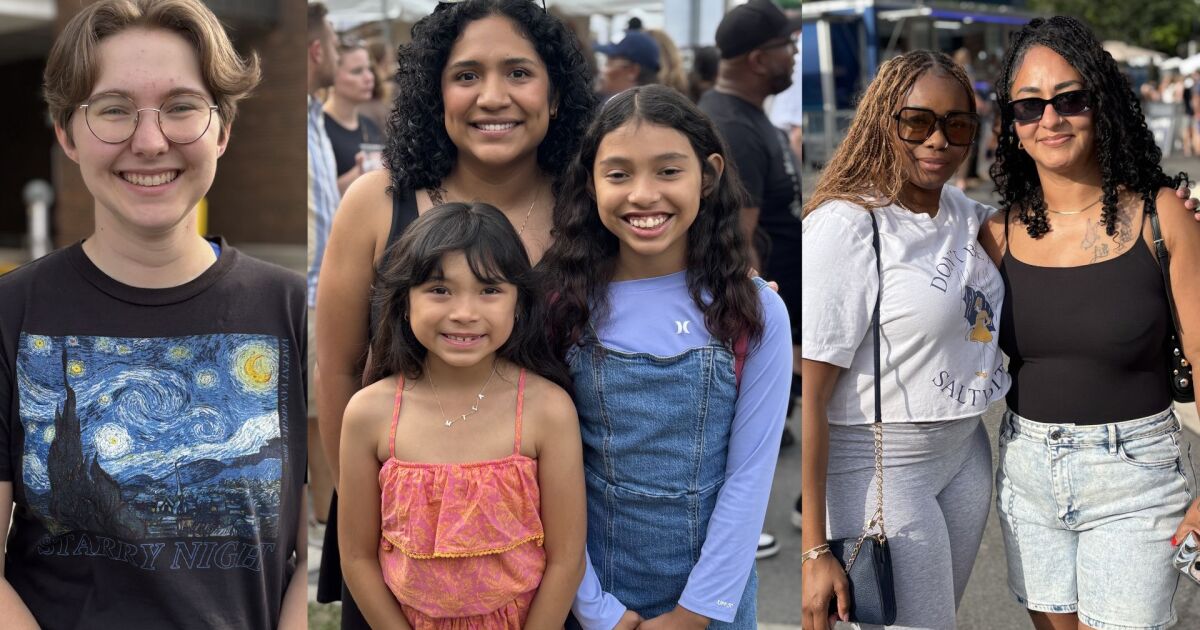
MILWAUKEE — Bastille Days and Festa Italiana are filling downtown Milwaukee with live music, food and large crowds this weekend.
For many, events like these are a summer tradition.
“The festivals for the summertime-they’re something to do like almost every single day and almost most definitely every single week,” Natara Riley said.
But some festivalgoers say outside of these big events, downtown’s entertainment scene isn’t what it used to be.
“I grew up partying on Water Street. I won’t go there no more at all,” Leandra Wohner said.
“I think it’s the city is not upkeeping the entertainment that people need to have fun. So when something does happen, like Bastille Days or other festivals, a lot of people tend to go to it because there’s not a lot of room for like activities for people,” Riley said.
Watch: Festivalgoers say Milwaukee’s summer events fill a gap in downtown entertainment
It’s a weekend of festivals in downtown Milwaukee
Festivalgoers say events like these give people a chance to enjoy live music, support local vendors, and try new foods — all in an environment they feel is well organized.
“I feel like it’s safe. They block off the roads, especially where there’s a lot of people walking around, and you know, parking wasn’t hard to find either. So it’s very-I want to say-I feel like it’s very well put together,” Dana Garcia said.
For those who may be hesitant about coming downtown, Emma Maertz offered this encouragement.
“If you never give it a chance, you never discover all the wonderful little vibrant things out here on the streets, and so I’d say give it a chance. You know, come down, see what it’s like, walk around, try out a street festival, park a few blocks away, and explore a new area,” Maertz said.
Let’s talk:
Hey there! At TMJ4 News, we’re all about listening to our audience and tackling the stuff that really matters to you. Got a story idea, tip, or just want to chat about this piece? Hit us up using the form below. For more ways to get in touch, head over to tmj4.com/tips.
It’s about time to watch on your time. Stream local news and weather 24/7 by searching for “TMJ4” on your device.
Available for download on Roku, Apple TV, Amazon Fire TV, and more.
Report a typo or error // Submit a news tip
Minneapolis, MN
Minneapolis police highlight missing person found by drone as city weighs aerial tech program

Minneapolis police officers and a K-9 had been looking for a man for about three-and-a-half hours. A drone found him nine minutes after it launched.
That’s according to a police report documenting the search for 82-year-old Bob Stewart, a Marine veteran who had gone missing after he went for a walk on the city’s north side. His wife began to get worried when he didn’t return home back in May.
“It was frightening, though. I remember just thinking, ‘This can’t be how this ends. This just can’t be,’” Linda Stewart said.
Bob said that he had fallen into Shingle Creek in Webber Park in north Minneapolis.
“[I] slipped right in the mud, and gravel, and water and everything, slid right in. Lay there for about, on and off, five hours,” Bob Stewart said.
The drone operator for the Minneapolis Police Department wrote in his report that he spotted Bob Stewart after noticing an “anomaly” through the vegetation in a densely wooded area of the park. It was Bob Stewart, trying to climb out. With the drone operator keeping an eye on him from above, officers on the ground got to him.
“We’re both very faithful people and believe that everything happens for a reason, so I was praying, Bob was praying,” Linda Stewart said.
The couple is overjoyed that everyone got home safe, saying they have no interest in the politics involved in police using drones.
Minneapolis police are citing the May incident as a positive example of how the technology can be used to keep the public safe. This week, MPD presented information to the City Council about trying out a drones-as-first-responders program. The key difference is that, at the moment, police can launch a drone at the scene from a vehicle once they’ve already arrived at an emergency. If adopted, the first responder program would send a drone in response to an emergency call ahead of officers, allowing them to start documenting the scene far faster.
Officials say it would be a free 75-day trial period in the 4th Precinct with the company Skydio, Inc., and the drones would have police markings and flash red and blue lights. They say the goal is to see if drones can improve emergency response times, make both the public and the first responders safer and help clear calls when police aren’t needed.
Several other Minnesota agencies already use the drones, including in St. Paul and Minnetonka, but Minneapolis residents pushed back Wednesday, expressing concerns about surveillance and the company the city could potentially contract with.
Councilmember LaTrisha Vetaw, who represents the part of Minneapolis where the pilot program would be launched, said she supports the measure. She says that she has been talking to constituents about this for at least a few years.
“I went to a demo and I was like, ‘Wow, let’s try this,’” Vetaw said. “This footage is going to be deleted after seven days if it’s not used in an investigation. This is stored with MPD. This is not Skydio’s footage. This is MPD’s footage.”
The council is set to take a vote on the pilot program on Thursday.
-
 Lifestyle33 seconds ago
Shy on the dance floor? Virtual reality ‘partners’ aim to help you find your groove
-

 Technology13 minutes ago
Are you filthy enough for a $700 portable shower?
-

 World14 minutes ago
Former British MP and reality TV star Ann Widdecombe found dead; man arrested for murder
-

 Politics20 minutes ago
Trump takes unusual step, lets bipartisan housing bill become law unsigned amid SAVE pressure campaign
-

 Health28 minutes ago
Eating common dairy food every day may slow biological aging, study suggests
-

 Sports30 minutes ago
CM Punk to defend Undisputed WWE Championship against Cody Rhodes at SummerSlam
-

 Technology36 minutes ago
Would you pay $8,000 for a robot to fold laundry?
-
 Business43 minutes ago
Legendary Television City may be be sold in further blow to Hollywood

