Midwest
Biden admin turning this federal agency into a Dem get-out-the-vote machine

NEWYou can now listen to Fox News articles!
The Founding Fathers feared a system of government where the executive branch is able to wield the power of the federal bureaucracy to interfere with elections. Unfortunately, President Biden has directed every federal agency to do just that.
As chairman of the Committee on Small Business, we have been investigating the electioneering efforts undertaken by the Small Business Administration (SBA), and what we have uncovered is already very troubling.
On March 19, 2024, the SBA announced a Memorandum of Understanding (MOU) with the Michigan Department of State (MDOS) to facilitate voter registration efforts ahead of the 2024 election cycle.
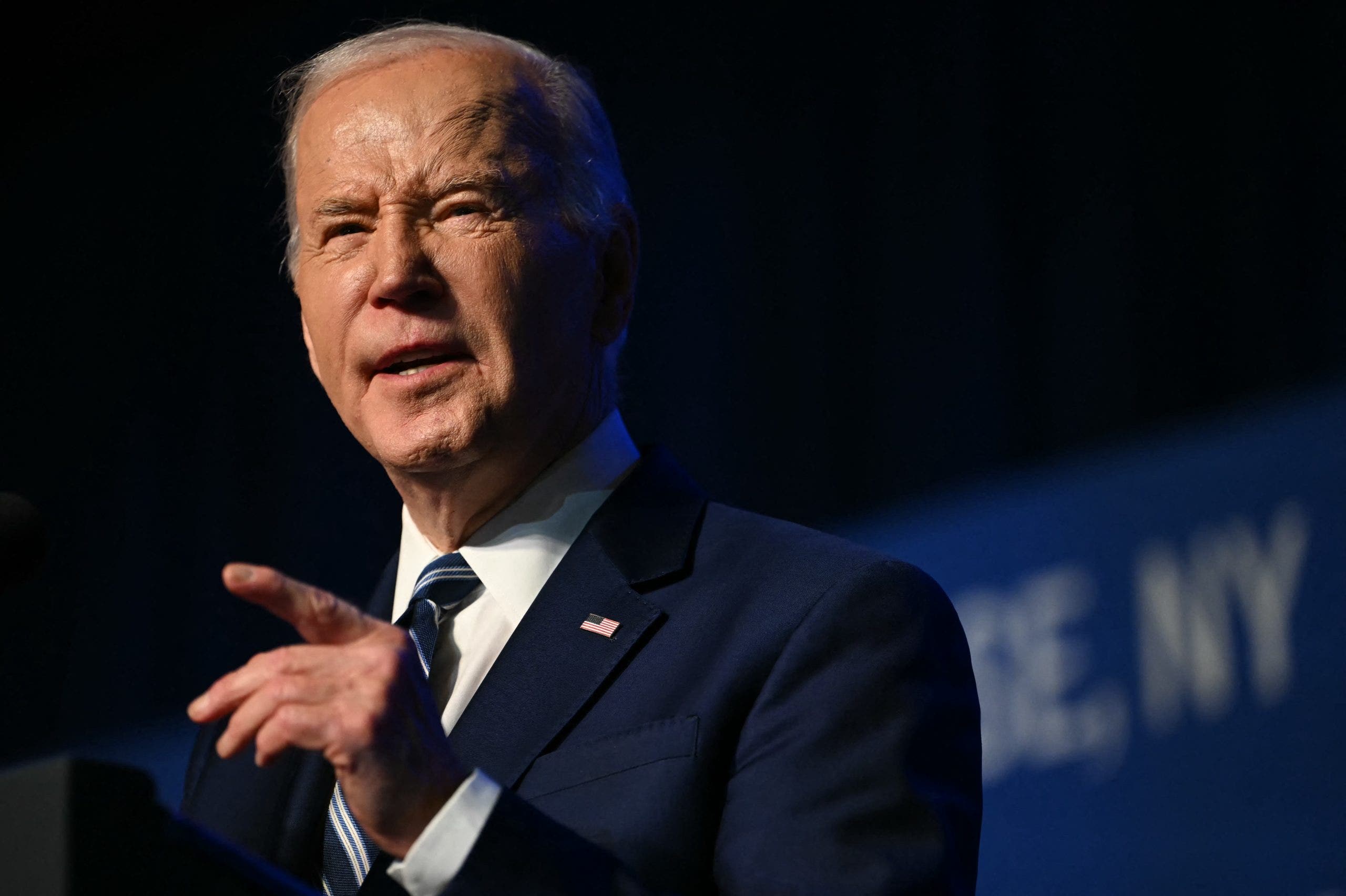
President Biden has directed every federal agency to wield the power of the federal bureaucracy to interfere with elections. (Andrew Caballero-Reynolds/AFP via Getty Images)
Given that small businesses continue to struggle under the weight of crippling inflation, high interest rates, and an acute labor shortage, the SBA diverting resources to assist a get-out-the-vote effort is extremely troubling. This alarming shift in focus raises serious questions about the agency’s priorities and its commitment to its core constituency: America’s small businesses.
WATCHDOG GROUP SUES BIDEN AGENCY FOR RECORDS AS LAWMAKER CALLS ITS VOTER WORK ‘A SLAP IN THE FACE’
The SBA’s press release bragging about this first of its kind partnership with Michigan to register voters immediately raised red flags and led the committee to request the signed agreement. Since the agency was so proud to announce this MOU, we assumed that this request wouldn’t be met with much resistance.
However, the SBA stonewalled turning over the document for months, dating back to the committee’s oversight hearing with Administrator Isabel Guzman on March 20, 2024. But as we were waiting to see what this new partnership entailed, the committee started to dig deeper into what the SBA has already been doing in Michigan.
As a critical battleground state where Biden is facing challenges, the selection of Michigan for this effort already insinuated that this was politically motivated decision. If the agency was truly only interested in registering voters, Michigan is a very unusual choice.
GOP STATE LAWMAKERS APPEAL TO SCOTUS TO CHALLENGE BIDEN’S ‘USURPATIONS’ OF THEIR POWER TO RUN ELECTIONS
With three-quarters of their state’s population already registered to vote, the third-highest percentage of registered voters in the entire country, there must be another reason for this first of its kind partnership.
Curiously, the committee noticed that this agreement with MDOS was announced four days after the Biden re-election campaign reiterated its interest in Michigan and noted its “not taking a single voter for granted,” especially among key demographics of young and minority voters.
As the committee continued to wait to receive the MOU from the SBA, we decided to look into the background of some of Biden’s political appointees who will be carrying out these orders. Within the SBA, Jennifer Kim, the associate administrator of the SBA Office of Field Operations is tasked with carrying out these voter registration efforts.
WE NEED TO SAVE OUR ELECTIONS FROM ABUSE AND HERE’S HOW
In going to the SBA website to see Kim’s background, the agency fails to highlight any experience in helping small businesses. Instead, her biography on sba.gov says she has years of experience in “increasing voter registration in communities of color as well as promoting youth civic engagement.” Coincidentally, she also attended the University of Michigan.
The diversion of taxpayer dollars and agency resources toward partisan activities like electioneering raises serious legal and ethical concerns. Just last week we held a hearing to discuss some of these conflicts of interest.
One of the witnesses was Stewart Whitson, the senior director of federal affairs at the Foundation for Government Accountability (FGA). The FGA is a nonpartisan, nonprofit organization that seeks to enhance the lives of all Americans by improving welfare, workforce, health care, and election integrity policy at the state and federal levels. In his testimony, he summed up the concerns very eloquently:
“The worry is that this isn’t about registering small business owners across the state of Michigan, but rather, this is about using generous business startup and other grants to lure targeted groups of voters, those the Left believes are more likely to vote for the current president, to SBA’s website and to in-person outreach events hosted in Democratic strongholds, all to help register and mobilize these voters ahead of the 2024 election.
“In other words, this appears to be a get-out-the-vote effort aimed at directly benefiting the Biden campaign, at the expense of the American taxpayer and the small businesses the SBA is supposed to serve.”
The SBA’s actions set a dangerous precedent for executive overreach. The founding principles of federalism and separation of powers are under threat as the Biden administration seeks to consolidate control over elections.
The SBA should not be transformed into a campaign arm of the Biden administration while abandoning the needs of small businesses. This devastating deviation from their core purpose is not only a breach of their duty, but also a disservice to Main Street America, as they continue to struggle to survive in the face of economic turmoil.
As chairman of the House Committee on Small Business, I will continue to demand answers throughout this investigation until the needs of Main Street are met and the agency intended to help them returns to carrying out their core mission.
ROGER WILLIAMS
Read the full article from Here


The Detroit Lions are facing a significant dilemma regarding a player selected in the first-round of the 2024 NFL Draft.
Cornerback Terrion Arnold is facing multiple felony charges stemming from an alleged robbery and kidnapping plot in Florida.
When drafted, the former Alabama Crimson Tide defensive back signed a four-year, $14,343,710 contract. The agreement included a $7,251,788 signing bonus and an average salary of $3,585,928 annually.
So at this point, Arnold has been paid more than half of his contract.
This year, Arnold was set to earn a base salary of $1,273,974, which included a roster bonus of $825,000. His cap hit is $3,911,921 this year and has dead cap hit of $9,127,816.
If the Lions decide to cut the 23-year-old, they would be on the hook for dead cap costs, but could in the future recoup monies based on the league’s conduct policy.
According to Spotrac, “Lions Terrion Arnold has 2-years, $4.8 M (guaranteed) remaining on his rookie contract, plus a potential 5th-year option for the 2028 season. Any suspension stemming from a violation of the league’s conduct polict would void the guarantees.”
In the short term, cutting Arnold is not significantly beneficial. The organization could save money in the future depending on if his decisions are deemed to have breech the clauses in his first NFL contract.
Detroit has options at the cornerback position if Arnold is no longer a part of the organization. Nick Whiteside, Rock Ya-Sin, Keith Abney and Ennis Rakestraw are all in the mix to earn playing time opposite of veteran D.J. Reed.
“It’s just the depth. Like, you’ve got guys that have played in games and that’s what you want. It’s not like you’re guessing on what you’re getting. You know what you’re going to get from those guys and so another year in the system, another year competing, he’s (Whiteside) going to be better,” said defensive backs coach Deshea Townsend. “And just that’s the thing about the NFL, you got to have guys who go out there and compete and he’s another one that’s capable of playing and it’s going to push everybody else in the room.”
Currently, the team has $19,338,873 (17th) available in cap space, based on the top-51 players on the roster.
#Lions CB Terrion Arnold has 2-years, $4.8M (guaranteed) remaining on his rookie contract, plus a potential 5th-year option for the 2028 season.
Any suspension stemming from a violation of the league’s conduct policy would void the guarantees.
— Spotrac (@spotrac) June 25, 2026
For more comprehensive Detroit Lions coverage and NFL insider analysis, follow us on X, @detroitpodcast, head on over to our Facebook page and give it a like, follow us on TikTok, subscribe to the Detroit Lions On SI Lone Wolves YouTube Channel for daily videos, news, member-exclusive content.
Follow


Sneak peek inside the new Milwaukee Public Museum under construction
See inside the new Nature & Culture Museum of Wisconsin, the future successor to the Milwaukee Public Museum, under construction on Nov. 20, 2025.
The Milwaukee Public Museum has now packed 600,000 items from its collection of 4 million as the staff prepares to move them into their new home: The Nature & Culture Museum of Wisconsin at 1310 N. 6th St.
The staff could still be working through 2027 to move the remaining items, said Collections Move Project Manager Sara Podejko on June 24.
“We will continue packing here even after the future museum opens,” Podejko said.
According to the museum’s June report to the County Board’s committee on parks and culture, construction continues to move along on track, and the new site is expected to open mid-way through 2027.
About half of the total collection has already been inventoried, a painstaking process that has given the museum the opportunity to streamline its electronic storage system.
“There’s been a lot of work ongoing in the collections departments prior to digitize their material, but not everything was. And so, a real upside to this move is that we are able to not only inventory, but barcode all of our specimens,” Podejko said.
That barcode allows collection move technicians to easily input items into an inventory spreadsheet and immediately relocate them.
“It kind of eliminates some human error, which is really important when you’re dealing with four million things,” Podejko said.
Twenty-nine staff members are facilitating the move, including the technicians who were hired and trained specifically to move the artifacts.
“Every time they pack an object, they first assess it for its condition, weaknesses, areas of stability, and then they adapt the pack to that object itself,” Podejko said.
Many of the technicians are also recent graduates and early professionals looking to break into the museum collections scene.
“Collections can be difficult to get into and a job like this kind of gives them (a) foot in the door,” Podejko said.
The public museum’s current facility has continued to face structural challenges amid the move. In January, a passenger elevator failed and was out of service for two months. The only elevator was a small one for wheelchairs, which led to wait times as long as 30 minutes. During that time, an escalator was also taken out of service for repairs.
The museum’s 350-ton water-cooled chiller is also close to failure and needs bearing replacement to keep it functioning throughout the summer.

Sunshine and comfortable temperatures return Thursday before a weekend warm-up sends highs into the 90s. Heat index values could reach the triple digits early next week. FOX 9 meteorologist Jared Piepenburg has the forecast.
Posted
-

 Movie Reviews6 minutes ago
8News Reel Talk: ‘Toy Story 5’ movie review
-

 World16 minutes ago
Strong Earthquake Rocks Venezuela Capital
-

 Health46 minutes ago
Does Berberine Aid Weight Loss? The Best Time To Take It To Boost Results
-
 Lifestyle1 hour ago
John Cena wanted to step away from the WWE ring before he became ‘too slow for the show’ : Wild Card with Rachel Martin
-

 Technology1 hour ago
Here’s a bunch of Prime Day deals on keyboards, mice, and other peripherals we like
-

 World1 hour ago
Israel slams UN report as ‘political blood libel’ for alleging deliberate targeting of Palestinian children
-

 Politics1 hour ago
Biden judge rejects Trump’s sanctuary cities lawsuit, says even a win wouldn’t solve DOJ’s problem
-

 Health1 hour ago
Latest COVID vaccine may have unexpected health benefit, study suggests

