Lifestyle
This California national park is 'chill Yosemite,' an outdoor wonderland without crowds

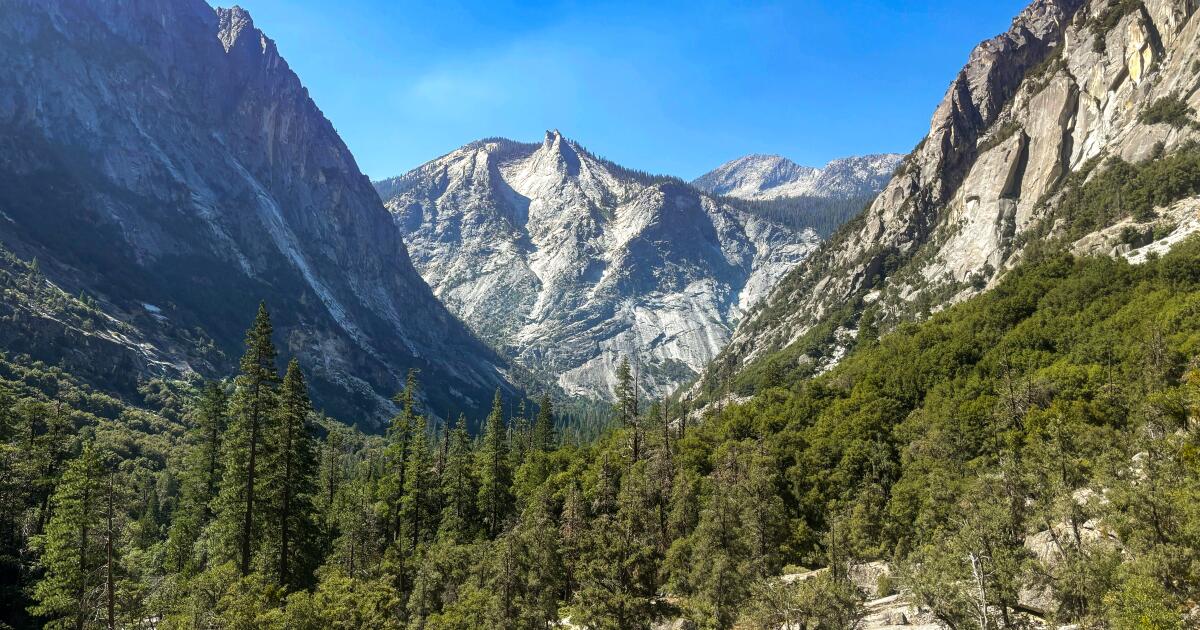
Just five hours north of Los Angeles sits a national park that should be on your outdoor bucket list.
It features a valley carved millions of years ago by glaciers, hulking mountains made of granite and other rock, countless waterfalls, massive ancient trees and a cool, clear river.
I know what you’re thinking: “That sounds like Yosemite.” Even better. It’s like Yosemite, but way more chill.
Kings Canyon National Park will give you the majestic outdoors respite you’re dreaming of without all the busy trails, swarming crowds and traffic jams at the park entrance gate that come with the Hollywood Boulevard of national parks. Just east of Fresno, this swath of paradise is the underrated local favorite, with welcoming campgrounds, easy-to-navigate day trails, plentiful backpacking opportunities and swimming holes galore.
For the record:
9:53 a.m. Aug. 28, 2024A previous version of this story said Kings Canyon is west of Fresno. It is east.
As I was heading out to report this story, I steeled myself for the typical national park experience. As someone who once accidentally got into a spat with another grown adult at Yellowstone National Park while attempting to help my 5-year-old niece steal a peek at Old Faithful, I know all too well the way chaotic tourist crowds can get under my skin.
But those crowds never materialized. Kings Canyon gets a fraction of the foot traffic that Yosemite does. Last August, Yosemite saw almost 594,000 visitors, and Kings Canyon saw 81,000, according to federal data. At its busiest, in June of last year, Kings Canyon welcomed 126,000 visitors, which was just over a fourth of the visitors who went to Yosemite that month.
You might be wondering: Is Kings Canyon’s landscape as spellbindingly majestic? The short answer is yes, if a tad more rugged. Both parks feature massive granite mountains, gorgeous rivers and alpine meadows. But Yosemite’s natural wonders have the manicured sheen of a famous name. Kings Canyon is its untamed, serene cousin. When I asked a ranger the name of a nearby cliff, they quipped: “We don’t name everything like Yosemite.” During my three-day stay, I heard multiple guests say: “This is like a chill Yosemite.”
In fairness, many of the best experiences you can have at Kings Canyon are in the backcountry and require some level of backpacking knowledge. But even if you’re a camping novice, this guide outlines the many different ways you can experience the park, whether it’s from a cozy lodge or magnificent campground.
This guide focuses on the Cedar Grove area of the park. After being closed for more than a year because of major flooding, it reopened this summer. Its campgrounds are slowly but surely becoming available to book. (More on how to do that below.)
Please enjoy your stay in this slept-on paradise. And eat your heart out, Yosemite.
Getting there | Where to stay | What to pack | Bear safety | Where to day hike | Other activities
The South Fork of the Kings River flows through the Cedar Grove area of Kings Canyon National Park.
(Jaclyn Cosgrove / Los Angeles Times)
Getting there
Sequoia and Kings Canyon National Parks are two parks managed as one. Kings Canyon is the northern half of the parks. They have several entrances. The most direct way to reach the Cedar Grove area of Kings Canyon National Park from L.A. is to take Highway 180 near Fresno to the Big Stump entrance.
From here, you’ll follow this scenic seasonal roadway into Kings Canyon. It’s a beautiful drive, especially the beginning that passes through Sequoia National Forest. There you’ll be met with incredible vistas and waterfalls, including one you can take a short walk to visit. (More on that below.)
This route is not accessible year-round. Highway 180 from Grant Grove Village to Cedar Grove is open seasonally. It generally opens the fourth Friday in April and closes in mid-November. You can check the road conditions on the Kings Canyon website.
If you’d like to take the scenic way to reach Kings Canyon, you can drive through Sequoia National Park via Highway 198. You’ll pass through the idyllic town of Three Rivers before entering Sequoia National Park. A slow winding journey, you’ll drive about 46 miles north until you reach the Highway 180 junction. There are several great places to stop along the way. Honorable mention goes to the General Sherman Tree, a giant sequoia that’s one of the largest and oldest trees in the world.
If you’re craving more giant trees, this route offers multiple spots to see them, although it will add about two hours to your trip. You can also take the first route mentioned and stop at the Grant Grove area of Kings Canyon before you reach Cedar Grove, which doesn’t feature sequoias like the rest of the parks.
Take note that if you have the “avoid tolls” option selected on your mapping app, it might try to direct you to take an unpaved road to avoid paying the park entrance fee. In short: this is a bad idea. Also, beware that service is scant in these parts, so it’s best to download the area on your GPS app before you leave. While I’m ticking through lifesaving necessities, be sure to top off your gas tank in a nearby town before entering the park, since options are limited inside. At present, there are no electric car chargers in Sequoia and Kings Canyon. Best to enter the park with a full charge.
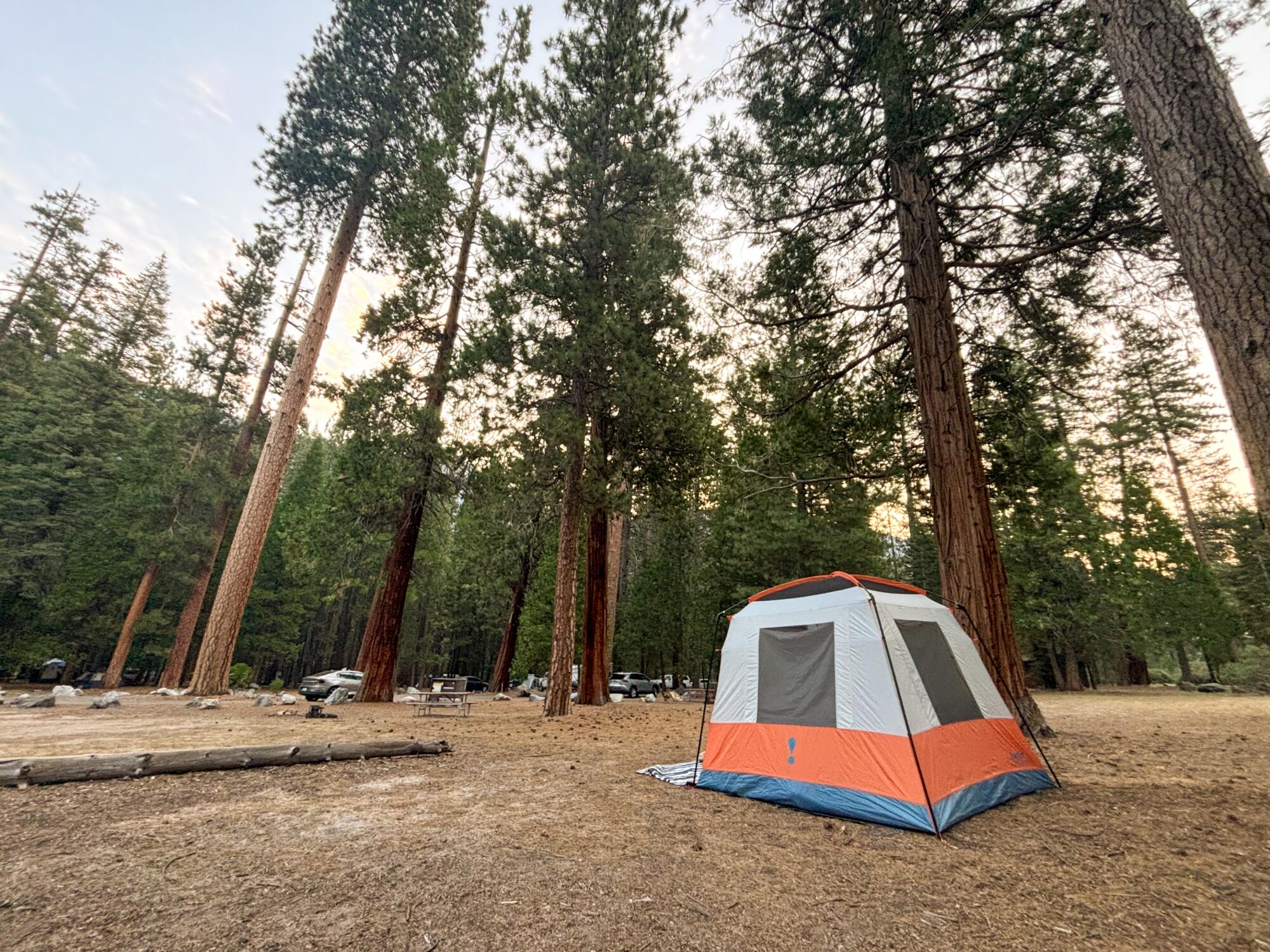
Sentinel Campground in Kings Canyon National Park re-opened in July.
(Jaclyn Cosgrove / Los Angeles Times
)
Where to stay
Sentinel Campground
Reopened in July, Sentinel Campground is the only campground open in the Cedar Grove area of Kings Canyon as of late August. It offers 82 sites for tents, RVs and trailers that you can reserve on Recreation.gov. There are no first-come first-served sites in the campground.
The South Fork of the Kings River runs along the northern side of the campground, near a handful of coveted (read: quickly booked) sites. But you don’t have to be next to the river to enjoy yourself. No matter where you end up staking your tent, you will be treated to a dark sky full of twinkling stars, a concert of crickets, the calming sound of the nearby river rushing and the soothing whoosh of wind through the canyon. This is hopefully not all drowned out by the roar of your neighbor’s RV generator. Quiet hours are at 10 p.m. after all.
Steller’s jays and robins may appear when you start cooking your dinner, optimistic for a treat. Hopefully, you aren’t greeted by one of the park’s larger hungrier residents, the black bear. Throughout the campground, there are flush toilets, sinks to wash dishes and spigots with drinking water. Each site has a campfire ring, picnic table and bear-proof food storage box.
During the day, when you aren’t out adventuring, you can find a shady spot beneath a towering ponderosa pine or cedar tree. Some might even be small enough to hang a hammock.
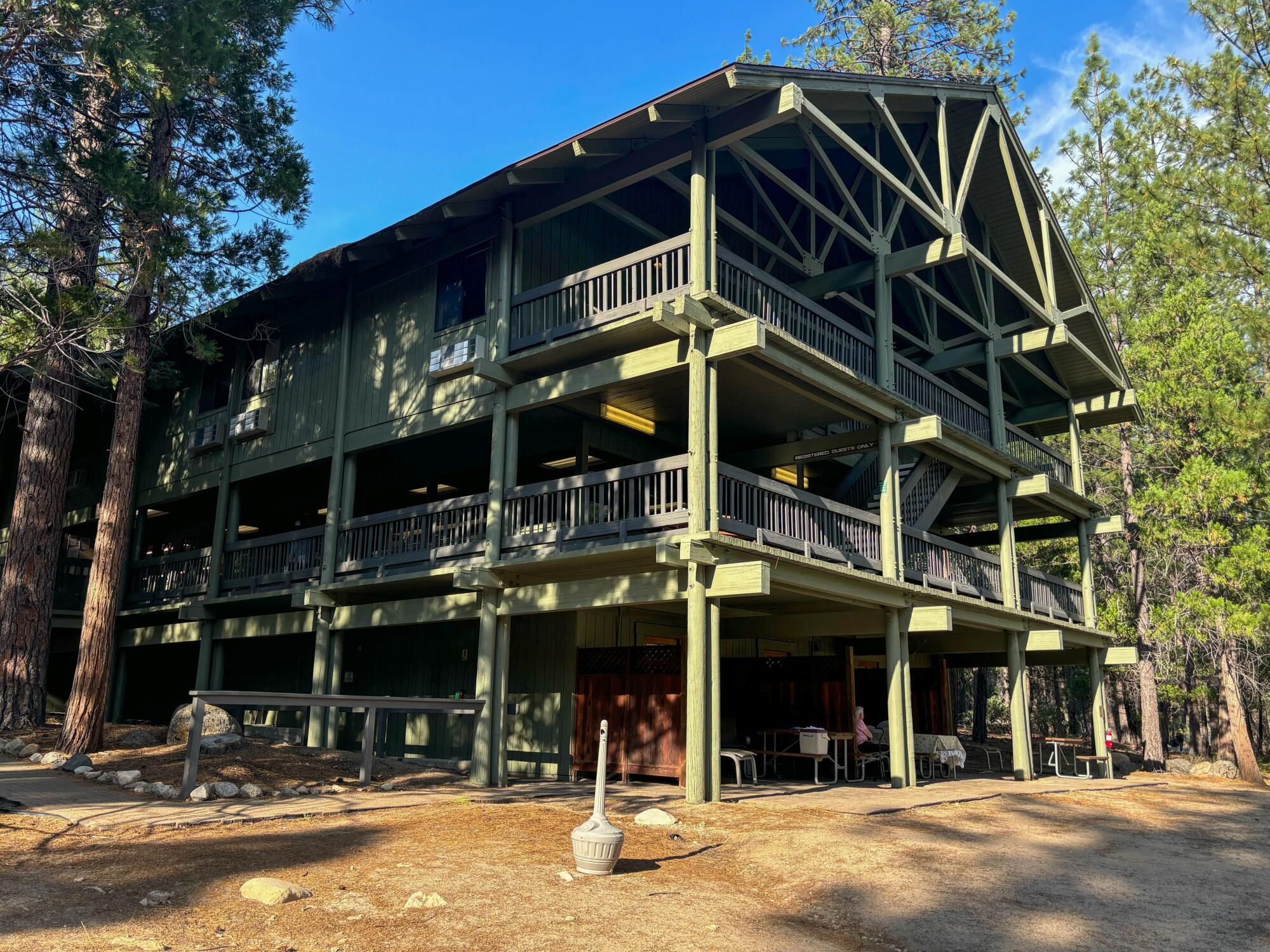
The Cedar Grove Lodge in Kings Canyon National Park.
(Jaclyn Cosgrove / Los Angeles Times)
The Cedar Grove Lodge
Location, location, location! The Cedar Grove Lodge is a rustic but charming throwback to simpler times. The Wi-Fi is iffy at best, and there aren’t televisions in the rooms. But you aren’t coming here to hang out in your room. The lodge is close to all the area’s main attractions. It’s situated next to the Kings River, where guests pull up a lawn chair and enjoy the serenity of the space. It offers standard and suite rooms with queen and king beds and a complimentary breakfast.
It also has a gift shop (with fairly priced souvenirs), a market and the Cedar Grove Diner, a counter-service snack bar, on its first floor. From 4 p.m. to 8 p.m., the diner serves burgers, sandwiches and wraps. The menu includes beef, chicken and fish offerings as well as a plant-based veggie burger and hummus wrap. But sorry, no fries.
Meanwhile, its market is a good resource in case you forgot to pack something. It sells tent stakes and chairs, as well as food and ice.
The most luxurious part of the Cedar Grove Village area is the showers, available to anyone in the park. The lodge’s market sells shower tokens for $1.50 for three minutes. (You can use multiple tokens to extend your hygienic routine, but make sure to allow each token’s time to run out before inserting the next. Otherwise, it’s a wasted token.)
Other options
Outside Kings Canyon, nearby campgrounds include:
- Convict Flat Campground, a first-come first-served spot with five campsites in Sequoia National Forest. It’s free to use with the entry fee you pay to get into the park. Light on amenities, it has a vault toilet and no potable water. It’s about 11 miles from the Cedar Grove area of Kings Canyon.
- Princess Campground, an 88-site reservation-only site in Sequoia National Forest featuring giant Sequoia stumps, a Sequoia grove and a meadow with wildflowers. Amenities include drinking water, vault toilets and an amphitheater. It’s about 23 miles from the Cedar Grove area of Kings Canyon.
- Sunset Campground, a 158-site reservation-only campground in Sequoia National Forest, three miles from the Kings Canyon entrance. It boasts beautiful trees, cellphone reception, flush toilets and a camp store that sells ice, firewood and other necessities. It’s about 30 miles from the Cedar Grove area of Kings Canyon.
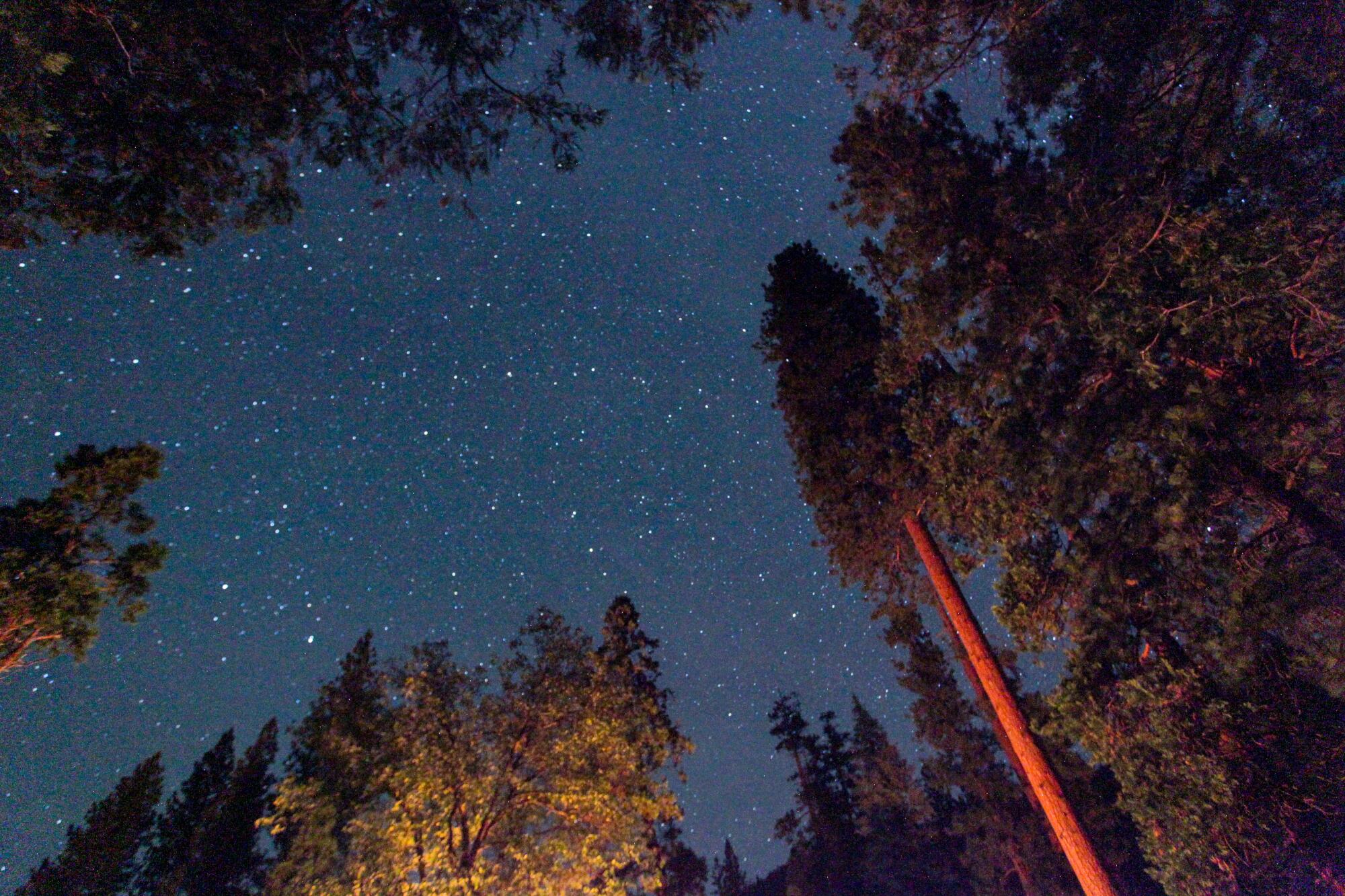
A view of the night sky from Sentinel Campground in Kings Canyon National Park.
(Jaclyn Cosgrove / Los Angeles Times)
What to pack
If camping, you’ll want to pack the usuals, including: a tent, sleeping bags, an air mattress or other cushioning, extra blankets and pillows. Remember to pack a few light sources. I always like to have both a headlamp and a few solar-powered lanterns. And, just because I’ve forgotten each of these items on various trips, I will remind you: Don’t forget to bring a mallet for your tent stakes, your camping chairs and a shovel to dig out the campfire pit.
You will not have cellphone reception in the Cedar Grove area. For safety reasons, you should share your trip itinerary with a family member or friend, along with an estimated time of when you’ll be back. There is a pay phone at the Cedar Grove Lodge. For the zoomers reading, that’s a coin-operated phone you can use to make calls. Maybe put a roll of quarters in your car, just in case.
Bear safety
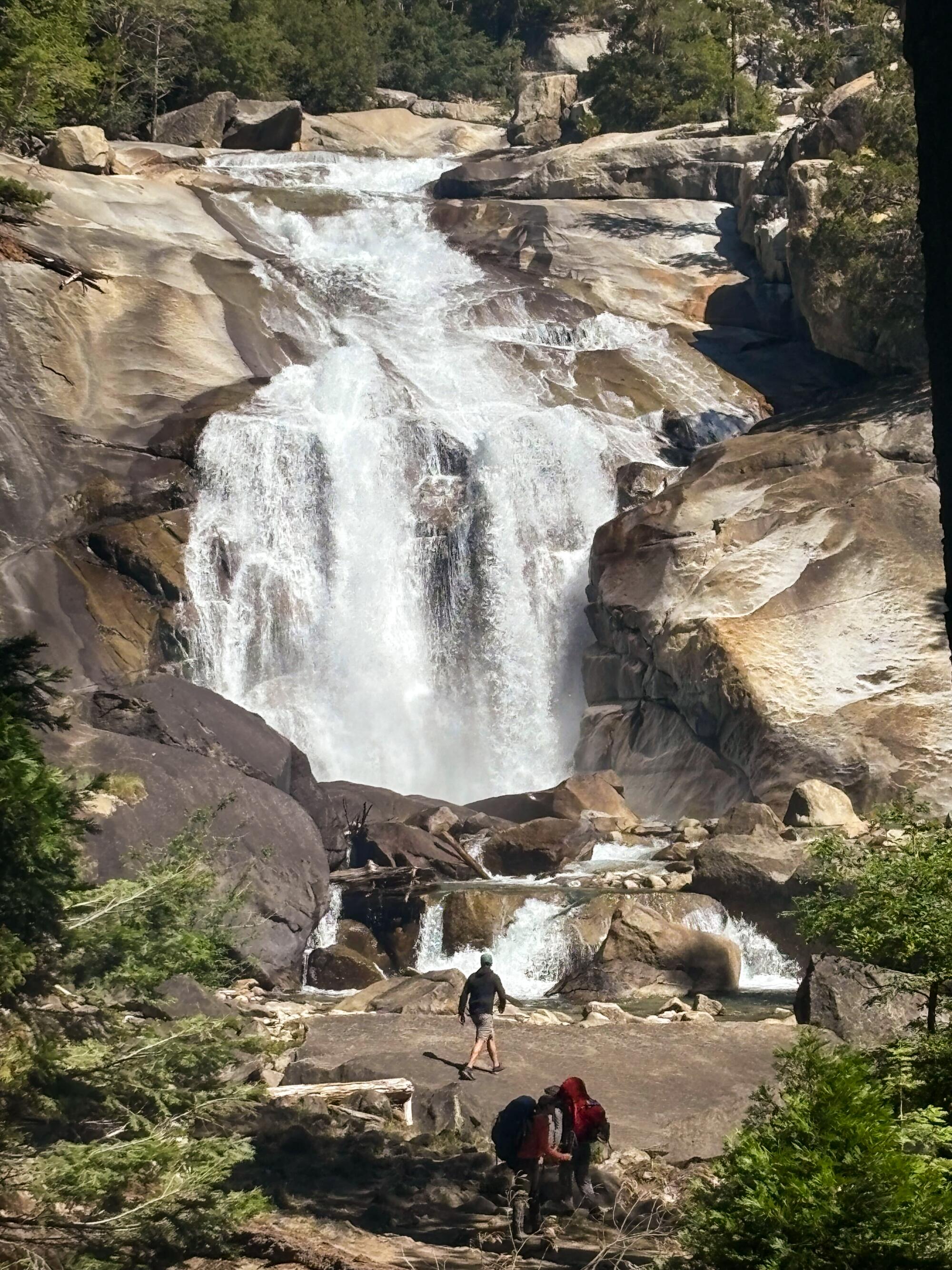
Mist Falls in Kings Canyon National Park.
(Jaclyn Cosgrove / Los Angeles Times)
Kings Canyon is home to American black bears. Throughout the park, you’ll find signs reminding you to be “bear aware.” That includes ensuring that all food, beverages and scented items (like shampoo, toothpaste and lip balm) are stowed in a bear box when you aren’t using them. This applies to not only campgrounds but also trails. At trailheads, you will find bear-proof brown vaults where you should stow any snacks and scented items you aren’t taking on the hike. (I left half a bar of chocolate in one, and no one stole it. The honor system is alive and well in this park!)
The park advises that, if you see a bear, clap your hands and in a loud firm voice yell: “Get out of here, bear!” You should report all bear sightings to a ranger. Leave the bear spray at home, though. Bear spray is illegal in national parks where only black bears are present.
Where to day hike
The Kings Canyon Cedar Grove area has plenty of day hikes to choose from, all of which you can hike without a permit. Wilderness permits are required only for overnight trips. Here’s a three-day itinerary of the best spots to go to if you’re visiting for a quick weekend.
Roaring River Falls to Zumwalt Meadows
Day 1: After setting up your tent, hit the trails for an introductory stroll at the Roaring River Falls parking area. This short paved path leads you to a nice-sized waterfall noisy enough you’ll know how it earned its name. This is a nice spot to unwind and have a picnic. (Though swimming is not advised. Drowning is the most common way people die in Sequoia and Kings Canyon National Parks.)
Once you’re done at the waterfall, you can take the nearby dirt path about two miles to the backside of Zumwalt Meadows. Flooding in 2019 washed out its boardwalk, so this is no longer a loop trail. That said, it’s a pleasant walk between the canyon walls where you can appreciate your first taste of beauty before embarking on bigger adventures tomorrow. Plus, there are a few sandy spots where the current is manageable. Life jackets are advisable for younger kiddos or anyone who cannot swim.
Mist Falls trail
Day 2: This is when you’ll want to do your longest hike. For that I’d recommend heading to the Road’s End parking area to tackle the Mist Falls trail, an eight-mile out-and-back trail that will lead you through forest, wetlands, over boulders and up to a massive, humbling cascade of water. The last mile is where you gain the most elevation, so make sure you’re hydrated and sated with a power snack for that final push. After completing the trail, head over to Muir Rock for a swim. Be mindful of the current.
Hotel Creek trail
Day 3: Do you have one more hike in you? Great! This last one is a treat, especially as the sun rises. Head to the Hotel Creek trailhead, located about a half mile north of the Cedar Grove Lodge. You have two main options here. You can hike 4.4 miles out and back to the Cedar Grove overlook, where you will find panoramic views of the whole park. Or, you can do a 7.3-mile loop of Hotel and Lewis Creek. From the overlook, I watched the early morning light over the canyon, feeling like a little speck of stardust in our vast universe.
Bonus: I was alone until the final mile when I saw three hikers. Like I’m saying: a chill Yosemite!
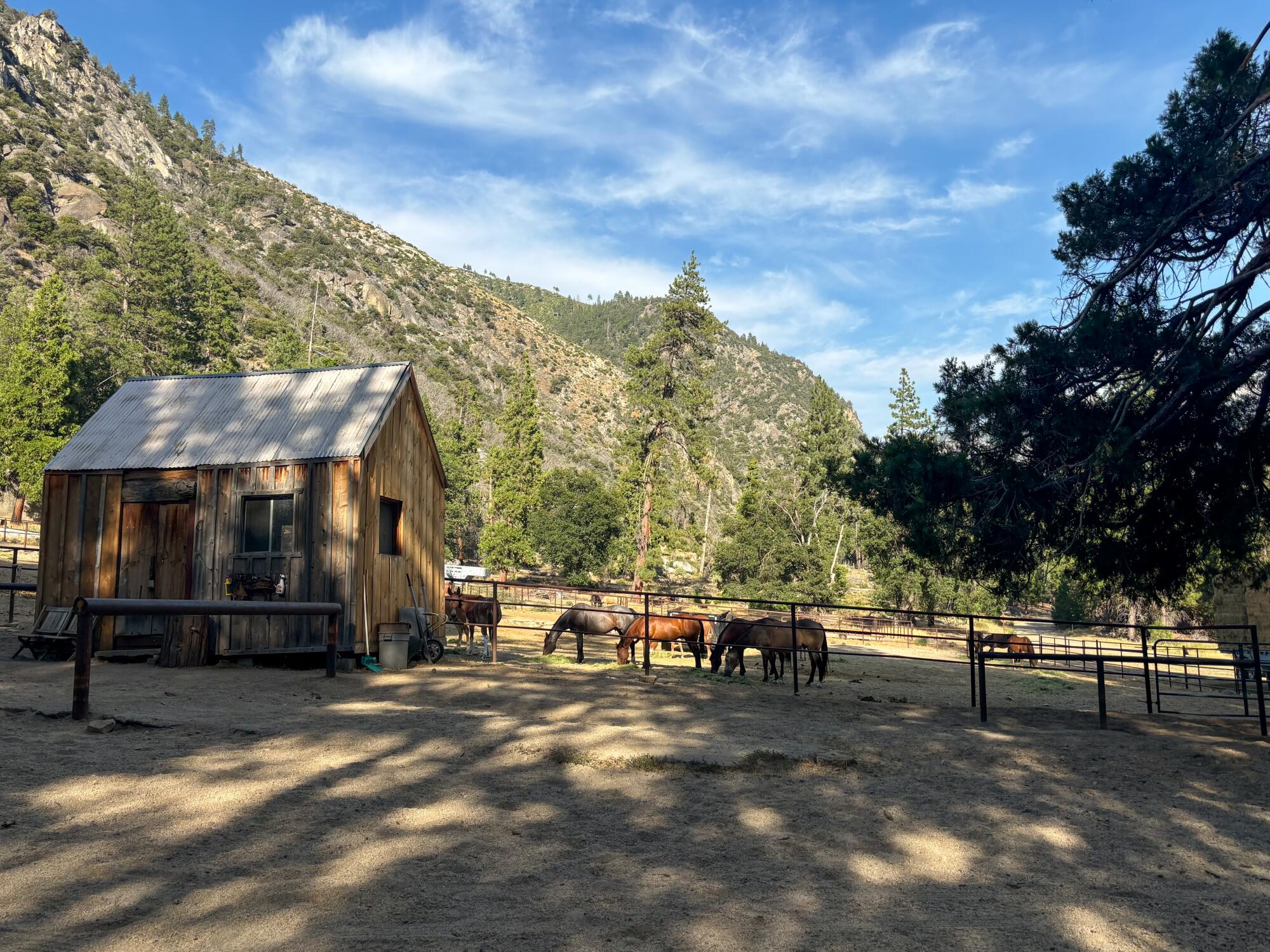
Horses graze in a pen at the Cedar Grove Pack Station in Kings Canyon National Park.
(Jaclyn Cosgrove / Los Angeles Times)
Other activities
- Fishing is allowed in most areas of Kings Canyon. Those 16 and older must have a valid California fishing license. The park advises you should buy one before arriving, as they aren’t always available in its markets. You are allowed to keep some of what you catch, including rainbow trout. You must follow daily limits, and must take note of the areas of the park that are catch and release only.
- Horseback rides are sold through the Cedar Grove Pack Station. They offer one- and two-hour rides for $70 and $110 respectively, and half ($180) and full-day ($230) trips. They also sell pack trips where mules and horses, led by a packer, carry your group and gear to a backcountry site.
- Head underground to the Boyden Cavern, a marble cavern that features stalactites, stalagmites and other geological delights. A walking tour, which takes about an hour, will cost between $8 and $23 depending on age, date and time. Staff also offers a flashlight tour at 9 a.m. and 5 p.m. if at least four people buy tickets. That tour takes up to 75 minutes and is $35. The cavern is about 10 miles west of Cedar Grove off Highway 180.
- Picnic near Grizzly Falls, an 80-foot waterfall in Sequoia National Forest, just under five miles from Cedar Grove. It’s a short walk from your car to the picnic area where you can view the falls.
Regardless of whether you spend your days relaxing along the South Fork, or hit the back country for more rugged hiking, you will return home feeling refreshed and energized. In an era where escaping the bustle of the city often means swapping one type of crowd for another, Kings Canyon is an underpopulated gem that, for now, proves that nature can still be peaceful.


In central London’s Waterloo Place, a life-size statue that emerged overnight in late April has been creating a stir. When I visited a few weeks after it was erected, local authorities had already set up protective barriers around it.
The installation — signed by the famed street artist Banksy — depicts a man in a suit hoisting a flag as he strides over a precipice. As he marches on, the flag blows backward to cover his face, leaving him unaware he’s only a step away from a perilous fall.
Set among grand monuments celebrating Britain’s past, the “flag man” takes on a particular visual irony at a time when the country — and much of the world — is debating its path forward.
Like many viewers there, I found myself wondering whether this statue is Banksy’s warning about the consequences of uncritical nationalism, or simply a reflection on human shortsightedness. Or, perhaps, it is just prompting us to ponder a broader question: What happens when devotion to a symbol prevents us from seeing what lies ahead?
Whatever the message, the work feels remarkably attuned to the current moment.
For more Far-Flung Postcards, click here.
Lifestyle
Wait, it’s a candle? Her beeswax fruit and veggie ones look so real, you’ll want to take a bite
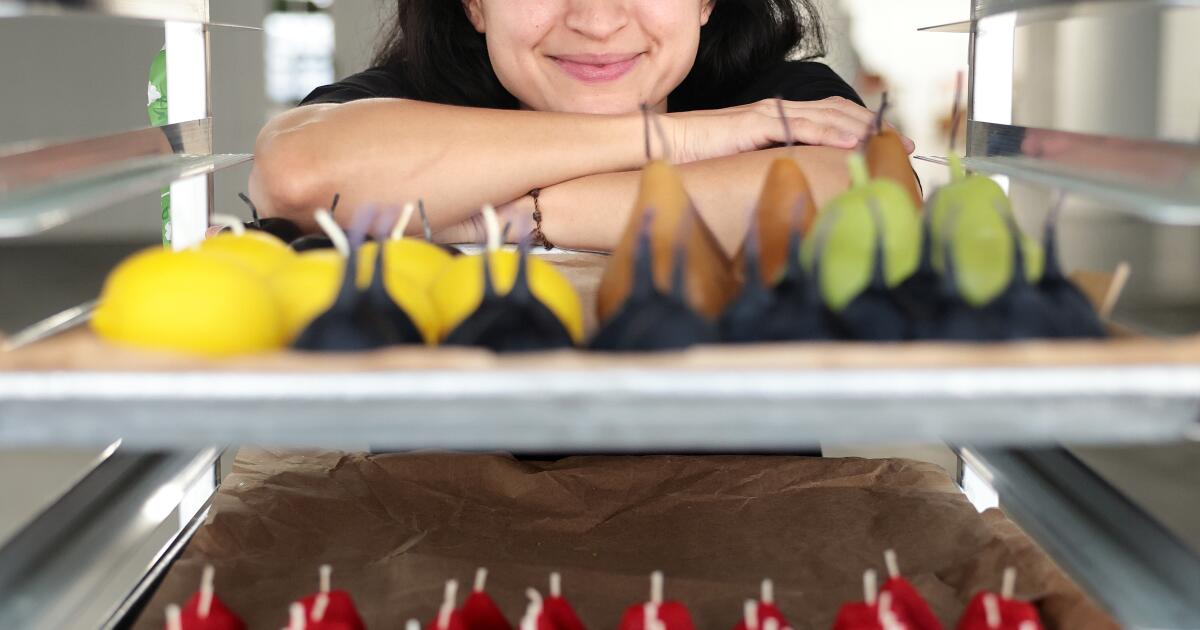
Jessica Gonzalez hustles behind her booth at the recent Renegade Craft Fair, frantically ringing up sales, answering questions and packaging her beeswax candles.
It’s hot on the grounds of the Los Angeles State Historic Park in April, but 35-year-old Gonzalez and her fiancé, Jordan Colindres, keep their cool as a crowd gathers to admire her Happy Organics candle collection, a homage to her family’s produce company in the Central Valley that looks like real fruits and vegetables.
“I love doing in-person events because it’s so fun to see people’s reactions,” she said a few months later. “It makes me feel good to see other people finding joy in my candles. They often say, ‘Oh, that’s really funny.’ And it is funny to have a cherry candle on top of your birthday cake.”

3

1. A staff member pulls a beeswax corn candle, $26, out of its mold at Happy Organics’ studio in downtown Los Angeles. 2. Each Beeswax Mixed Berry Birthday Candles set is cast from real mixed berries — strawberries, raspberries, blackberries, blueberries and cherries. A set of 10 is $30. 3. Bartlett green pears and heirloom tomatoes, $24 to $40.
Judging by the smiles and charmed looks on shoppers’ faces, her produce-inspired candles are less about illuminating rooms and more about sharing the joy she sought when she first started the company in 2018.
In this series, we highlight independent makers and artists, from glassblowers to fiber artists, who are creating original products in and around Los Angeles.
But then, it’s hard not to smile at the playfully elegant Bosc pears, puckered mandarins and green-and-purple asparagus taper candles which range in price from $12 to $40. Some are molded into corn on the cob, celery and rhubarb shapes. Others are made to look like mushrooms, figs, tomatoes and snap peas. The most popular are the small birthday candles shaped like raspberries, cherries and blackberries, packed in molded-pulp baskets just like you’d find at the grocery store or farmers market.

-
Share via
Gonzalez didn’t start out as a designer. The youngest of nine children, she was born in 1991 in Salinas and later moved to Merced, where she grew up on a 10-acre farm. She studied computer science at Mills College, then worked in tech consulting in the Bay Area and eventually became the CTO of an ag-tech company. When her mother, Angela, became ill in 2016, she returned to Merced to be with her family.
When her mom died suddenly soon after she moved home, Gonzalez left the tech industry. “I wasn’t connected with what I was doing,” she said. “I wanted to find something more meaningful; something I loved. I didn’t want my ego to keep me stuck in what I studied in college. I decided to let myself try new hobbies and passions and look for joy again.”
After her mother’s death, she began working with her father, Salvador, and her uncles at the family’s apiary, where they managed more than 30 hives. (Her grandfather was also a beekeeper in Michoacán, Mexico.) Soon, she began selling their raw honey at local farmers markets. In a heartbreaking turn, her father was diagnosed with cancer a year later, so she started making cannabis-infused honey, balms and chocolates to help ease his pain.
When she saw that the beeswax candles, which last significantly longer than paraffin candles, were selling faster than the honey, she decided to focus on making candles from the leftovers from her uncles’ hives.
She was only 25, but it was a turning point. “It was one of those moments where I felt like I needed to change my path,” she said. “I needed to change everything in my life.”

Jessica Gonzalez and her father Salvador on their family farm in Merced. (Gonzalez family)

Gonzalez at Happy Organics’ studio in downtown Los Angeles. (Christina House / Los Angeles Times)
When her father died in 2018, she inherited his bees and started Happy Organics, although she hadn’t planned on starting a business. After experiencing so much loss, making candles became a kind of therapy. “It felt great to work with my hands again, something I thought I’d never have time for,” she said.
Her oldest sister, Sonia Gonzalez, said Gonzalez reminds her a lot of their father, who reinvented himself many times over the years.


The nopal cactus is cast from a real nopal and hand-poured in 100% pure beeswax in the Los Angeles studio.
“He grew up as a village boy in the rural mountains of Michoacán, Mexico, and went on to work in restaurants, cut down Christmas trees and pick strawberries and broccoli in the fields of Salinas,” she wrote in an email. “From there, he started selling produce door-to-door, then at flea markets and eventually built his own produce distribution business from the ground up. As the youngest of nine kids from a working-class family, Jessica’s always been incredibly resourceful, responsible, and amazing at reinventing herself.”
Like a lot of millennials, Gonzalez taught herself how to make candles by watching YouTube videos. She started with hand-dipped tapers, working in the garage on the farm that helped her feel safe and connected to her parents. “It was a really nice environment to try something new and creative,” she said.
Inspired by her family’s produce, she cast real corn, strawberries and cherries in plaster, then made a silicone mold to create copies. Even when using the same mold, color can vary from batch to batch, and how it cools also affects the result. “That’s just how handmade things are,” she said. “There’s always some variation.”

Cherry molds make cherry candles at Happy Organics’ studio in downtown Los Angeles.

A variety of fruit and veggie candles.
When she moved to Los Angeles in 2023 to be with Colindres, her business took off. “L.A. is a great place to grow,” she said. “There’s so much opportunity here. When I go to a farmers market, I never know who I’ll meet.”
She sold her candles in person at craft shows, the Hollywood Farmers’ Market and most recently, during a residency at the P.F. Candle Co. showroom in Echo Park.

2

3

1. A staff member trims the wicks on a pair of carrot birthday candles, $22. 2. Gonzalez passes by shelves of candles at Happy Organics’ studio in downtown Los Angeles. 3. Asparagus taper candles, $30.
“I have a lot of respect for her as a fellow candle maker (making molds is not easy), but getting to know her story more and how her choice of foods and wax is reflective of her family’s history gave it so much meaning,” P.F. Candle Co. founder and creative director Kristen Pumphrey said in an email. “It’s been a tough couple of years for L.A. businesses, so we gotta stick together — there’s this wonderful sense of community hosting a local brand that’s so passionate about their work.”
As her business has expanded, her products are now available at Terrain, Joan’s on Third and the MoMA Design Store in addition to her website. She has also had to source beeswax from other vendors across the country to keep up with demand.
Kimberly Curtis, owner of Hide & Seek Vintage in Studio City, said Gonzalez’s strawberry and cherry birthday candles “flew off the shelves last year” during the holidays. “Our customers love them,” she added.

Gonzalez holds a cabbage candle.
Still, Gonzalez stays connected to her Central Valley roots. Everything she and her small team make in downtown Los Angeles is handmade and “takes time,” she said, describing the steps involved in crafting quality candles. Right now, her favorite is the Nopal Cactus candle, which she made using a clipping from an employee’s yard. While others help her with production, wholesale management and packaging, she focuses on sales, content and all-new product development.
When asked if she has advice for others who want to start their own business, Gonzalez admits she sometimes feels overwhelmed.

In 2013, Gonzalez and her family gathered at their Merced ranch to celebrate her parents’ anniversary.
(Gonzalez family)
“The biggest thing that has gotten me through the toughest spots is my why or my reason for starting,” she said. “I think that has to be really strong. That’s what brought me a lot of comfort when I felt like quitting: going back to the beginning and remembering why I started this.”
For Gonzalez, her reason is always close to her heart. “I wanted to feel connected to my parents in some way,” she said. “This was a good representation of my upbringing.”

The Kennedy Center, the facade of which remains covered with a tarp, is seen in Washington, DC, on June 28, 2026. A US federal judge asked on June 24 for an explanation for why a tarpaulin continues to cover the facade of the Kennedy Center where President Donald Trump’s name was recently removed. District Judge Christopher Cooper gave the board of trustees of the performing arts venue until the end of July to explain “the purpose for and status of the tarp and scaffolding that Defendants have erected on the front portico of the Center.”
ALEX WROBLEWSKI/AFP via Getty Images
hide caption
toggle caption
ALEX WROBLEWSKI/AFP via Getty Images
More than two weeks ago, President Trump’s name was removed from the Kennedy Center facade though it is still covered by a tarp and the legal battle continues.
On Monday, a U.S. Department of Justice filing on behalf of the Kennedy Center included some surprises. The document was submitted in response to issues raised by lawyers for ex-officio board member Rep. Joyce Beatty of Ohio who is suing to remove President Trump’s name from the center and stop its closure for renovations.
Among the revelations, the Kennedy Center admitted that, during a board meeting on December 18, 2025, Beatty had been “muted and prevented from speaking.” It was at that meeting that the board voted to add President Trump’s name to the center. The filing later acknowledges the congresswoman was “prevented from voicing her opposition.”
The John F. Kennedy Center for the Performing Arts is a living memorial to its namesake. The guidelines for how the theatre complex spends federal dollars are very specific. Among other rules, it states that “no additional memorials or plaques shall be designated or installed.” Beatty argues adding Trump’s name runs afoul of those rules and that any change requires approval from Congress.
According to one of Beatty’s filings, “There was no advance notice in the agenda that the Board would be considering a name change,” a statement the Kennedy Center now does not deny. The center admits that, prior to voting, there was “no discussion about potential risks or downsides of the vote to adopt a secondary name for the Center.” Nor was there a board discussion “about any potential conflict of interest that might result from the vote.”
The center’s lawyers previously contended that if Trump’s name were to be removed, it would “lose money from donors who support” him and “impede the Center’s fundraising efforts.”
Closing for renovations
Earlier this year, Trump announced on social media that the Kennedy Center would close for two years for renovations. He wrote that he made the decision after “a one year review” with “Contractors, Musical Experts, Art Institutions, and other Advisors and Consultants.”
But, according to the center’s lawyers, Trump’s announcement “was made without presenting any plans, analyses, timelines, or funding information to his cotrustees and without any Board vote.”
The Kennedy Center has long denied reporting by The Washington Post that ticket sales plummeted after President Trump became the Center’s board chair. In Monday’s legal filing, the Center admits that, by October 2025, “nearly half of the Center’s tickets were going unsold.”
-

 World2 minutes ago
‘Positive progress’ as US, Iran wrap up indirect technical talks in Doha
-
 News26 minutes ago
What the SCOTUS campaign finance ruling means, according to an expert
-

 Los Angeles, Ca2 hours ago
Knife-wielding man rushes at LAPD officers in tense body cam video
-

 Detroit, MI2 hours ago
5 Potential Landing Spots For Former Detroit Lions CB Terrion Arnold
-

 San Francisco, CA2 hours ago
May 17 officially declared
-

 Dallas, TX2 hours ago
Dallas City Hall named to World Monuments Fund’s ‘Irreplaceable America’ list – Lake Highlands
-

 Miami, FL3 hours ago
Ex-con lists $138M in luxury penthouses, including Miami trophy condo
-

 Boston, MA3 hours ago
Celtics reportedly trading Jaylen Brown to 76ers for Paul George, picks

