Lifestyle
The 2025 pop culture yearbook, from pettiest cameo to nerdiest movie moment


Aisha Harris’ pop culture superlatives include (clockwise from top left) Hedda, Marty Supreme, Serena Williams at the Super Bowl, Sabrina Carpenter’s lyrics, Love Island USA and Friendship.
Amazon, A24, Getty Images, Peacock/Photo illustration by Emily Bogle/NPR
hide caption
toggle caption
Amazon, A24, Getty Images, Peacock/Photo illustration by Emily Bogle/NPR
Well, 2025 has been a year. A year women on reality dating shows got fed up with “apolitical” men; a year a pair of filmmaking brothers both released solo projects about semi-famous athletes; a year a series finale ended in fecal waste. So much happened, and frankly, much of it feels like a blur.
For better or for worse, these cultural moments stood out.
Film’s nerdiest moment: “Aspect Ratios with Sinners Director Ryan Coogler”
YouTube
This Kodak video is a most perfect union of art and commerce, just like Sinners itself. In his distinctive, soothing Bay Area drawl, Coogler got super technical about the differences between each of his movie’s available formats, while breaking things down in easily digestible layperson’s terms. At a time when theater attendance continues to struggle, he made the best case for big screens, and he didn’t need existing IP to do it.
Best running joke at an awards show: “Thank you, Sal Saperstein!” The Studio
YouTube
In retrospect, host Nate Bargatze’s dreadful Boys & Girls Club donation bit at this year’s Emmys only made The Studio‘s parody of running gags on awards shows that much funnier. The bit starts when Adam Scott, playing himself, accepts a Golden Globe and impulsively thanks the guy who let him crash on the couch before his career took off: studio exec Sal Saperstein (Ike Barinholtz). Soon, every other winner – Quinta Brunson, Jean Smart, Aaron Sorkin, Zoë Kravitz – is thanking Sal, too. Most of them have no idea who Sal is. But even better is how each iteration of the corny, beaten-to-death joke eats away at Seth Rogen’s spotlight-seeking studio head Matt Remick.
Best Safdie brother feature: Marty Supreme

Josh Safdie (left) and Timothée Chalamet on the set of Marty Supreme.
A24
hide caption
toggle caption
A24
Benny Safdie’s The Smashing Machine is … fine: Dwayne “the Rock” Johnson, in a naked play for artistic credibility, barely has to stretch to play MMA champion Mark Kerr (the wig is doing much of the “transformation”). So in the matchup of solo Safdie bro sports movies, Josh’s Marty Supreme is the clear if imperfect victor. Timothée Chalamet’s wannabe table tennis champion is absolutely insufferable from beginning to end, but the movie bucks the typical narrative and turns out to be the frenetic tale of a cocky hustler who needs — and to a point, gets — a swift ego check.
Most awkward breakup: Huda and Chris, Love Island USA

Chris Seeley (left) and Huda Mustafa in Season 7 of Love Island USA.
Peacock
hide caption
toggle caption
Peacock
It was obvious to everyone with eyes that chaotic “mamacita” Huda Mustafa and blasé sleepyhead Chris Seeley were never going to happen; even they knew it. So the setting for their inevitable ending could not have been more magnificent or fitting: a romantic dinner in the middle of a candlelit pond, cordial vibes quickly descending into an exchange of various grievances. (“Why won’t you cuddle with me at night?” “Why won’t you let me get my sleep?”) Then, right in the middle of their breakup, with Huda on the verge of tears, an unnamed woman in an evening gown appeared out of nowhere, waved hello, and proceeded to serenade them with “Moon River.”
Most satisfying breakups: Sara and Ben; Virginia and Devin, Love Is Blind

Ben Mezzenga (left) and Sara Carton in Season 8 of Love Is Blind.
Netflix
hide caption
toggle caption
Netflix
The whole premise of Netflix’s bizzarro pod-based “social experiment” is inherently political, but Season 8 was the first in which political conflict played such an unambiguous part of the dating process that the producers presumably couldn’t downplay it through clever editing. Progressive-minded Sara Carton and Virginia Miller both spent much of their on-screen time trying to get their respective fiancés, Ben Mezzenga and Devin Buckley, to discuss issues including abortion, racial justice, and queer rights. Both men repeatedly deflected and refused to take a clear stance, any stance. It took the women far too long to heed all those “apolitical” red flags, but when they finally did and ended their relationships, it felt like a triumph.
Pettiest cameo: Serena Williams at the Super Bowl Halftime Show

Serena Williams performs onstage during the Super Bowl Halftime Show on February 9, 2025.
Emilee Chinn/Getty Images
hide caption
toggle caption
Emilee Chinn/Getty Images
In a most pathetic move, Drake filed a lawsuit in January against Universal Music Group, the label he shares with Kendrick Lamar, for “defamation” over “Not Like Us.” Of course, Lamar performed the song at the Super Bowl anyway — but to rub salt in the wound, he brought out fellow Angeleno (and Drake’s alleged former paramour) Serena Williams, who was briefly spotted crip walking with a cool vengeance. Surely, Drake wept. (And then wept again, when a judge dismissed his suit.)
Most ridiculous mathing: Materialists

Dakota Johnson (left) and Pedro Pascal in Materialists.
A24
hide caption
toggle caption
A24
Credit where it’s due: Unlike most movies, Celine Song’s romantic dramedy about a matchmaker torn between a wealthy suitor and her working-class ex isn’t interested in painting wealth and class abstractly – her script engages with actual numbers to contextualize it. (Pedro Pascal’s character’s penthouse is worth $12 million!) But one data point just doesn’t add up, and that’s Lucy’s (Dakota Johnson) matchmaker salary of $80K a year before taxes while living in a spacious one-bedroom in New York City, without parental help. How?
Best Lonely Island album: Sabrina Carpenter’s Man’s Best Friend
YouTube
If her 2024 album Short n’ Sweet was notably cheeky and teasing, like a burlesque performance by way of a pop star, Sabrina Carpenter’s Man’s Best Friend went for the broad humor of a Lonely Island-era SNL Digital Short. Nearly every track seems calibrated to be taken un-seriously, from the chintzy disco-flavored “Tears” to the yacht-rock-y “Never Getting Laid.” But the Loneliest track has to be “When Did You Get Hot?”:
Congratulations on your new improvements
I bet your light rod’s, like, bigger than Zeus’s
Hey, wait, can you lift my car with your hand?
You were an ugly kid, but you’re a sexy man
Most depressingly apt series finale: And Just Like That…

Cynthia Nixon in And Just Like That…
Craig Blankenhorn/HBO Max
hide caption
toggle caption
Craig Blankenhorn/HBO Max
With less than 10 minutes remaining in the conclusion of a beloved decades-long franchise, a bathroom toilet overflowed with excrement. This was caused by a very minor character who’d appeared in just five episodes total (played by Victor Garber, his talents wasted). Poor Miranda (Cynthia Nixon) spent her final full scene on her hands and knees, cleaning it up. Pretty much sums up most of the AJLT viewing experience.
Sickest musical number: Mr. Milchick and his marching band, Severance

Tramell Tillman in Severance.
Apple TV
hide caption
toggle caption
Apple TV
I could hardly tell you anything about the plot points in Season 2 of one of the most opaque shows currently on TV, but the pure pleasure derived from watching authoritarian manager Mr. Milchick celebrate Mark’s (Adam Scott) completion of the “Cold Harbor” file cannot be denied. It’s as if a more sinister Carlton Banks joined an HBCU marching band. Tramell Tillman earned that Emmy, and this moment is a huge reason why.
Best best friend: Nikki, Dying for Sex

Jenny Slate (left) and Michelle Williams in Dying for Sex.
Sarah Shatz/FX
hide caption
toggle caption
Sarah Shatz/FX
When Molly (Michelle Williams) is diagnosed with terminal cancer, she’s inspired to end her unsatisfying marriage and pursue sexual pleasure for the first time. But as much as Dying for Sex is about Molly’s journey, it’s also very honest about being a full-time caretaker, through the eyes of her best friend Nikki (Jenny Slate). Nikki’s commitment to Molly becomes a full-time job, to the point that she neglects her own career and emotional wellbeing, and the strains become evident. Slate’s performance is tremendously raw and empathetic, and the friends’ unshakable bond under the worst of circumstances is the heart of the series.
Best bromance: Dennis and Roman, Twinless

Dylan O’Brien (left) and James Sweeney in Twinless.
Roadside Attractions
hide caption
toggle caption
Roadside Attractions
The circumstances that allow for the budding friendship between prickly gay man Dennis (writer and director James Sweeney) and dim-yet-compassionate himbo Roman (Dylan O’Brien) are knotty and uncomfortable when eventually revealed in the movie Twinless. Yet watching this unlikely duo bond over similar traumas is a sweet and funny experience; in one of the year’s best scenes, Sweeney deploys a split screen during a house party, underlining their differing personalities while drawing them even closer together. It’s complicated but they’re connected, for better or worse.
Most diabolical bromance: Craig and Austin, Friendship

Tim Robinson (left) and Paul Rudd in Friendship.
A24
hide caption
toggle caption
A24
Alas, the bromance between meteorologist Austin (Paul Rudd) and marketing exec Craig (Tim Robinson) in Friendship is extremely short-lived, but the fallout is catastrophic. Cringey. Awful. Dying-from-secondhand-embarrassment. Because men like Craig — men lacking any shred of social EQ or self-awareness but still desperate to forge strong friendships, like any human — can’t handle rejection. Writer-director Andrew DeYoung has crafted one of the weirdest and most apt depictions yet of the current “male loneliness epidemic.”
Most vindictive ex: Hedda, Hedda

Tessa Thompson in Hedda.
Prime
hide caption
toggle caption
Prime
Given all Hedda (Tessa Thompson) is up against as a mixed-race woman born to a white father out of wedlock in mid-century England, her naked ambition to maintain a high social status can be understood. But the lengths she unabashedly goes to are ice-cold, nasty, and truly unforgivable. In one lavish evening, she tries to destroy several people’s lives, but perhaps her most humiliating deed is allowing former lover and now-rival Eileen (Nina Hoss) to enter a room full of peers — all men — while Eileen is experiencing an, *ahem* wardrobe malfunction. Thompson’s commitment to Hedda’s delicious depravity is everything.
Sweetest prayer: Wake Up Dead Man: A Knives Out Mystery

Josh O’Connor (left) and Daniel Craig in Wake Up Dead Man: A Knives Out Mystery.
Netflix
hide caption
toggle caption
Netflix
If you’ve seen it, you know: This is the scene. After the murder of controversial firebrand Msgr. Wicks (Josh Brolin), his noted rival Rev. Jud (Josh O’Connor) is a prime suspect and looking to clear his name. While chasing a lead, Jud ends up on the phone with a chatty construction company employee (Bridget Everett), and what begins as a mildly annoying interaction becomes a tender expression of compassion when she asks him to pray for her and a sick relative. Time to solve the murder is ticking by, but Jud is called to his duty, and he beautifully serves.
Most haunting ending: It Was Just an Accident
YouTube
The past is never dead, as the saying goes, a sentiment felt acutely throughout Jafar Panahi’s timely film about Vahid (Vahid Mobasseri), a former political captive who kidnaps someone he believes was one of his tormentors. The temptation for vengeance abounds, but Vahid and others wonder, to what end? Can past trauma be overcome or just merely subdued? The final quiet moment, after much has happened and been said, is the image of the back of Vahid’s head as he pauses in his tracks, having sensed the eerie presence of an all-too familiar sound. With the news that Panahi, a vocal critic of the Iranian government, has been given a year-long prison sentence and a two-year travel ban based on charges of propaganda, the ending echoes even louder.
And still more
A few honorable mentions for my 2025 pop culture yearbook:
Most charming misanthrope: Carol Sturka (Rhea Seehorn), Pluribus
Best inevitable death: Erik (Richard Harmon) and Bobby (Owen Patrick Joyner) via an MRI machine, Final Destination: Bloodlines
Breakout performers: Tonatiuh, Kiss of the Spider Woman; Miles Caton, Sinners
Best movie about an artist dad trying to reconnect with his estranged children: Sentimental Value
Worst bad show: All’s Fair
Doing the most with the least: Teyana Taylor, One Battle After Another
Best (and ok, only) “truthstorian”: Lee Raybon (Ethan Hawke), The Lowdown
Greatest show-within-a-show: “Teenjus,” The Righteous Gemstones


Can you say no to a friend’s wedding?
Getty Images/Getty images
hide caption
toggle caption
Getty Images/Getty images
Are we spending too much on other people’s weddings?
Going to a friend’s weddings can be so fun and meaningful… but it can also really hurt your wallet. A survey by LendingTree found that 31% of people who had been to a wedding in the past five years had accrued debt to attend. So what’s driving up the cost of weddings for guests? And what makes it so hard to say no to these expenses?
Brittany breaks it down with Allyson Rees, senior analyst at trend forecasting firm WGSN, and Annie Joy Williams, assistant editor at The Atlantic.
This episode was produced by Liam McBain, with additional support from Corey Antonio Rose. It was edited by Neena Pathak. Our Supervising Producer is Cher Vincent. Our Executive Producer is Barton Girdwood. Our VP of Programming is Yolanda Sangweni.
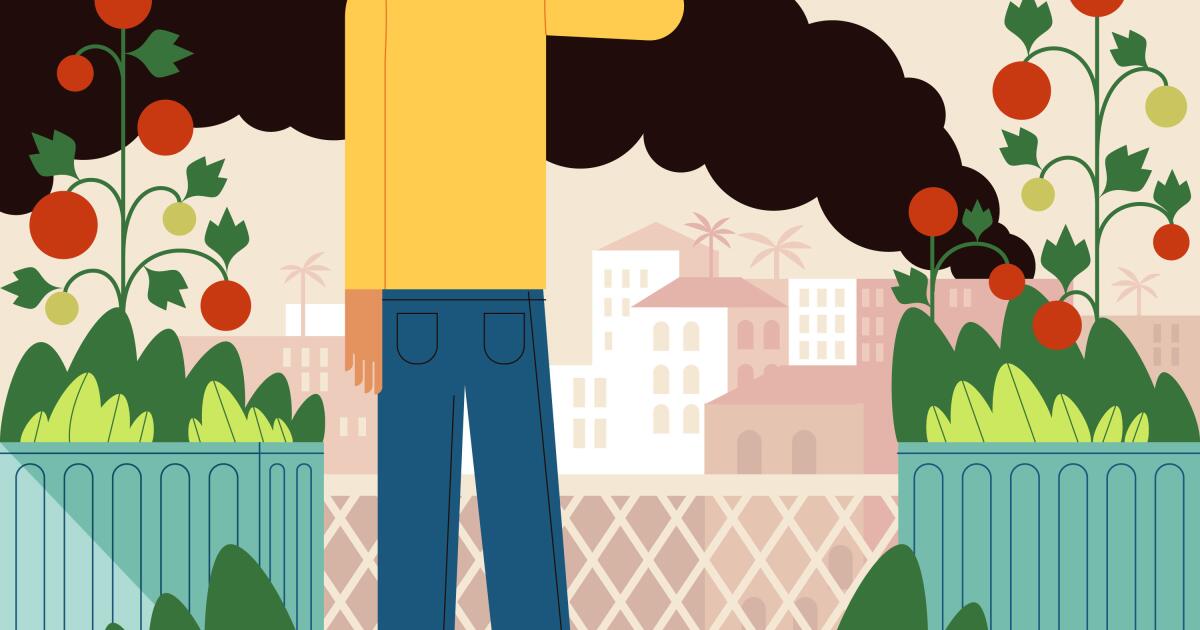
After the eight-day-long fire in a 500,000-square-foot Boyle Heights warehouse, eastern Los Angeles residents are contending with putrid smells, soot and potentially hazardous airborne chemicals after heavy plumes of smoke spread throughout the city. But those who grow food in nearby neighborhoods may also be wondering: How will the fires affect the plants and produce in my garden?
The Boyle Heights warehouse, owned by Lineage — a global temperature-controlled storage facility operator — housed 85 million pounds of frozen food and other products. In the days since the fire, local emergency visits for smoke inhalation and throat pain spiked while agencies still scramble to measure the amount of PM 2.5 — harmful fine particles — and heavy metals, like lead and arsenic, in the air.
According to researchers, any toxic airborne chemicals would likely stem from the charred foam insulation, metal exterior, burned solar panels and any lithium batteries that might have been present inside the warehouse.
After a fire, heavy metal particles can spread through ash and smoke over gardens and inhibit growth, said Olukayode Jegede, an agricultural toxicologist and assistant professor at UC Davis. Since the warehouse fire is so recent and cleanup has just begun, Jegede said the precise impact on gardens can’t be measured until comprehensive soil tests are conducted in the area.
While the L.A. city government hasn’t announced plans for soil testing, the Contaminant Level Evaluation and Analysis for Neighborhoods project at USC is offering free contaminant testing for Boyle Heights and East L.A. residents. Residents can collect soil samples and deliver them to Boyle Heights City Hall and other locations for an evaluation of lead, arsenic, chromium and mercury levels.
The good news is produce, plants and roots can still be preserved. According to Jegede, many of the soil tests conducted last year in the Altadena area after the Eaton fire showed that gardens and poultry were not as contaminated as one might expect.
“Quite a number of the soils we tested [in Altadena] were not really contaminated,” Jegede said. “We weren’t seeing many soils with concerning elevated levels of metal, so gardeners should not be too alarmed when these things happen.”
Nevertheless, there are several measures that gardeners can take to keep themselves, their children, plants and produce safe from potentially harmful contaminants stemming from the fire. Researchers, gardening experts and horticulturists offered some guidance on the handling, recultivation and cleanup that can keep you and your garden in good health.
How do I remove ash and contaminants from my garden?
Altadena horticulturist Leigh Adams said Boyle Heights plants and produce already live in a difficult environment, surrounded by industrial warehouses that spread contaminants daily.
“That area has been used industrially for 100 years, and the soil is impacted by many, many, many things,” Adams said. “Low-income neighborhoods and gardens usually don’t have a lot of resistance against dominant manufacturing.”
This means that the contamination of gardens in eastern L.A. won’t be as catastrophic as compared with those in Altadena, a more suburban environment, Adams said. But fallen ash still poses major health risks if ingested or inhaled.
An advisory from University of California Agricultural and Natural Resources last year recommended suiting up in an N95/KN95 mask, long sleeves, pants, close-toed shoes and gloves before attempting to deal with ash in the garden to limit exposure to potentially toxic contaminants. The advisory added that individuals should make sure all of this gear is cleaned thoroughly before bringing it back inside.
Once in the proper gear, Adams recommends removing the top two inches of topsoil from gardens, where the highest concentration of contaminants will settle after a fire. Using a plastic bag to collect the soil and disposing of it in the garbage — not green yard waste bins — will help to reduce the spread of airborne chemicals.
Gardeners with raised beds are advised to remove approximately six inches of soil, because excess ash can raise the pH level and prevent nutrients from soaking into the soil bed.
After this, watering the garden gently but plentifully will help to promote soil health and get rid of most of the ash present on plant leaves and stems. Adams said replacing the top two inches of soil with store-bought mulch or straw will help to contain any remaining ash and prevent it from spreading any further.
Experts say to avoid using leaf blowers if ash is present in the garden because they can send particles airborne. Doing so will increase the likelihood of heavy metal particles, which can carry lung irritants and carcinogens, being spread and inhaled.
A Boyle Heights resident keep a watchful eye on the fire at the 5,000-square-foot commercial building, which stores 85 million pounds of frozen food.
(Genaro Molina / Los Angeles Times)
Is it safe for me to eat produce from my garden?
Several studies, including one from the UC Cooperative Extension of Sonoma County, have shown that consuming produce in a fire-affected area poses minimal health risks.
Jegede said most root vegetables like potatoes and carrots, along with any fruit that has an outer layer, can be washed to remove potential contaminants, even if they were covered in ash. Peeling the outer layer of your produce can also help to reduce potential risks, he said.
Lettuce and other leafy foods with multiple layers pose a higher risk of contamination, but with a vigorous wash and peeling the outer layers, even the greens can be saved. The County of Los Angeles Department of Public Health recommends soaking leafy produce and fuzzy fruits like peaches in a 10% white vinegar and 90% water mixture.
Jegede said if the leaves or fruit are too delicate to wash or ash is still visible, it would be best to dispose of the produce.
How can I tell if my soil is contaminated?
After ridding your garden of visible ash, you might wonder how to tell if your plants will still thrive in the soil.
At-home soil tests that measure for alkaline, fertility and pH levels are widely available and can be purchased for $15 to $100 (for more detailed results) online. But Jegede said these tests can’t tell the full story of soil health.
Comprehensive soil testing is “something you can’t do properly at home,” Jegede said. “In labs, we are testing for metals like lithium and zinc, stuff that an at-home test will not show … If it comes to the point that you’re worried about your soil, I would just send it out to a lab.”
Wallace Laboratories in El Segundo, Babcock Laboratories in Riverside, Waypoint Analytical in Anaheim and other labs offer more detailed soil tests that measure heavy metal particles in addition to other fertility factors. Prices at Wallace Laboratories can range from $115 to $295 for a complete compost test.
The soil below two inches should be unharmed, Adams said, so long as new compost is set and plants are watered plentifully, which will promote natural biological cycles.
“What you’re doing is capping the soil, so that moisture stays in there, and instead of being dirt, it’s a living system called soil,” Adams said. “The more carbon we can get into our soil, the better.”
What can I do to help my soil recover?
For the last 12 years, Adams has been working with Metabolic Studio, a Los Angeles-based art and research hub focused on environmentalism, on methods for bioremediation, the practice of using additional fungi, plants and compost to decontaminate ash and break down contaminants.
Adams said straw, mushrooms, corn, rye and sunflowers are great bioremediators that can help to repair damage to soils. She said certain samples she’s worked on with Metabolic Studio have gone from testing at high heavy metal levels to nearly contaminant-free.
But for a more immediate fix, wash your produce, water your plants and have a little patience during ash cleanups. Your garden should look better in no time, Adams and Jegede said.

Inde Navarrette and Michael Johnston in Obsession.
Focus Features
hide caption
toggle caption
Focus Features
Two big horror films, Obsession and Backrooms, just smashed all box office expectations. So much of their success has been driven by Gen Z, which is now the biggest moviegoing demographic. But what makes a movie a Gen Z movie? Today we’re bringing you an episode of NPR’s It’s Been a Minute. Host Brittany Luse talks about this trend with Sam Adams and Reanna Cruz.
If you want to hear more about these movies, check out these episodes:
In ‘Obsession,’ love hurts. It really, really, really hurts.
‘Backrooms’ brings YouTube horror to the big screen
Zendaya brings ‘The Drama,’ we bring the spoilers
Connect with Pop Culture Happy Hour:
Letterboxd / Facebook
Our weekly newsletter
Support Pop Culture Happy Hour+
-

 Iowa1 minute ago
Person drowns at Coralville pool
-

 Kentucky13 minutes ago
Kentuckians deserve honesty about McConnell’s health | Letters
-

 Louisiana16 minutes ago
Leadership Louisiana Health Fellows Welcomes Inaugural Class – Leaders for a Better Louisiana
-

 Maine21 minutes ago
A hard lesson for Democrats in Maine. Plus, we have some news about Ed Markey. – The Boston Globe
-

 Maryland28 minutes ago
Governor Moore Announces Awardees for $1.23 Million Investment to Help Maryland Workers Thrive in a Changing Economy
-

 Michigan31 minutes ago
‘Big Brother’ season 28 to premiere this week. One guest from Michigan
-

 Massachusetts31 minutes ago
Cool off this summer at these 10 splash pads in central Massachusetts
-

 Minnesota43 minutes ago
EF2 tornado injures two, damages homes near Detroit Lakes, Minnesota

