Lifestyle
Soo Catwoman, ‘the Female Face of Punk,’ Is Dead at 70


In 1976, Susan Lucas asked a local barber in Ealing, West London, to part the back of her short hair — which she greased on the sides to emulate the Bride of Frankenstein — and shave off the entire middle section.
“He was very shocked and I think he thought I was kidding at first,” she recalled in a 2009 interview. But eventually he relented. When he finished shearing off almost all her hair, she said, “I think he felt bad about what he’d done.”
Two tufts remained, one on either side of her shaved head, flared upward to resemble cat ears.
“I was really pleased with it,” she said.
She dyed her new ears black, slicked them up with dabs of Vicks VapoRub and christened herself with a new name: Soo Catwoman.
That summer, she met and befriended Sid Vicious and Johnny Rotten of the Sex Pistols at Club Louise, a hotbed for musicians on the growing punk scene. She emerged as the face of that scene when she graced the cover of Anarchy in the U.K., a Sex Pistols fanzine.
With long tendrils of eyeliner swiped across her lids, a black star on her cheek and a skull dangling from one ear, her look, as well as her expression — a devil-may-care gaze that refused to waver — became a defining image of the vibrant, corrosive glamour of British punk.
“For me, rock ’n’ roll is all about haircut and attitude,” Bob Gruen, a photographer who documented the early punk era, said in an interview. “And she had both.”
Soo Catwoman died on Sept. 30 at a hospital in London. She was 70. Her daughter, Dion October Lucas, said the cause was complications of meningitis.
The fanzine photograph was published without her knowledge, and her face was soon reproduced on countless T-shirts and posters, often without permission or payment.
“It seems that my face and image, my ‘art’ as some have called it, has been hijacked,” she said in 2009, adding, “I’ve lost count of the amount of things that my face has since been used to publicize over the years, from books to clothing and everything in between.”
As her likeness became synonymous with punk, Soo Catwoman was a frequent presence in British newspapers. She was later portrayed onscreen in Julien Temple’s mockumentary “The Great Rock ’n’ Roll Swindle” (1980) and in the 2022 mini-series “Pistol.”
Her D.I.Y. ethos influenced designers including Thierry Mugler, Chanel and Junya Watanabe, whose models strutted down the runway wearing warped Union Jacks and spiked hair. Keith Flint of the band the Prodigy fashioned his own acid-green cat ears after hers.
Soo Catwoman “was the female face of punk, the sexual opposite of Johnny Rotten,” Mark Perry wrote in his book “And God Created Punk” (1996). “Next to Vivienne Westwood she was the most influential woman in punk fashion. If she wore something, others followed.”
Susan Helene Lucas was born on Oct. 24, 1954, in London to John William Lucas, who was in the merchant navy, and Mary (Cobb) Lucas. She was the 10th of 15 children, and her parents joined two houses in the Chiswick area to make room for their large family.
As a teenager, inspired by the flamboyance of glam rockers like David Bowie, Susan dyed a pink stripe into her pointed bangs.
At 21, after debuting her signature haircut, which she paired with jewelry made from found objects like needles and broken razor blades, she became a fixture, photographed with Billy Idol and members of the Damned. For a time in the 1970s, she shared a flat with Sid Vicious and earned the nickname Auntie Sue for her kindness toward him.
In 1979, she contributed backing vocals to the Invaders’ album “Test Card” and sang lead on their single “Backstreet Romeo.” In 1989, after a long absence from the scene, she resurfaced to record a cover of the O’Jays song “Back Stabbers” with Derwood Andrews of Generation X and Rat Scabies of the Damned.
As punk permeated the mainstream, Soo Catwoman largely withdrew from the public eye. She went from being “insulted on a daily basis,” with people avoiding her on public transportation “as if I were contagious,” to watching privileged strangers infiltrate the scene. “Those of us with holes in our jumpers didn’t actually put them there on purpose,” she said in a 2007 interview with the website Punk77.
“I had an exhibit in London a while ago, and Soo came to the opening,” Mr. Gruen said, “and she was this sweet English housewife.”
Speaking to The Times of London after her mother’s death, Dion Lucas said, “Although she was the epitome of punk, as far as her image, she was a hippie underneath it all.”
She home-schooled her children for a while and led an effort to save a tree outside their school. In her free time, she read the Romantic poets and listened to music ranging from Neil Young to Motown.
In 2008, her daughter launched a campaign to reclaim her image. She silk-screened T-shirts and printed tote bags, which she and her mother sold online.
“My mother’s image has at times been associated with negativity, words like ‘destroy’ and ‘anarchy,’ and the mental pictures they conjure up don’t really fit with the person she is,” Dion Lucas said in 2009. “Her beliefs are more about a mental revolution — about people learning to think for themselves.”
In addition to her daughter, Soo Catwoman is survived by a son, Shem Lucas; 10 brothers, Paul, John, Tony, Steve, Joe, Jim, Dave, Robert, Roland and Adam; a sister, Linda Lucas Kenny; and four grandchildren.
Reflecting on her legacy on her Myspace page years ago, Soo Catwoman seemed bemused by the evolution of the look she helped create.
“It still seems strange to me that what happened back then could bring about so many changes, in hair, music, fashion, etc.,” she wrote. “It seems quite funny that what started out as anti-fashion became fashion in itself.”



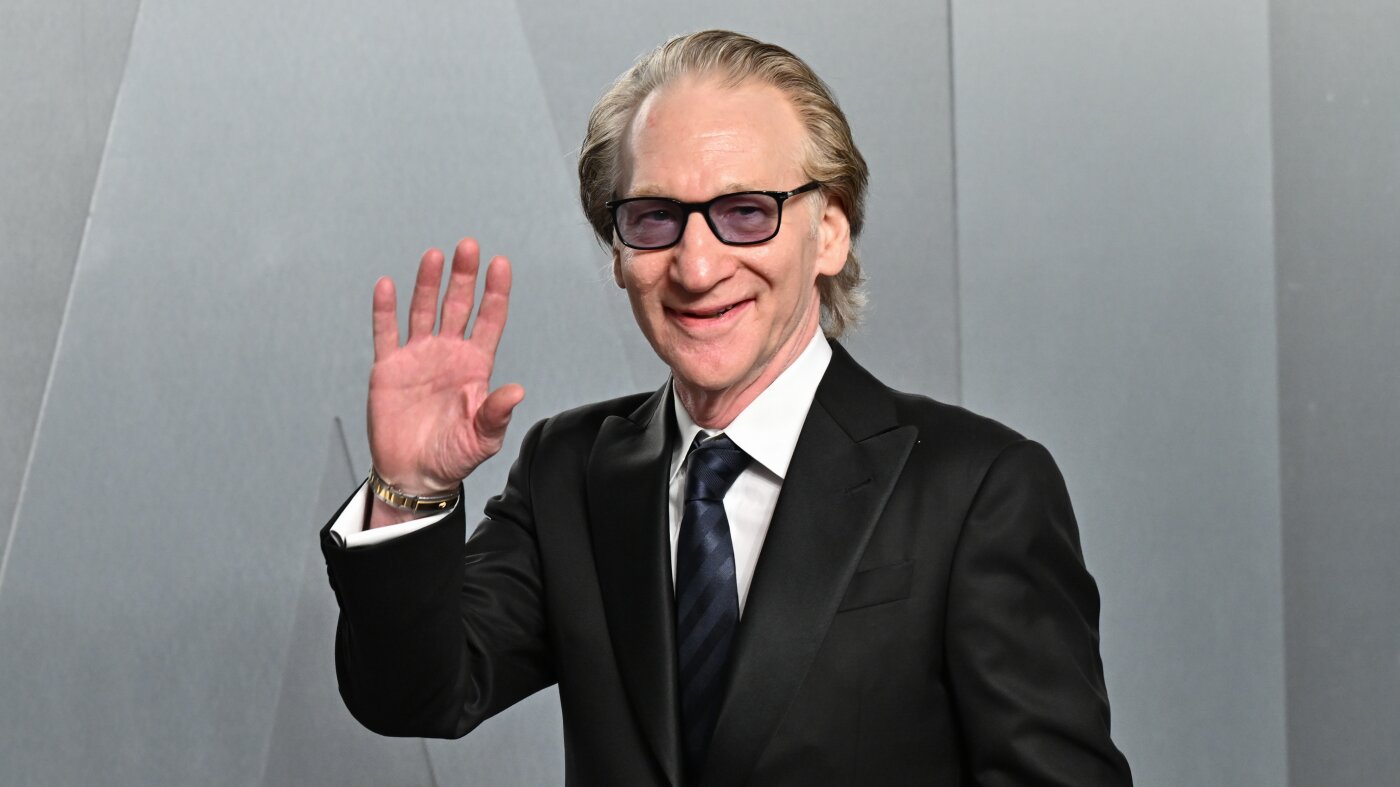
Satirist Bill Maher is this year’s recipient of the Mark Twain Prize for American Humor. Maher will receive the award at the Kennedy Center on June 28th. The show will stream on Netflix at a later date.
Evan Agostini/Invision/AP
hide caption
toggle caption
Evan Agostini/Invision/AP
Bill Maher will be receiving the Mark Twain Prize for American Humor after all.
There’s been some confusion about whether the comedian and longtime host of HBO’s Real Time with Bill Maher would, indeed, be getting the top humor award. After The Atlantic cited anonymous sources saying he was, White House press secretary Karoline Leavitt called it “fake news.” But today the Kennedy Center made it official.
“For nearly three decades, the Mark Twain Prize has celebrated some of the greatest minds in comedy,” said Roma Daravi, the Kennedy Center’s vice president of public relations in a statement. “For even longer, Bill has been influencing American discourse – one politically incorrect joke at a time.”
Is President Trump, chair of the Kennedy Center’s board, in on the joke?
Maher once visited Trump at the White House and he tends to be more conservative than many of his comedian peers but after their dinner Trump soured on Maher, calling him a “highly overrated LIGHTWEIGHT” on social media.
Maher’s acerbic wit has targeted both political parties and he’s been particularly hard on Trump recently, criticizing his decisions to wage a war with Iran and his personnel choices.
“Trump said, ‘when oil prices go up, we make a lot of money.’ Um, who’s ‘we?,’” Maher said in a recent monologue.
Past recipients of the Mark Twain Prize include Conan O’Brien, Dave Chappelle, Jon Stewart, Julia Louis-Dreyfus, Tina Fey, Eddie Murphy and Carol Burnett.
In a statement released through the Kennedy Center, Maher said, “It is indeed humbling to get anything named for a man who’s been thrown out of as many school libraries as Mark Twain.”
Maher will receive the Mark Twain Prize at the Kennedy Center on June 28. The show will stream on Netflix at a later date.


Workers react to the media after updating signage outside the Kennedy Center on Dec. 19, 2025, in Washington, D.C.
Jim Watson/AFP via Getty Images
hide caption
toggle caption
Jim Watson/AFP via Getty Images
Rep. Joyce Beatty of Ohio is asking a federal court in Washington, D.C., to force President Trump and the board and staff of the Kennedy Center to revert to calling the arts complex The John F. Kennedy Center for the Performing Arts.
The motion, which Beatty filed on Wednesday, asks a federal circuit court judge to reverse the Trump administration and the center’s current board and staff’s decision to call the complex “The Trump-Kennedy Center.”
In the filing, Beatty’s attorneys wrote: “Can the Board of the Kennedy Center — in direct contradiction of the governing statutes — rename this sacred memorial to John F. Kennedy after President Donald J. Trump? The answer is, unequivocally, ‘no.’ By renaming the Center — in violation of the law — Defendants have breached the terms of the trust and their most basic fiduciary obligations as trustees. Shortly after President John F. Kennedy’s assassination, Congress designated the Kennedy Center as the ‘sole national memorial to the late’ President in the nation’s capital.”

In a statement emailed to NPR Thursday, Roma Daravi, the vice president of public relations for the Kennedy Center, wrote: “We’re confident the court will uphold the board’s decision on the name change and the desperately needed renovations which will continue as scheduled.” NPR also reached out to the White House for comment, but did not receive a reply.
In December, White House press secretary Karoline Leavitt announced that the complex would heretofore be called “The Trump-Kennedy Center.” Although the new moniker was never approved by Congress, the Center’s website and publicity materials were immediately updated to reflect the administration’s chosen name, and the same day as Leavitt’s announcement, Trump’s name went up on the signage of the complex’s exterior, over that of the slain President Kennedy.
Later that month, Rep. Beatty who serves as an ex-officio member of the Kennedy Center’s board of trustees, sued Trump, members of the Kennedy Center board appointed by Trump, and some ex-officio members, arguing that the complex’s name had been legislated by Congress in 1964. Wednesday’s motion is part of that lawsuit.

In a press release sent to NPR on Wednesday, Rep. Beatty said: “Donald Trump’s attempt to rename the Kennedy Center after himself is not just an act of ego. It is an attempt to subvert our Constitution and the rule of law. Congress established the Kennedy Center by law, and only Congress can change its name.”
For many patrons, artists and benefactors of the Kennedy Center, the name change was the last straw in politicizing the performing arts hub. Following the White House announcement of the new name, many prominent artists withdrew planned performances there, including the composer Philip Glass (a Kennedy Center Honors award recipient, who received his prize during the first Trump administration), the famed Broadway composer and lyricist Stephen Schwartz and the 18-time Grammy-winning banjo master Béla Fleck.
The Washington National Opera (WNO), which had been in residence at the Kennedy Center since 1971, also severed its ties in January after ticket sales dropped precipitously. Earlier this month, WNO artistic director Francesca Zambello told NPR, “We did try as best as we could to encourage [the patrons] that we are a bipartisan organization, but people really voted with their feet and with their pocketbooks. And so we realized that there was really no choice for us.”

On Monday, a coalition of eight architecture and cultural groups also sued Trump and the Kennedy Center board in federal court over the complex’s scheduled closing in July for unspecified renovations. Their suit seeks to have the White House and board members comply with existing historic preservation laws, and to secure Congressional approval before moving ahead with the renovation plans.

ND State Fair completes 2026 grandstand lineup with EDM artist Zedd, ‘Turn Up ND!’

Thousands head to Columbus for 23rd annual Home Improvement Show at Ohio Expo Center

Oklahoma City Comets preliminary 2026 roster

Merkley Announces Additional Oregon Town Halls April 2-4

Pennsylvania-born indie rockers Tigers Jaw return with new album release

Florida High School Football Rankings: Top 25 teams – Oct. 21

How old is Bo Nix? What to know about Oregon quarterback ahead of 2024 NFL Draft

Cleary's 21 help Le Moyne down Central Connecticut State 69-64 in OT

99th annual Pony Swim held in Virginia

Indiana Members Credit Union announced as new anchor tenant at Bottleworks District

Video: Will ICE Change Under Its New Leader?

DHS shutdown breakthrough comes at cost for Republicans as funding fights nears end

Rubio joins crucial G7 talks as Iran war set to dominate second day

A surprise resignation could open the door for an independent to win a Montana Senate seat

Video: Savannah Guthrie Says She Believes Her Mother Was Taken for Ransom
-

 Detroit, MI1 week ago
Drummer Brian Pastoria, longtime Detroit music advocate, dies at 68
-

 Science1 week ago
How a Melting Glacier in Antarctica Could Affect Tens of Millions Around the Globe
-

 Movie Reviews1 week ago
‘Youth’ Twitter review: Ken Karunaas impresses audiences; Suraj Venjaramoodu adds charm; music wins praise | – The Times of India
-
 Science1 week ago
I had to man up and get a mammogram
-

 Sports6 days ago
IOC addresses execution of 19-year-old Iranian wrestler Saleh Mohammadi
-

 New Mexico5 days ago
Clovis shooting leaves one dead, four injured
-
 Business1 week ago
Disney’s new CEO says his focus is on storytelling and creativity
-

 Texas1 week ago
How to buy Houston vs. Texas A&M 2026 March Madness tickets