Lifestyle
Shaky voice? There’s no shame at this no-audition choir that's teaching Angelenos to sing


The emails arrive in people’s inboxes a few times each year with subject lines like: “Want more positivity in your life?” “We all need this right now!” or “Do something for YOU.”
Recipients might be inclined to immediately trash these messages, mistaking them for spam promoting the latest weight–loss drug or advertisements for an upcoming Danube River cruise. But they’re actually heartfelt messages from Greg Delson, a 44-year-old native Angeleno and voice educator who funneled his passion for singing into forming one of the city’s most popular secular adult choirs.
Voice educator Greg Delson, center, starts every choir rehearsal with an icebreaker to help the singers loosen up and get centered.
(William Liang / For The Times)
Offering two eight-week seasons a year in the spring and fall, Landlights Community Choir has grown profoundly since its launch in 2019. What started as a single class of 35 people singing pop songs in someone’s living room has expanded into a roster of 260 singers divided among four choir groups across the Greater Los Angeles area — City, South Bay, Valley and Westside L.A. — with a wait list of more than 100 people eagerly counting down the days until the next one. It is not unknown for attendees to commute from as far away as Ventura or Riverside counties to attend their group’s weekly 1-hour-and-45-minute rehearsals. Sessions for each group culminate in a full-production, pop-music-heavy final concert backed by a live band of professional musicians. Although the set list is never revealed before the concerts, the songs for the upcoming spring performances revolve around themes of growth and progress.
A choir that’s about uplifting one another
The secret sauce behind Landlights is its dedication to fun and its approach to rigidity. There are no auditions, and all skill levels are welcome. Attendance is not mandatory, not even for the final concert. Everyone, regardless of talent, can sign up for a solo, and the No. 1 rule sets the tone for the whole experience: “No shaming anyone, ever.”
“My mission is to get the world singing together,” says Delson, who has a master’s degree in music education from Boston University. “My work is to remove the barriers to entry and encourage everyone to sing, regardless of their self-perceived abilities or skill level.”

Two-time returnee Marina Fox joins in song during a rehearsal for the City group’s spring 2025 season.
(William Liang / For The Times)
These sentiments spoke to 23-year-old Marina Fox, and it’s how she found herself standing in front of a crowd of 385 people, reciting the opening line to “Home” by Edward Sharpe and the Magnetic Zeros at Landlights’ fall concert in Koreatown last November.
Fox had been nervous about signing up for a solo, or as Delson calls them, “special moments.” As a recent college graduate holding down her first full-time job, Fox hadn’t been sure she should join an extracurricular group, let alone elect to have a “special moment.” But her fellow City choir members emphatically encouraged her to sign up for a solo, and Fox took the plunge. She’s glad she did.

-
Share via
An adult secular choir has become massively popular thanks to its policy of no shaming and letting in everyone who wants to join.
“It felt amazing. I don’t do a lot of things in my life that warrant applause,” Fox says. “When you graduate from college, there’s a little bit of a loss of self because the path isn’t set for you anymore. Singing in this choir has given me back so much confidence.”
Dressed in a joyful orange ensemble, Fox was flanked by her fellow choir members, each dressed in a richly hued jewel tone of their choice. As Fox stepped away from the mic, her delight was palpable. Even though it was just a short segment of a hit song from 2009, it felt like a major accomplishment.
“It was almost like crossing the finish line in my postgraduate life,” she says, “because I was finally back to doing something that brought me a ton of joy and excitement, and I had something to show for it.”
Then something surprising happened at the performance. Two singers stepped out of the ranks to recite the closing lines, and one of them ad-libbed an addition.
Turning to the other performer, she dropped down on one knee and said: “Ever since we met, you’ve felt like going home. Baby, will you please marry me?”
The crowd — and the choir — went wild. There was applause, tears, children running amok and flowers being thrown in the air.

Delson selects popular songs from artists and groups such as Adele and ABBA that most choir members will already know the words to.
(Sebastian Garcia)
Even for Landlights standards, this was a momentous event. At no other time in the six years of Landlights’ history has a marriage proposal happened at a concert — but other magic has brewed, thanks to the group’s unique concoction of support and camaraderie. Romantic matches have been made, singing careers have been started, bands have been formed, podcasts have been launched, health conditions like asthma have been improved and more than a few people have found a part of themselves they’d been missing.
Ron Gould, a 70-year-old creative director who joined the City group last season with his wife, regained a confidence he’d lost at age 12 when his voice cracked during a glee club performance of “Over the Rainbow.”
After years of relying on friendships formed through her husband, 37-year-old Carole Buckner developed a community of her own that has kept her rejoining the choir each season. And Cheryl Hoffman, a retired UCLA radiologist, got back in touch with a creative side of her personality that for decades had remained dormant because of the nature of her work.
“When I see the looks of joy and pride on their faces — that’s my favorite part of this whole thing,” Delson says. “You just see people blossoming right before your eyes. It’s what fuels me to keep doing this.”

Greg Delson, center, has steadily grown the Landlights Community Choir since its inception in 2019.
(William Liang / For The Times)
Keep it secular and just sing the hits
Although there are a handful of community choirs sprinkled throughout Los Angeles, Landlights is said to be the only continuous group that eschews audition requirements for admission. It’s different in other ways too. The songs performed are popular music, with a few smatterings of classics from the last century, including “California Dreamin’” by the Mamas & the Papas and the John Denver hit “Take Me Home, Country Roads.”
The benefit of focusing on these tunes — aside from their broader appeal compared to, say, chorale music — is that the majority of singers are already familiar with them and don’t need to know how to read sheet music to perform them.
Delson credits his background in community music and the research-based teaching methods he learned at the Complete Vocal Institute in Copenhagen for helping shape the core principles of Landlights.
Delson makes an effort to create a safe space that encourages participants to ask questions, fraternize with others and leave their stress at home. He is a firm believer that anyone can sing; it’s just a matter of providing them the right anatomical training — and making sure they have fun while doing it.
It’s why self-professed “extroverted introvert” Buckner felt comfortable signing up for her first season in the spring of 2022.
“I figured if it sucked I wouldn’t be locked in and could bail at any time. Luckily, I was completely hooked after the first practice,” she says. “It’s a little like summer camp in the way we all come together for a short time and build strong bonds. Honestly, it’s a much better all-around experience than my sixth-grade honor choir was.”
Buckner is a singer in Landlights’ Valley group, marking her seventh season in the choir.

Carole Buckner hadn’t sung in public since sixth-grade choir class but has enjoyed participating in Landlights Community Choir so much that she’s joined for the last seven seasons.
(William Liang / For The Times)
An adult choir with zero pressure
The scheduling flexibility of Landlights has been a strong appeal for Hoffman, who has been in the choir for four seasons and sang her first “special moment” at the City group’s concert last fall.
“I come from a world that’s a lot more structured, so it’s really relaxing and welcoming to see another way of doing things,” she says.
The choir attracts a range of participants across age groups (so long as they’re 18 or older), skill level and background. While some are novice singers and karaoke bar enthusiasts, many come from the entertainment industry, where they work as actors, dancers or fledgling musicians.
To foster community, name tags are worn at every rehearsal, with green stickers used by newcomers and orange ones for returnees. Delson and members agree that it takes the pressure off having to remember names, allowing people to focus on feeling comfortable when they practice the songs.

In the greenroom shortly before the start of the City group’s fall 2024 concert, emotions ran high as Delson gave a pep talk.
(Cynthia Garcia)
Learn from a voice expert at a discount
For more than two decades, Delson has worked as a voice coach, but he also has been a songwriter, recording artist, backup singer, producer, vocal arranger and educator.
Another benefit to the choir is that members can learn from him without the substantially heftier prices for his private voice training sessions. Previous eight-week seasons have cost in the ballpark of $350, depending on how early or late one signed up, as discounts are given to those who commit promptly as well as to returning singers. That’s nearly as much as one private lesson with Delson.
“I love having economical ways for people to be able to sing, and in our choir rehearsals, I’m definitely teaching them tricks and skills,” Delson says. “I also make audio files on Dropbox for each of them where I teach them their parts, such as how to get the notes and make the vowels.”
It’s not just what you’re singing but who’s teaching you
The model that Landlights follows wouldn’t be hard for another choir to replicate. Throw together a set list of pop songs, let everyone join, ban people from critiquing themselves and others, and end the season with a big-bang performance. But there’s one key ingredient that would be missing: Delson.
“Greg is a very special human being, and I think without him, you couldn’t necessarily make this happen,” Hoffman says. “He brings people from all walks of life together with his unique perspective and charisma. He really is the glue.”
Gould, who admits he only begrudgingly joined the choir to have a bonding activity with his wife, was similarly impressed.
“Greg’s whole thing is making you feel more than,” Gould says. “He is so courageous with what he does in getting people to loosen up and try these different exercises. There’s a certain level of feeling silly, and he’s able to lead by example and get you in that mode.”

At the City group’s fall 2024 concert, a record number of members signed up to perform a solo or, as Delson calls them, “special moments.”
(Sebastian Garcia)
As demand to join the choir has grown, Delson has been working on crafting groups of no more than 65 singers each so that everyone’s voice can be heard while also scaling them so he doesn’t have to turn people away for lack of space. It’s a tricky balance, and it’s why he’s expanded the choir to multiple locations and hired associate conductors, which is something he plans to invest in more heavily for the future.
“I hate telling people no when it comes to people wanting to sing, so it has to grow,” he says. “My task right now is trying to identify the elements that make Landlights what it is, codifying that and teaching it to others.”
But that’s a long-term goal, because at the moment, Delson has bigger things to focus on: namely, the upcoming spring concerts taking place from the end of March through early April in West L.A., Sherman Oaks, El Segundo and Santa Monica.
He’s not worried about how the groups will sound — he knows they will sound phenomenal. Also, he’s not worried about members forgetting their lines or missing their notes. Because in the end, Landlights is about more than just the singing.
“We’ve lost so many of these third spaces that bring people together, and Landlights is an antidote to that,” Delson says. “You don’t see anyone on their phone in rehearsal. Everyone’s just talking and smiling and being present, having fun and just realizing how much they have in common. And to me, that is true community choir. That is what Landlights is about.”

Lifestyle
Terry Tempest Williams on why women with big ideas get labeled ‘crazy’ : Wild Card with Rachel Martin
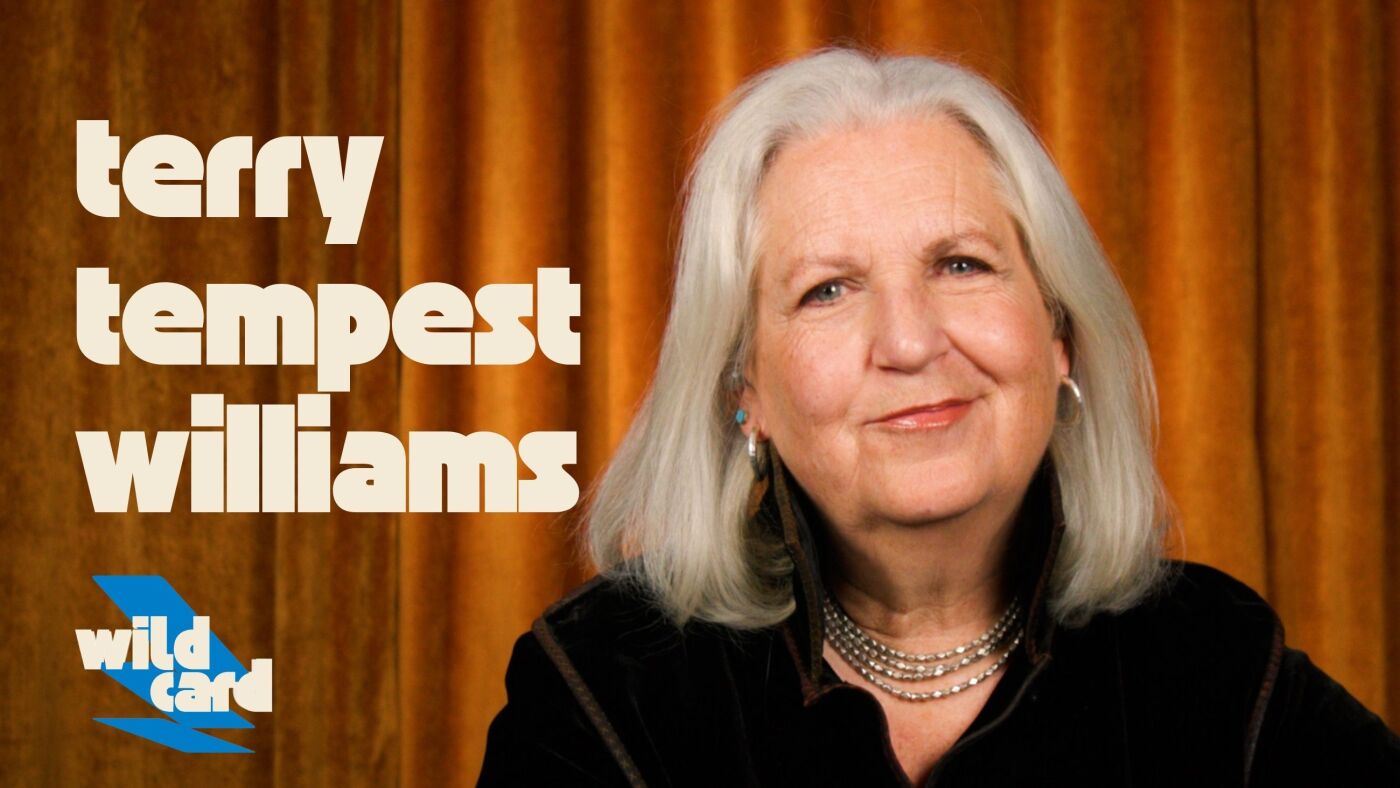
A note from Wild Card host Rachel Martin: I met Terry Tempest Williams about 25 years ago at a writer’s conference in Yosemite Valley. I was a young reporter who was there to do a story about how literature was addressing climate change and she made such a huge impression on me. I had never heard someone talk about the natural world the way Terry did and she had a spiritual depth I hadn’t encountered in my life at that point.
To this day, Terry’s writing always reorients me towards what is good, what is beautiful, and what is true. Her newest book is called “The Glorians.”

For its upcoming Los Angeles venue, experiential art firm Meow Wolf will focus on the art of storytelling, with a specific eye toward skewering our city’s moviemaking magic. To help bring that vision to life, Meow Wolf has entered into a creative partnership with Titmouse, one of L.A.’s most renowned independent animation houses.
The Hollywood-based studio behind popular series such as “Big Mouth” and “Star Trek: Lower Decks” will create animation that will be shown throughout the West L.A. venue, which is on target for a late 2026 opening at the Howard Hughes entertainment complex.
It’s a move that represents a shift for Santa Fe, N.M.-based Meow Wolf. Over the last decade-plus, the art collective has grown beyond its anything-goes, punk-meets-psychedelic roots into an organization with full-scale, maximalist installations in its hometown, Denver, Las Vegas, Houston and the Dallas suburbs. In the past, Meow Wolf kept most of its media in-house.
As part of its larger-than-life participatory art installations, Meow Wolf L.A. will feature a mix of live action and animation, the former filmed by Meow Wolf in its Santa Fe studio. Meow Wolf’s James Stephenson, a senior VP with the company and its creative director of emerging media, said the degree to which the L.A. exhibition will lean into various animation styles necessitated an outside partner. Titmouse’s work, in development by a number of directors with contrasting tones, will be shown on a variety of formats, ranging from cinema screens to full-room projections.
“I really believe in animation as an art form, and I know the Titmouse folks do too,” Stephenson says. “Animation is made by artists. It’s made by artists with their own hands. It’s something that is still very rooted in craft.”
Meow Wolf’s L.A. space is set in a former cinema complex, and will champion its location, taking guests on a journey through a converted movie house and beyond, into a sci-fi-inspired fantasyland with sentient spaceships and a 30-foot-tall mushroom tower. Meow Wolf creatives have spoken of the fantastical movie theater as one that will feature animated, self-aware candy before attendees enter the main exhibition space, making Titmouse’s work some of the first art guests will encounter. Titmouse co-founder Chris Prynoski has said the studio has lined up at least six directors for the exhibit.
An in-progress art installation destined for Meow Wolf L.A. at the art collective’s Santa Fe, N.M., headquarters. The L.A. exhibition will feature animation from Titmouse.
(Gabriela Campos / For The Times)
Titmouse, says Stephenson, is the right partner because “they’re known less for a house style, and more for a house vibe.” Over the years, Titmouse has been behind such diverse shows as “Scavengers Reign,” owning a Jean Giraud influence rooted in French and Spanish surrealism, the lively “Jentry Chau vs. the Underworld,” with an unique color palette that took inspiration from anime and Chinese mythology, the exaggerated comic book feel of Adult Swim’s “Metalocalypse,” and the approachable yet expressive tone of “Star Trek: Lower Decks.”
“Meow Wolf’s vibe is similar to Titmouse’s vibe,” Stephenson says. “It’s artist-first, artist-driven, independent and kinda edgy. They are always trying to find the edge of what’s possible. They try to see how far they can go, and it’s done for fun and in the spirit of taking risks.”
Prynoski says working with Meow Wolf will give Titmouse a sense of artistic freedom it doesn’t always have when delivering content for more traditional Hollywood partners. He says the multi-director approach is a callback to the early days of Warner Bros. Animation, when individual creators put their own stamp on Looney Tunes material.
“I use Bugs Bunny as an example,” Prynoski says. “You’ve got a Friz Freleng Bugs Bunny short. You’ve got a Chuck Jones Bugs Bunny short. You’ve got a Tex Avery Bugs Bunny short. They’re all different versions of Bugs Bunny, and people who are really paying attention can tell which director directed each one. Even though to the layman, these are all Bugs Bunny, but if you lined them up, they are drawing in different styles, sensibilities and techniques.”
Prynoski says that was a centerpiece of his pitch to Meow Wolf, noting that characters will reappear in multiple installations, each handled by a different artist. Meow Wolf L.A., in fact, will be the firm’s most character-driven exhibition, as guests will follow the storylines of three main protagonists throughout the space.
In announcing the partnership, Meow Wolf and Titmouse released an image from an animated work directed by Luca Vitale. It features a key character having a moment with a hummingbird and it’s done in an elegant, slightly anime-influenced style. It’s an image full of movement, reflecting a character in transition with inviting pastels and bold dashes.
“I like that image because I think it captures some of the sense of wonder that we want people to feel,” Stephenson says. “The character is having an encounter with the elusive nature of creativity and reality in a way that makes them have a different perspective of what’s possible.”
Other contributing animation directors to Meow Wolf L.A. include Space Dawg, Felix Colgrave, Alexander Vanderplank and Phimémon Martin, and Jun Ioneda.
Titmouse’s partnership with Meow Wolf will extend beyond the L.A. exhibition. The two will be working on the development of Meow Wolf New York, which is slated to open some time after Los Angeles, and are collaborating on a planned animated series, which Prynoski is spearheading.
Meow Wolf exhibits are the result of sometimes hundreds of disparate artists coming together in a shared space. Distilling that into a signature, singular style for a series could be a challenge. Stephenson pinpoints some guiding principles.
“You really need to feel the hand of the artist,” he says. “You need to feel a DIY aesthetic. You need to feel the materiality. Those are very specific to what we are.”

The Kennedy Center on June 28, with its facade signage still covered by a tarp and scaffolding.
Alex Wroblewski/AFP via Getty Images
hide caption
toggle caption
Alex Wroblewski/AFP via Getty Images
On Wednesday, a federal appeals court denied President Trump’s request to stop the removal of his name from Washington, D.C.’s Kennedy Center. The signage on the building has been covered with tarp and scaffolding since June 13, but in a court filing last month, the center’s current executive director said that Trump’s name has been removed.
In their decision, three judges from the U.S. District Court of Appeals for the District of Columbia Circuit said that the president had failed to prove that the arts center would be “irreparably injured” without Trump’s name attached to it.

NPR requested comment from the Kennedy Center, but did not receive an immediate reply.
This latest round of court decisions is part of the ongoing litigation filed by Rep. Joyce Beatty, D-Ohio, against President Trump and the board of the Kennedy Center. In a statement emailed Wednesday to NPR, Beatty said: “Today’s ruling again affirms that this administration’s efforts to rename the Kennedy Center were unlawful. His name no longer desecrates this sacred memorial, which belongs to the American people. Now it is time for the Trump administration to accept this, comply with the law, and take the tarps down.”
In previous court filings, Trump’s legal team had asserted that removing the president’s name from the arts complex, both on the physical building and in its digital materials, would inflict irreparable harm in both time and money already spent. In the denial, the three judges — Patricia Millett, Robert Wilkins and Gregory Katsas — wrote that since Trump’s name has already been removed, “a stay would not avert those harms.”
Furthermore, Trump had claimed that without his name attached, future fundraising would be threatened “and [will] contribute to the financial decline of the Center.” In response, the appeals judges wrote: “Appellants, however, have failed to support this assertion with any specific facts or evidence. They offer only the conclusory assertions of the Kennedy Center’s Executive Director that were made in a factually unsupported declaration.” The center’s current executive director, Matt Floca, specializes in physical plant management.
The presiding judge in the case, Christopher R. Cooper, has ordered that the center provide him a status report on the center’s operation and programming before the end of this month. As of Wednesday, the center’s calendar lists a small roster of programs, including outdoor free movie screenings, workshops for children, and five free live performances in July on its Millennium Stage. In the past, the Kennedy Center presented over 2,000 arts and education events each year, including free daily Millennium Stage performances.

-
Culture14 minutes ago
Which Version of the ‘Odyssey’ Should You Read?
-
Lifestyle17 minutes ago
Terry Tempest Williams on why women with big ideas get labeled ‘crazy’ : Wild Card with Rachel Martin
-

 Technology29 minutes ago
Google’s Nest Thermostat has hit its best price of the year
-

 World32 minutes ago
Argentinian flight instructor jumps to death from plane, 22-year-old student forced to land alone
-

 Politics37 minutes ago
Omar’s disclosures erased millions, leaving her with potential negative net worth. She won’t explain why.
-

 Health44 minutes ago
Dr Oz links obesity to chronic disease surge, says GLP-1s can ‘jumpstart’ better health
-

 Sports47 minutes ago
Pirates star pitcher makes unfortunate history after being taken out in middle of perfect game bid
-

 Technology52 minutes ago
Medical identity theft follows you into the doctor’s office

